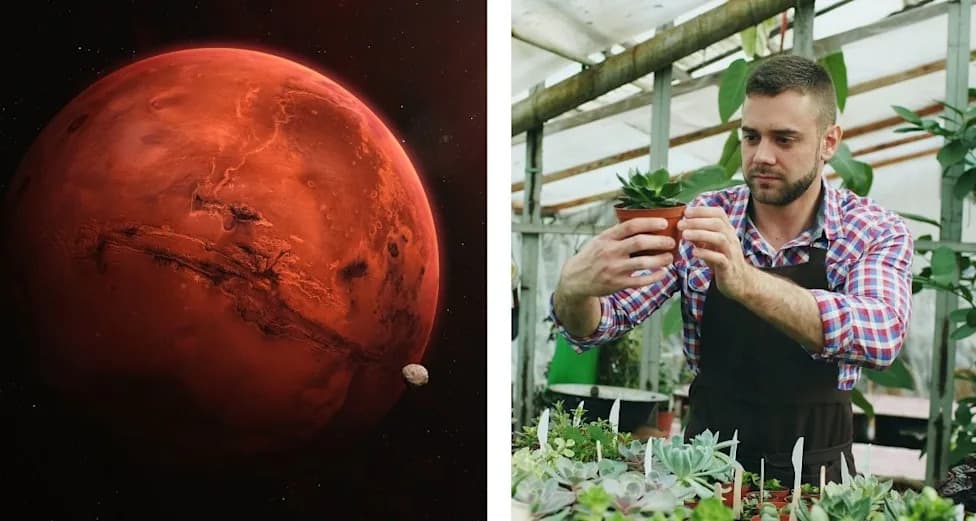
NASA je otvorila međunarodno takmičenje «Mars to Table» koje traži dvonedeljne planove ishrane i sisteme za proizvodnju hrane na Marsu. Pobednička američka ekipa može osvojiti 750.000 dolara, dok međunarodni timovi mogu učestvovati bez prava na novčanu nagradu. Konkurs prihvata rešenja koja smanjuju zavisnost od ranjivih lanaca snabdevanja i maksimizuju efikasnost resursa; rok za prijave je 21. avgust, a pobednici će biti objavljeni u septembru.
Kako pomoći NASA-i kad je DoorDash 200 miliona milja daleko — NASA zove Zemljane da uzgajaju hranu na Marsu
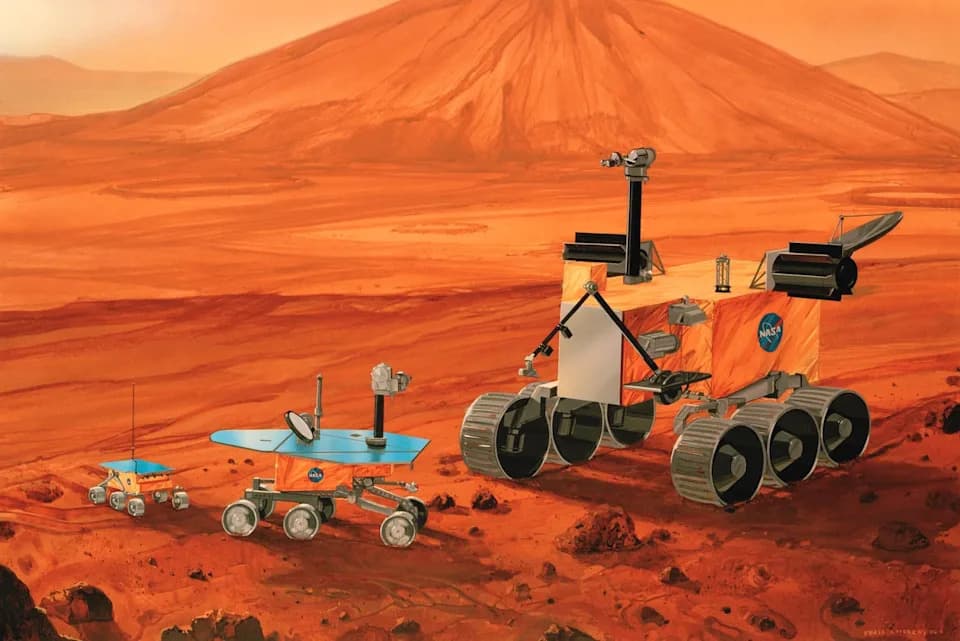
NASA has sent five robotic vehicles to Mars. Sojourner, Spirit, Opportunity, Curiosity, and Perseverance. Look back at the missions.
NASA je pokrenula međunarodno takmičenje koje poziva naučnike, inženjere, poljoprivrednike i inovativne timove da reše jedan od ključnih problema dugih svemirskih misija: kako obezbediti hranu za astronaute na Marsu. Cilj konkursа je da se osmislе pouzdani sistemi proizvodnje hrane i dvonedeljni planovi ishrane pogodni za život na Crvenoj planeti.
O čemu se radi
Takmičenje, pod imenom «Mars to Table» (aluzija na izraz „farm to table“), traži koncepte i prototipove sistema koji omogućavaju uzgoj, preradu i pakovanje hrane u uslovima sa ograničenim resursima. Organizatori očekuju rešenja koja smanjuju zavisnost od krhkih lanaca snabdevanja i maksimizuju efikasnost materijala i energije.
"Dizajniranjem sistema hrane koji pouzdano funkcionišu u ekstremnim ograničenjima, Mars to Table ističe pristupe koji smanjuju zavisnost od krhkih lanaca snabdevanja, maksimizuju efikasnost resursa i omogućavaju proizvodnju hrane tamo gde tradicionalni sistemi ne uspevaju", navode organizatori.
Zašto je važno
Astronauti na dugim misijama suočavaju se sa više izazova: obezbeđenje kompletne nutritivne vrednosti, prevencija "menijskog zamora" (dosade hranom koja se ponavlja), logistika dopreme i dugoročna održivost. Rešenja razvijena za Mars mogu imati direktnu primenu i na Zemlji — u regionima sa narušenim lancima snabdevanja, sušama ili u urbanoj poljoprivredi.
Šta takmičenje zahteva
- Plan dvonedeljne ishrane prilagođen neodređenom broju ljudi.
- Sistem za uzgoj i/ili proizvodnju hrane koji funkcioniše u marsovskim uslovima (ili simulacijama) uz jasno objašnjenje resursa i protokola.
- Do 50% početnih zaliha hrane može doći sa Zemlje — to znači da se očekuju prioritetne kulture visokog nutritivnog sadržaja.
Rok, nagrade i učešće
Rok za podnošenje predloga je 21. avgust, a pobednici će biti objavljeni u septembru. Pobednička američka ekipa može osvojiti 750.000 dolara; međunarodni timovi mogu učestvovati, ali nisu podobni za novčanu nagradu.
Širi kontekst i tehnički izazovi
NASA, uz razvoj prehrambenih strategija, istovremeno radi i na drugim ključnim komponentama za ljudske misije: izvorima energije (među opcijama je nuklearna energija), skloništima otpornim na zračenje i mikrometeoroide, proizvodnji kiseonika na Marsu i bržim komunikacionim sistemima baziranim na laseru.
Takmičenje podseća na popularni film The Martian, u kome astronaut preživljava uzgajajući krompir. Teoretski rastojanje između Zemlje i Marsa varira od oko 33 miliona do oko 249 miliona milja, što znatno utiče na logistiku i vreme putovanja.
Brzi podaci o Marsu
- Mars je četvrta planeta od Sunca i poznat je kao Crvena planeta zbog oksidovanog gvožđa na površini.
- Gravitacija na Marsu iznosi oko 40% zemaljske (osoba od 200 lb na Zemlji tamo bi težila oko 76 lb).
- Planeta ima tanku atmosferu sa vrlo malo kiseonika pogodnog za disanje.
Ovaj članak je adaptiran iz originalne objave USA TODAY: "NASA needs takeout on Mars".
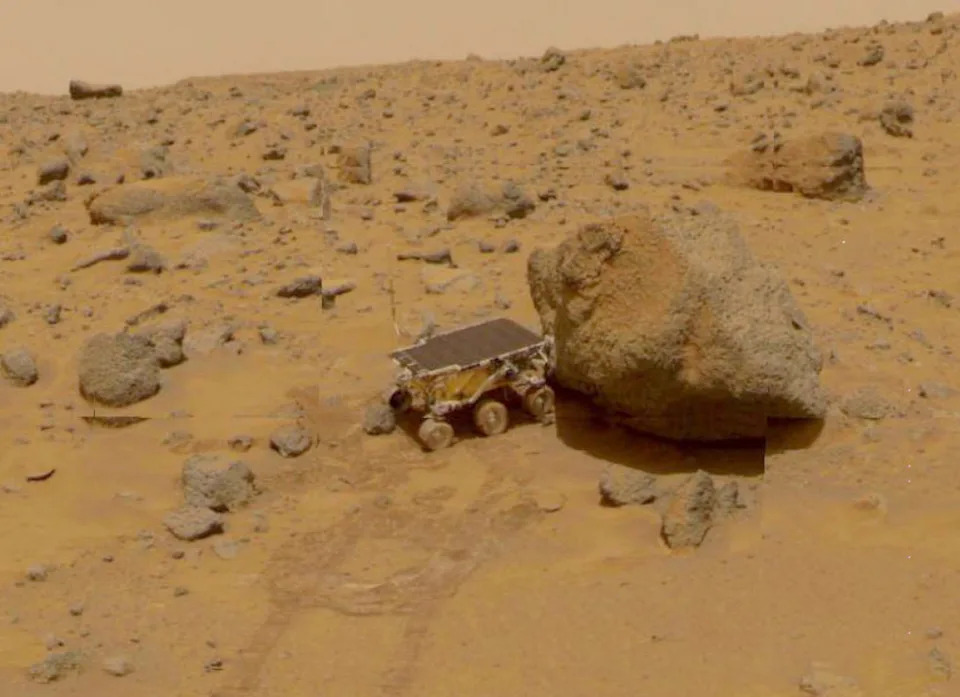
View of the NASA Pathfinder Sojourner Rover robotic data gathering vehicle exploring the surface terrain of the planet Mars, 1997.
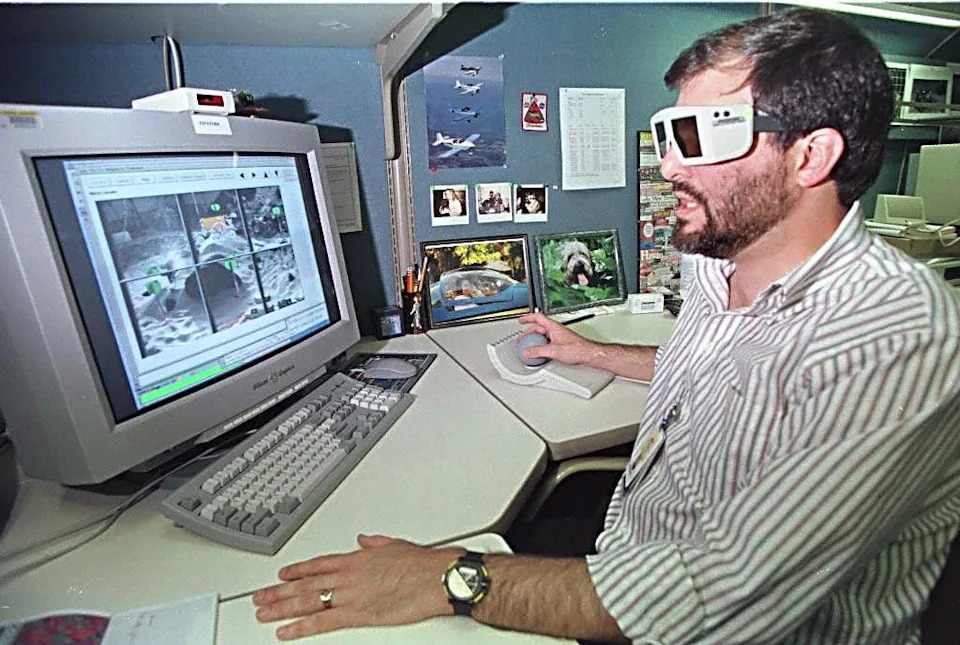
Brian Cooper, who will command the Mars Pathfinder rover "Sojourner", uses 3-D glasses on July 1,1997 to operate the mechanical explorer which will give him a three dimensional view of the Martian surface. He will receive pictures of the Martian surface including Sojourner from the camera on the Mars Pathfinder Lander.
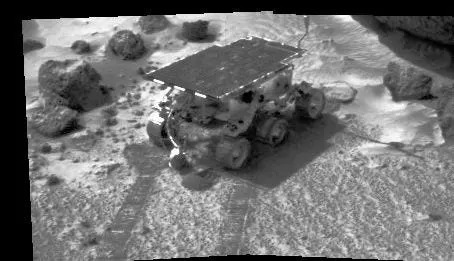
This July 8, 1997 NASA photo taken by the Mars Pathfinder shows the Sojourner rover on the rocky Martian terrain. The Sojourner is making an analysis of the soil content and transmitting data back to earth.
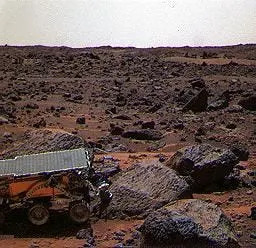
This image taken by the Imager for Mars Pathfinder (IMP) and released on October 8, 1997 by the Jet Propulsion Lab (JPL) shows the Sojourner rover's Alpha Proton X-ray Spectrometer (APXS) deployed against the rock "Moe". The rock behind rover is "Half Dome", which has also been analyzed.
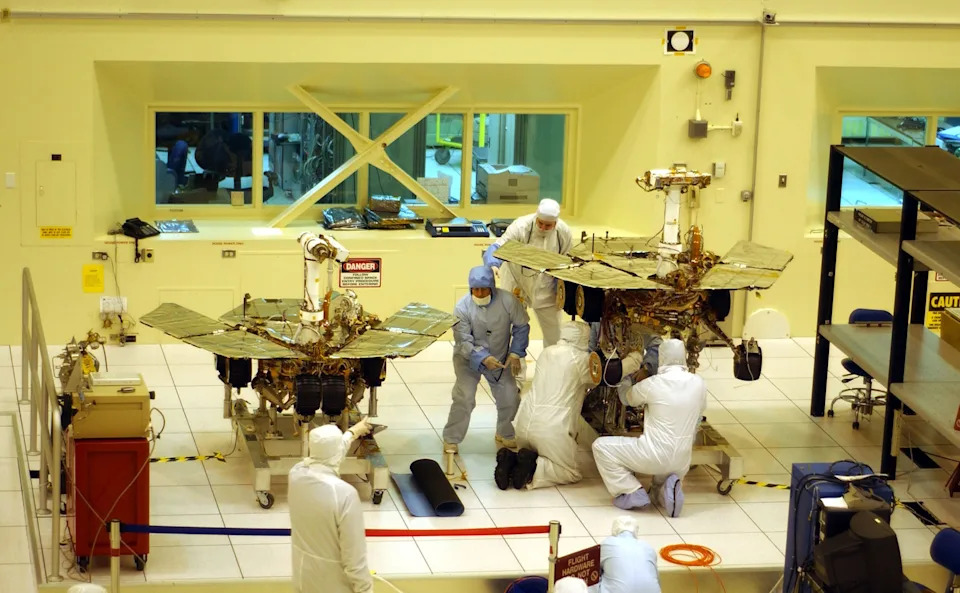
Workers put final touches to the two new Mars exploration rovers at NASA Jet Propulsion Laboratory (JPL) February 10, 2003 in Pasadena, California. The identical robotic explorers, Spirit and Opportunity, will trek up to 109 yards each Martian day, far more than the much smaller Mars Pathfinder was able to do in 1997. The rovers will search for evidence of liquid water in two separate areas of the red planet. The rovers stand about five feet tall and weigh in around 400 pounds. The first rover has a launch opportunity May 30, 2003 and the second June 25, 2003.
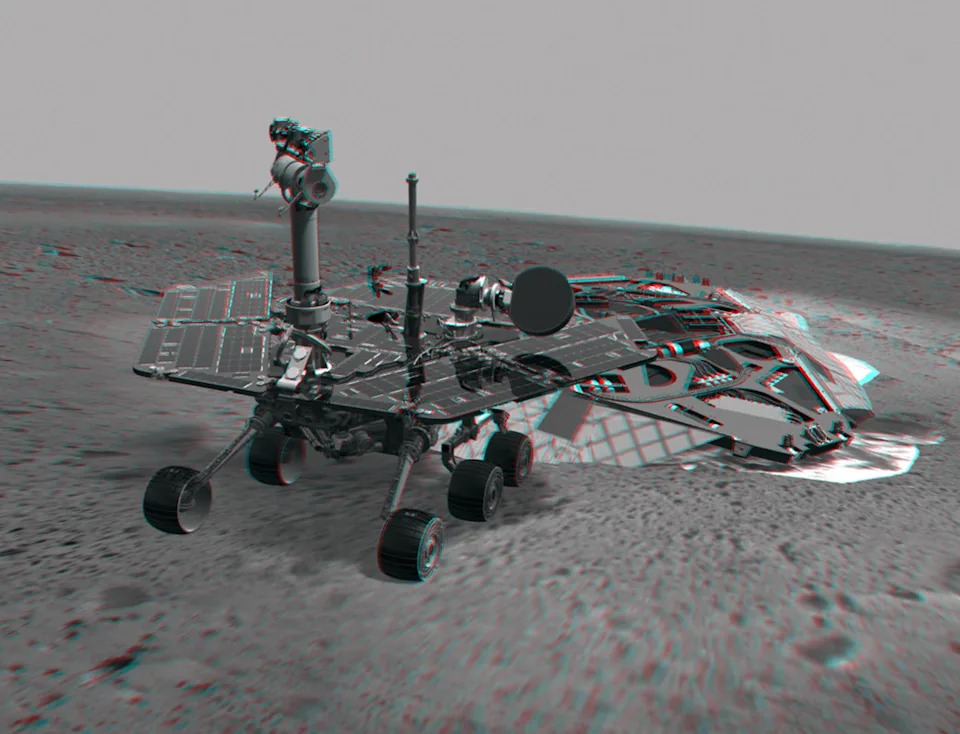
This 3-D image released by NASA January 23,, 2004 combines computer-generated models of the Mars Exploration Rover Spirit and its lander with real surface data from the rover's panoramic camera. NASA made progress in fixing its malfunctioning Mars rover Spirit by finding a work-around for a balky memory card. "We made good progress overnight. The rover has been upgraded from critical to serious." said Peter Theisinger, rover project manager, at an afternoon press briefing 24 January at the Jet Propulsion Laboratory (JPL). Theisinger said that ground controllers have established an ability to communicate with and control the vehicle reliably. Scientists said they managed to reset Spirit's computer and put the rover into what's called "cripple" mode to bypass software problems. Still, the problems may prevent the rover from taking another drive on Mars for as long as three weeks.
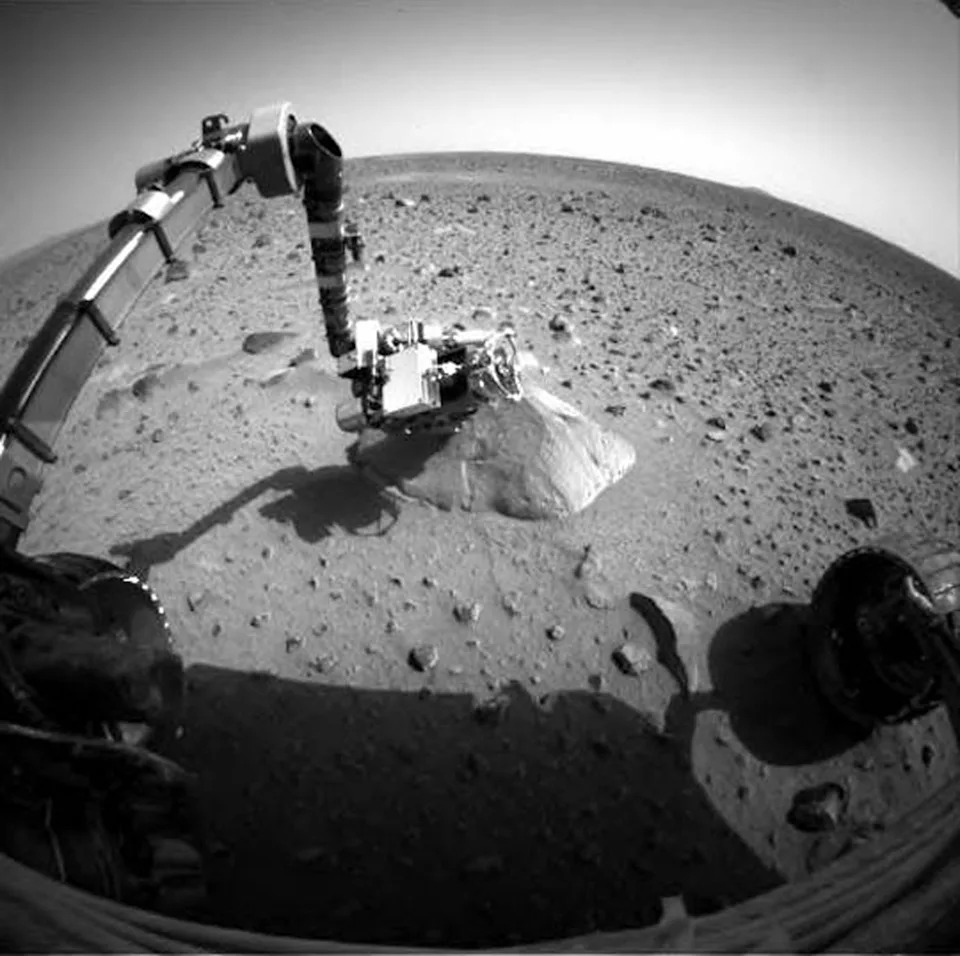
In this handout image provided by the National Aeronautics and Space Administration (NASA)/JPL, NASA's Mars Exploration Rover Spirit took and returned this image on January 28, 2004, the first picture from Spirit since problems with communications began a week earlier. The image from the rover's front hazard identification camera shows the robotic arm extended to the rock called Adirondack. As it had been instructed a week earlier, the Moessbauer spectrometer, an instrument for identifying the minerals in rocks and soils, is still placed against the rock. Engineers are working to restore Spirit to working order so that the rover can resume the scientific exploration of its landing area.
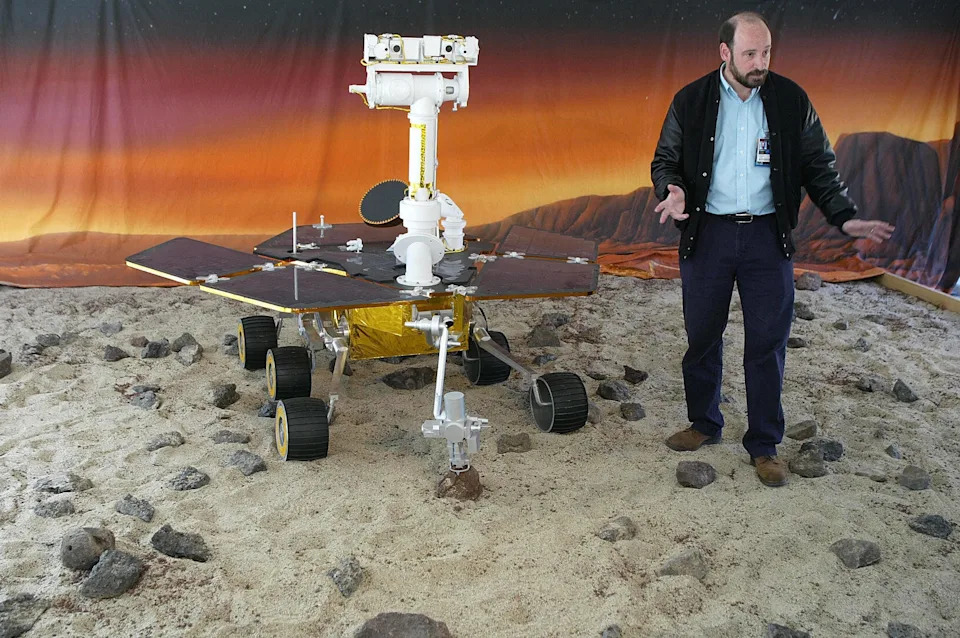
NASA's Jet Propulsion Laboratory (JPL) Navigator Program Engineer Dr Randii Wessen discusses the Mars Exploration Rover (MER) beside a model of the MER in a "sandbox" at the JPL in Pasadena, California on January 21, 2004. With the first rover named "Spirit" already safely on martian soil, engineers and scientists are gearing up for the scheduled landing of the second rover "Opportunity" on the opposite side of Mars later this week.
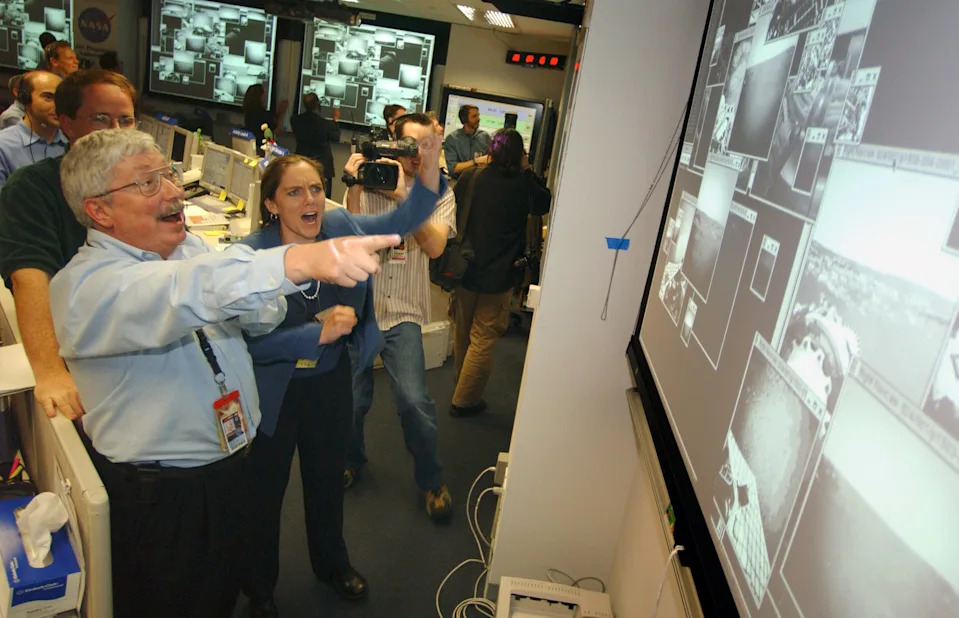
Pete Theisinger, project manager, lef, and Jennifer Trosper, Spirit Mission Manager for Surface Operations, react as the first images arrive from the NASA Mars Rover, "Opportunity," at Jet Propulsion Laboratory (JPL) on January 25, 2004 in Pasadena, California.
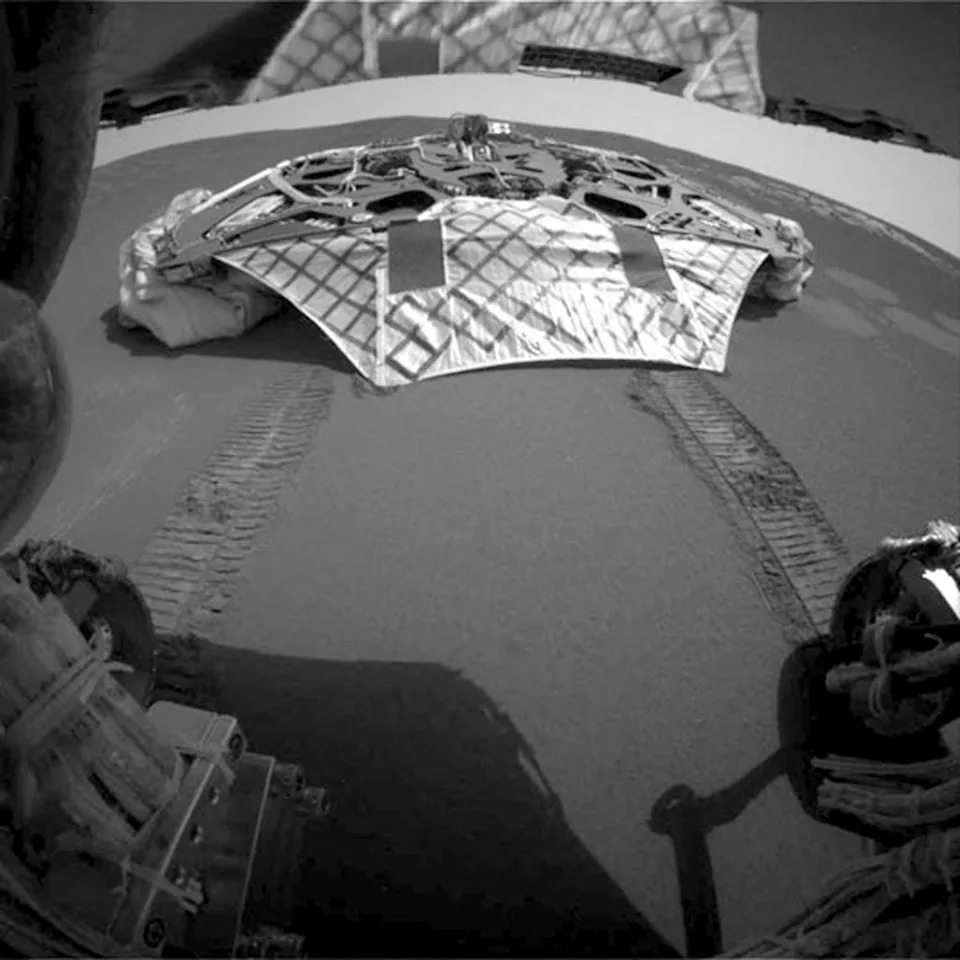
This black and white image released by NASA on January 31, 2004, shows rover lander Opportunity successfully drives off onto the surface of Mars. The US rover Opportunity drove across the surface of the planet Mars for the first time early Saturday nearly a week after landing on the planet, the US space agency NASA said.
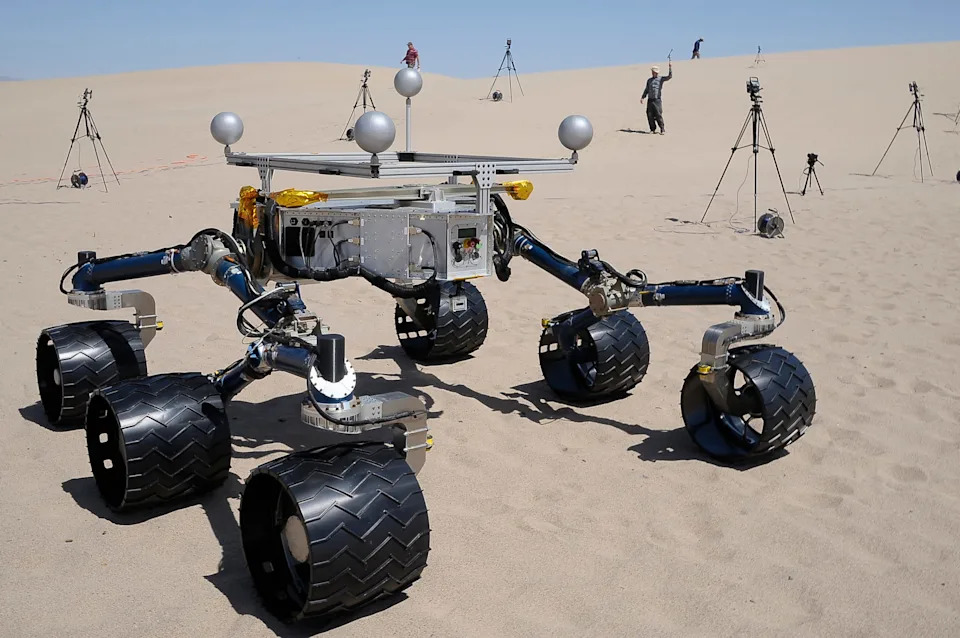
Members of the Mars Science Laboratory/Curiosity team, which includes rover drivers and scientists, test out an engineering model of its next generation Mars rover, dubbed "Curiosity", in the desert near Baker, California May 10, 2012. According to a press release from NASA, the rover is 89 days away from its August appointment with Mars.
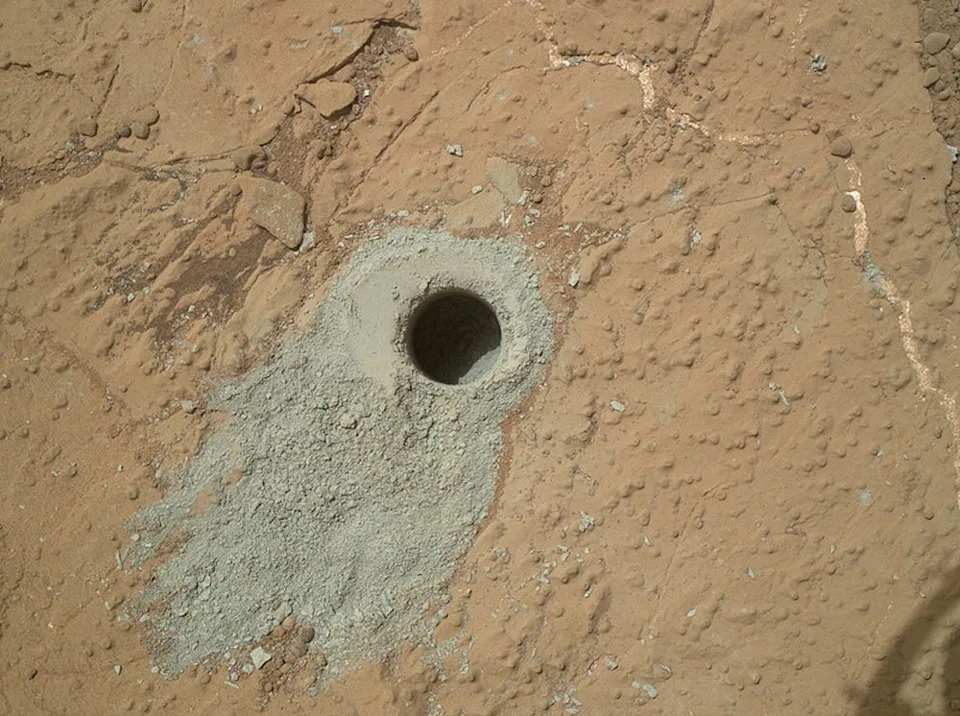
NASA's Mars rover Curiosity drilled into this rock target, "Cumberland," during the 279th Martian day, or sol, of the rover's work on Mars, on May 19, 2013 and collected a powdered sample of material from the rock's interior, in this handout photo provided by NASA . Methane in the Martian atmosphere and organic chemicals in the red planet's soil are the latest tantalizing findings of NASA's Mars Curiosity rover as it hunts for clues about the possibility of extraterrestrial life, scientists said on December 16, 2014.
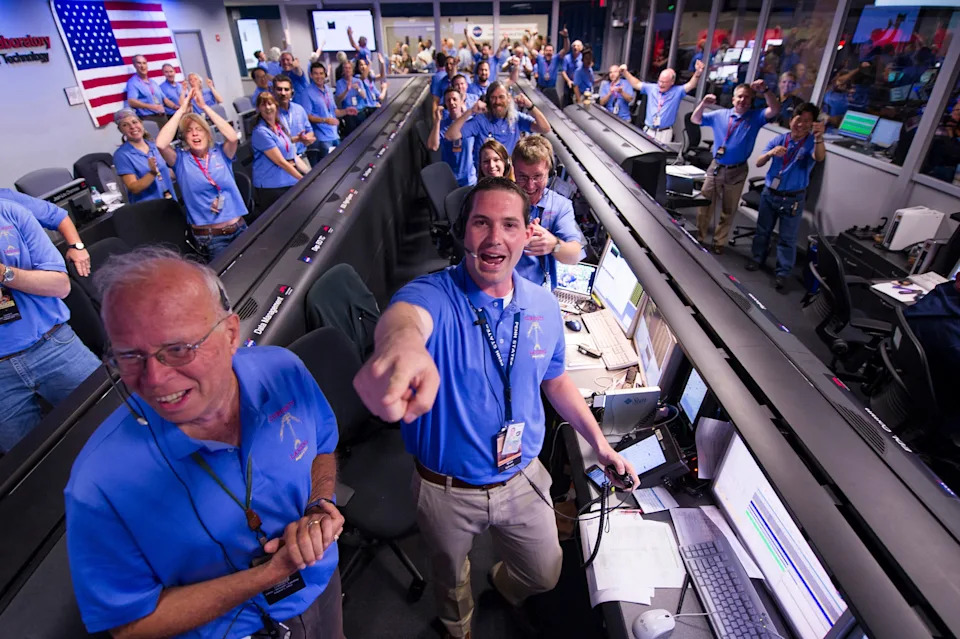
The Mars Science Laboratory (MSL) team in the MSL Mission Support Area reacts after learning the Curiosity rover has landed safely on Mars and images start coming into the Jet Propulsion Laboratory, in Pasadena, California in this August 5, 2012 handout photograph provided by NASA. Curiosity survived its daredevil landing on Mars one year ago Tuesday and went on to discover that the planet most like Earth in the solar system could indeed have supported microbial life, the primary goal of the mission.
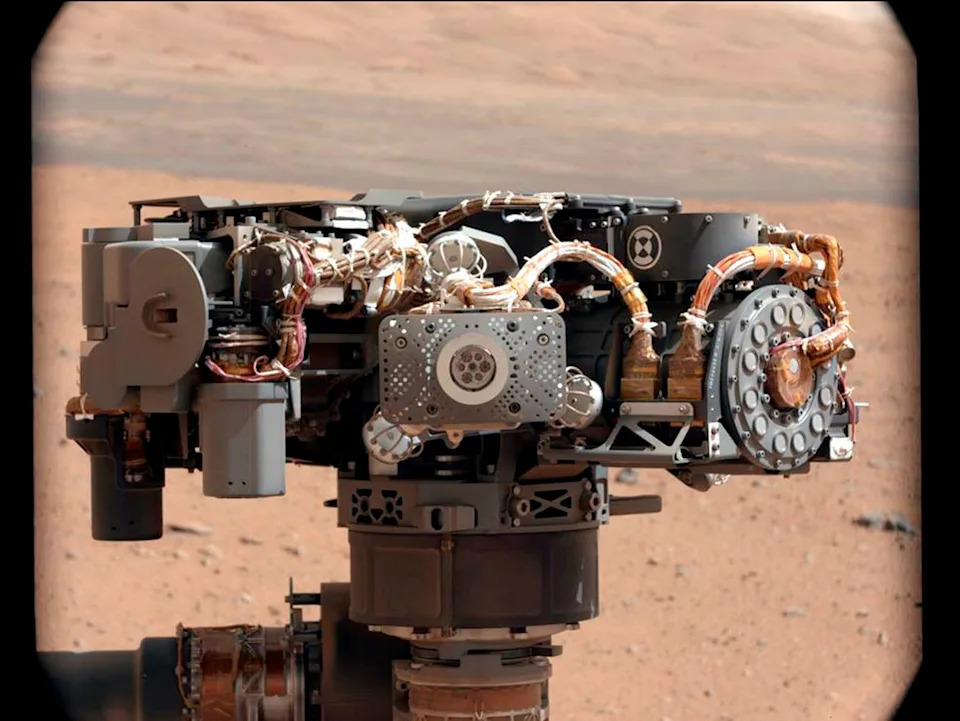
In this image taken by Curiosity's Mast Camera, the Alpha Particle X-Ray Spectrometer (APXS) on NASA's Curiosity rover is pictured, with the Martian landscape in the background on the 32nd Martian day, or sol, of operations on the surface on September 7, 2012, PDT or September 8, 2012, UTC. This image lets researchers know that the APXS instrument had not become caked with dust during Curiosity's dusty landing.
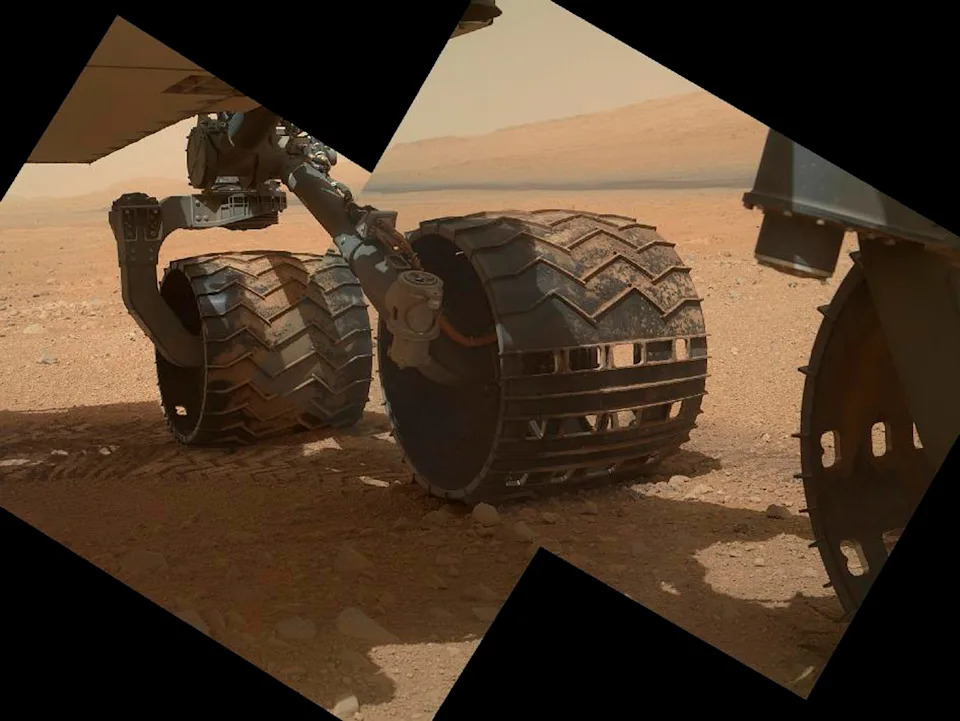
A NASA handout photo shows the three left wheels of NASA's Mars rover Curiosity combined in two images that were taken by the rover's Mars Hand Lens Imager (MAHLI) on September 9, 2012. In the distance is the lower slope of Mount Sharp.
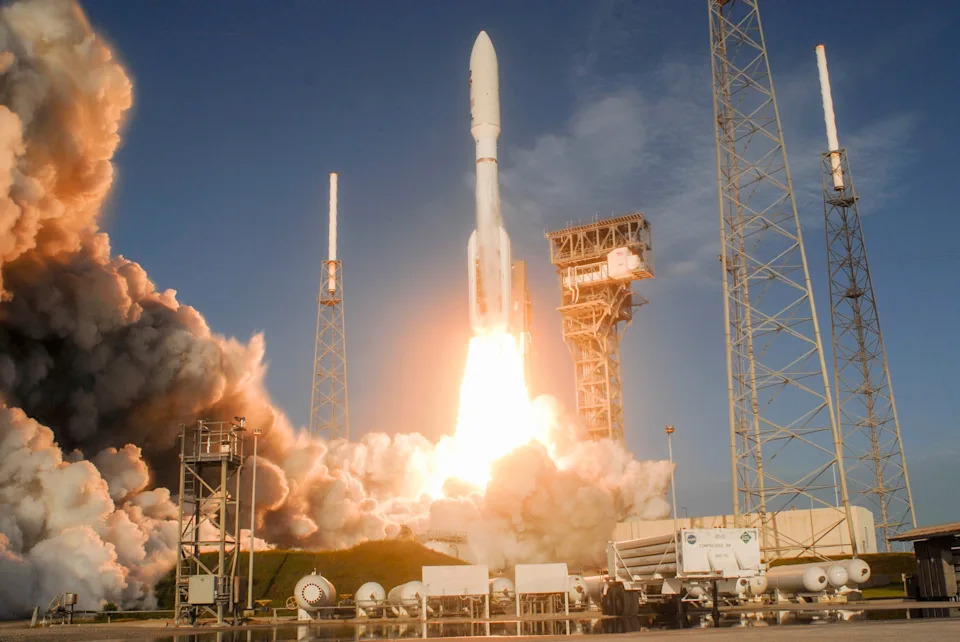
A United Launch Alliance Atlas V rocket lifts off from Cape Canaveral Space Force Station on Thursday, July 30, 2020, with NASA's Perseverance rover destined for Mars.
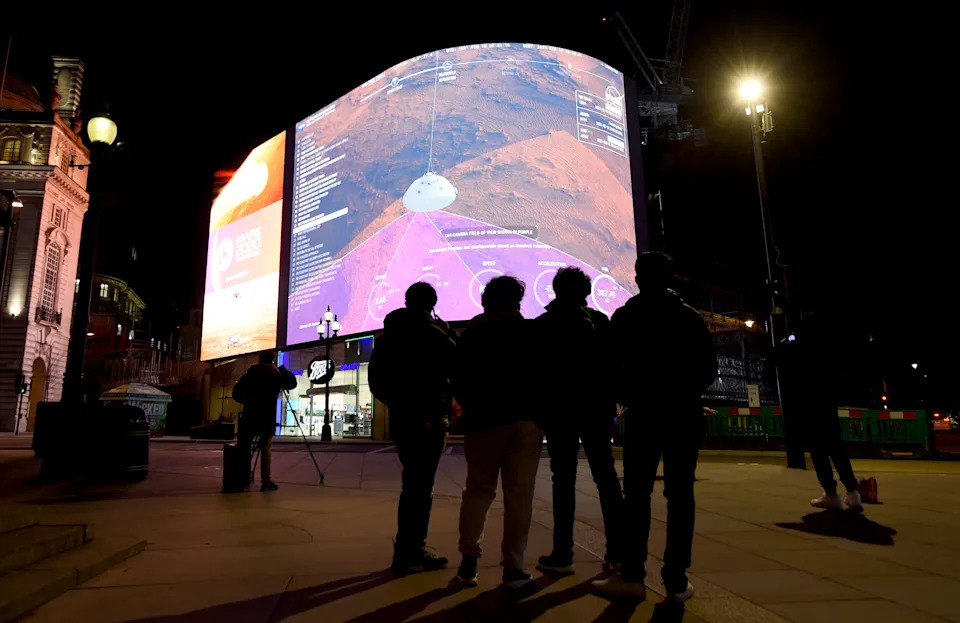
A general view of the live-stream landing of NASA's Perseverance on Mars at Piccadilly Circus on February 18, 2021 in London, England. The rover has been traveling through space since launching from Cape Canaveral at the end of July 2020.
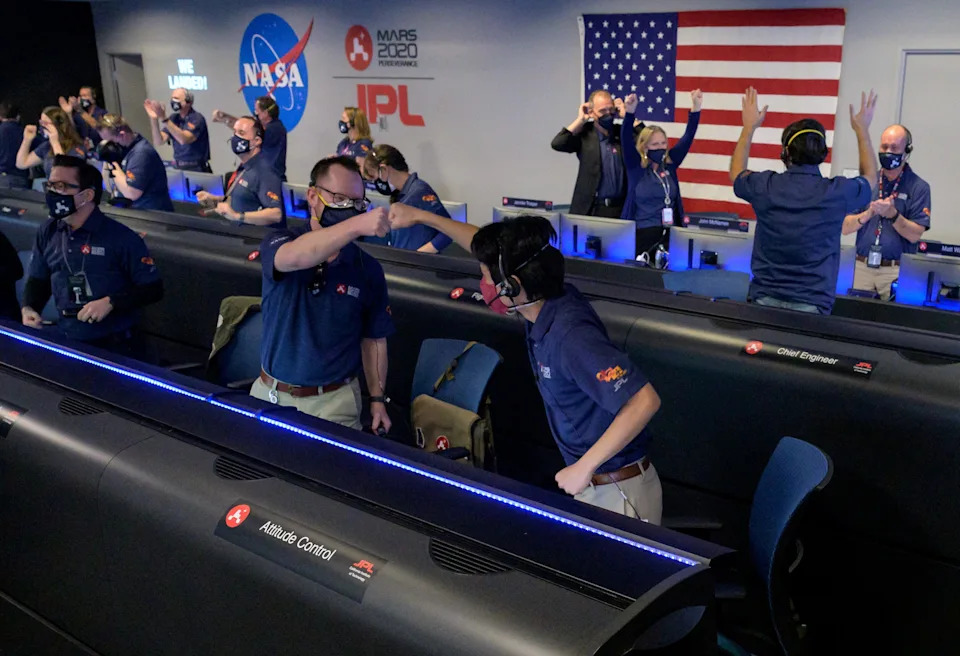
Members of NASAÕs Perseverance rover team react in mission control after receiving confirmation the spacecraft successfully touched down on Mars, at NASA's Jet Propulsion Laboratory in Pasadena, California, U.S. February 18, 2021. Picture taken February 18, 2021.
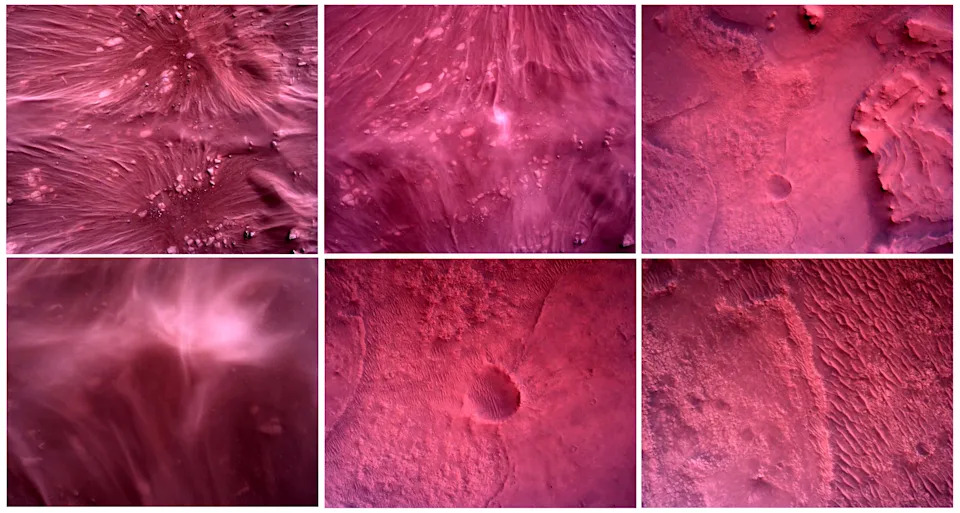
The surface of Mars directly below NASA's Mars Perseverance rover is seen using the Rover Down-Look Camera in a combination of images acquired February 22, 2021.
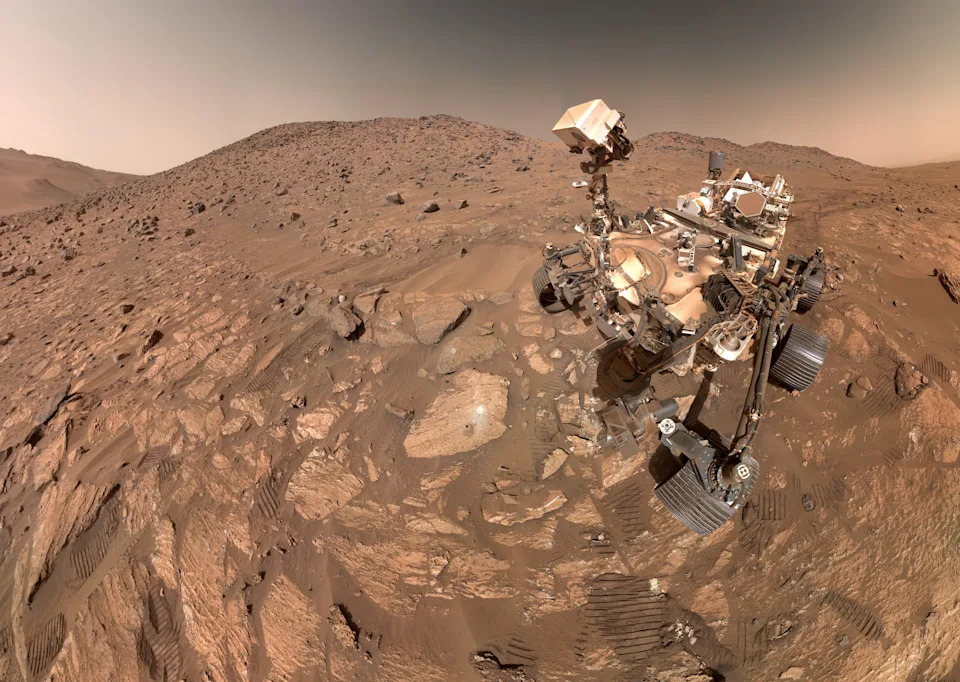
A "selfie" taken by NASA's Perseverance Mars rover, made up of 62 individual images, on July 23, in this image released on September 10, 2025. A rock nicknamed "Cheyava Falls," which has features that may bear on the question of whether the Red Planet was long ago home to microscopic life, is seen to the left of the rover near the center of the image.
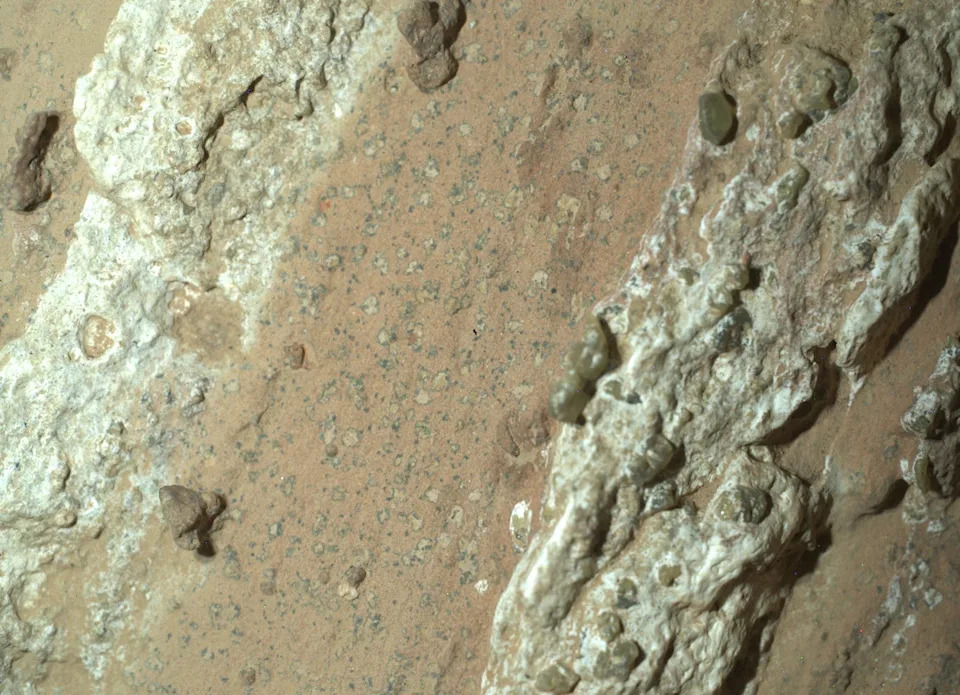
This handout photo obtained on September 10, 2025, from NASA/JPL-Caltech/MSSS shows an image taken by NASA's Perseverance rover that shows "leopard spots" on a reddish rock nicknamed "Cheyava Falls" in Mars' Jerezo Crater in July 2024 on Mars. Colorful, speckled rocks found on the surface of Mars have offered among the most encouraging evidence yet of ancient life on our neighboring planet, scientists at NASA announced on September 10, 2025. The Perseverance Mars rover collected the "Sapphire Canyon" rock samples in July 2024 from the bed of what's considered an ancient lake, and its poppyseed and leopard-esque spots pointed to potential chemical reactions that piqued the interest of researchers.
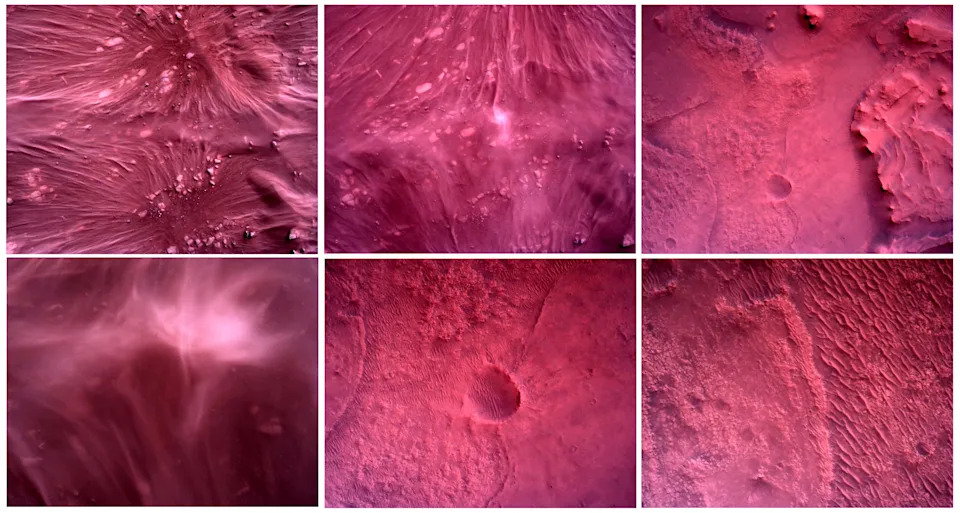
The surface of Mars directly below NASA's Mars Perseverance rover is seen using the Rover Down-Look Camera in a combination of images acquired February 22, 2021.
Pomozite nam da budemo bolji.