Artemis 2 posada — Reid Wiseman, Victor Glover, Christina Koch i Jeremy Hansen — ušla je u treći karantin dok NASA priprema SLS raketu za mogući start 1. aprila. Tokom najmanje 14 dana izolacije posada nastavlja simulacije, treninge i medicinske preglede, a oko pet dana pre polijetanja biće prebačeni u Kennedyjev svemirski centar. Misija je desetodnevni prolazak oko Meseca bez sletanja i predstavlja važan korak ka budućim misijama sa sletanjem planiranim najranije za 2028. godinu.
Artemis 2: Posada Ponovo U Karantinu — Šta To Znači Za Pripreme I Potencijalno Aprilsko Lansiranje
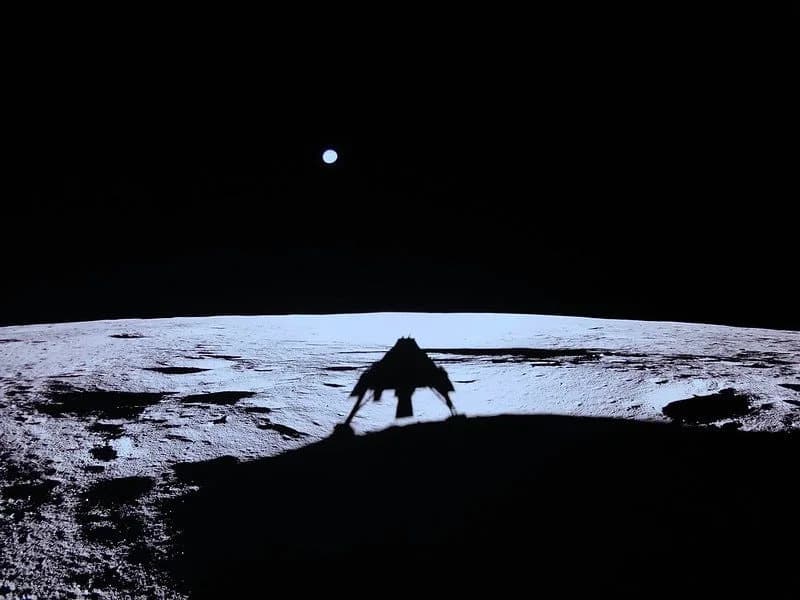
Firefly's Blue Ghost lunar lander captures its shadow on the moon's surface after completing a successful landing March 2 near a volcanic feature on the moon called Mons Latreille. The vehicle became the first of two landers manufactured by a U.S. company to reach the moon is 2025 in crucial missions to lay the groundwork for NASA to return humans to the lunar surface in the years ahead.
Četiri astronauta misije Artemis 2 ponovo su u karantinu dok NASA priprema raketu za mogući start početkom aprila. Ovo je treći put da su članovi posade izolovani pred lansiranje, dok agencija otklanja tehničke probleme i finalizuje pripreme za let.
Posada: Reid Wiseman, Victor Glover, Christina Koch (NASA) i Jeremy Hansen (Kanadska svemirska agencija).
Šta podrazumeva karantin
Karantin je počeo 18. marta u Johnsonovom svemirskom centru u Houstonu. Cilj je smanjiti rizik od zaraznih bolesti koje bi, ukoliko se pojave neposredno pre lansiranja, mogle ugroziti misiju ili zdravlje članova posade.
Astronauti provode većinu vremena u posadnim kvartovima ali mogu da primaju posete članova porodice i prijatelja pod strogim pravilima — izbegavanje javnih mesta, nošenje maski i držanje fizičke distance prema NASA procedurama.
Treninzi i transfer na lansirni kompleks
Tokom najmanje 14-dnevnog karantina posada nastavlja sa simulacijama, operativnim treninzima i medicinskim pregledima. Otprilike pet dana pre planiranog polijetanja članovi posade će biti prebačeni u Kennedyjev svemirski centar na Floridi, gde će karantin biti nastavljen do lansiranja.
Raketa, lansiranje i značaj misije
Misiju će izneti Space Launch System (SLS) — moćna raketa visoka oko 322 feet (oko 98 metara) — sa Orion kapsulom koja će nositi posadu na desetodnevni prolazak oko Meseca. Artemis 2 neće obaviti sletanje na Mesec, ali će testirati sisteme i opremu namenjene budućim ekspedicijama. Tokom leta posada će proći do približno 4.700 milja (oko 7.560 km) iza daleke strane Meseca — to će biti najudaljenija tačka do koje su ljudi ikada stigli u svemiru.
NASA trenutno cilja datum lansiranja 1. aprila, a u planu su i alternativni prozori 2.–6. april i 30. april ukoliko vremenski uslovi ili druge okolnosti dovedu do odlaganja.
Kontekst i naredne misije
Artemis 2 će biti prvi let SLS rakete i Orion kapsule sa ljudskom posadom nakon bespilotne misije Artemis 1 (2022). Planirano je da naredne misije — uključujući Artemis 3 (2027.) i Artemis 4 (najranije 2028.) — dalje razvijaju povratak ljudi na površinu Meseca, uz saradnju komercijalnih partnera koji razvijaju lunarne landere.
Zašto je ovo važno: Uspešan karantin i bezbedno lansiranje Artemis 2 predstavljaju ključan korak ka ponovnom slanju ljudi na Mesec i testiranju tehnologije za trajne istraživačke misije.
Izvor: USA TODAY (tekst adaptiran i preveden za čitaoce na srpskom jeziku).
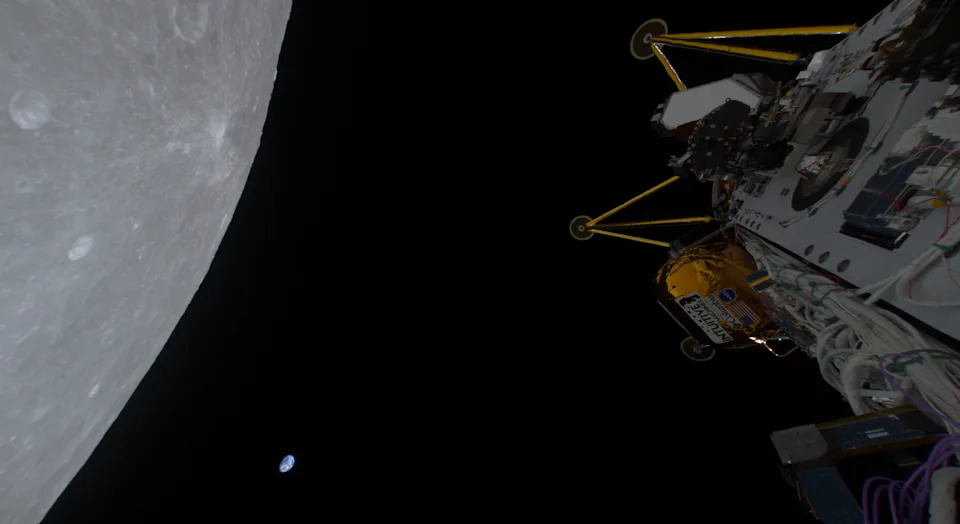
Athena, the lunar lander on Intuitive Machines' IM-2 mission, captured this image of the moon's surface with Earth seen in the distance ahead of a March 6 landing attempt. While the lander was the second U.S. vehicle to reach the moon within a week, it ultimately landed on its side, which hindered much of its mission.
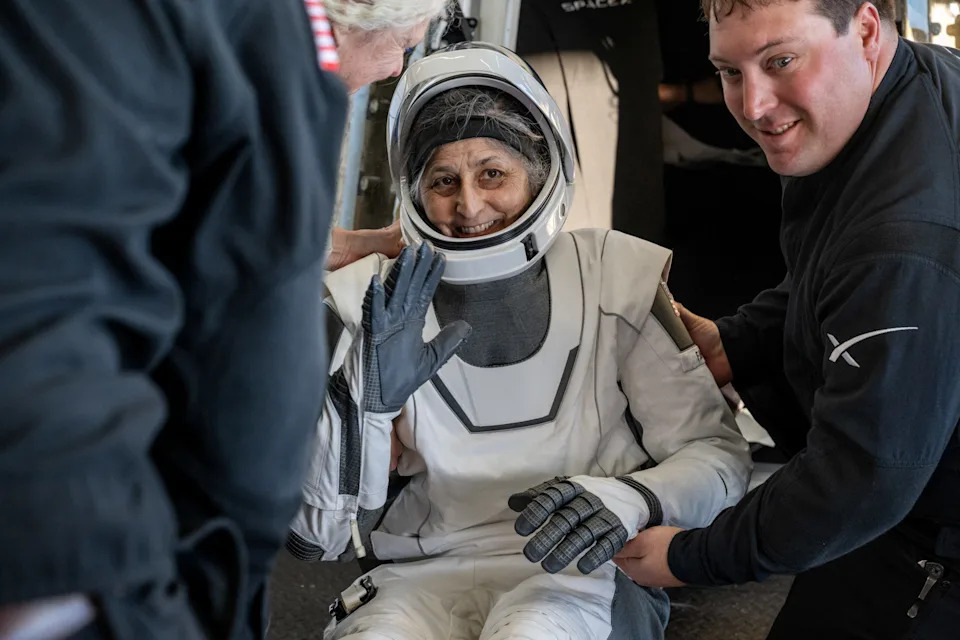
NASA astronaut Suni Williams is helped out of a SpaceX Dragon spacecraft March 18 following a return to Earth after a nine-month stay at the International Space Station. She and NASA astronaut Butch Wilmore crewed the Boeing Starliner, which had launched in June 2024 on a failed test flight that was meant to return them to Earth a few days later.
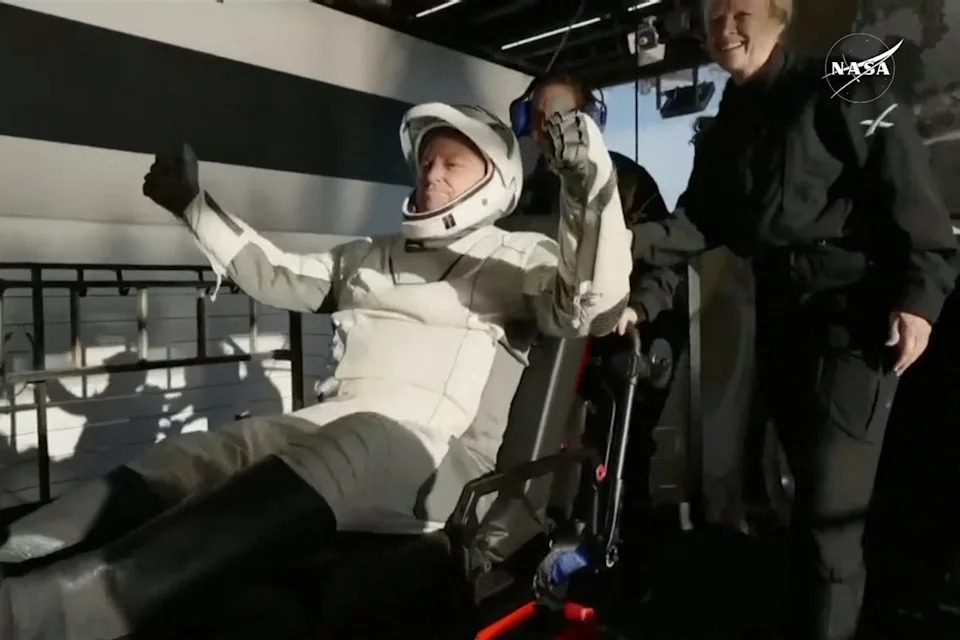
Butch Wilmore reacts after he and Suni Williams and two other astronauts splashed down March 18 in a Crew Dragon space capsule following their return to earth from the International Space Station off the coast of Florida. The astronauts' extended stay at the orbital outpost dominated the news cycle for months.
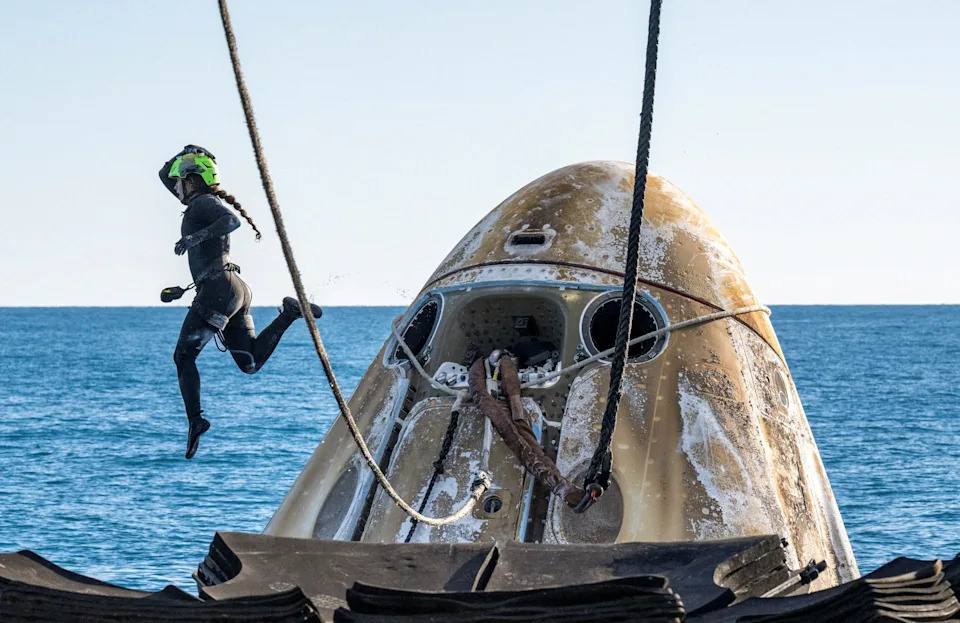
A SpaceX support team member is seen airborne while working to lift the SpaceX Dragon capsule that returned the Starliner astronauts and two others onto a recovery vehicle following its landing off the coast of Florida.

This picture shows the crew of a privately-funded mission known as Fram2, from left to right, mission specialist and medical officer Eric Philips, mission commander Chun Wang, pilot Rabea Rogge and vehicle commander Jannicke Mikkelsen on March 19, 2025 in Hawthorne, California. Launched March 31 from Florida using a SpaceX Dragon capsule, the mission became t first ever human spaceflight over the Earth's polar regions.
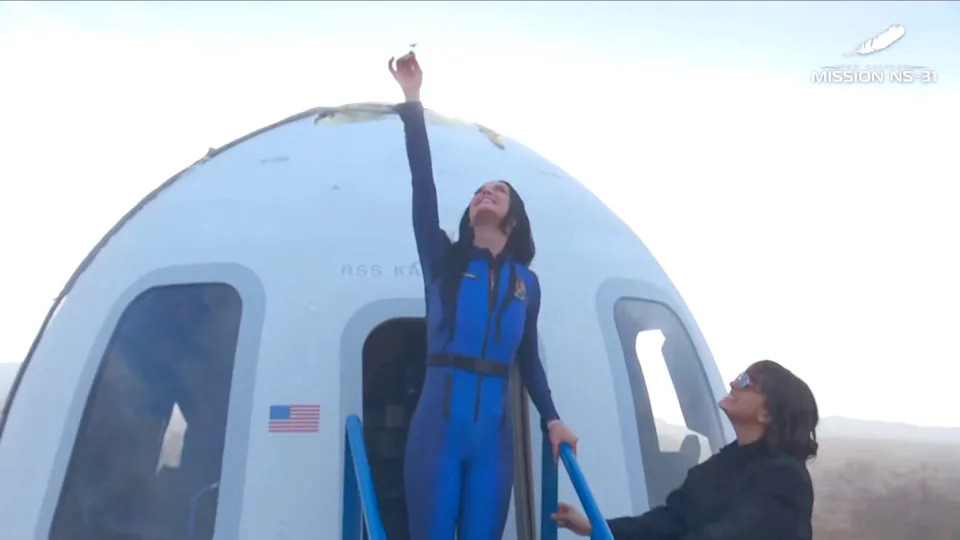
Pop musician Katy Perry emerges April 14 from Blue Origin's New Shepard capsule in West Texas following a brief flight to the edge of space. Perry was part of an all-women crew that also included broadcast journalist Gayle King that took the ride from Blue Origin's facility called Launch Site One. The high-profile launch attracted plenty of headlines and even drew some backlash from those who viewed the mission as a wasteful publicity stunt.
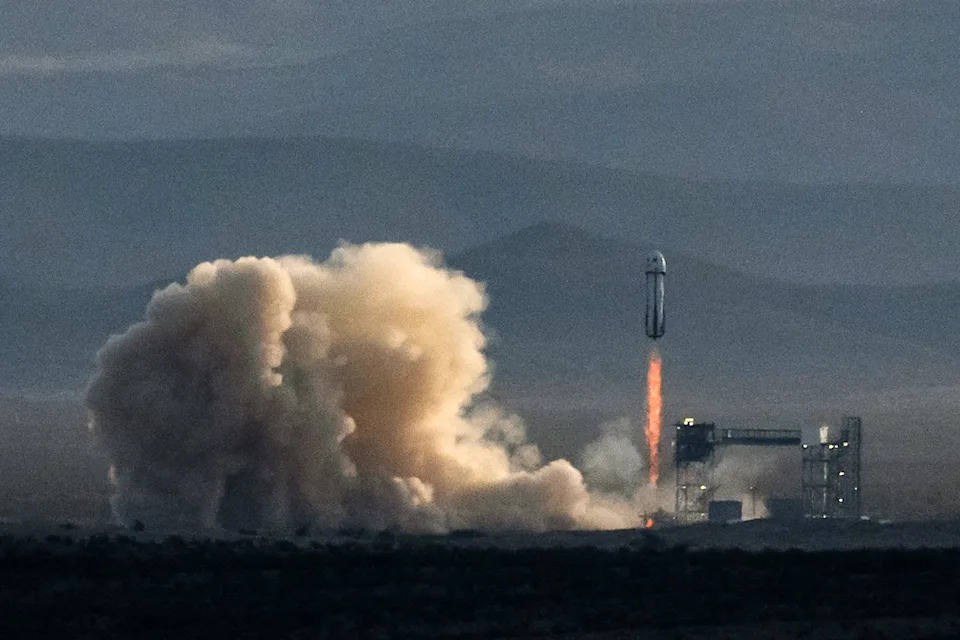
Blue Origin's New Shepard rocket carrying astronauts Aisha Bowe, Amanda Nguyen, Kerianne Flynn, Gayle King, Katy Perry, and Lauren Sanchez lifts off April 14 from Launch Site One near Van Horn, Texas. Blue Origin has since launched five more human spaceflights on the New Shepard in 2025.
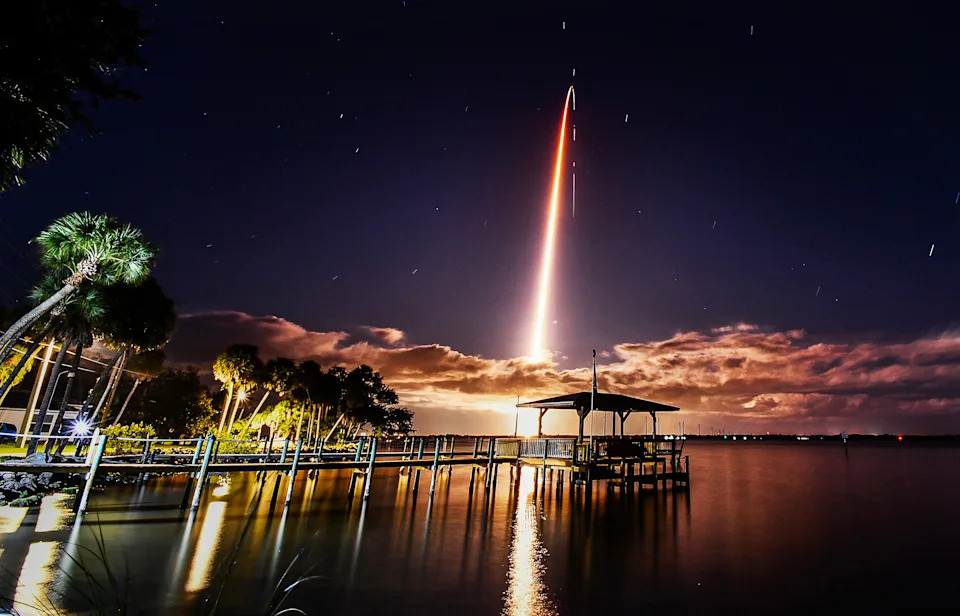
This photo depicts a United Launch Alliance Atlas V rocket carrying the latest batch of Amazon's broadband satellites on Dec. 16 to low-Earth orbit after launching from the Cape Canaveral Space Force Station in Florida. Formerly called Project Kuiper, the venture has since been renamed Amazon Leo. Since its debut April launch, Amazon Leo has deployed 180 of 3,000 satellites planned for its first constellation, which could challenge SpaceX's Starlink.
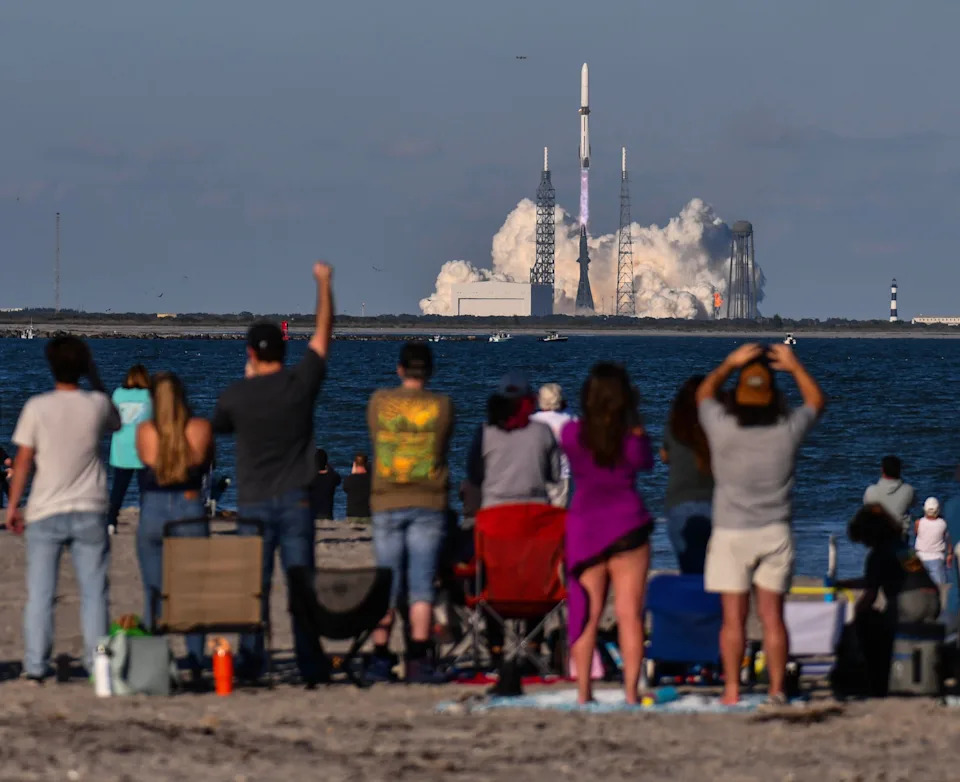
A group of Blue Origin employees with their friends and families gather on the beach in Cape Canaveral for the launch of Blue Origin's second New Glenn rocket in 2025. Following its January debut, the rocket launched for the second time Nov. 13 from Launch Complex 36 at Cape Canaveral Space Force Station, sending NASA's twin ESCAPADE spacecraft on their trek to Mars.
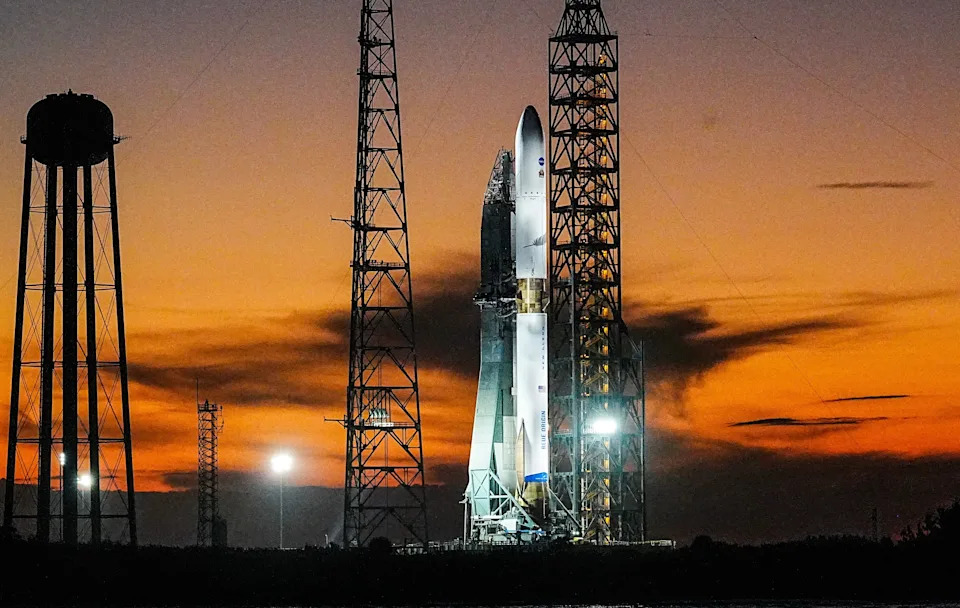
Darkness falls Nov. 9 as a Blue Origin New Glenn rocket is prepped for its second-ever launch from the Cape Canaveral Space Force Station. Blue Origin is developing the towering rocket for heavy-lift missions that could see Jeff Bezos' company compete with Elon Musk and SpaceX.
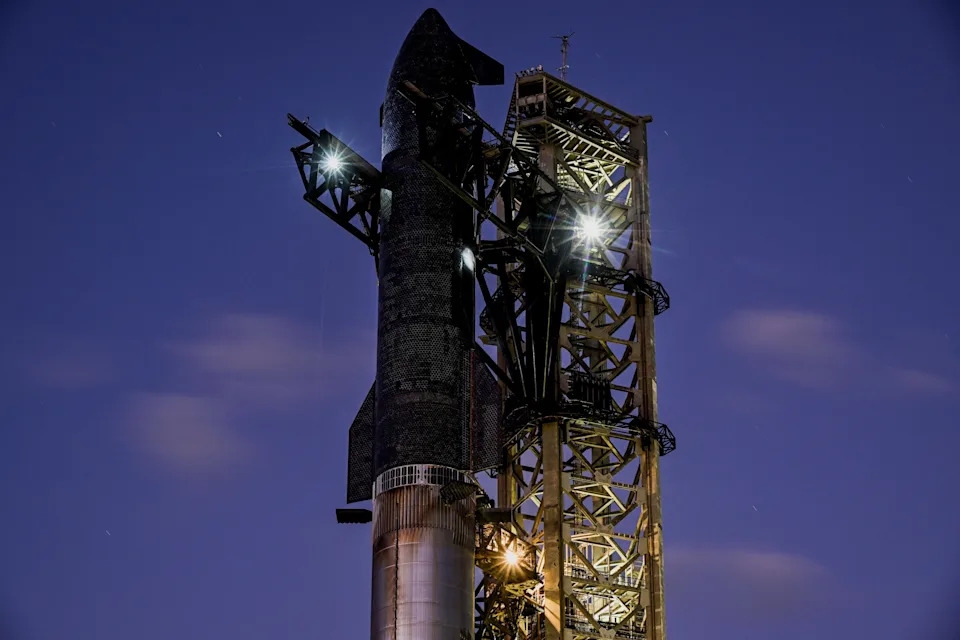
The SpaceX Starship spacecraft sits Oct. 12, 2025 atop the Super Heavy booster before sunrise as preparations continue for its 11th test flight from the company's complex in Starbase, Texas.
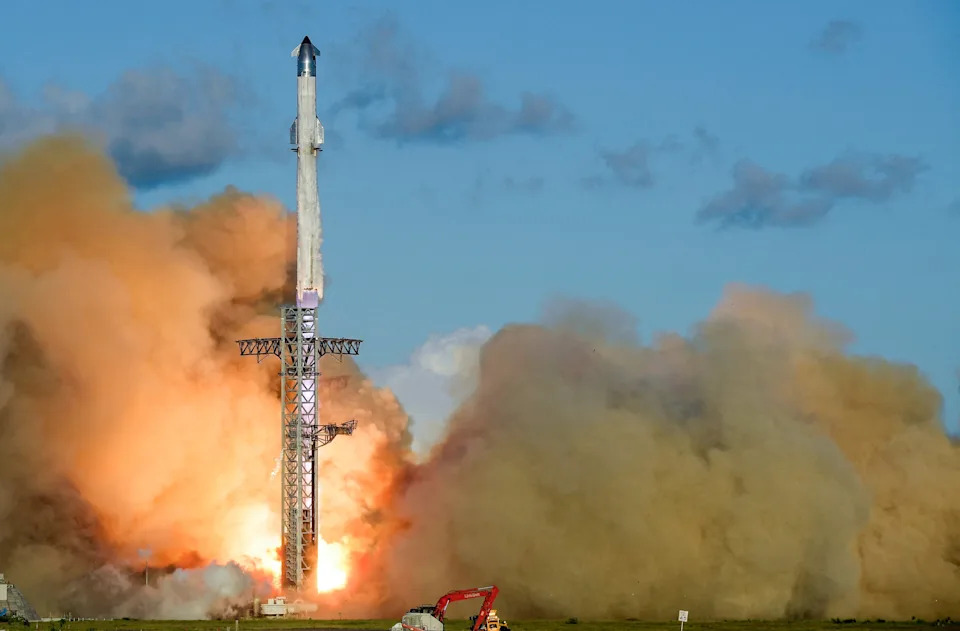
A SpaceX Super Heavy booster carrying the Starship spacecraft lifts off Oct. 13, 2025, on its 11th ever test flight at the company's launch pad in Starbase, Texas. The launch was Starship's fifth of 2025, and second consecutive successful test flight following a year that was early on marked by explosive failures. SpaceX is developing the rocket for future missions that would help NASA astronauts land on the moon and also potentially transport the first humans to Mars.
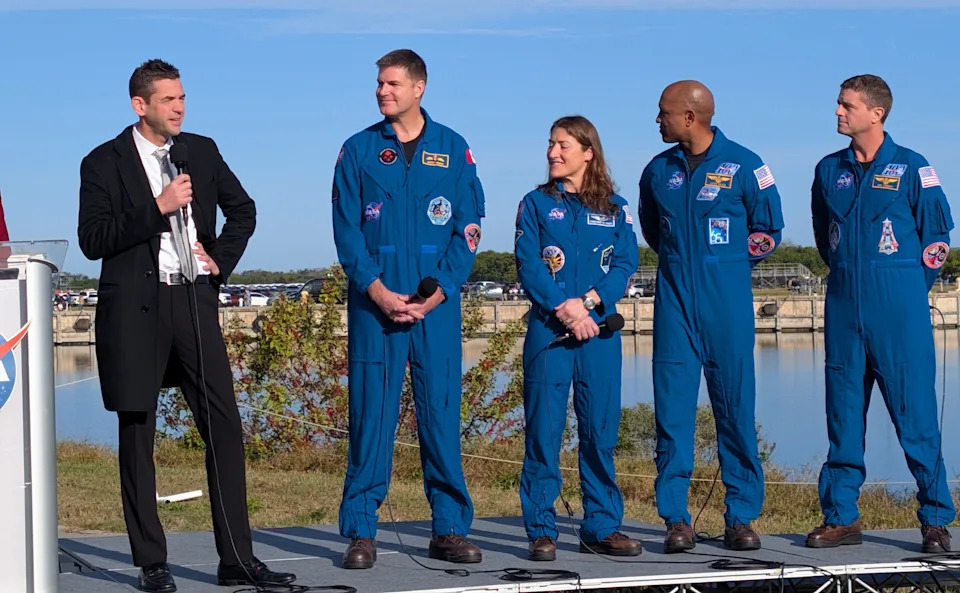
NASA Administrator Jared Isaacman stands with the Artemis II crew during an SLS rollout press briefing.
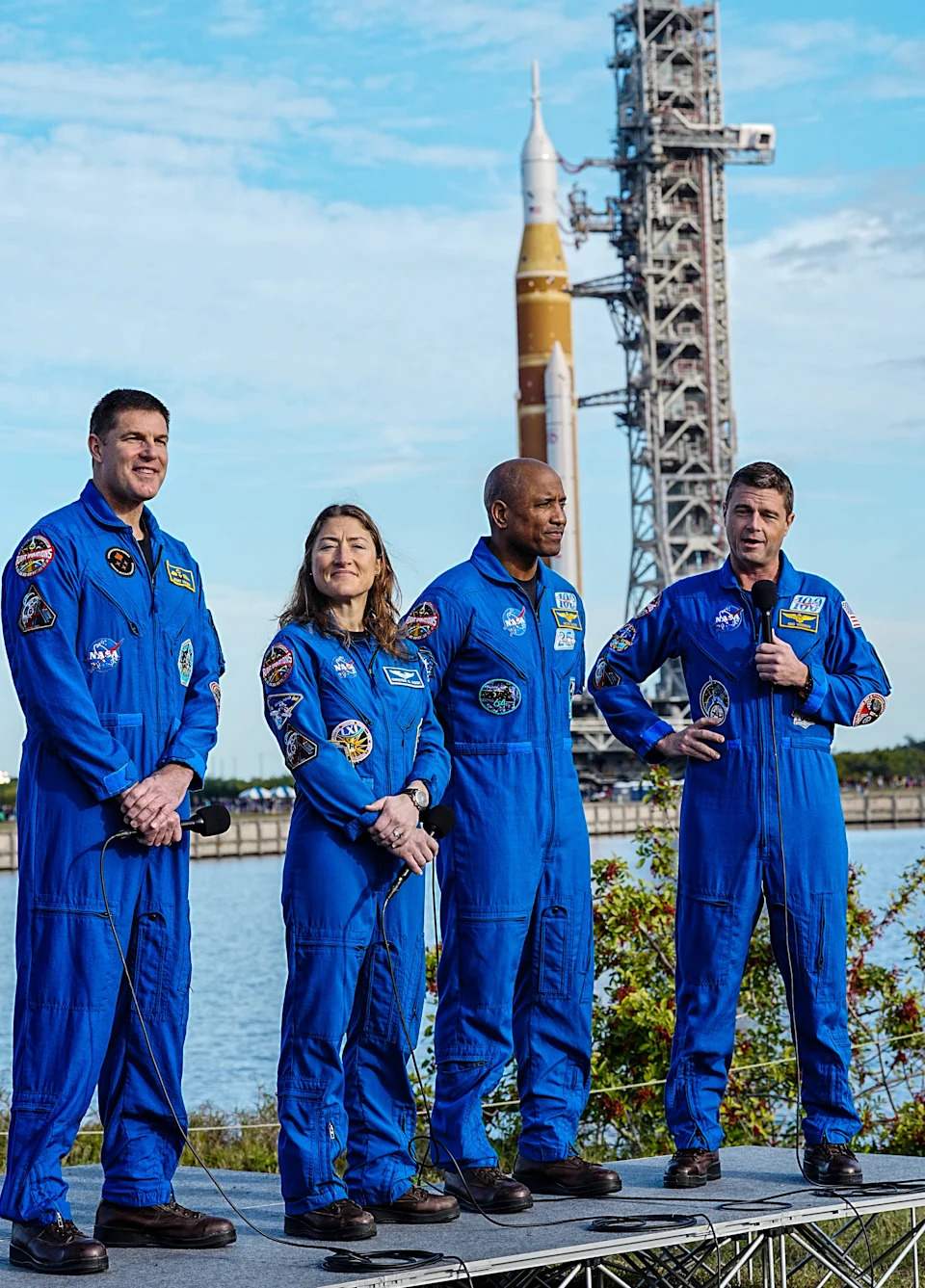
Thecrew of ArtemisII (from left: Mission Specialist Jeremy Hansen, Mission Specialist Christina Koch, Pilot Victor Glover and Commander Reid Wiseman) answer questions at a press conference as their Space Launch System rocket is transported to Pad 39B January 17, 2026. Artemis II is tentatively scheduled to launch on a mission to th Moon in early February. Craig Bailey/FLORIDA TODAY via USA TODAY NETWORK
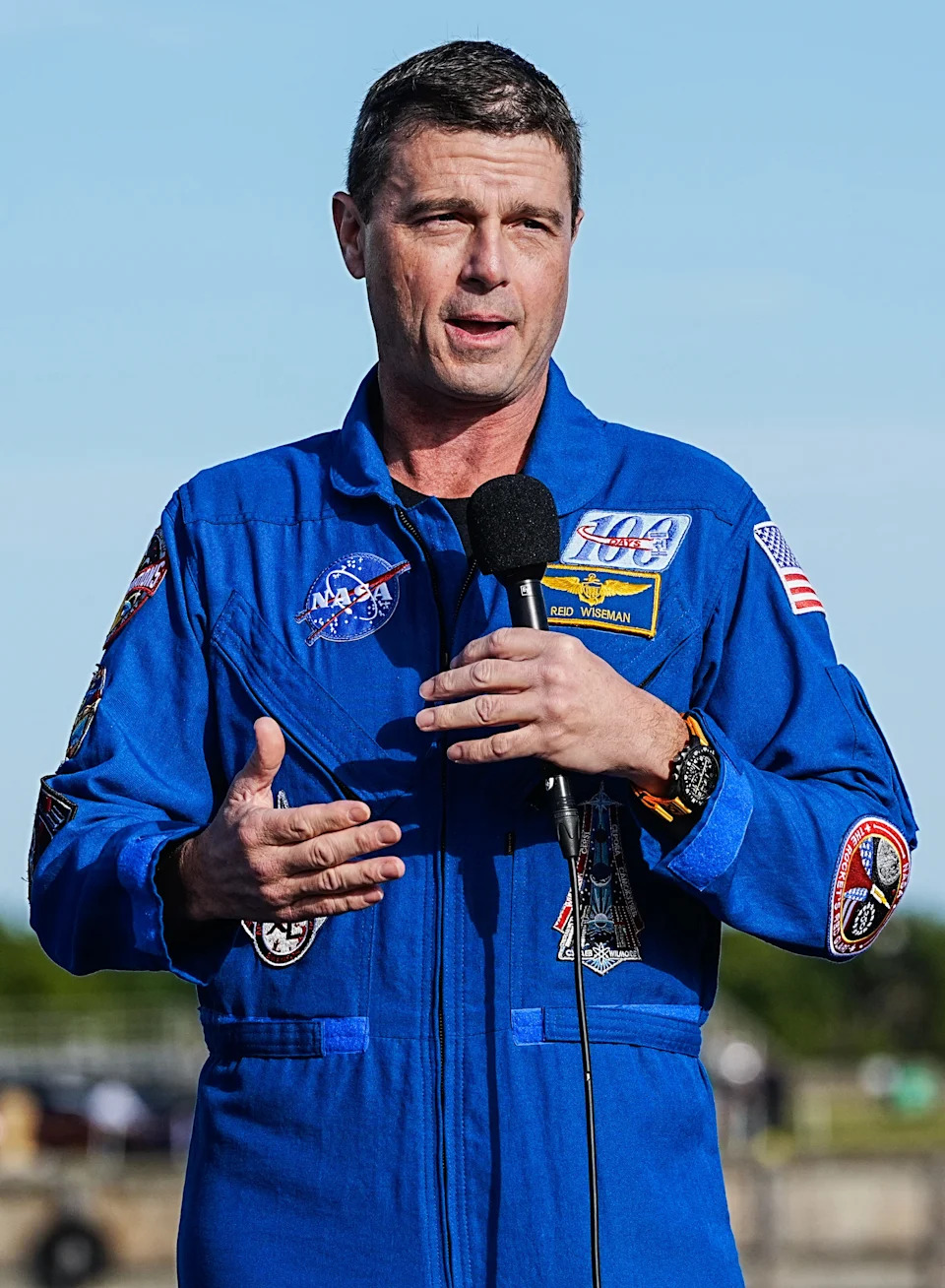
Artemis II Commander Reid Wiseman answers questions during a press conference at Kennedy Space Center, FL January 17, 2026. The Artemis II crew is tentatively scheduled to launch in early February. Craig Bailey/FLORIDA TODAY via USA TODAY NETWORK
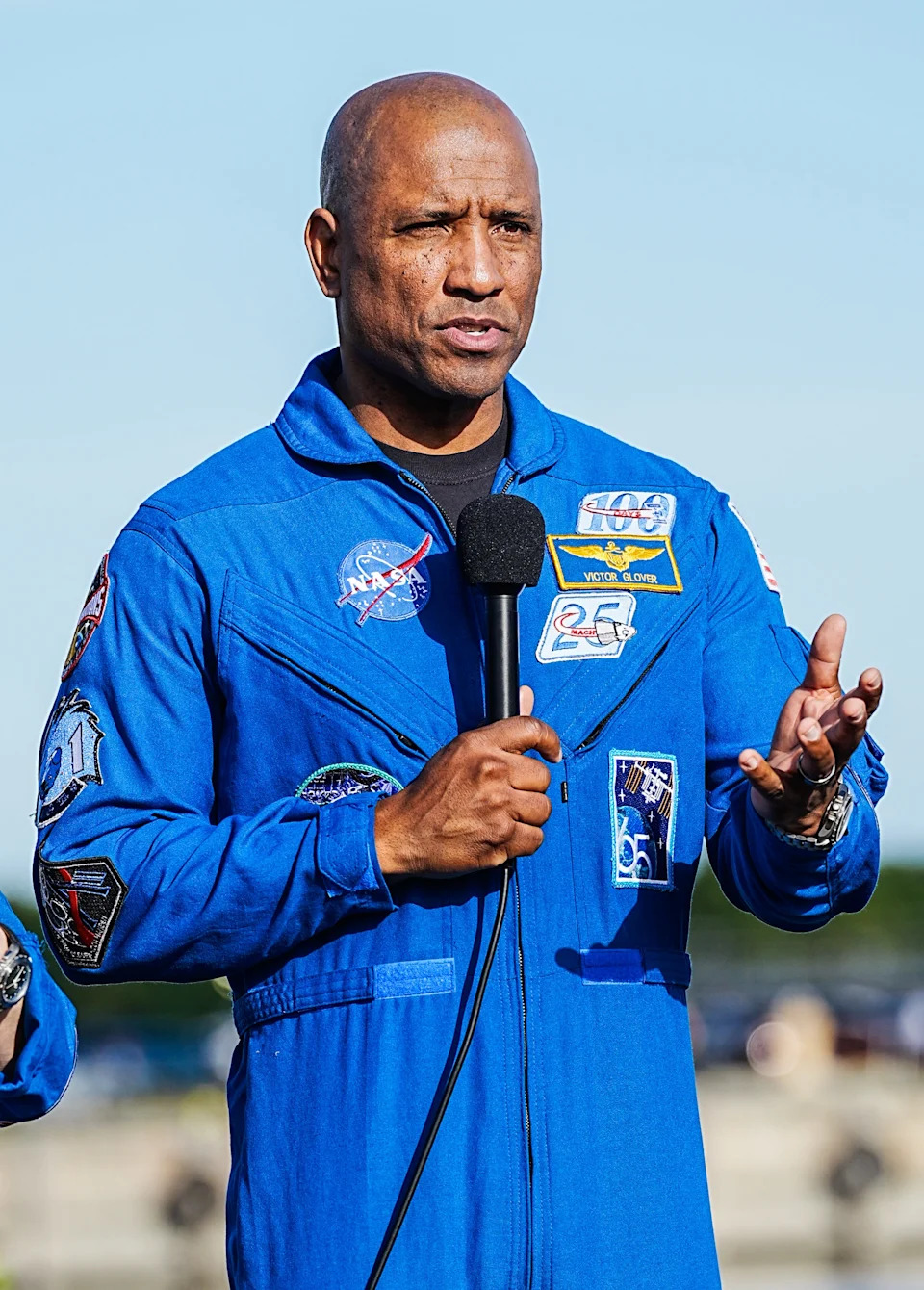
Artemis II Pilot Victor Glover answers questions during a press conference at Kennedy Space Center, FL January 17, 2026. The Artemis II crew is tentatively scheduled to launch in early February. Craig Bailey/FLORIDA TODAY via USA TODAY NETWORK
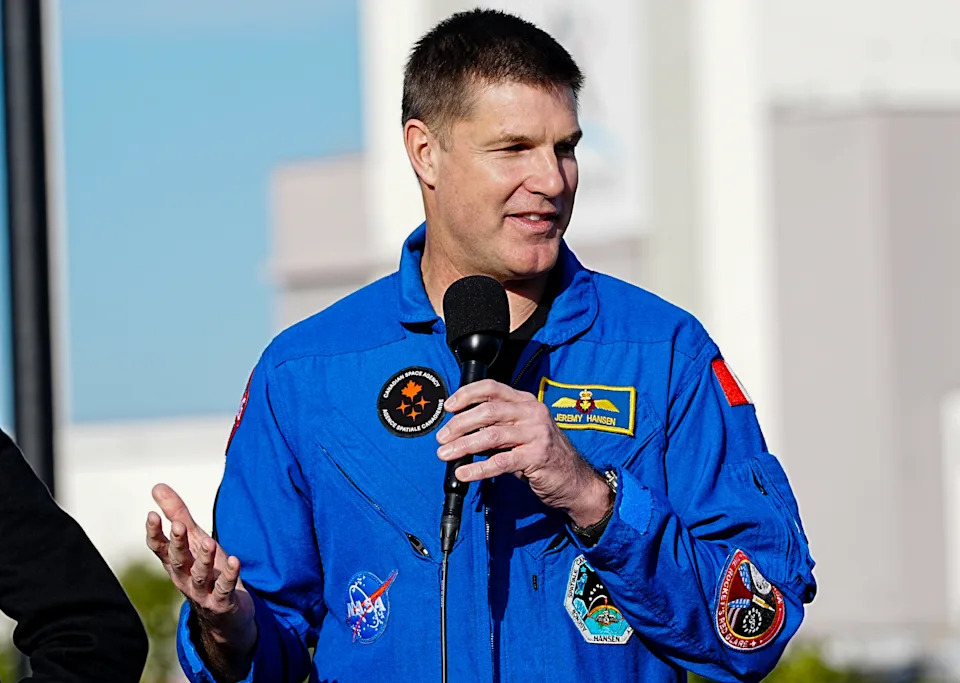
Artemis II Mission Specialist Jeremy Hansen answers questions during a press conference at Kennedy Space Center, FL January 17, 2026. The Artemis II crew is tentatively scheduled to launch in early February. Craig Bailey/FLORIDA TODAY via USA TODAY NETWORK

The Artemis II crew poses in front of an Orion simulator Jan. 23, 2026 at NASA’s Johnson Space Center in Houston.
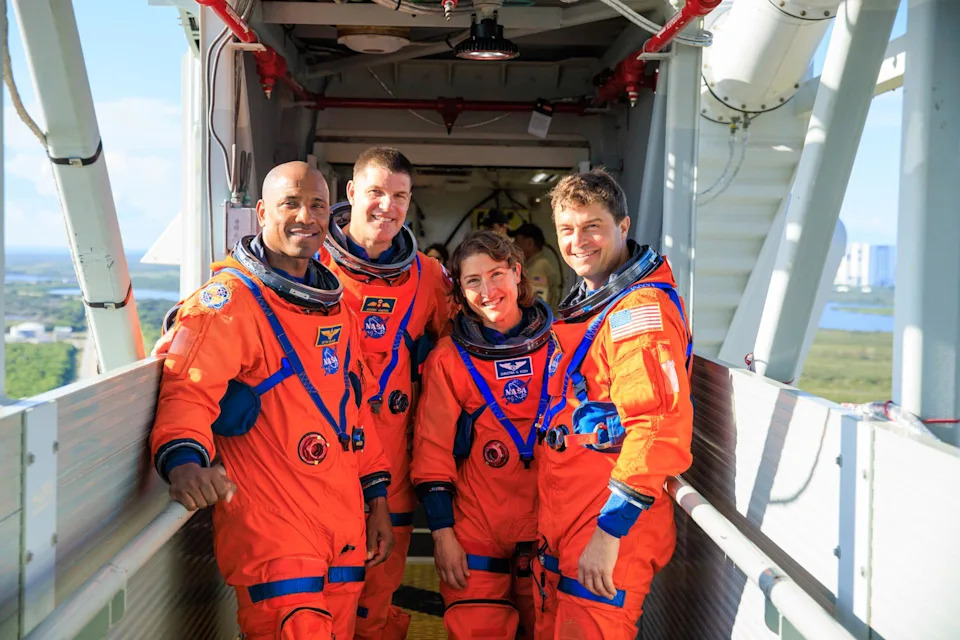
Four astronauts will venture around the Moon on Artemis II, the first crewed mission on NASA's path to establishing a long-term presence at the Moon for science and exploration through Artemis. The 10-day flight will help confirm systems and hardware needed for early human lunar exploration missions.
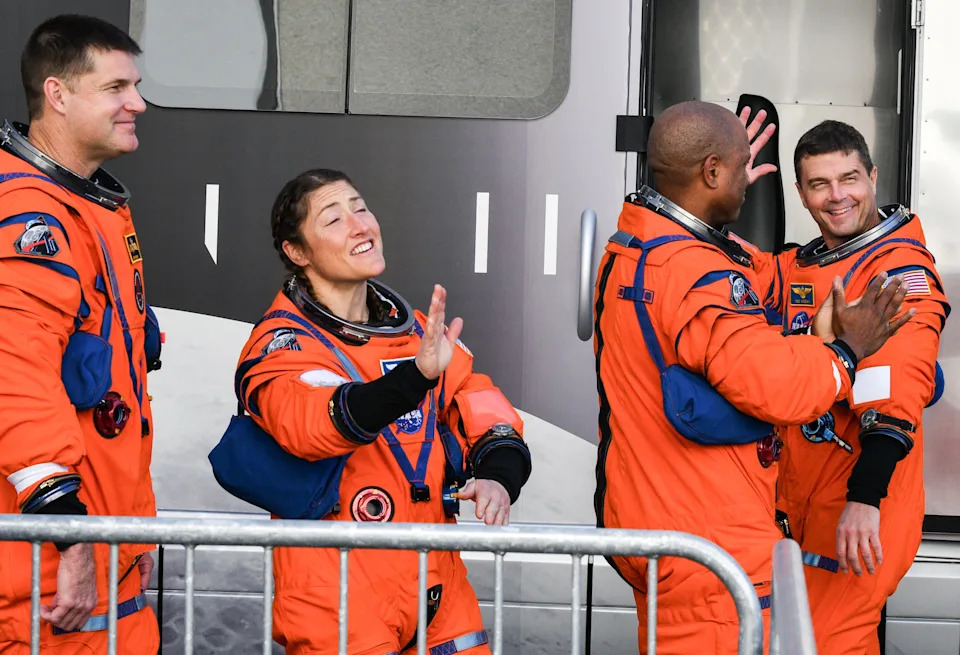
The crew of Artemis II (from left) Jeremy Hansen, Christina Koch, Victor Glover and Reid Wiseman leave crew quarters December 20, 2025 during their pre-launch rehearsal. Craig Bailey, FLORIDA TODAY via USA TODAY NETWORK

Artemis II mission specialist Christina Koch talks with spectators as the crew leaves crew quarters December 20, 2025 during their pre-launch rehearsal. Craig Bailey, FLORIDA TODAY via USA TODAY NETWORK
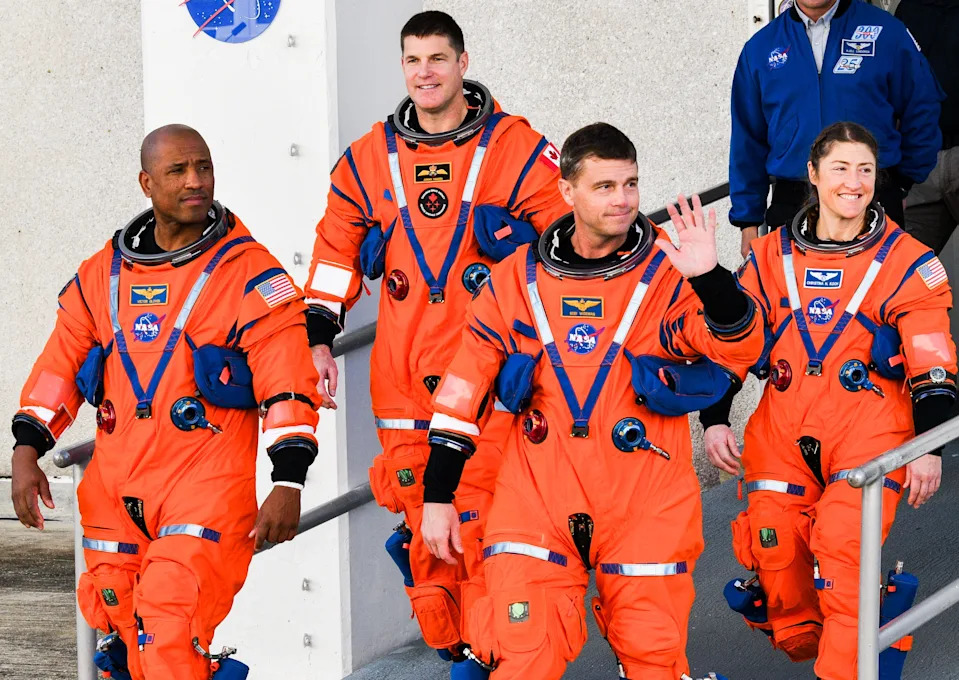
The astronauts of Artemis II (from left) Victor Glover, Jeremy Hansen, Reid Wiseman and Christina Koch leave crew quarters December 20, 2025 during their pre-launch rehearsal. Craig Bailey, FLORIDA TODAY via USA TODAY NETWORK
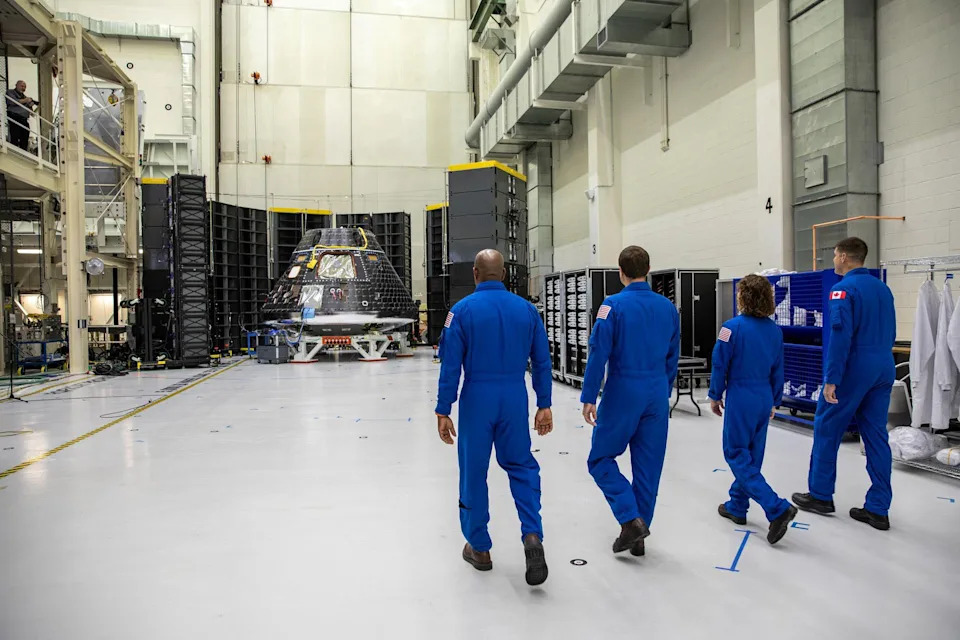
Artemis 2 crew members, shown Aug. 8, 2023 inside the Neil Armstrong Operations and Checkout Building at NASA’s Kennedy Space Center in Florida, walk toward their Orion crew module.
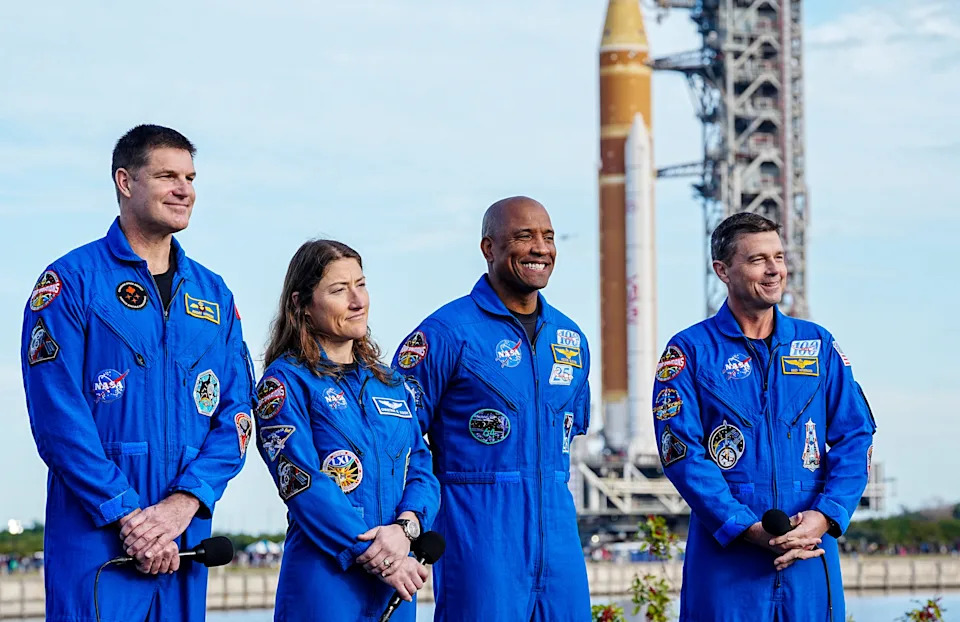
The crew of Artemis II (from left) Jeremy Hansen, Christina Koch, Victor Glover and Reid Wiseman pose for pictures as their ride to the moon is transported from the Vehicle Assembly Building at Kennedy Space Center, FL to the launch pad January 17, 2026. The rocket is tentatively scheduled to launch in early February. Craig Bailey/FLORIDA TODAY via USA TODAY NETWORK
Pomozite nam da budemo bolji.