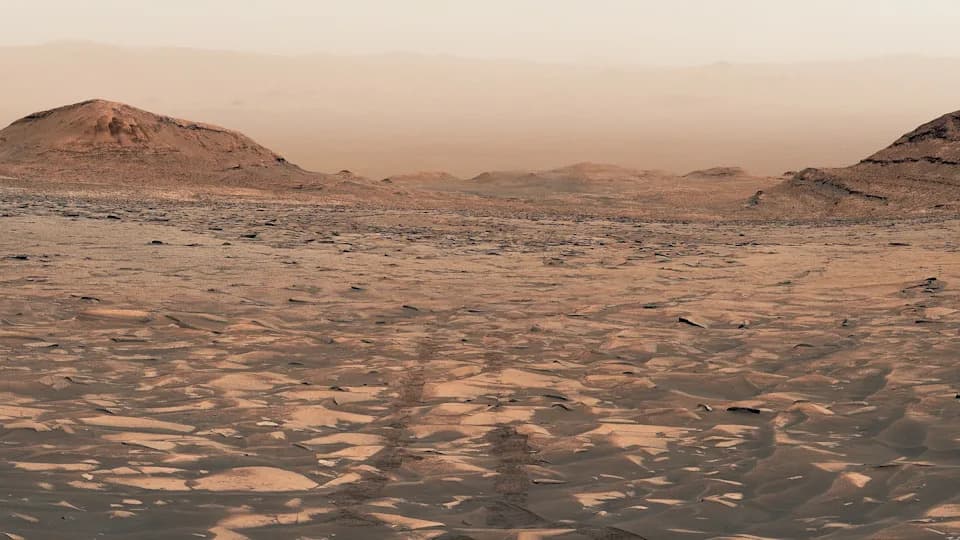
Nove NASA-ine fotografije otkrivaju geološku raznolikost Marsa i pružaju nove tragove o njegovoj vodenoj i vulkanskoj prošlosti. Perseverance je napravio selfi sastavljen iz 61 snimka i nastavlja istraživanje ruba Jezero kratera; Curiosity je otkrio boxwork formacije i sakupio 42 uzorka dok se penje Mount Sharp. Orbiteri poput HiRISE i Odyssey mapiraju promene površine, dok je MAVEN izgubio signal u decembru 2025. — a potencijalni biosignal iz 2025. zahteva dalju potvrdu.
Najnove NASA-ine fotografije Marsa: tragovi drevne vode, praistorijski pejzaži i mogući biosignali
This is a section from a larger image the Vera C. Rubin Observatory captured referred to as the "ocean of stars." The view shows millions of multi-colored stars against a backdrop of galaxies close to the Milky Way’s plane, the crowded disk of the galaxy.(NSF–DOE Vera C. Rubin Observatory/NOIRLab/SLAC/AURA)
Mars koji poznajemo na prvi pogled deluje kao pusta, prašnjava planeta. Međutim, najnovije fotografije i podaci sa površine i iz orbite pokazuju da je Crvena planeta nekada bila dinamičan svet — sa tekućom vodom, aktivnim vulkanizmom i uslovima koji su mogli podržati jednostavne oblike života.
Roveri na terenu i orbiteri u orbiti
Robotske letelice NASA-e decenijama skeniraju Mars iz orbite i sa tla. Danas su među aktivnim sondama dva rovera veličine automobila — Perseverance i Curiosity — i više orbitalnih letelica koje mapiraju površinu i prate klimatske promene.
Perseverance: novi pogledi sa ruba Jezera
Rover Perseverance napravio je selfi 11. marta 2026. tokom najdubljeg zapadnog pristupa van Jezero kratera; fotografija je sastavljena iz 61 pojedinačnog snimka. Posle lansiranja 2020. i putovanja od oko 200 dana i 300 miliona milja, Perseverance je sleteo u Jezero u februaru 2021. Krater Jezero, star oko 3,9 milijardi godina, pokazuje dokaze da je nekada bio ispunjen vodom.
Na snimcima se vide i detalji starih stenskih slojeva: spoljašnji obod kratera visok oko 490 stopa (~149 m) i sekvenca stena iz formacije nazvane Broom Point Member debljine oko 245 stopa (~75 m) — jedni od najstarijih terena koje je rover proučavao.
Perseverance je takođe zabeležio siluetu Phobosa kako prelazi ispred Sunca (13. avgust) i više prizora stena i dina na području Jezera, dok nastavlja potragu za potencijalnim biosignaturama i tragovima drevnog mikrobiološkog života.
Curiosity: geologija i organski sastojci na Mount Sharp
Curiosity, koji je lansiran 2011. i sleteo u avgustu 2012. u Gale krater, nastavlja uspon na Mount Sharp. Rover je snimio bute nazvan "Miraflores" (oko 20 ft / ~6 m) i obradio zanimljive stenske formacije, uključujući boxwork niske grebene i poligonalne teksture površine. Na jednom je snimku iz 12. decembra 2024. evidentirana slojevita stena nastala tokom snažnih peščanih oluja, rad koji je dospeo i na naslovnicu časopisa Geology (1. jul 2026).
Curiosity je do sada sakupio 42 uzorka u prahu pomoću svrdla na robotskoj ruci i otkrio do tada neviđena organska jedinjenja, što doprinosi boljem razumevanju ranog klimatskog i hemijskog okruženja Marsa.
Orbiteri i velike slike
Mars Reconnaissance Orbiter (MRO) dostigao je svoju 100.000. sliku pomoću kamere HiRISE, dokumentujući regiju Syrtis Major i dugoročne promene površine. MRO kruži od 2006. i ključan je za precizna snimanja i detekciju promena poput dina i mraza.
Odyssey, lansiran 2001., ostaje najduže aktivna orbitalna misija oko planete osim Zemlje i pomaže u praćenju oblaka, magle i mraza, te mapiranju terena za buduće misije sa posadom.
MAVEN je prestao sa radom nakon neočekivanog gubitka signala 6. decembra 2025., što je završilo više od 11 godina njegove usluge u istraživanju gornje atmosfere Marsa.
Šta je najvažnije
U septembru 2025. NASA je objavila otkriće potencijalnog biosignala u uzorku stene koje Perseverance istražuje — to je najbliže do sada u potrazi za dokazima prošlog života na Marsu, ali potrebna su dalja ispitivanja i potvrda.
Skup novih fotografija i podataka osvetljava geološku raznolikost Marsa: od starih, slojevitih sedimentnih stena i boxwork formacija do dinamičnih površinskih procesa koje i danas oblikuju pejzaž. Istraživanja koja vode Perseverance, Curiosity i orbitalne misije pružaju ključne tragove o tom kako je Mars izgledao pre milijardi godina i da li je mogao podstaći život.
Autor izvornog teksta: Eric Lagatta, USA TODAY Network.
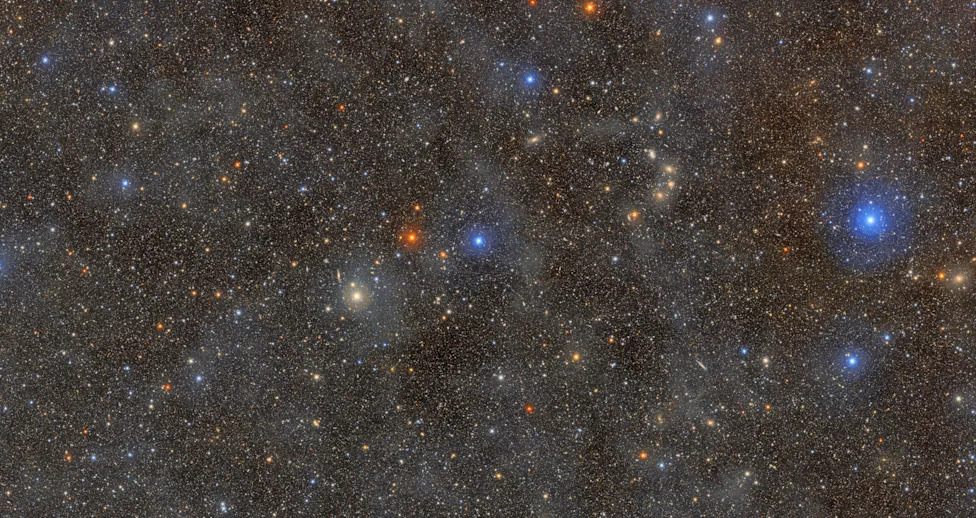
A field of stars in the constellation Lupus showcases the unprecedented view of the universe that the Vera C. Rubin Observatory provides. Rubin combines a wide view of the sky with the ability to detect extremely faint objects, revealing details of the cosmos across an enormous range of scales.(NSF–DOE Rubin Observatory/NOIRLab/SLAC/AURA)
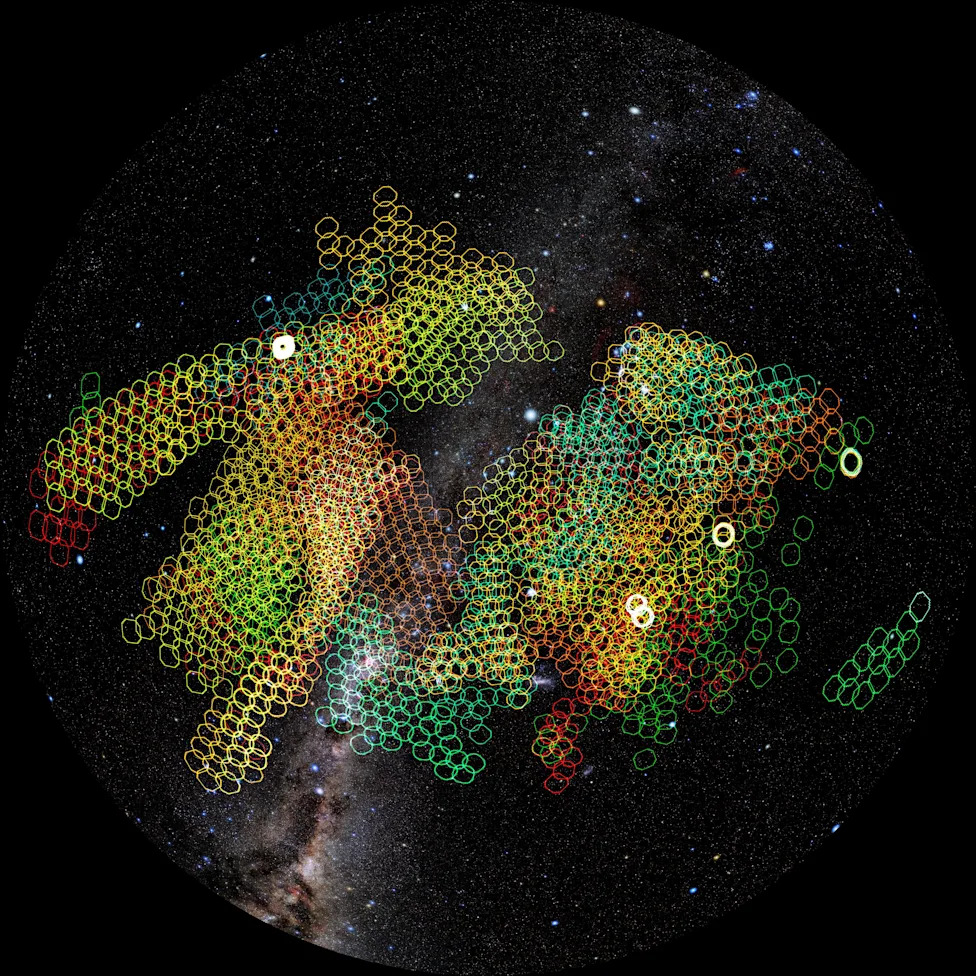
This map represents how much sky the Rubin Observatory can map in one week, with he color of the tile representing the filter used for each exposure as the Observatory rapidly builds a multicolor map of the universe.(NSF–DOE Rubin Observatory/NOIRLab/SLAC/AURA)
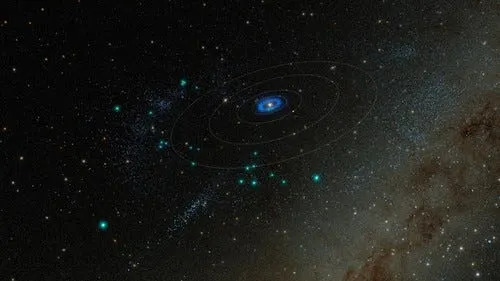
A model of the Solar System showing the roughly 380 trans-Neptunian objects (objects orbiting beyond Neptune) discovered using observations taken during Rubin’s early optimization surveys in summer 2025.(NSF–DOE Vera C. Rubin Observatory/NOIRLab/SLAC/AURA/R. Proctor)
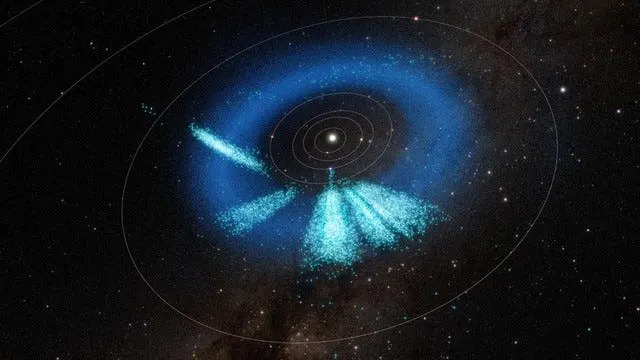
A model of the inner Solar System showing the asteroids discovered by Rubin in light teal. Known asteroids are dark blue. The model shows almost 12,700 asteroids that were discovered with Rubin over the span of a year and a half.(NSF–DOE Vera C. Rubin Observatory/NOIRLab/SLAC/AURA/R. Proctor)
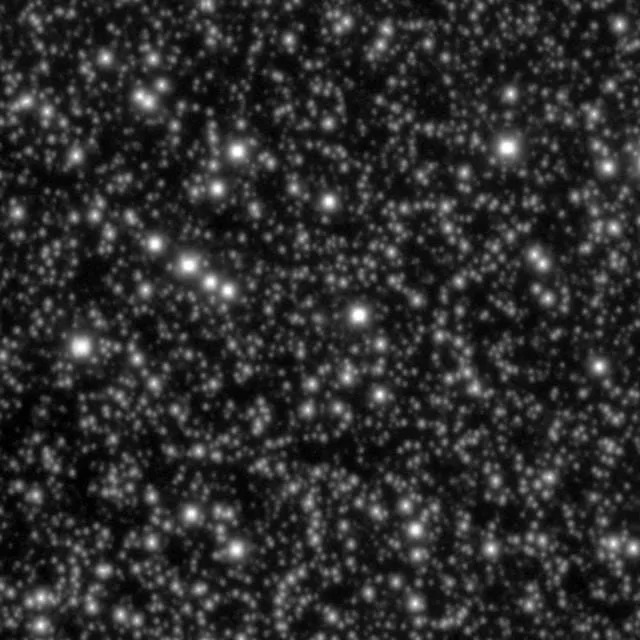
This image shows comet 3I/ATLAS, the third interstellar object ever discovered, on June 21, 2025 — ten days before its official discovery was announced.(NSF–DOE Vera C. Rubin Observatory/NOIRLab/SLAC/AURA; Image Processing: C. Chandler (University of Washington), M. Zamani & D. de Martin (NSF NOIRLab))
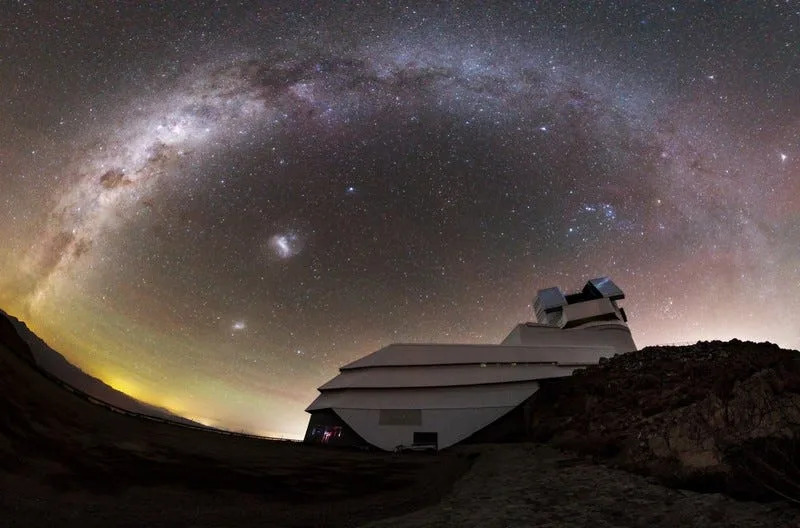
In this photo captured in February 2026, the Rubin Observatory observes the Chilean night sky above Cerro Pachón beneath the dazzling view of our home galaxy, the Milky Way.(NSF–DOE Rubin Observatory/NOIRLab/SLAC/AURA/P. Lago)
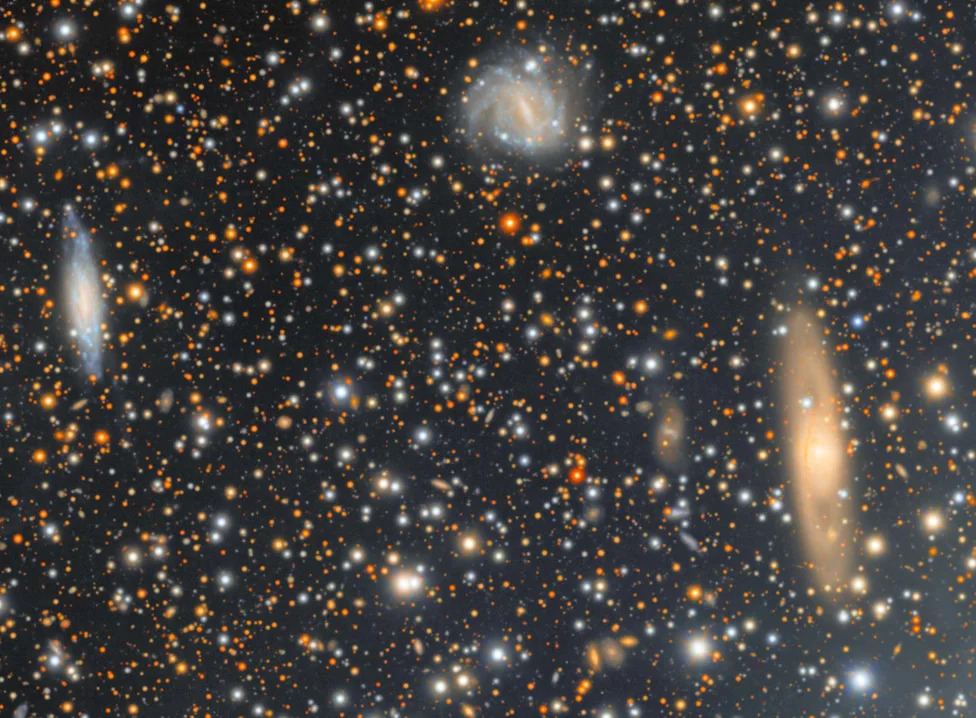
This is a section from a larger image the Vera C. Rubin Observatory captured referred to as the "ocean of stars." The view shows millions of multi-colored stars against a backdrop of galaxies close to the Milky Way’s plane, the crowded disk of the galaxy.(NSF–DOE Vera C. Rubin Observatory/NOIRLab/SLAC/AURA)
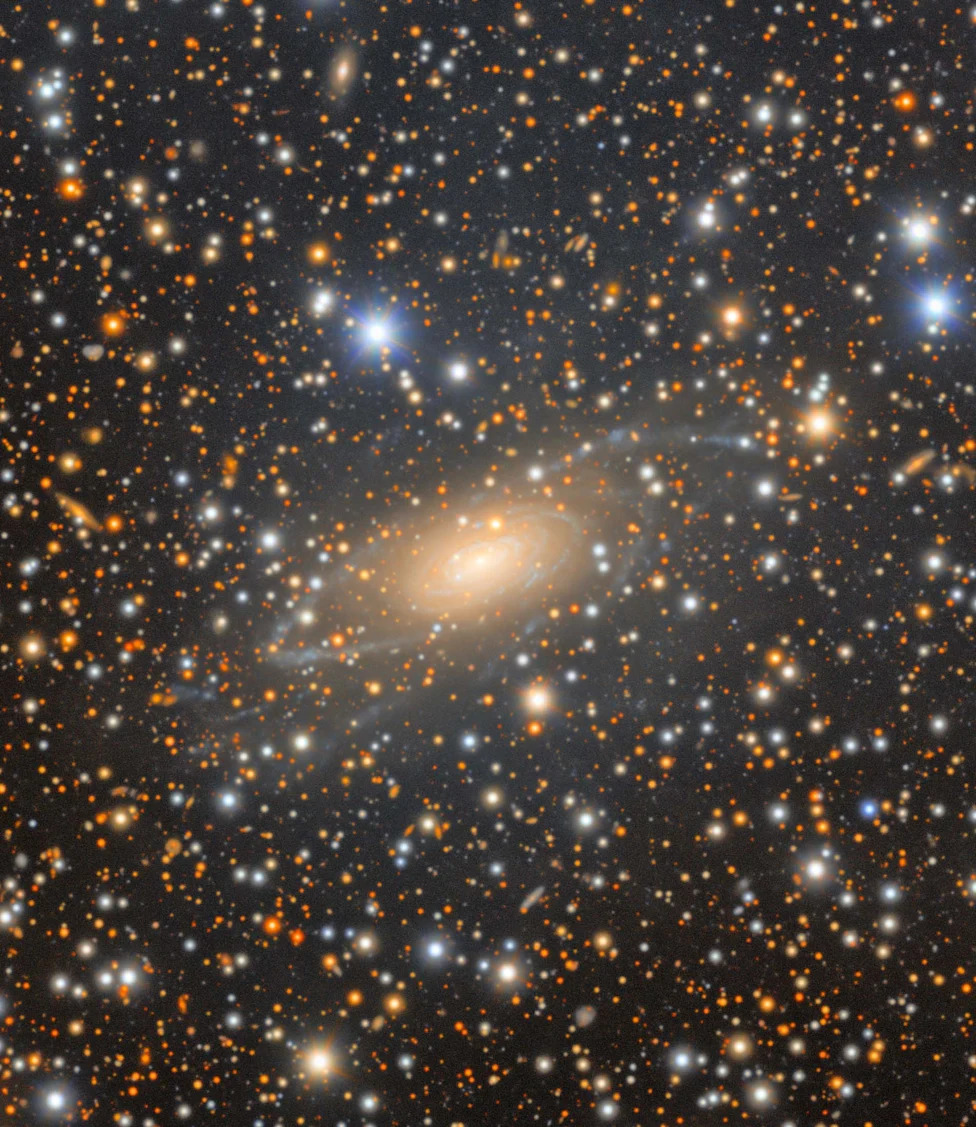
This is a section from a larger image the Vera C. Rubin Observatory captured referred to as the "ocean of stars." The view shows millions of multi-colored stars against a backdrop of galaxies close to the Milky Way’s plane, the crowded disk of the galaxy.(NSF–DOE Vera C. Rubin Observatory/NOIRLab/SLAC/AURA)
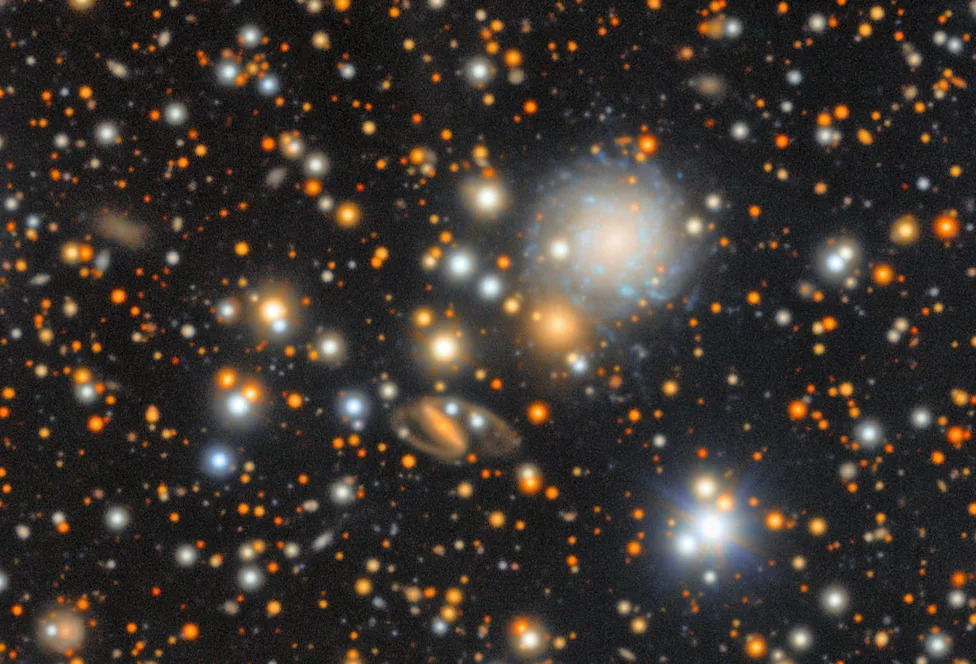
This is a section from a larger image the Vera C. Rubin Observatory captured referred to as the "ocean of stars." The view shows millions of multi-colored stars against a backdrop of galaxies close to the Milky Way’s plane, the crowded disk of the galaxy.(NSF–DOE Vera C. Rubin Observatory/NOIRLab/SLAC/AURA)
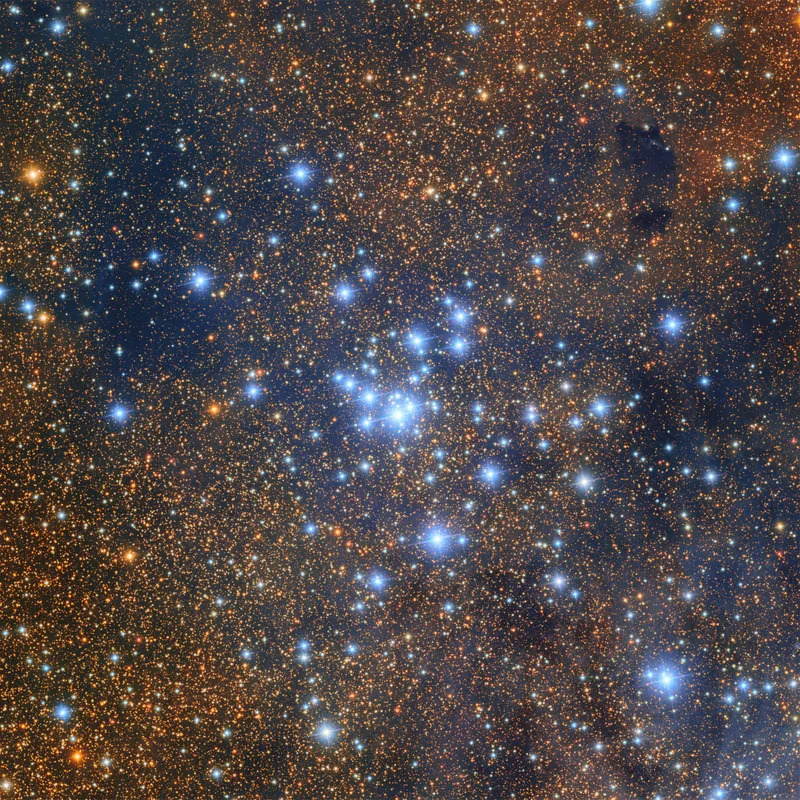
The open star cluster Messier 21 as imaged by NSF–DOE Vera C. Rubin Observatory. Located near the Trifid Nebula, Messier 21 is relatively young and tightly packed with small, dim stars.(RubinObs/NOIRLab/SLAC/NSF/DOE/AURA)
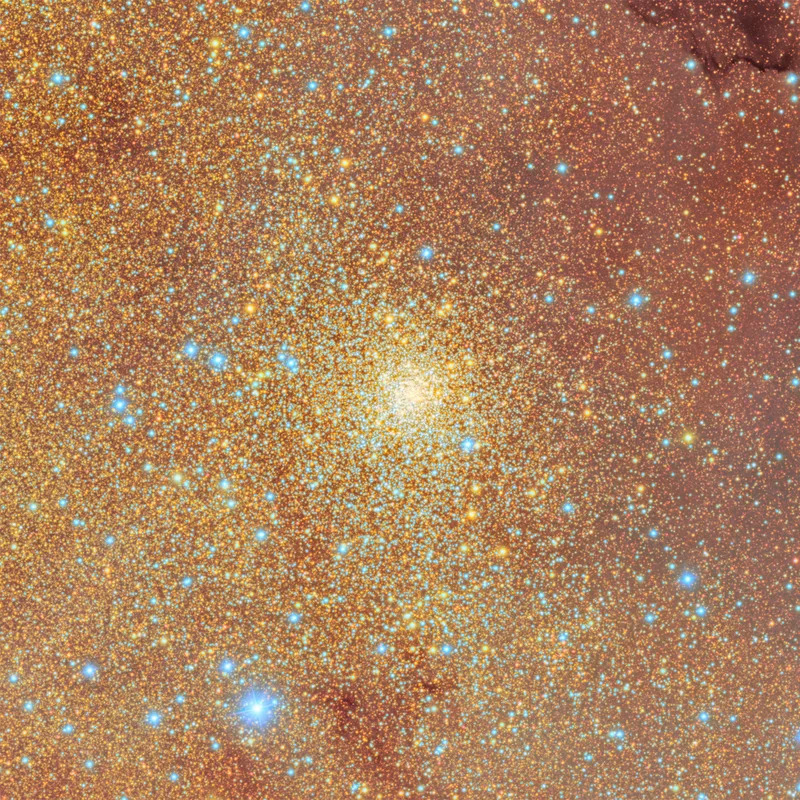
Globular cluster NGC 6544 as imaged by NSF–DOE Vera C. Rubin Observatory. This tightly packed globular cluster is home to tens of thousands of stars.(RubinObs/NOIRLab/SLAC/NSF/DOE/AURA)
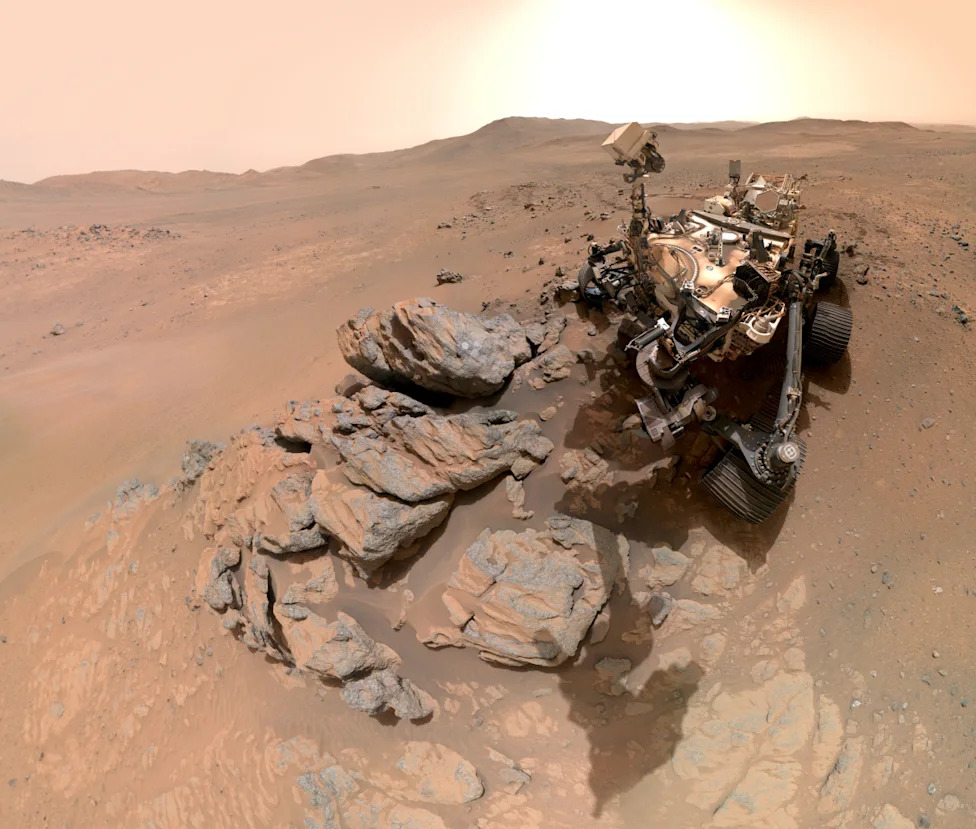
NASA’s Perseverance Mars rover took this selfie on March 11, 2026, during the rover’s deepest push west beyond Jezero Crater. The photo was assembled from 61 individual images.Perseverance, along with Curiosity, isone of two NASA roversthat have spent years exploring Mars' surface to uncover secrets about Earth's planetary neighbor and find evidence that Mars once harbored life.(Provided by NASA)
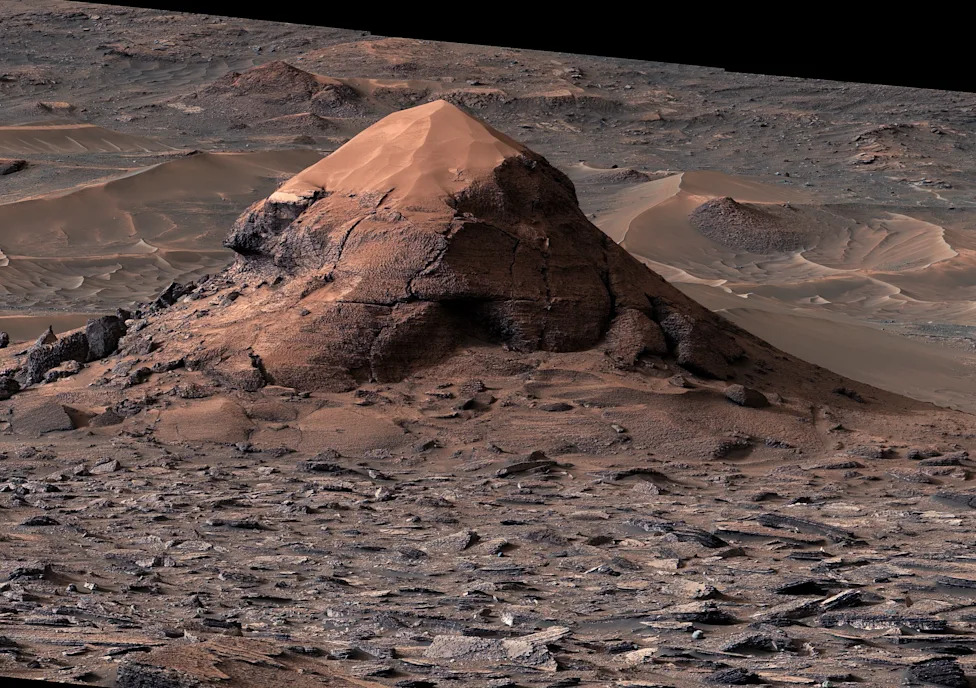
NASA’s Curiosity Mars rover captured thissand-capped butte, nicknamed “Miraflores,” estimated to be about 20 feet tall, on June 11. The butte was left behind as surrounding rock eroded away over time, deepening the broad valley Curiosity is climbing through.Curiosity is among NASA's fleet of uncrewed vehicles that have been sent to the red planet. In the years ahead, though, NASA is planning tosend the first humans to Marsunder its Artemis program.(NASA/JPL-Caltech/MSSS)
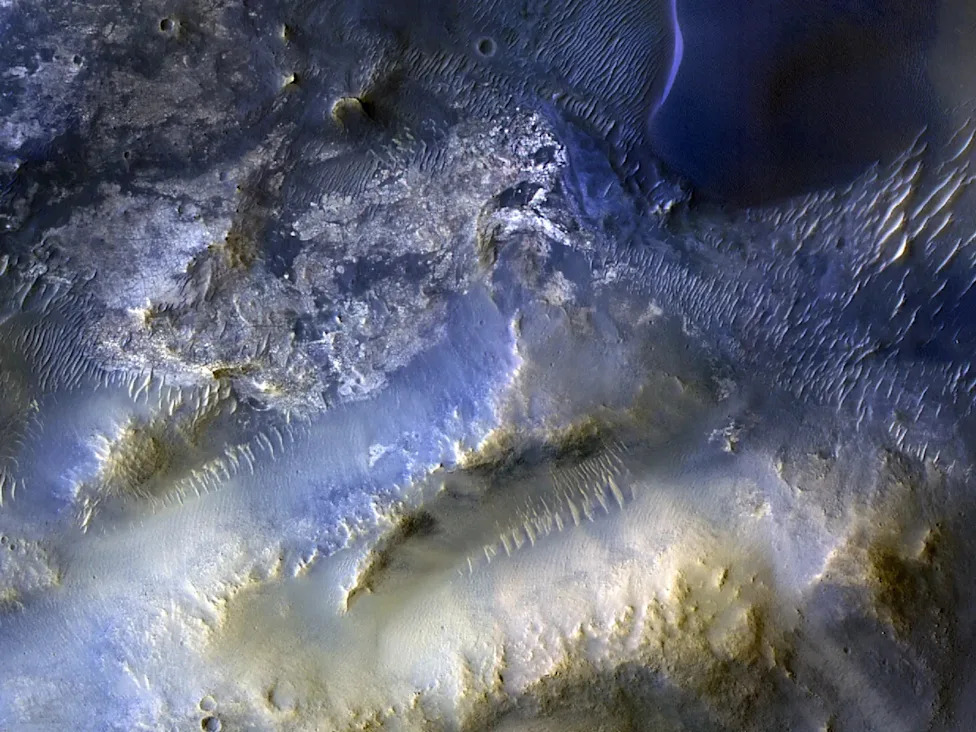
This view of a region called Syrtis Major is from the100,000th imagecaptured by NASA’s Mars Reconnaissance Orbiter using its HiRISE camera (High Resolution Imaging Science Experiment.)For nearly 20 years, HiRISE has helped scientists understand how the Red Planet’s surface is constantly changing.(NASA/JPL-Caltech/University of Arizona)
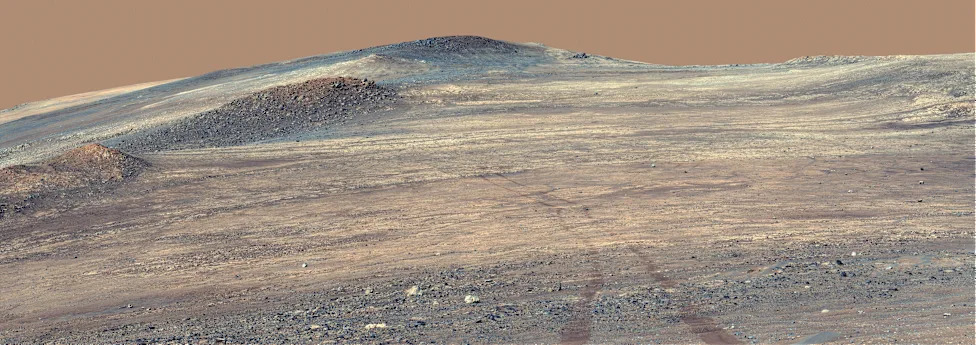
This view looking back upat the outside lip of the 490-foot-tall rim of Jezero Crater was taken by NASA’s Perseverance on May 15, 2025.The bright-colored rocks exposed across the slope, running from middle left to middle right of the image, belong to a formation NASA calls the “Broom Point member,” a 245-foot-thick stack of ancient rock. This sequence of layered bedrock is likely more than 3.9 billion years old, making it among the oldest terrain ever examined by a Mars rover.(NASA/JPL-Caltech/ASU/MSSS)
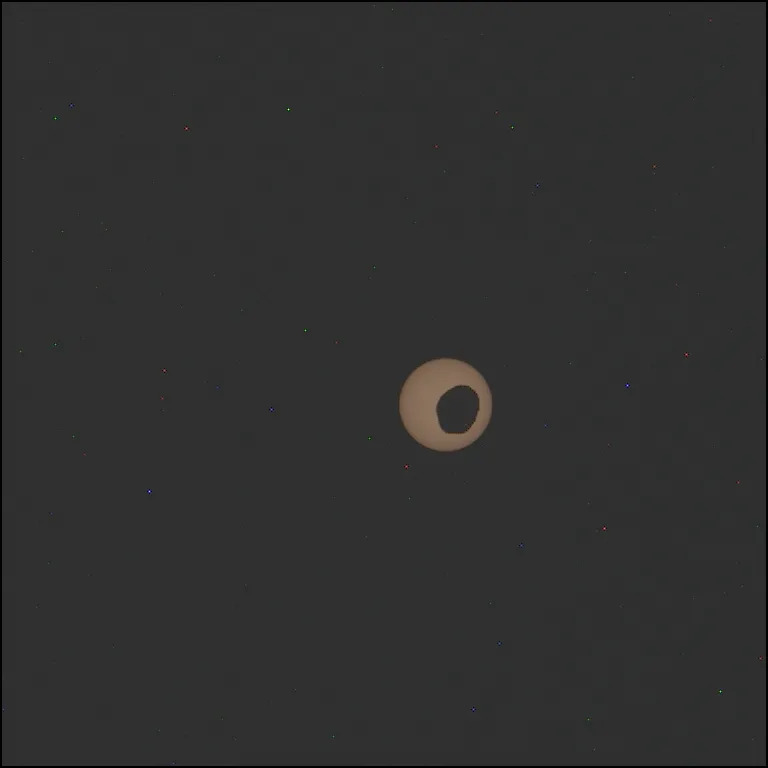
NASA’s Perseverance Mars rover used its Mastcam-Z camera tocapture the silhouette of Phobos, one of the two Martian moons, as it crossed in front of the sun Aug. 13.Perseverance hascapturedseveral Phobos transitssince its landing at Jezero Crater in February 2021.(NASA/JPL-Caltech/ASU)
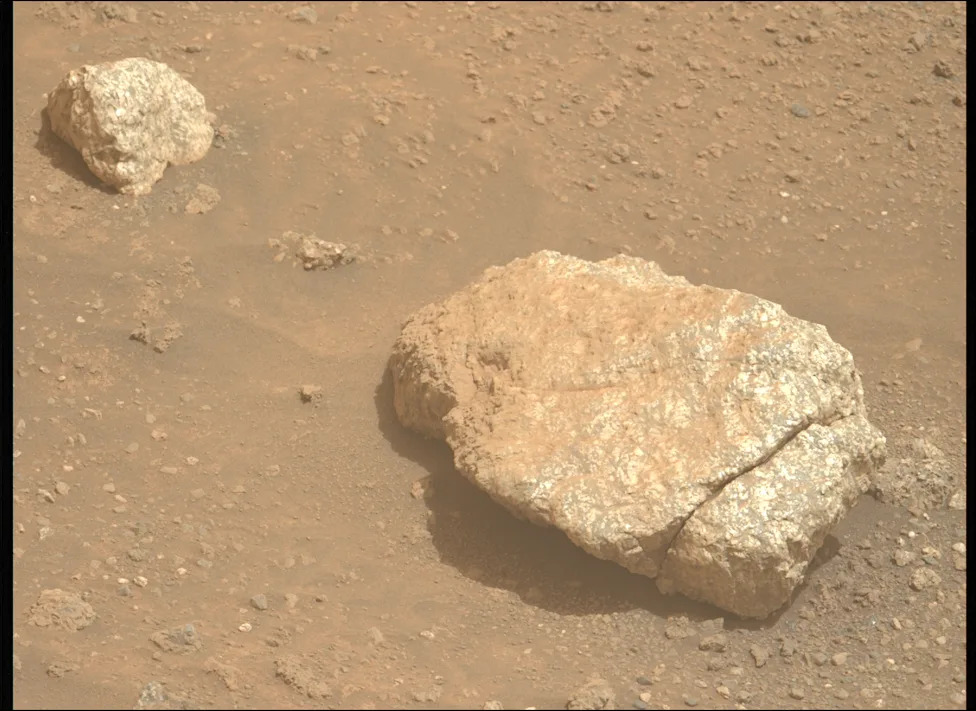
An image captured Aug. 20 by the Perseverance rover shows some rocks on the Martian surface.Perseverance and Curiosity are exploring very different areas of Mars 2,300 miles apart – the distance from Los Angeles to Washington, D.C. – to find new clues that will help scientists on Earth solve mysteries about the red planet's history.(NASA/JPL-Caltech/ASU)
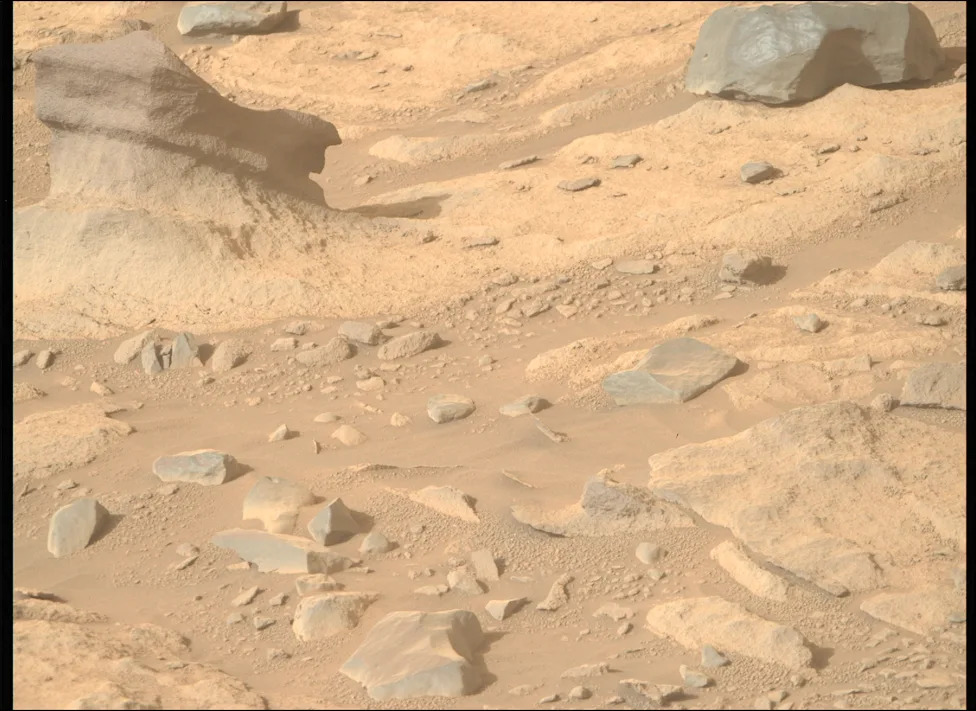
NASA's Perseverance rover captured this image July 22 of the Martian landscape.After launching in 2020,Perseverancemade a 200-day, 300-million-mile journeyto reach Mars' Jezero Crater in February 2021.(NASA/JPL-Caltech/ASU)
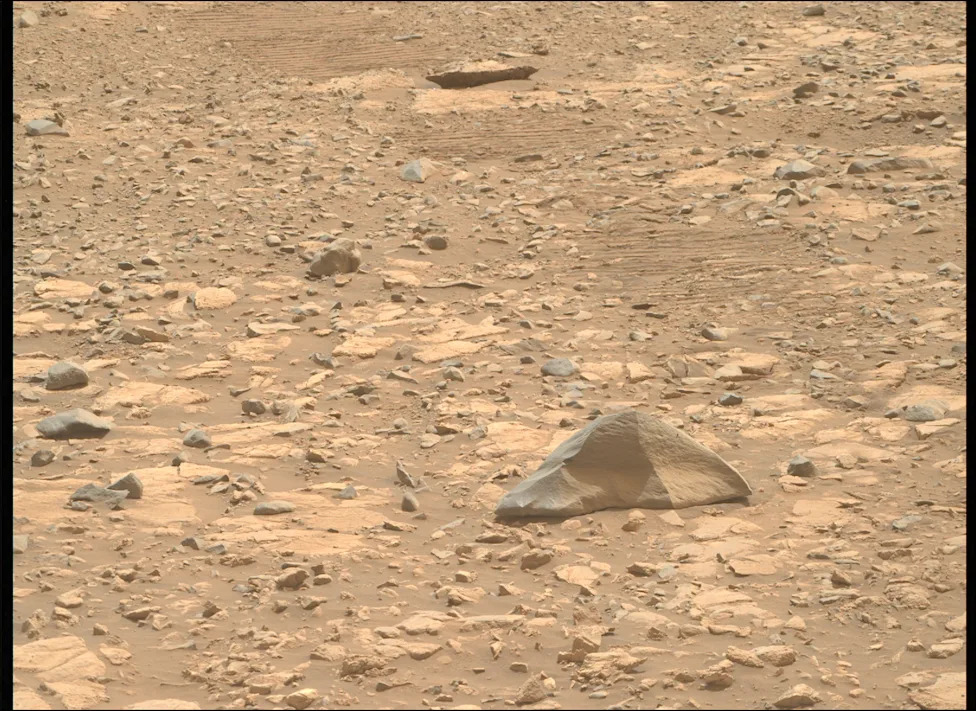
NASA's Perseverance rover captured this image Aug. 4 of the Mars landscape.At the end of 2024, after years in the trenches of Jezero, Perseverancesummited the steep Martian craterto begin the next leg of its journey on the rim.(NASA/JPL-Caltech/ASU)
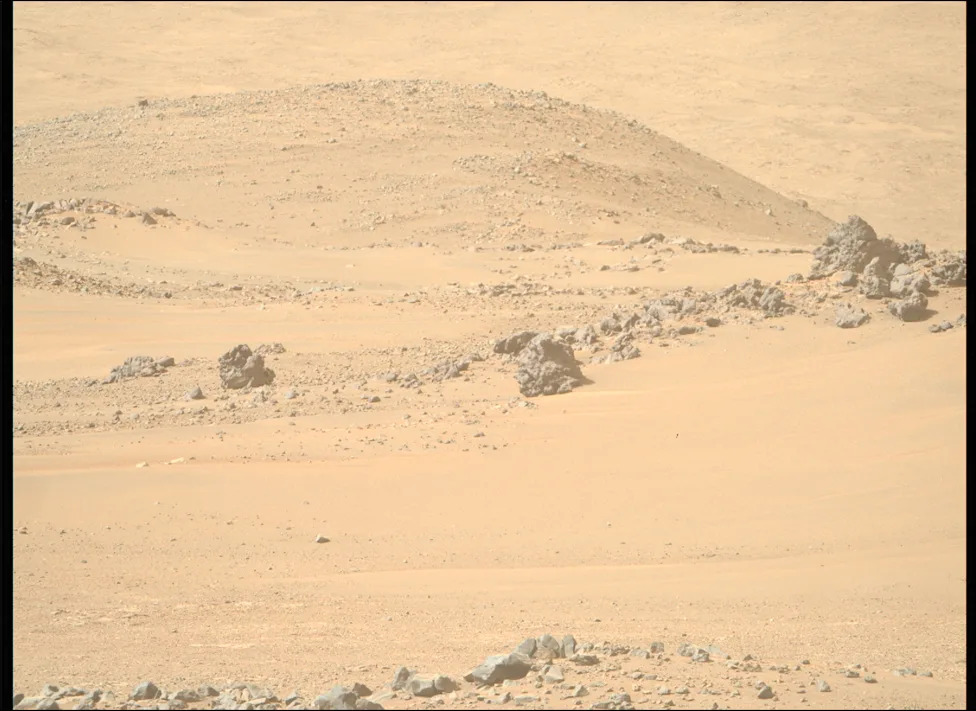
NASA's Perseverance rover captured this image June 24 of the Mars landscape.(NASA/JPL-Caltech/ASU)
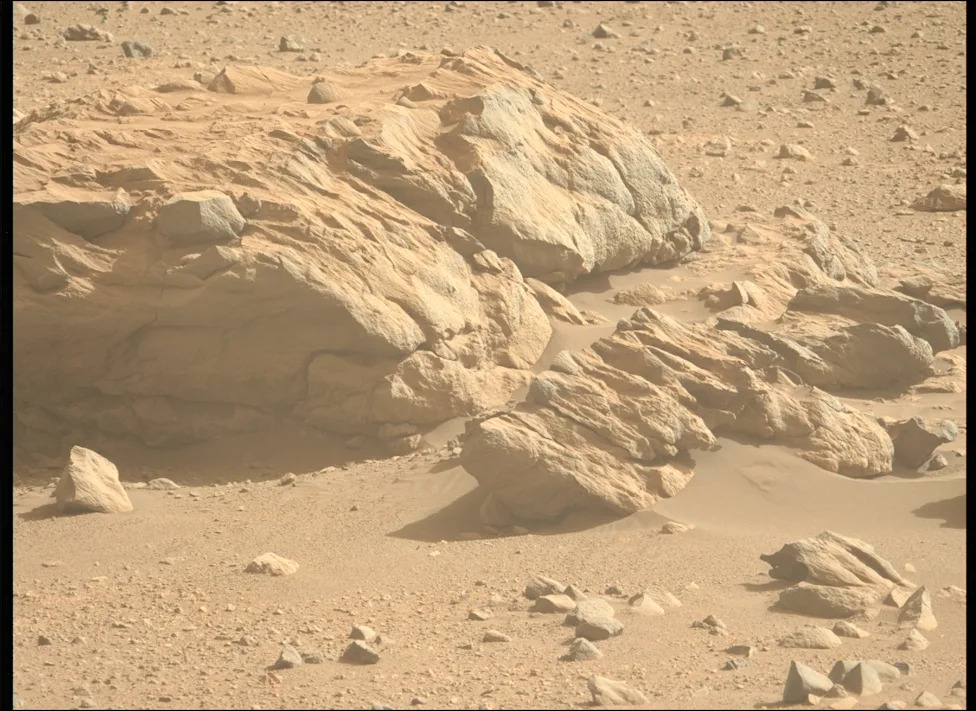
NASA's Perseverance rover captured this image May 26 of the Mars landscape.(NASA/JPL-Caltech/ASU)
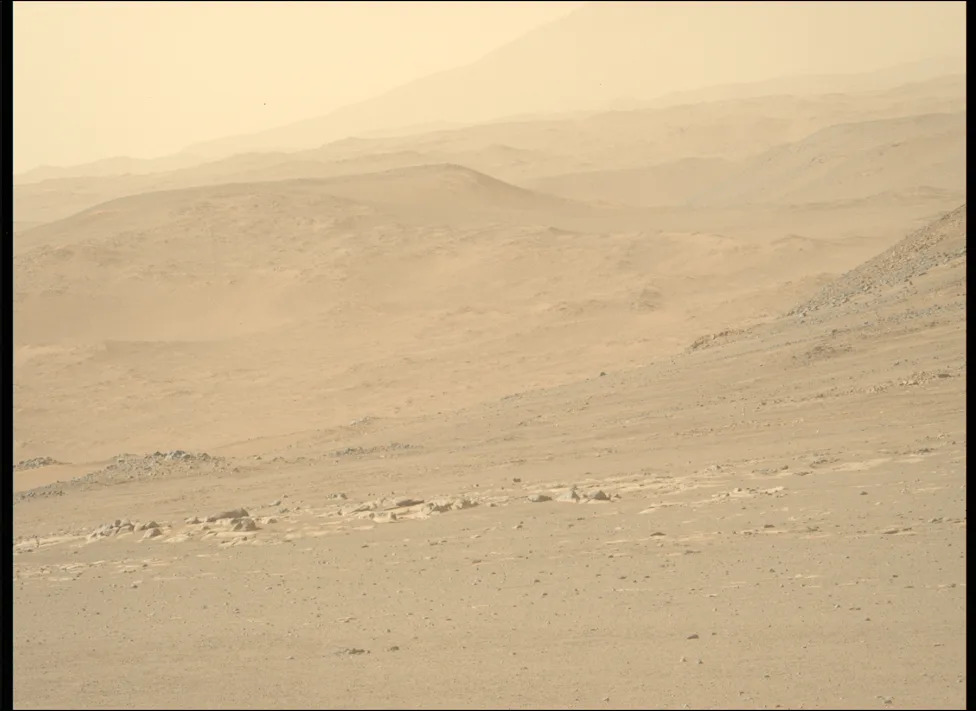
NASA's Perseverance rover captured this image April 8 of the Mars landscape.(NASA/JPL-Caltech/ASU)
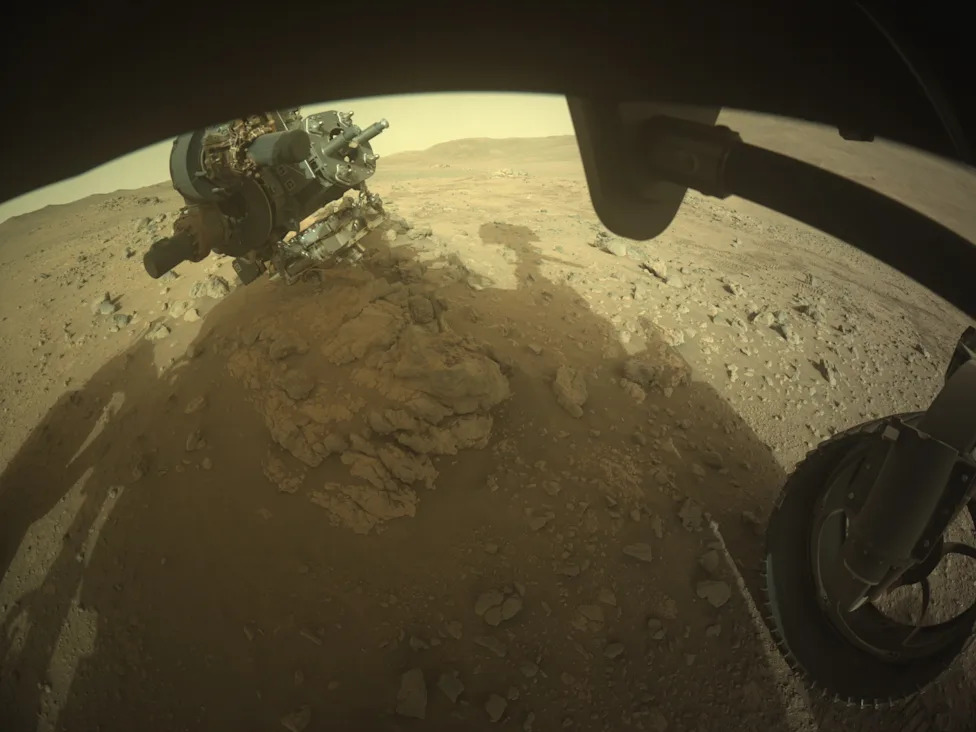
NASA's Perseverance rover captured this image March 24 using an instrument known as theFront Right Hazard Avoidance Camera A.(NASA/JPL-Caltech)
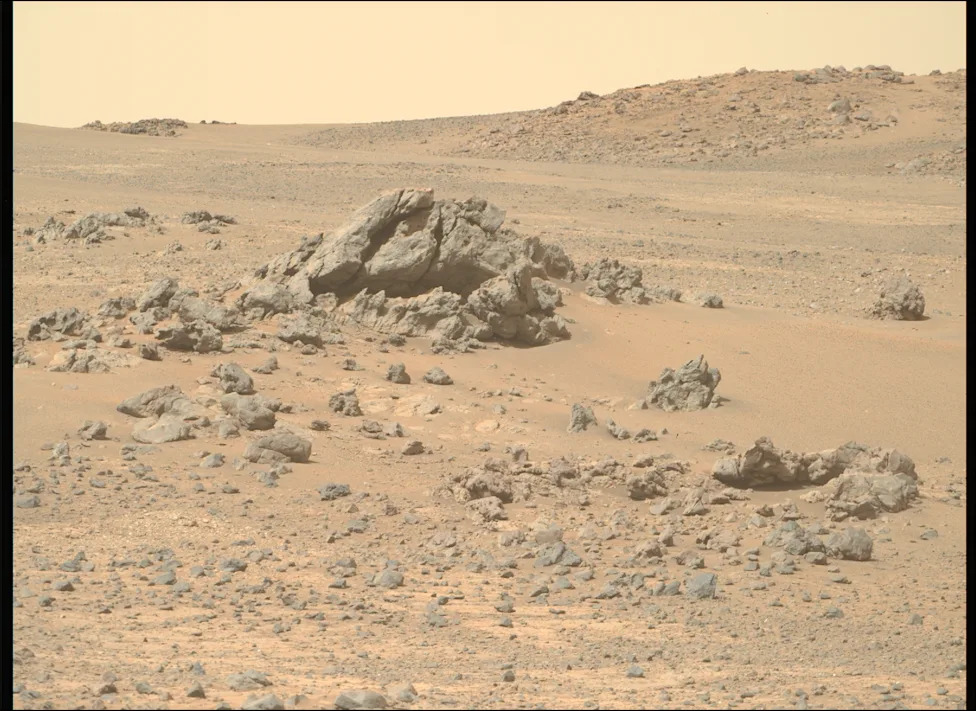
NASA's Perseverance rover captured this image Feb. 20 of the Mars landscape.(NASA/JPL-Caltech/ASU)
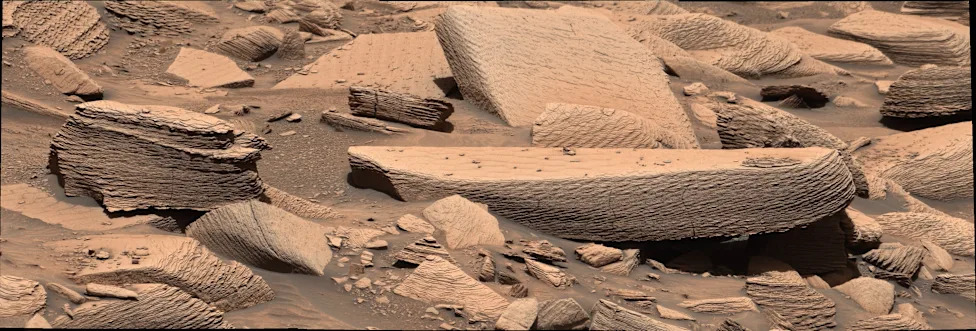
Billions of years ago, an hours-long Martian sandstorm blew so intensely that sand ripples began to climb upon one another as they moved across the surface. These layers of sediment eventually hardened into the multilayered rocks seen in this image, which wastaken by NASA’s Curiosity roveron Dec. 12, 2024.Apaperdetailing the discovery was featured on thecoverof the journal Geology on July 1, 2026.(NASA/JPL-Caltech/MSSS)
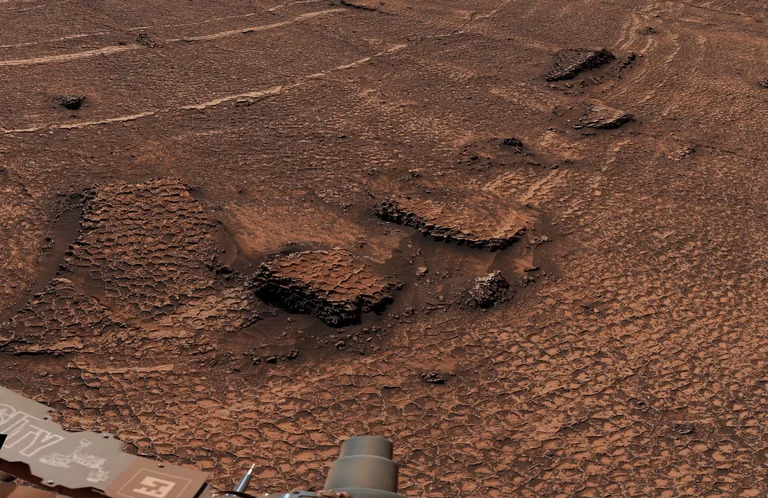
NASA’s Curiosity Mars rover captured this 360-degree view of an expanse of terrain covered in surfacefeatures called polygonson June 19 and 20, 2026. The rover has found the honeycomb-like textures several times in the past, but never so many in one place. Across the center of this image, the surface is covered by shapes ranging in size from roughly 2 to 4 inches in diameter.East of Perseverance, theCuriosityroverbegan its voyage to Mars in November 2011, landing in August 2012 in the Gale Crater on the boundary between Mars' cratered southern highlands and its smooth, northern plains.(NASA/JPL-Caltech/MSSS)
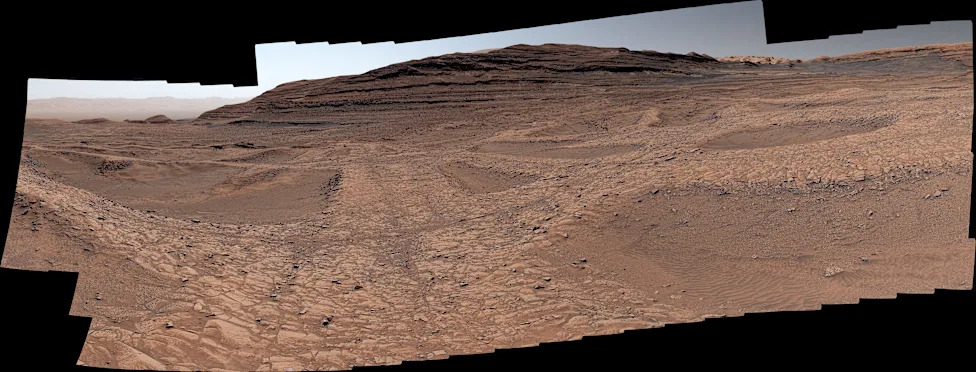
NASA’s Curiosity Mars rover captured this panorama of low ridgesknown as boxwork formationson Sept. 26, 2025. These boxwork formations were created billions of years ago. This particular image is a panorama made of 179 individual images stitched together after being sent back to Earth.As it climbs the 3-mile-high Mount Sharp, Curiosity is searching for evidence that Mars was ever hospitable to life.(NASA/JPL-Caltech/MSSS)
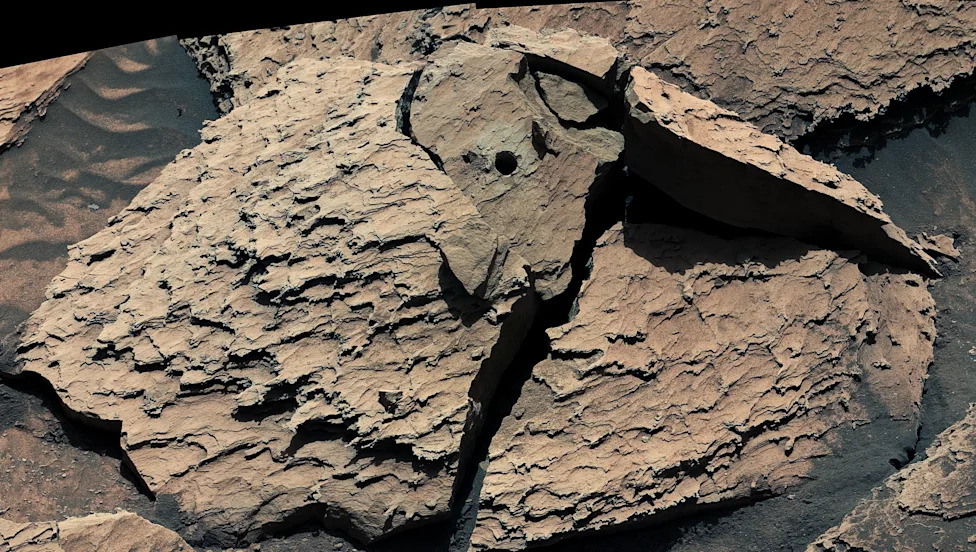
NASA’s Curiosity Mars rover used its Mast Camera, or Mastcam, to capturethis view of a rocknicknamed “Atacama” on May 6, 2026.The rock had gottenstuck to the drillon the end of Curiosity’s robotic arm on April 25. Engineers spent several days repositioning the arm and vibrating the drill to try and get the rock loose, finallydetaching the rockon May 1.(NASA/JPL-Caltech/MSSS)
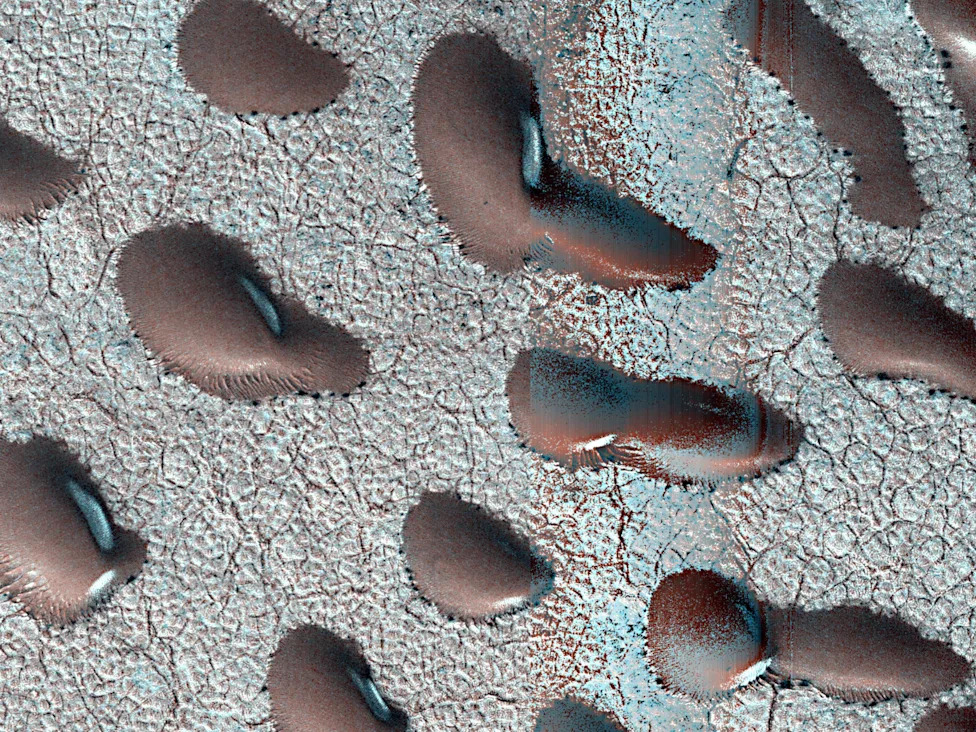
These Martian dunesin Mars' northern hemisphere were captured from above by NASA's Mars Reconnaissance Orbiter on Sept. 8, 2022. Scientists use such images to track the amount of frost that settles on the landforms and then disappears as the weather warms in spring.(NASA/JPL-Caltech/University of Arizona)
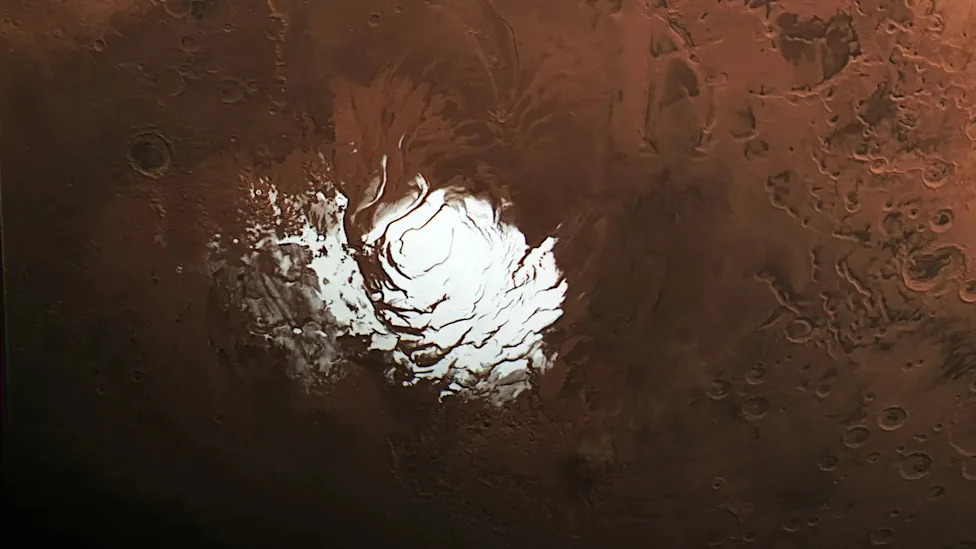
The European Space Agency’s Mars Express orbitercaptured this viewof Mars’ south polar ice cap Feb. 25, 2015. Three years later, the spacecraft detected a signal from the area to the right of the ice cap that scientists interpreted as an underground lake.(ESA/DLR/FU Berlin, CC BY-SA 3.0 IGO)
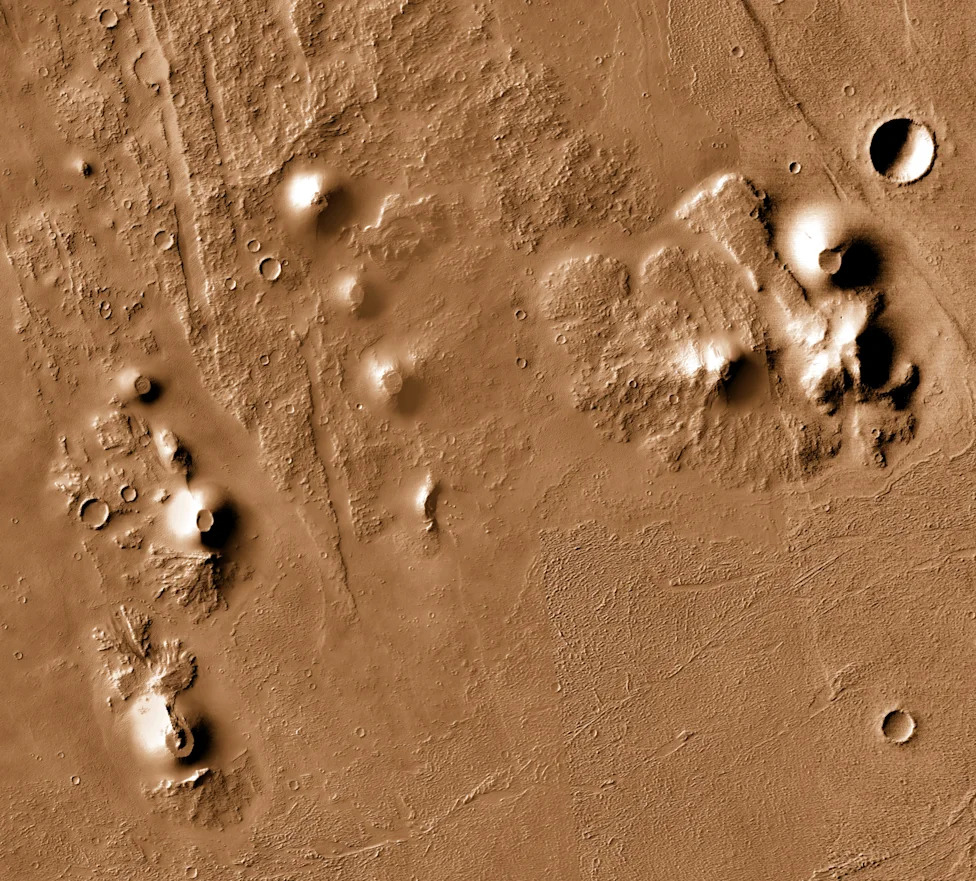
Since the 1970s, planetary geologists have known that volcanic features cover large swaths of Mars.This scoria conein Mars' Ulysses Colles region, formed through explosive volcanism, is thought to be billions of years old.(NASA/JPL-Caltech/University of Arizona)
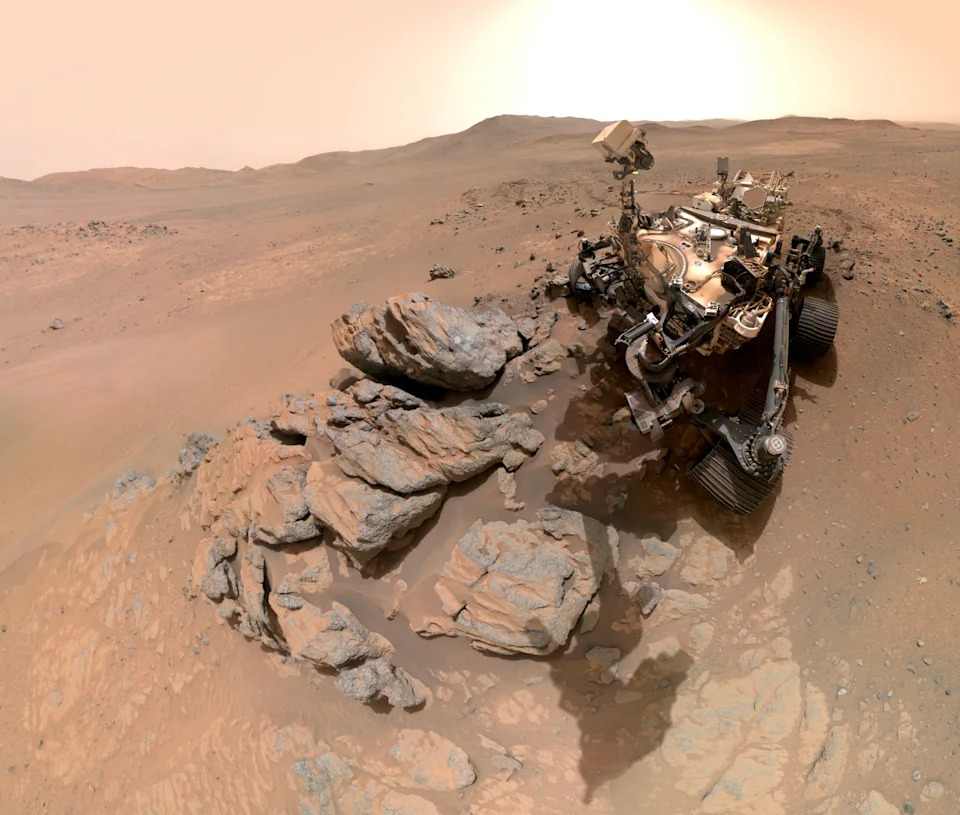
NASA’s Perseverance Mars rover took this selfie on March 11, 2026 during the rover’s deepest push west beyond Jezero Crater. The photo was assembled from 61 individual images
Pomozite nam da budemo bolji.