Tim sa Univerziteta u Warwick, koristeći podatke sa Cheopsa i drugih instrumenata, otkrio je u sistemu LHS 1903 neočekivan redosled planeta: stjenovita‑gasovita‑gasovita‑stjenovita. Simulacije su isključile sudare i zamene orbita kao verovatna objašnjenja. Nalaz podržava ideju o sekvencijalnom, „iznutra‑napolje“ formiranju planeta i podstiče preispitivanje koliko je Sunčev sistem tipičan.
Otkriven „iznutra‑napolje“ planetarni sistem: LHS 1903 razbija pravila o nastanku planeta
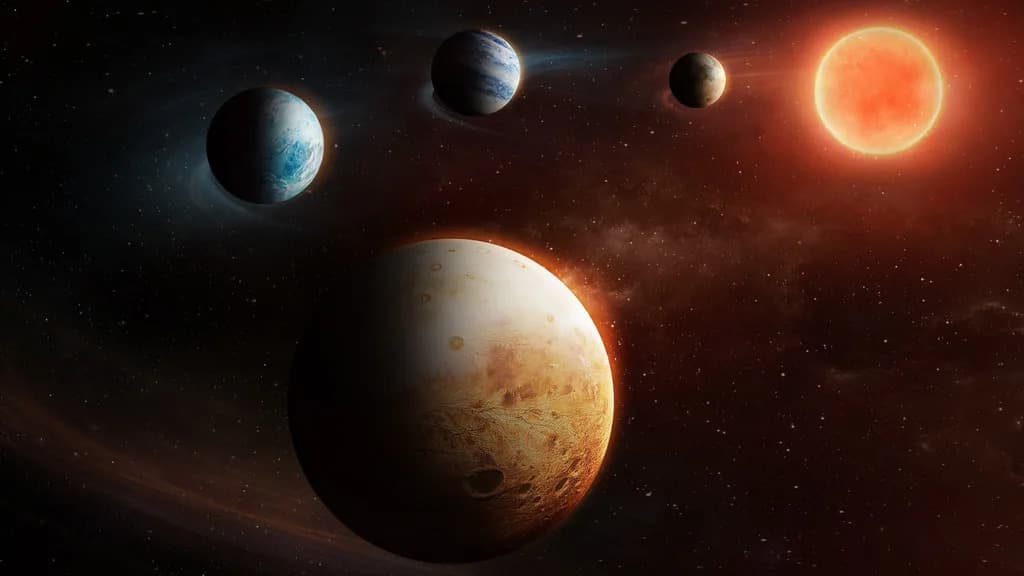
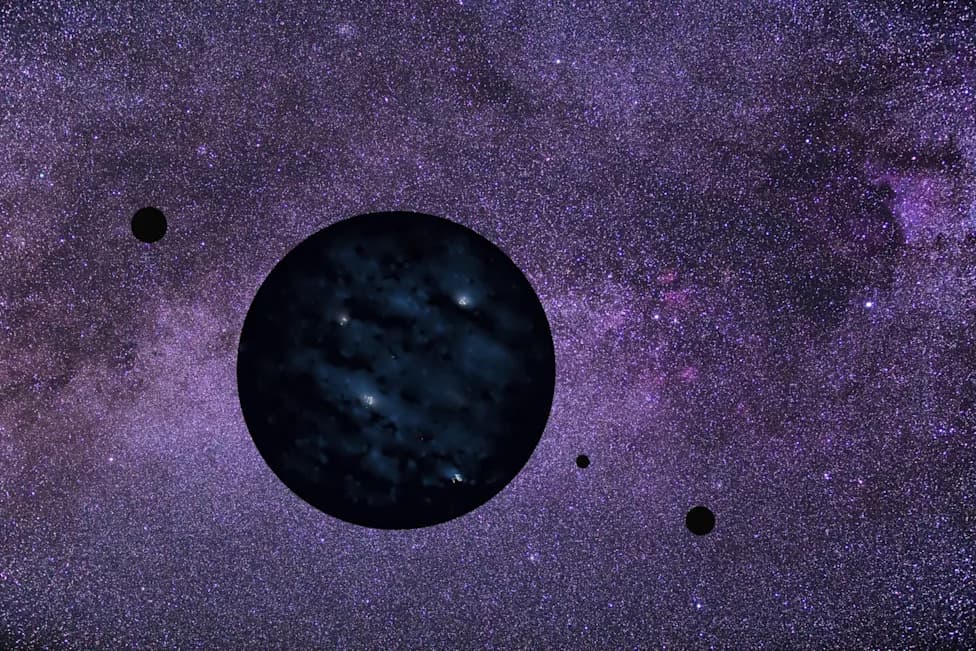
Artist impression of the planetary system with four planets,around a small red star,called LHS1903. Caption: Astronomers have long thought solar systems follow a simple pattern similar to our own: small, rocky worlds orbit close to the Sun, while large gaseous planets sit further out. For decades, astronomers have believed this arrangement to be the norm across the Universe. Observations of distant planetary systems have broadly supported the idea that rocky planets form near their star, with gas giants developing farther away where conditions are cooler. But a newly studied star system may turn that assumption on its head. Using the European Space Agency’s CHaracterising ExOPlanet Satellite (Cheops), scientists have found evidence of an unusual “inside-out” planetary system orbiting a star known as LHS 1903. LHS 1903 is a small, cool red dwarf star that shines far less brightly than the Sun. A team led by Thomas Wilson from the University of Warwick combined data from several telescopes on Earth and in space to study planets orbiting the star. They initially identified three planets: a rocky world closest to the star, followed by two gaseous planets. This, researchers say, looked entirely normal. The surprise came when the team analysed Cheops data more closely and spotted a fourth planet, orbiting furthest from the star. Against expectations, this distant planet also appeared to be rocky. “That makes this an inside-out system, with a planet order of rocky-gaseous-gaseous-and then rocky again. Rocky planets don’t usually form so far away from their home star,” says Thomas. Current theories suggest that intense radiation near a star strips away gas, leaving behind small, rocky planets. Farther out, cooler conditions allow gas to accumulate, forming thick atmospheres around large planets. Maximilian Günther, Cheops project scientist at the European Space Agency, says the finding highlights how much remains unknown. “Much about how planets form and evolve is still a mystery. Finding clues like this one for solving this puzzle is precisely what Cheops set out to do.” Scientists are cautious about overturning established theories based on a single example. The team therefore explored alternative explanations, including whether the outer planet might once have had an atmosphere stripped away by a violent impact, or whether the planets had swapped orbits over time. Their simulations ruled these scenarios out. Instead, the evidence points towards a different process: the planets may not have formed all at once. In most models, planets form together from a disc of gas and dust surrounding a young star. In the case of LHS 1903, the researchers suggest the star may have produced its planets sequentially. This idea, known as inside-out planet formation, was proposed about a decade ago but has lacked strong observational evidence until now. “By the time this outer planet formed, the system may have already run out of gas, which is considered vital for planet formation. Yet here is a small, rocky world, defying expectations. It seems that we have found first evidence for a planet which formed in what we call a gas-depleted environment”, says Thomas. The discovery raises a broader question about how representative our own Solar System really is.(ESA/Cover Images)
Nova posmatranja dovode u pitanje ustaljeni model nastanka planeta. Satelit Evropske svemirske agencije Cheops i tim istraživača sa Univerziteta u Warwicku otkrili su da sistem oko crvenog patuljka LHS 1903 ima neočekivan raspored planeta — stjenovita, gasovita, gasovita, pa opet stjenovita.
LHS 1903 je mali, hladan crveni patuljak koji značajno slabije svetli od Sunca. Tim pod vođstvom Thomasa Wilsona kombinovao je podatke sa Cheopsa i nekoliko drugih teleskopa na Zemlji i u svemiru kako bi mapirao planete u tom sistemu.
U početku su identifikovane tri planete: najbliža zvezdi je stjenovita, a slede dve gasovite. Međutim, detaljnijom analizom podataka sa Cheopsa otkrivena je četvrta, najudaljenija planeta — i ona deluje kao stjenovita planeta, što je u suprotnosti sa očekivanjima iz klasičnih modela formiranja.
"To čini sistem iznutra‑napolje, sa redosledom stjenovita‑gasovita‑gasovita‑stjenovita. Stjenovite planete obično se ne formiraju tako daleko od svoje zvezde," kaže Thomas Wilson.
Prevladajuće teorije predviđaju da blizu zvezde intenzivno zračenje uklanja gas sa mladih planeta, ostavljajući male stjenovite planete, dok se dalje od zvezde, u hladnijim oblastima, lakše akumulira gusta gasovita atmosfera i nastaju gasoviti džinovi.
Tim je testirao alternative: da je udaljena planeta nekada imala atmosferu uklonjenu silovitim udarom ili da su planete u toku evolucije zamenile orbite. Prema autorima studije, simulacije su takve scenarije praktično eliminisale.
Umesto toga, rezultati upućuju na drugačiji mehanizam — planete su možda nastajale sekvencijalno, jedna za drugom, u procesu poznatom kao inside‑out (iznutra‑napolje) formiranje. Po ovoj hipotezi, kasnije nastale planete mogle su se formirati u sredini sistema u kojoj je već bilo znatno manje gasa.
"Do trenutka kada se ta spoljašnja planeta formirala, sistem je možda već ostao bez gasa... Izgleda da smo pronašli prvi dobar posmatrački dokaz za planetu nastalu u gas‑siromašnom okruženju," kaže Thomas Wilson.
Maximilian Günther iz ESA ističe da otkriće pokazuje koliko je formiranje i evolucija planeta složeno i koliko još toga treba otkriti. Isabel Rebollido napominje da, kako raste broj različitih egzoplanetnih sistema, naučnici ponovo razmatraju teorije zasnovane na našem Sunčevom sistemu.
Ovo otkriće ne ruši odmah postojeće modele, ali predstavlja snažan motiv za dalje posmatranje i teorijsko preispitivanje — posebno u pogledu toga koliko su naša očekivanja o poretku planeta univerzalna.
Pomozite nam da budemo bolji.