SpaceX je ponovo pomerio debi Starshipa planiran za 2026. Elon Musk je 3. aprila naveo da je naredni probni let "4 do 6 nedelja" udaljen, što cilja na početak do sredine maja, bez detaljnog objašnjenja. Kompanija priprema Verziju 3 (oko 408 stopa) koja bi mogla omogućiti orbitalno dopunjavanje goriva, dok istovremeno razvija lunarnu varijantu HLS za NASA-in Artemis.
SpaceX Ponovo Pomerio Debi Starshipa Za 2026. — Musk Najavio Lansiranje "Za 4–6 Nedelja"
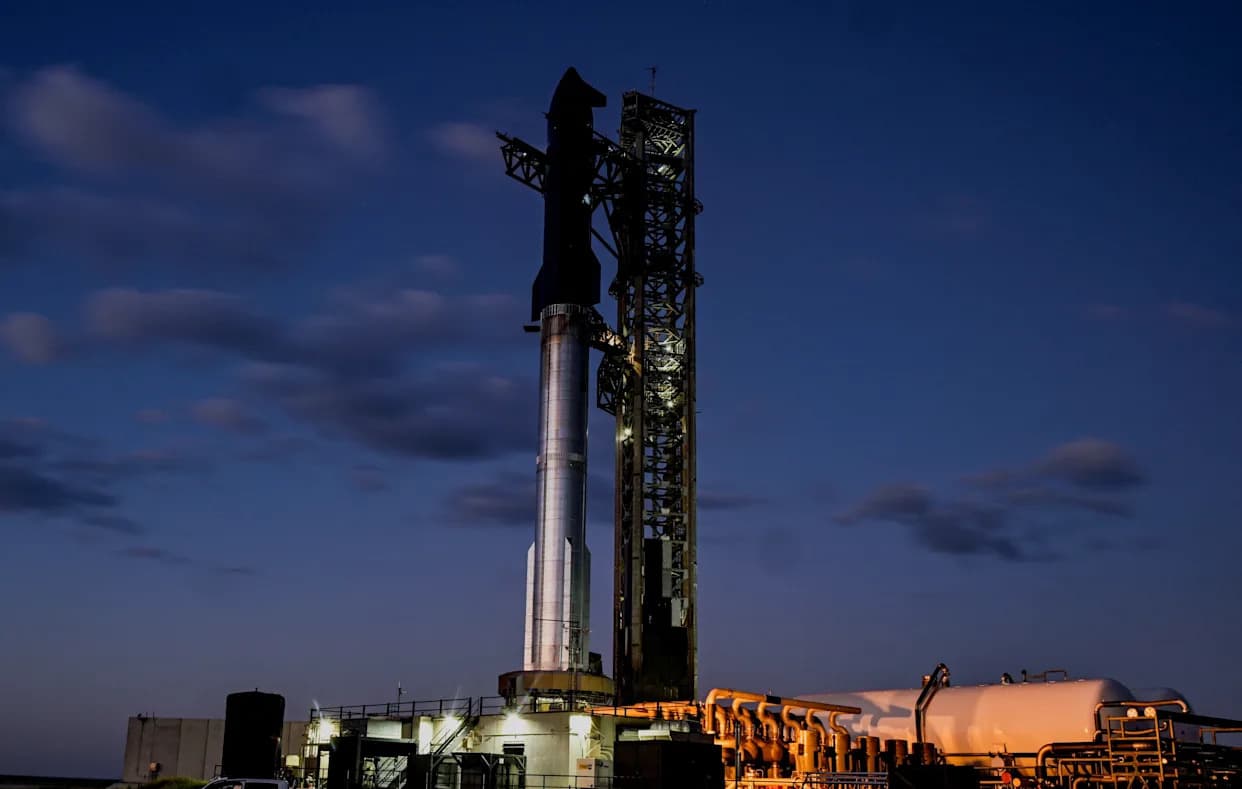
Elon Musk says SpaceX is bumping Starship's 2026 debut once again
Elon Musk, izvršni direktor SpaceX-a, potvrdio je da kompanija ponovo odlaže debi svoje masivne rakete Starship koji je bio planiran za 2026. godinu. Ovo je treće pomeranje 12. probnog leta tokom ove godine, dok SpaceX radi na većoj i unapređenoj verziji rakete namenjenoj misijama na Mesec, a u daljoj budućnosti i na Mars.
Šta se zna o trenutnom planu
U objavi na mreži X od 3. aprila, Musk je napisao da je naredni probni let "4 do 6 nedelja" udaljen — što, računajući datum objave, cilja na početak do sredine maja. Ni Musk ni SpaceX do sada nisu javno obrazložili tačan razlog za nova odlaganja.
Probni let bi, kao i prethodnih 11, trebalo da bude izveden sa Starbase-a, kompanijskog naselja i glavne baze SpaceX-a u južnom Teksasu, blizu granice sa Meksikom.
Verzija 3 i tehnički ciljevi
Starship, kada je u potpunom sklopu, dostiže više od 400 stopa visine (~122 m) i smatra se najvećim i najsnažnijim lansirnim sistemom na svetu. Potpuno integrisana letelica se sastoji iz donjeg stepena Super Heavy i gornjeg stepena Starship, koji nosi posadu i teret.
SpaceX radi na prototipu Verzija 3 (V3), visokog oko 408 stopa, koji bi mogao debitovati tokom 12. leta i doneti značajna poboljšanja: veću snagu, bolju robusnost i mogućnost orbitalnog dopunjavanja goriva. Taj manevar zahteva da se dve letelice Starship sretnu u orbiti i prebace stotine tona superohlađenog pogonskog sredstva — ključni korak kako bi Starship mogao da stigne do udaljenih destinacija poput Marsa.
Povezanost sa NASA-inim Artemis programom
SpaceX razvija lunarnu varijantu Starshipa, poznatu kao Human Landing System (HLS), koja bi mogla da prevozi astronaute iz lunarne orbite do površine Meseca. Misija Artemis IV, ciljana za 2028. godinu, trebalo bi da bude prvo sletanje ljudi na Mesec nakon Apola, ali zbog zabrinutosti oko kašnjenja NASA razmatra i alternativu — Blue Moon kompanije Blue Origin. U okviru plana za Artemis III (2027) predviđen je test dokovanja u orbiti koji bi prethodio eventualnom sletanju naredne godine.
Poslovni i istorijski kontekst
SpaceX je tokom 2025. izveo pet probnih letova Starshipa: prva tri završila su eksplozijama i ranijim raspadima, dok su poslednja dva lansiranja u avgustu i oktobru ocenjena kao uspešna. Lansanje od 13. oktobra bilo je poslednje za tu iteraciju, nakon čega se očekuje prelazak na V3.
Kompanija se paralelno priprema za dugo očekivani IPO. Prema izveštajima Reutera, SpaceX razmatra izlistanje već u junu na Nasdaq-u, dok je i Njujorška berza u trci za listiranje.
Ukratko: SpaceX nastavlja razvoj i testiranje Starshipa uprkos ponovnim odlaganjima; Verzija 3 donosi tehničke prekretnice, a HLS projekat ostaje ključan za učešće u NASA-inim misijama na Mesec.
Izveštavali: Reuters; članak adaptirao i dopunio USA TODAY Network autor Eric Lagatta.
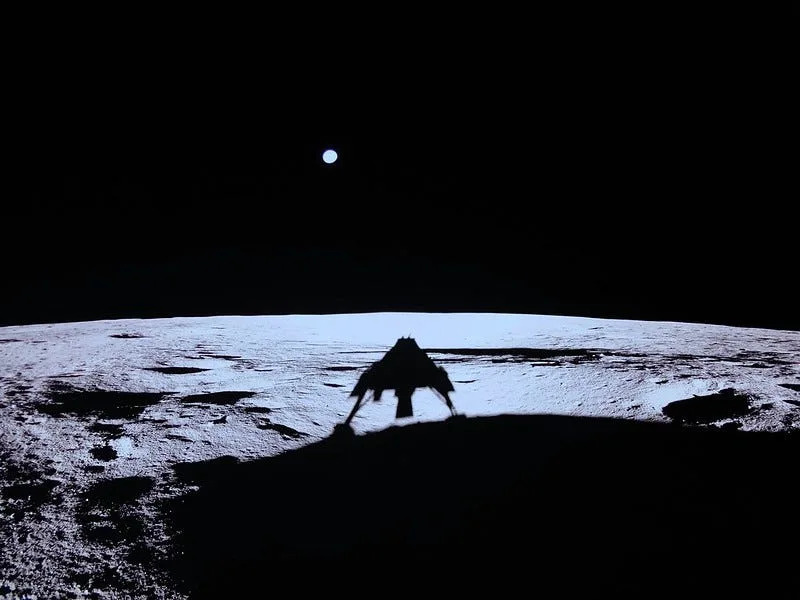
Firefly's Blue Ghost lunar lander captures its shadow on the moon's surface after completing a successful landing March 2 near a volcanic feature on the moon called Mons Latreille. The vehicle became the first of two landers manufactured by a U.S. company to reach the moon is 2025 in crucial missions to lay the groundwork for NASA to return humans to the lunar surface in the years ahead.
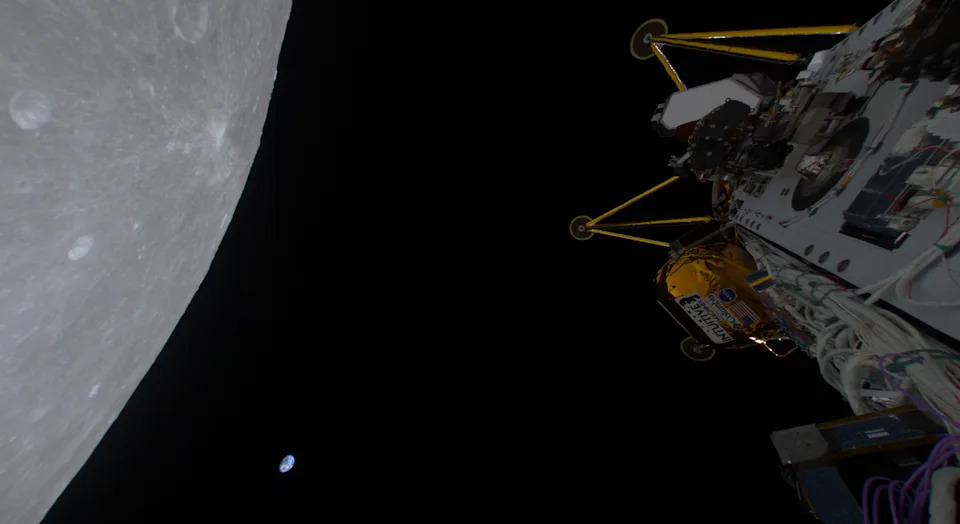
Athena, the lunar lander on Intuitive Machines' IM-2 mission, captured this image of the moon's surface with Earth seen in the distance ahead of a March 6 landing attempt. While the lander was the second U.S. vehicle to reach the moon within a week, it ultimately landed on its side, which hindered much of its mission.
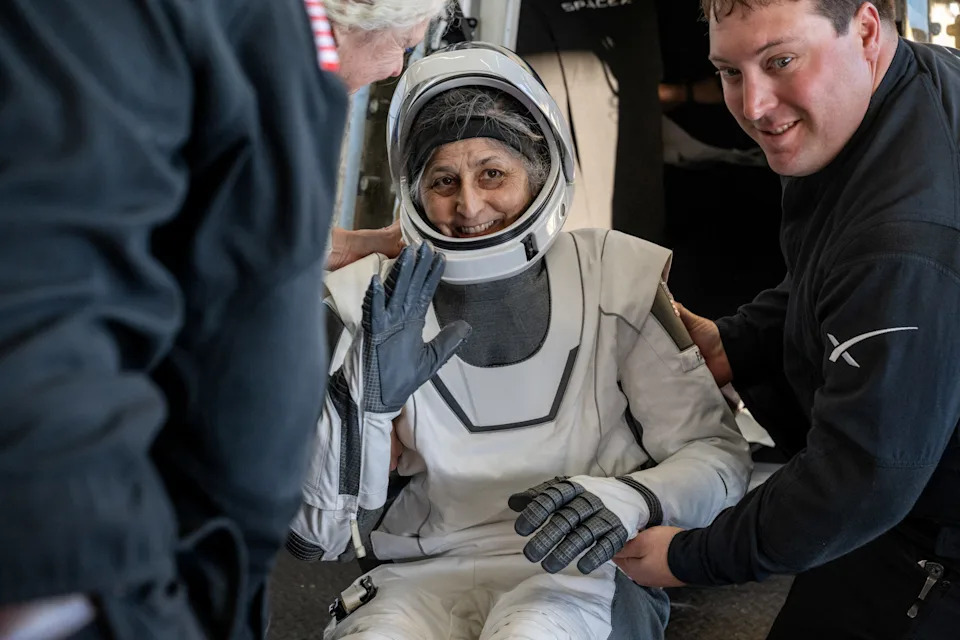
NASA astronaut Suni Williams is helped out of a SpaceX Dragon spacecraft March 18 following a return to Earth after a nine-month stay at the International Space Station. She and NASA astronaut Butch Wilmore crewed the Boeing Starliner, which had launched in June 2024 on a failed test flight that was meant to return them to Earth a few days later.
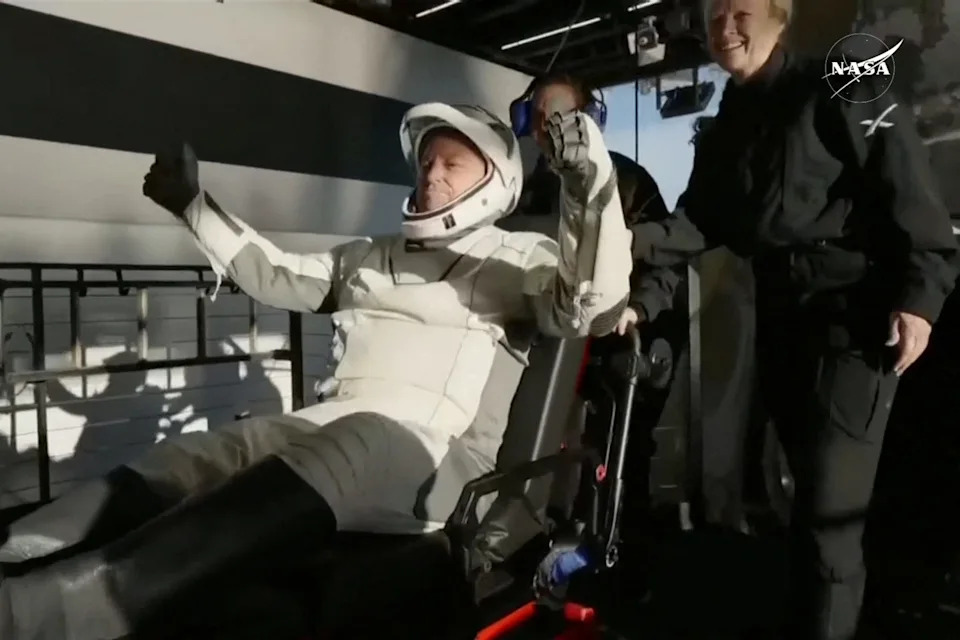
Butch Wilmore reacts after he and Suni Williams and two other astronauts splashed down March 18 in a Crew Dragon space capsule following their return to earth from the International Space Station off the coast of Florida. The astronauts' extended stay at the orbital outpost dominated the news cycle for months.
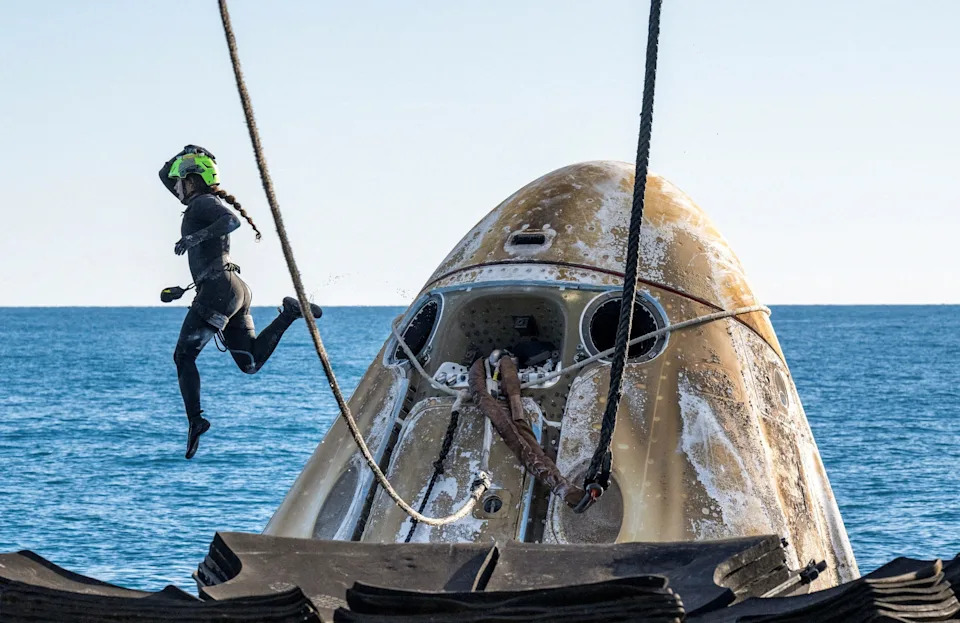
A SpaceX support team member is seen airborne while working to lift the SpaceX Dragon capsule that returned the Starliner astronauts and two others onto a recovery vehicle following its landing off the coast of Florida.

This picture shows the crew of a privately-funded mission known as Fram2, from left to right, mission specialist and medical officer Eric Philips, mission commander Chun Wang, pilot Rabea Rogge and vehicle commander Jannicke Mikkelsen on March 19, 2025 in Hawthorne, California. Launched March 31 from Florida using a SpaceX Dragon capsule, the mission became t first ever human spaceflight over the Earth's polar regions.
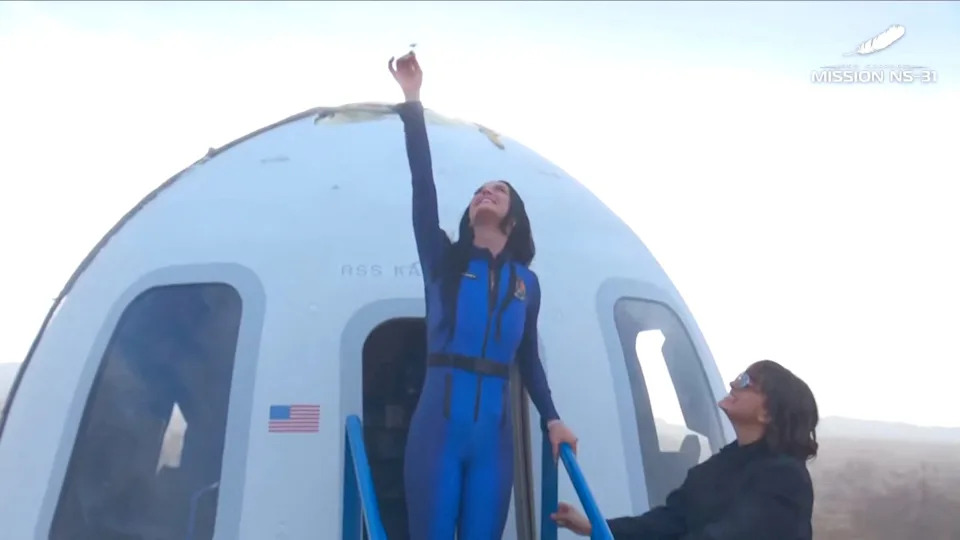
Pop musician Katy Perry emerges April 14 from Blue Origin's New Shepard capsule in West Texas following a brief flight to the edge of space. Perry was part of an all-women crew that also included broadcast journalist Gayle King that took the ride from Blue Origin's facility called Launch Site One. The high-profile launch attracted plenty of headlines and even drew some backlash from those who viewed the mission as a wasteful publicity stunt.
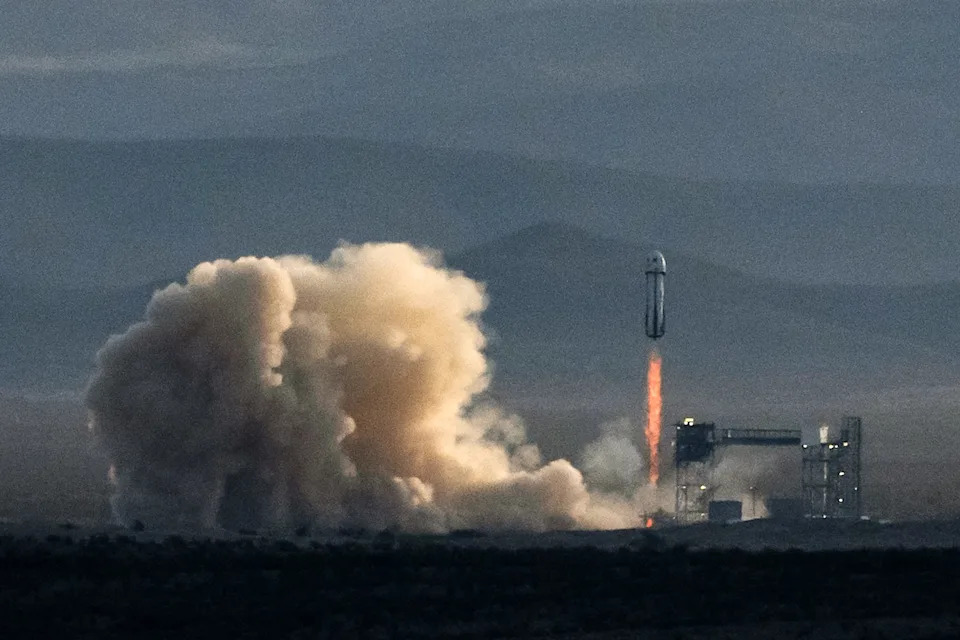
Blue Origin's New Shepard rocket carrying astronauts Aisha Bowe, Amanda Nguyen, Kerianne Flynn, Gayle King, Katy Perry, and Lauren Sanchez lifts off April 14 from Launch Site One near Van Horn, Texas. Blue Origin has since launched five more human spaceflights on the New Shepard in 2025.
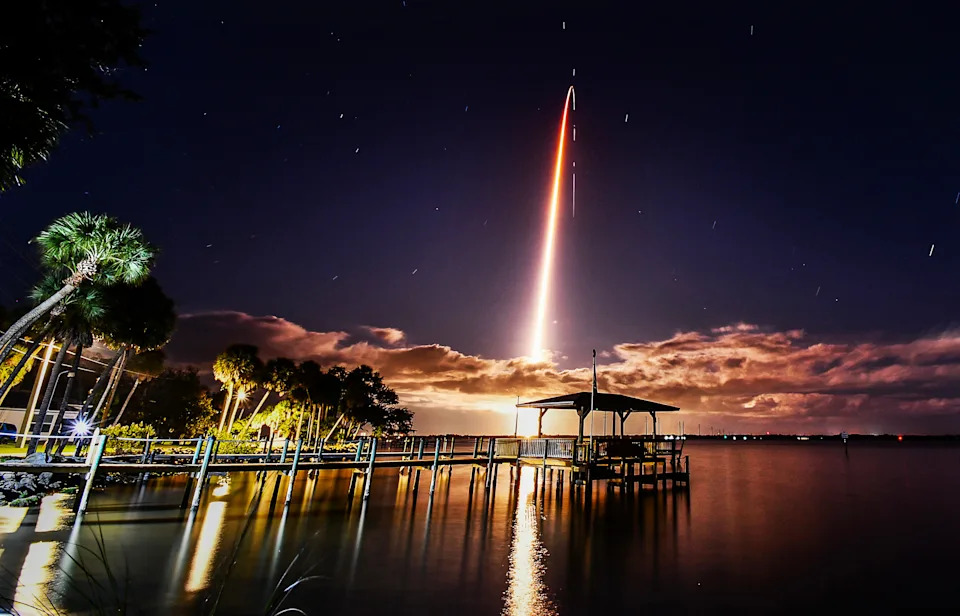
This photo depicts a United Launch Alliance Atlas V rocket carrying the latest batch of Amazon's broadband satellites on Dec. 16 to low-Earth orbit after launching from the Cape Canaveral Space Force Station in Florida. Formerly called Project Kuiper, the venture has since been renamed Amazon Leo. Since its debut April launch, Amazon Leo has deployed 180 of 3,000 satellites planned for its first constellation, which could challenge SpaceX's Starlink.
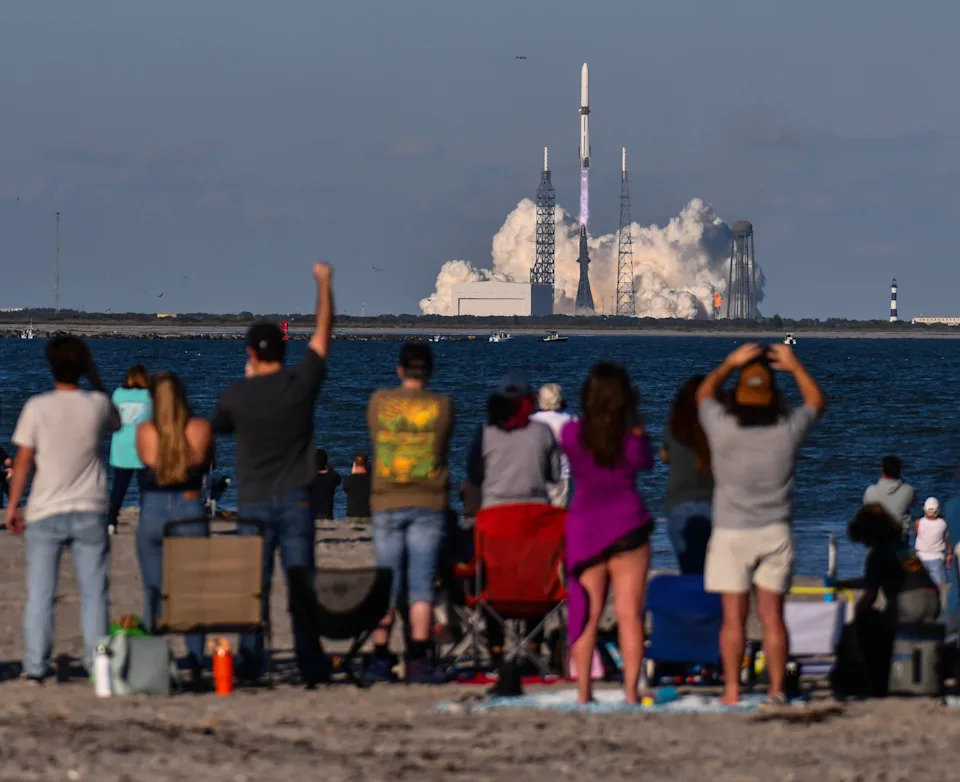
A group of Blue Origin employees with their friends and families gather on the beach in Cape Canaveral for the launch of Blue Origin's second New Glenn rocket in 2025. Following its January debut, the rocket launched for the second time Nov. 13 from Launch Complex 36 at Cape Canaveral Space Force Station, sending NASA's twin ESCAPADE spacecraft on their trek to Mars.
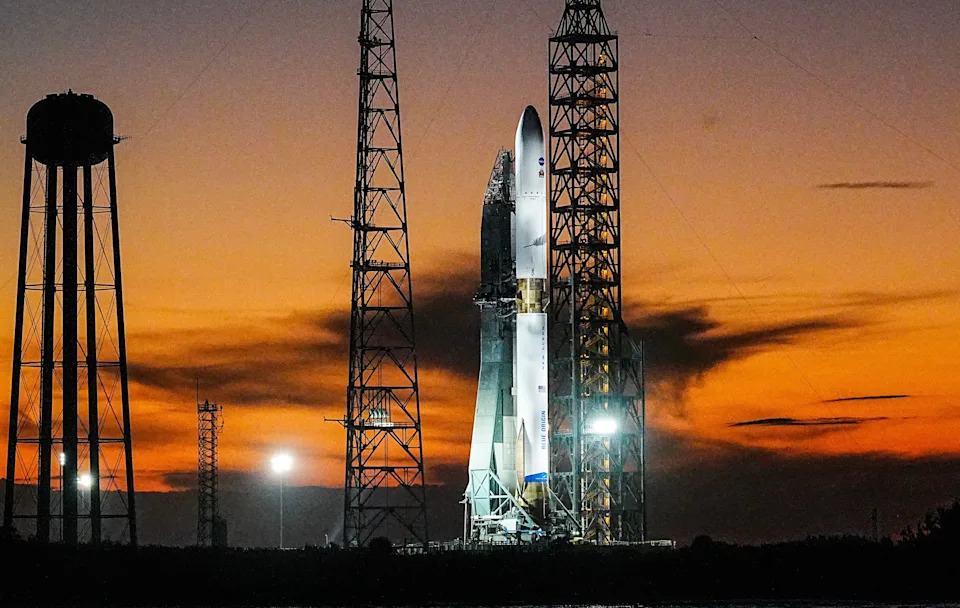
Darkness falls Nov. 9 as a Blue Origin New Glenn rocket is prepped for its second-ever launch from the Cape Canaveral Space Force Station. Blue Origin is developing the towering rocket for heavy-lift missions that could see Jeff Bezos' company compete with Elon Musk and SpaceX.
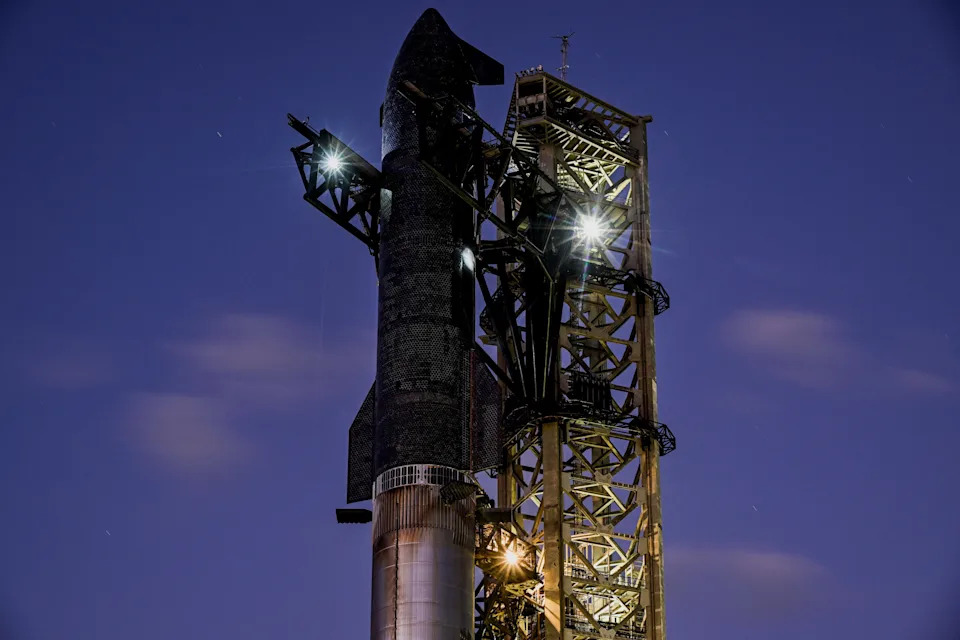
The SpaceX Starship spacecraft sits Oct. 12, 2025 atop the Super Heavy booster before sunrise as preparations continue for its 11th test flight from the company's complex in Starbase, Texas.
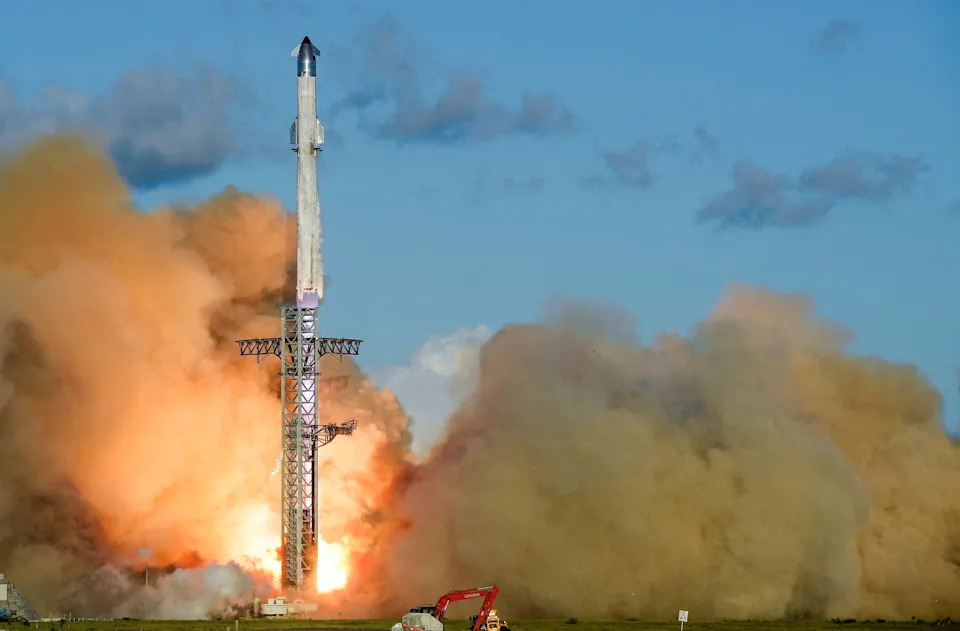
A SpaceX Super Heavy booster carrying the Starship spacecraft lifts off Oct. 13, 2025, on its 11th ever test flight at the company's launch pad in Starbase, Texas. The launch was Starship's fifth of 2025, and second consecutive successful test flight following a year that was early on marked by explosive failures. SpaceX is developing the rocket for future missions that would help NASA astronauts land on the moon and also potentially transport the first humans to Mars.
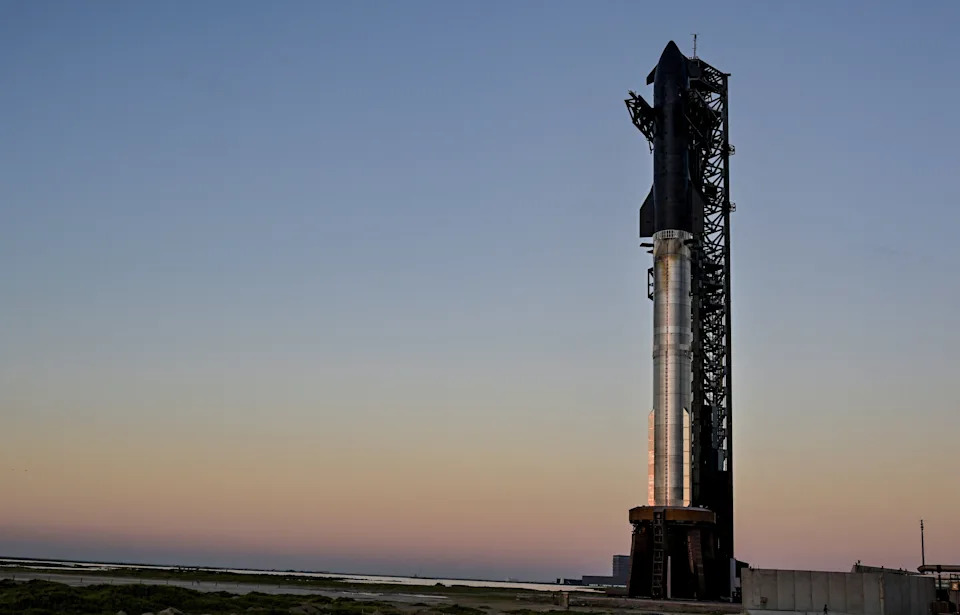
The SpaceX Starship spacecraft sits Oct. 12, 2025 atop the Super Heavy booster before sunrise as preparations continue for its 11th test flight from the company's complex in Starbase, Texas.
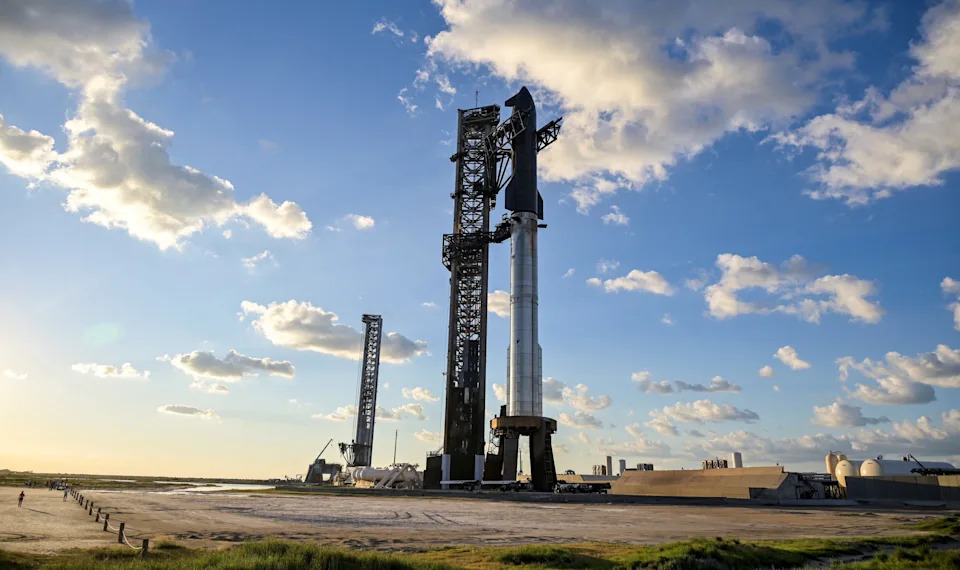
The SpaceX Starship spacecraft is hoisted Oct. 11, 2025 along the launch tower for stacking atop the Super Heavy booster in preparation for its 11th test flight from the company's complex in Starbase, Texas.
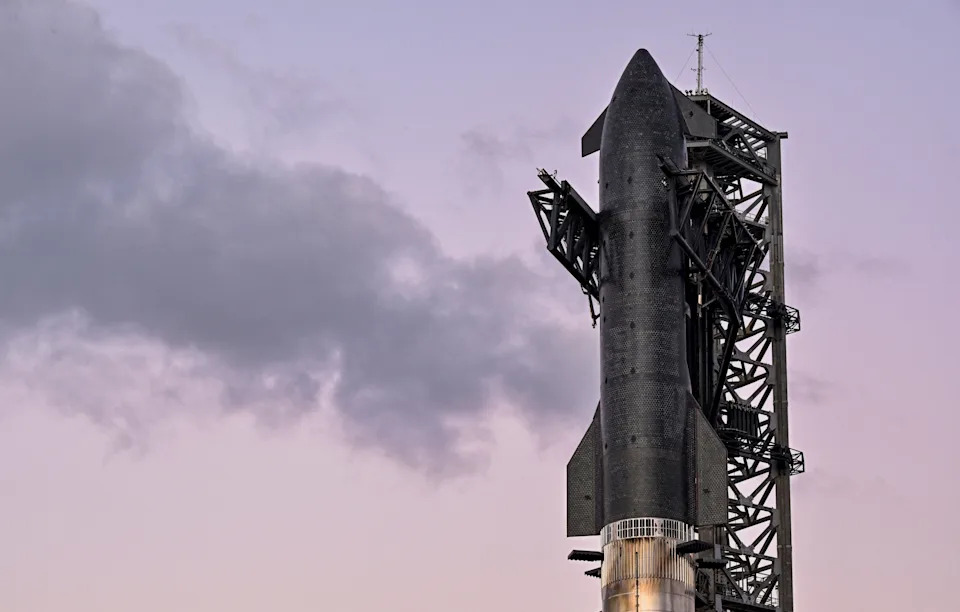
The SpaceX Starship spacecraft sits Oct. 12, 2025 atop the Super Heavy booster before sunrise as preparations continue for its 11th test flight from the company's complex in Starbase, Texas.
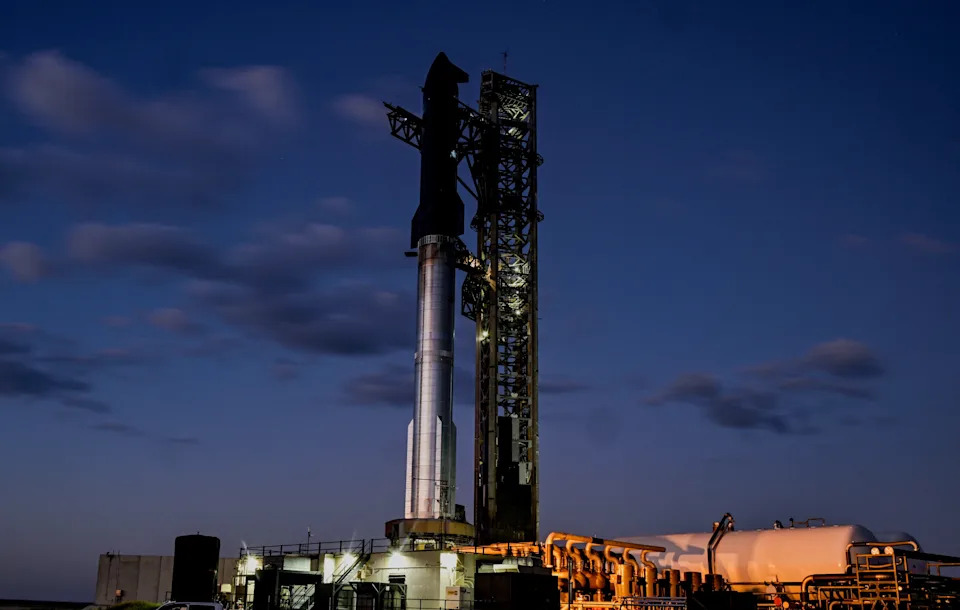
The SpaceX Starship spacecraft sits Oct. 12, 2025 atop the Super Heavy booster before sunrise as preparations continue for its 11th test flight from the company's complex in Starbase, Texas.
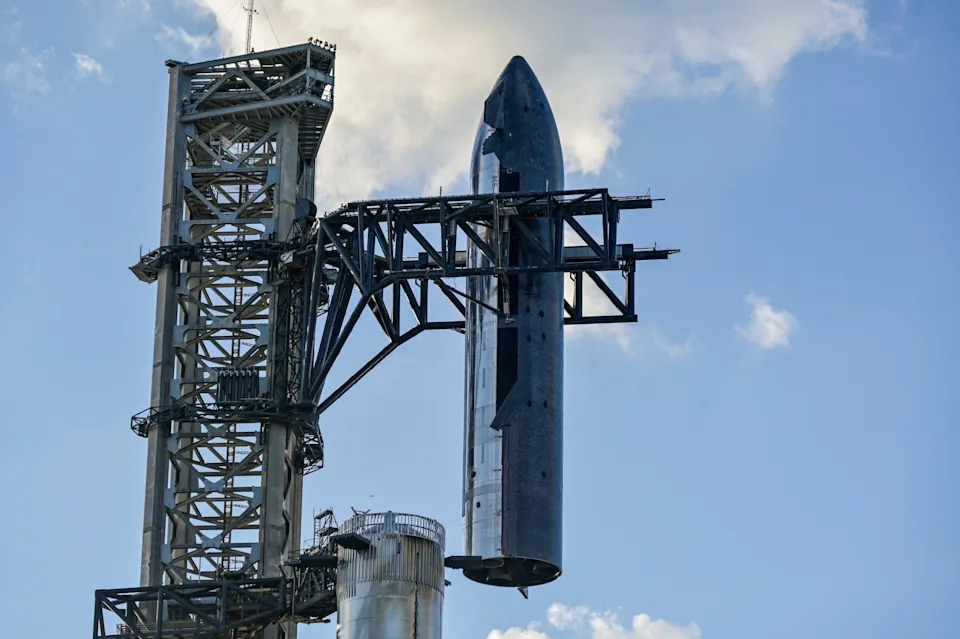
The SpaceX Starship spacecraft is hoisted Oct. 11, 2025 along the launch tower for stacking atop the Super Heavy booster in preparation for its 11th test flight from the company's complex in Starbase, Texas.
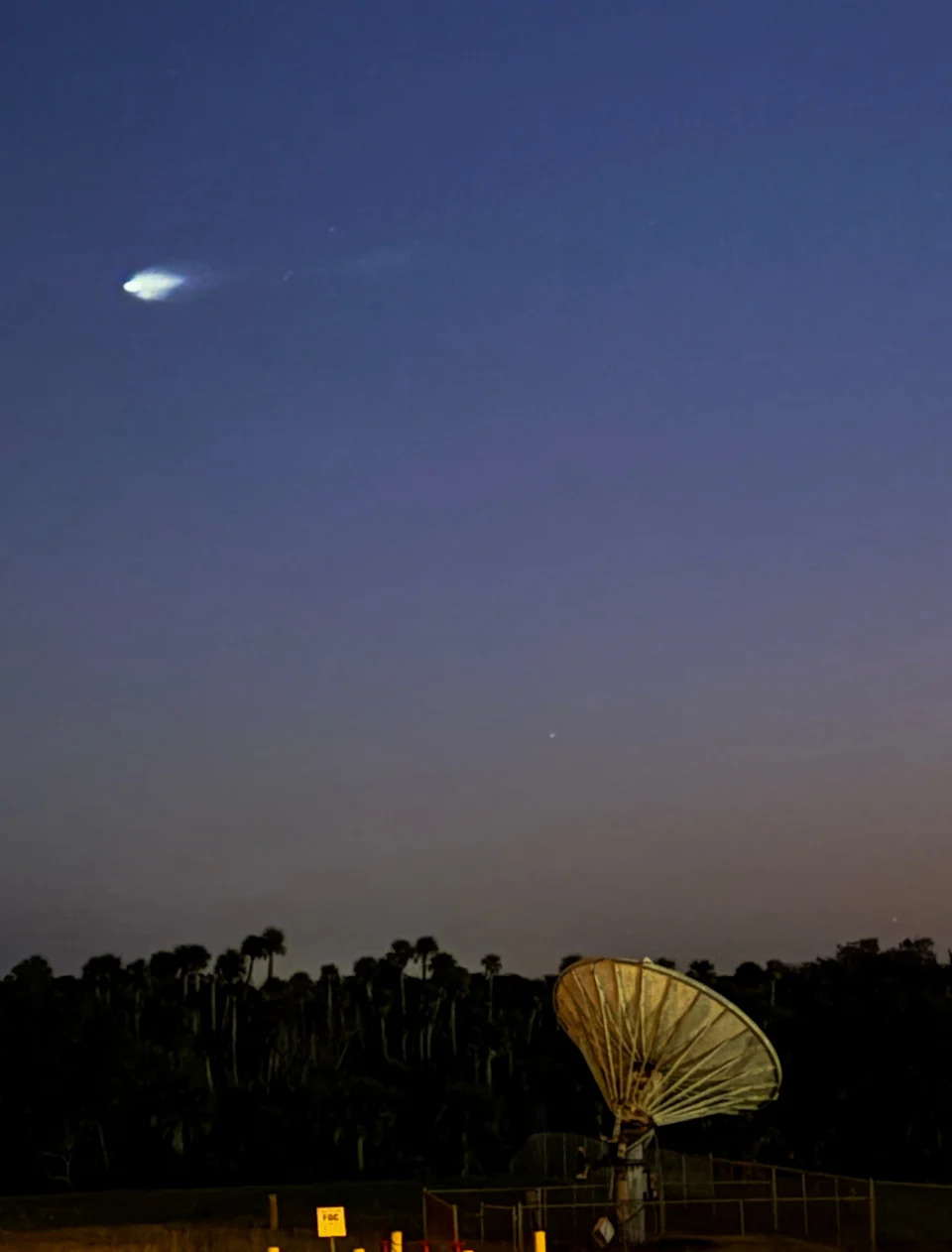
SpaceX’s 11th Starship test flight lights up the skies over Brevard as seen from the Kennedy Space Center October 13, 2025. Craig Bailey, FLORIDA TODAY via USA TODAY NETWORK
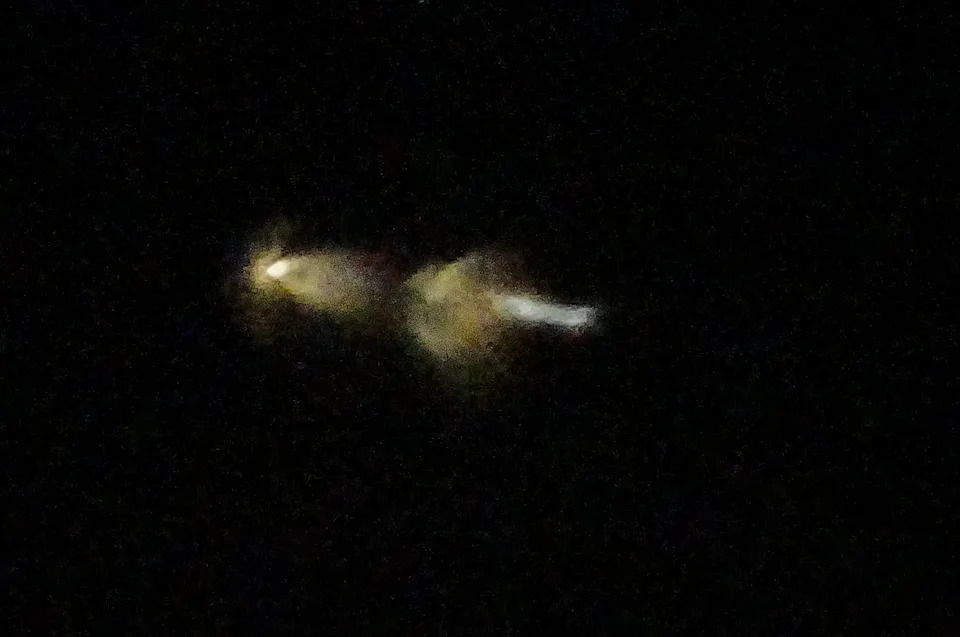
SpaceX’s 11th Starship test flight lights up the skies over Brevard as seen from the Kennedy Space Center October 13, 2025. Craig Bailey, FLORIDA TODAY via USA TODAY NETWORK
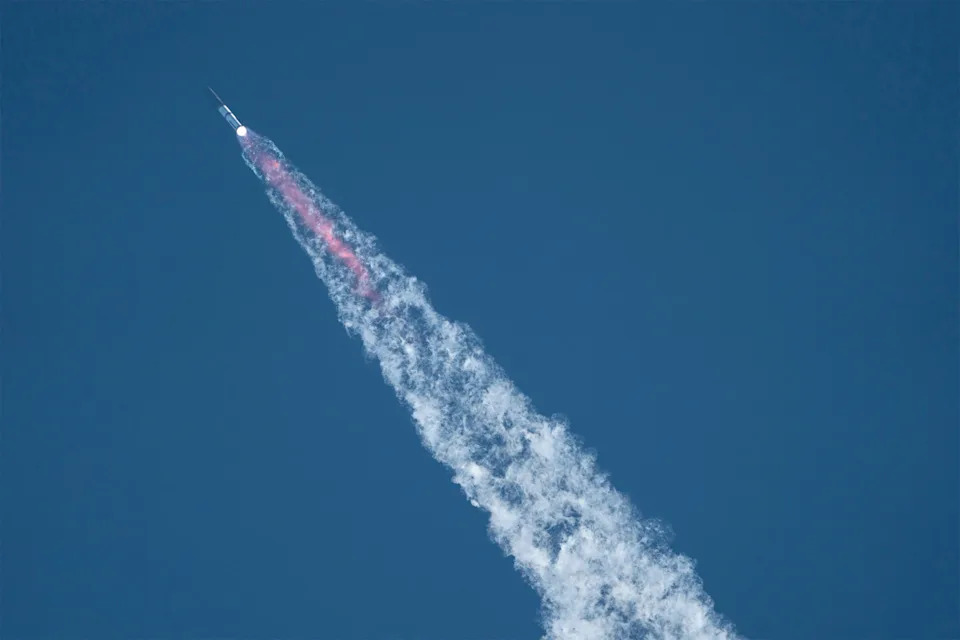
SpaceX's Starship rocket launches Oct. 13 during the 11th test flight, as seen from South Padre Island in Texas.
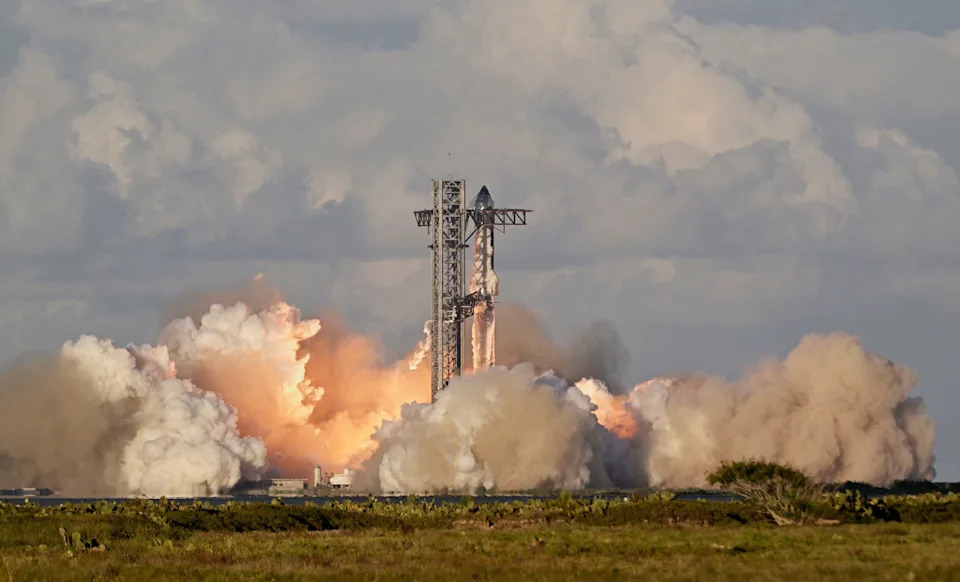
A SpaceX Super Heavy booster carrying the Starship spacecraft lifts off October 13, 2025 on its 11th test flight at the company's launch pad in Starbase, Texas.
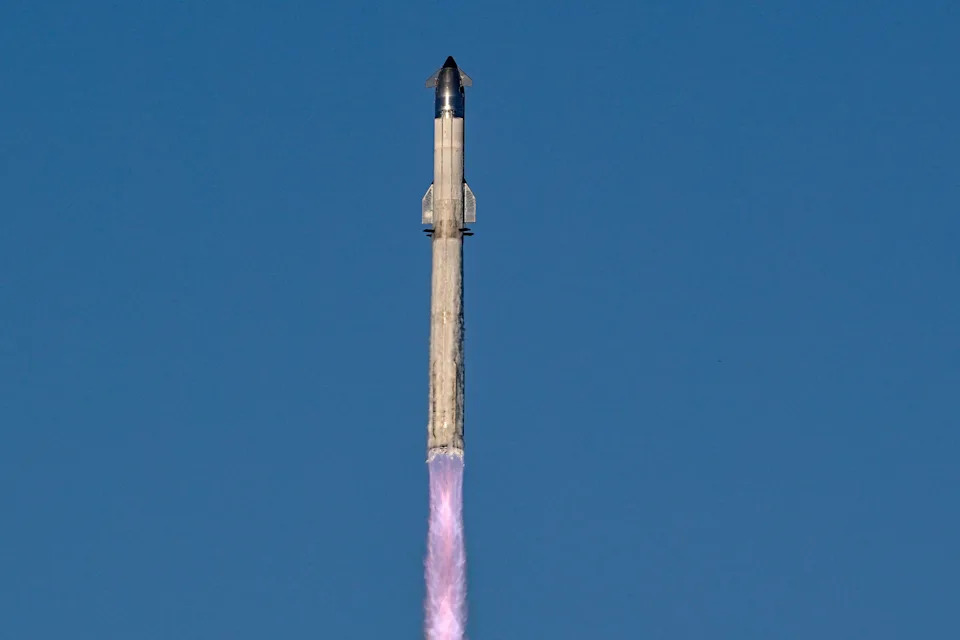
A SpaceX Super Heavy booster carrying the Starship spacecraft lifts off October 13, 2025 on its 11th test flight at the company's launch pad in Starbase, Texas.
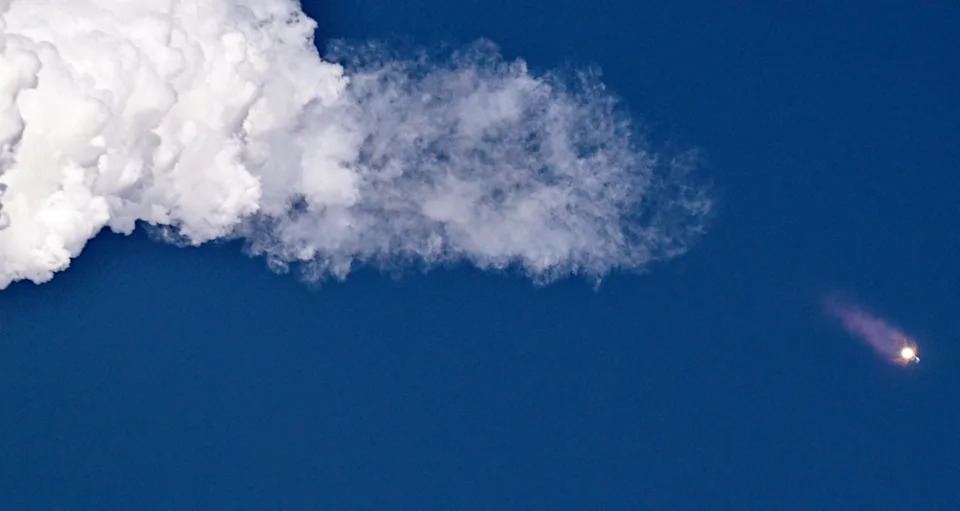
A SpaceX Super Heavy booster carrying the Starship spacecraft lifts off October 13, 2025 on its 11th test flight at the company's launch pad in Starbase, Texas.
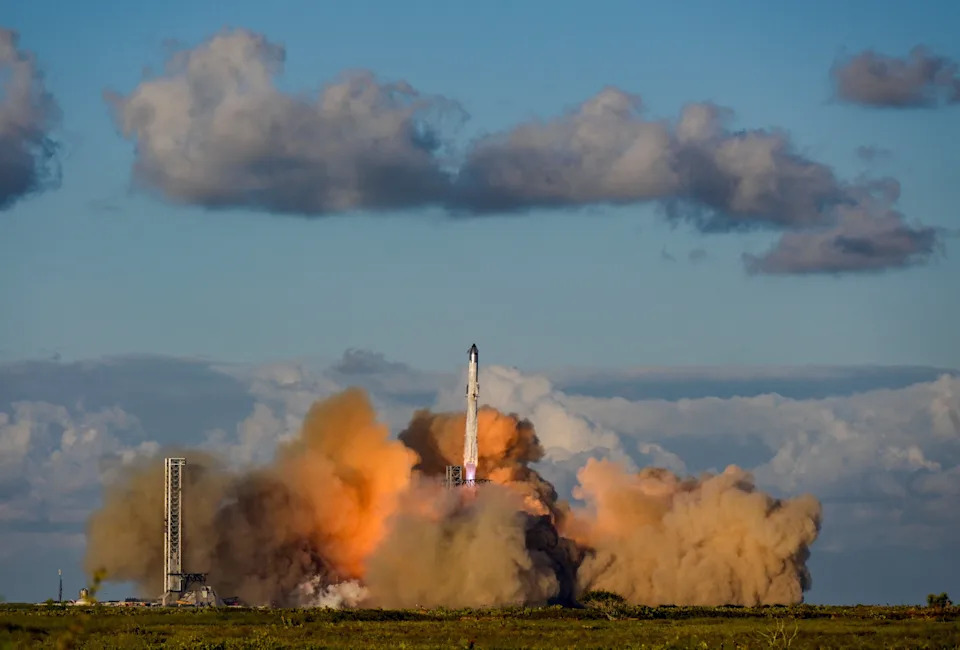
A SpaceX Super Heavy booster carrying the Starship spacecraft lifts off October 13, 2025 on its 11th test flight at the company's launch pad in Starbase, Texas.
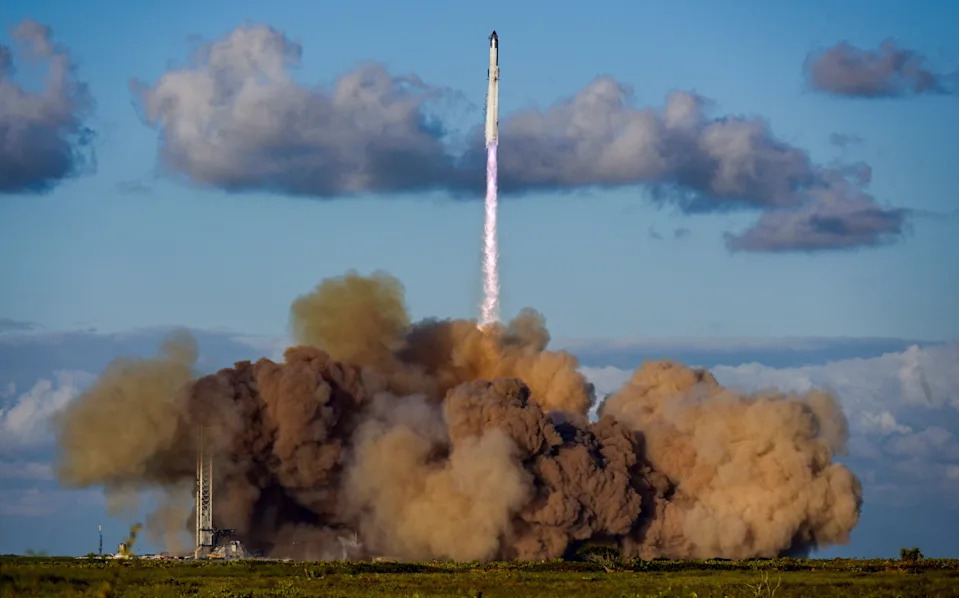
A SpaceX Super Heavy booster carrying the Starship spacecraft lifts off October 13, 2025 on its 11th test flight at the company's launch pad in Starbase, Texas.
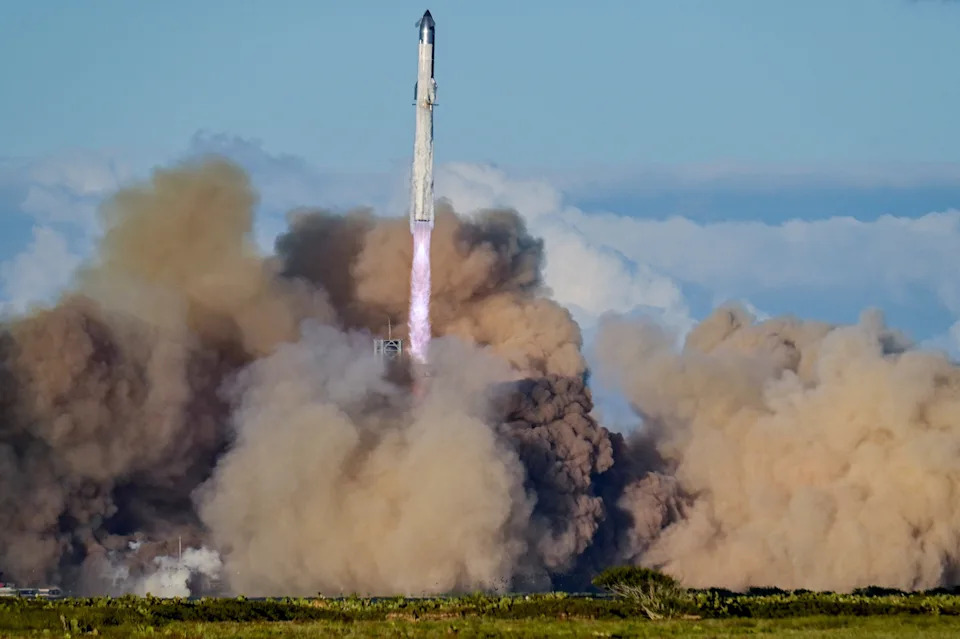
A SpaceX Super Heavy booster carrying the Starship spacecraft lifts off October 13, 2025 on its 11th test flight at the company's launch pad in Starbase, Texas.
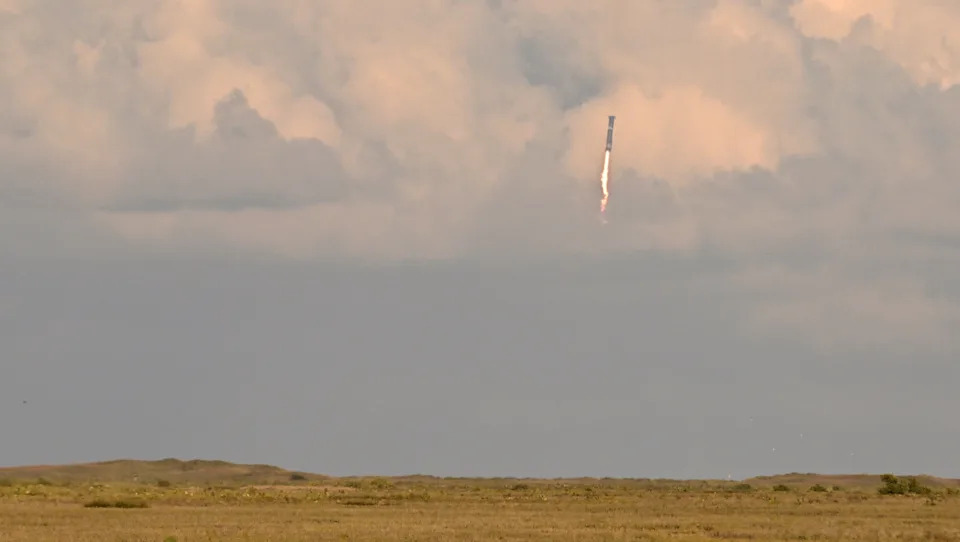
A SpaceX Super Heavy booster splashes down in the Gulf of Mexico, renamed by the U.S. government as the Gulf of America, after launching the SpaceX Starship spacecraft October 13, 2025 on its 11th test flight at the company's launch pad in Starbase, Texas.
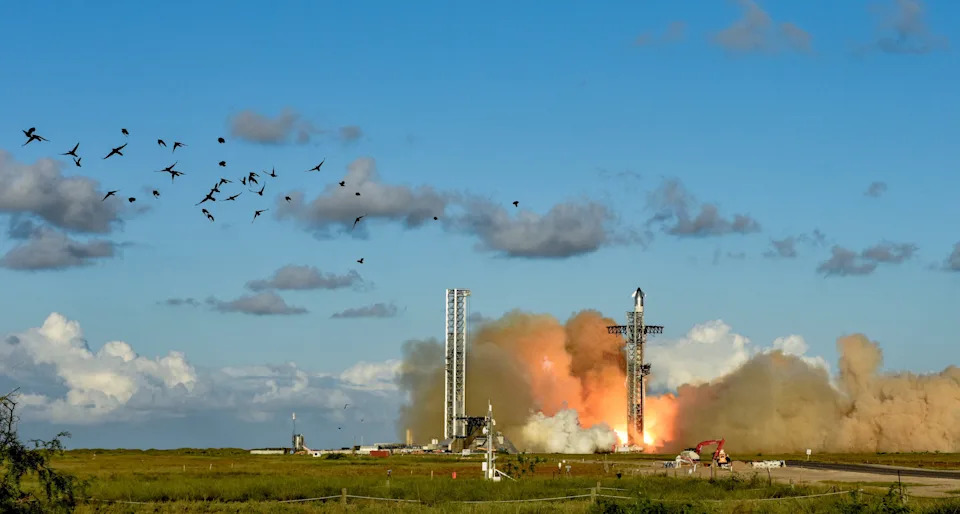
A SpaceX Super Heavy booster carrying the Starship spacecraft lifts off October 13, 2025 on its 11th test flight at the company's launch pad in Starbase, Texas.
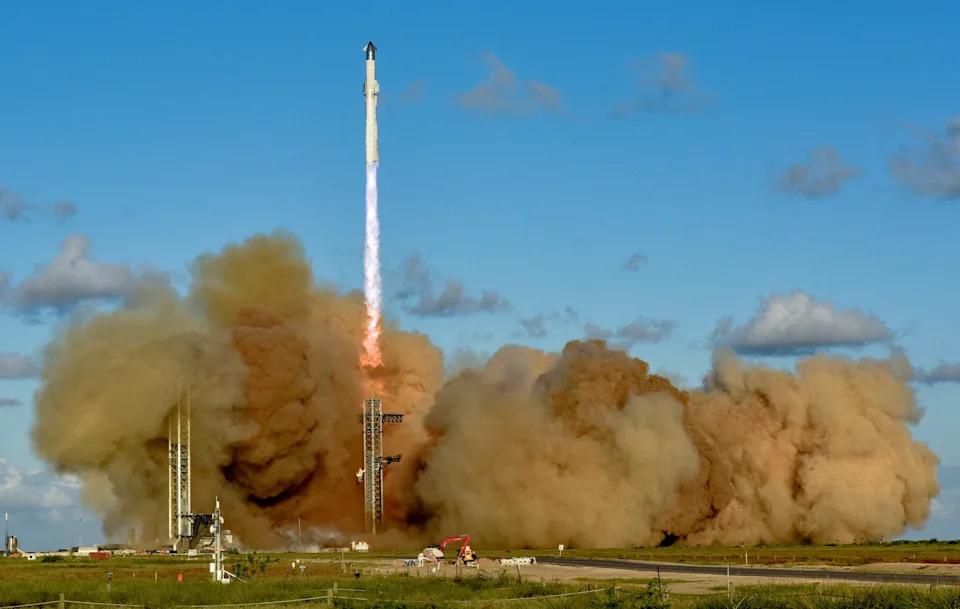
A SpaceX Super Heavy booster carrying the Starship spacecraft lifts off October 13, 2025 on its 11th test flight at the company's launch pad in Starbase, Texas.
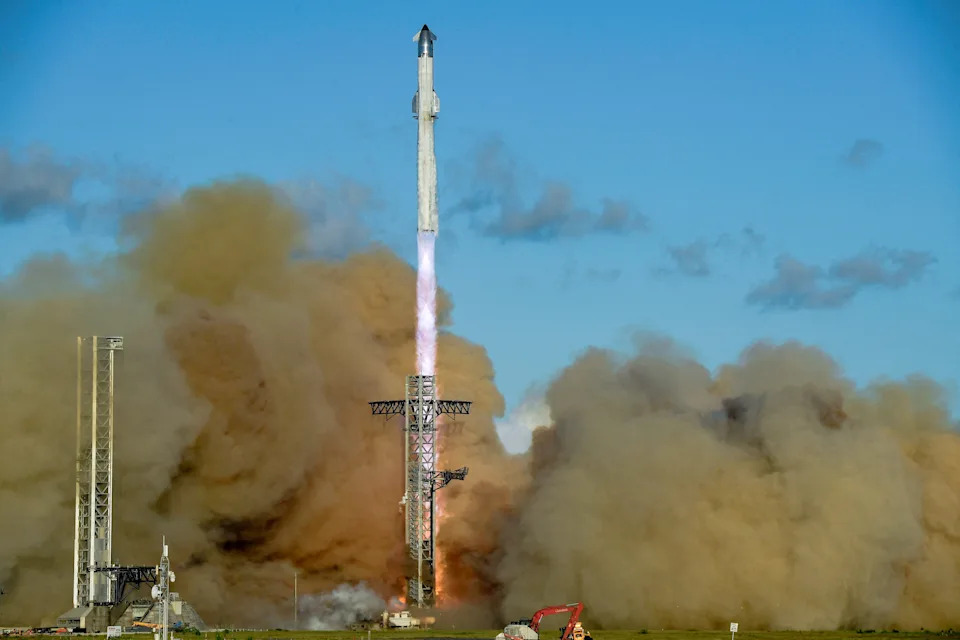
A SpaceX Super Heavy booster carrying the Starship spacecraft lifts off October 13, 2025 on its 11th test flight at the company's launch pad in Starbase, Texas.
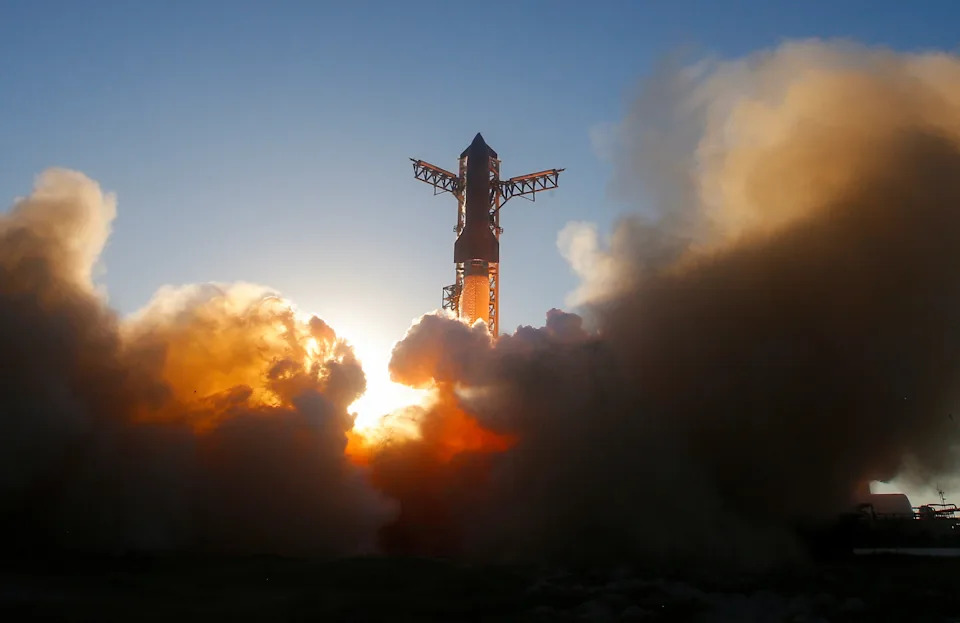
A SpaceX Super Heavy booster carrying the Starship spacecraft lifts off October 13, 2025 on its 11th test flight at the company's launch pad in Starbase, Texas.

Artemis II crew members Jeremy Hansen, Reid Wiseman, Christina Koch, and Victor Glover answer questions from reporters during the first downlink event of their mission.
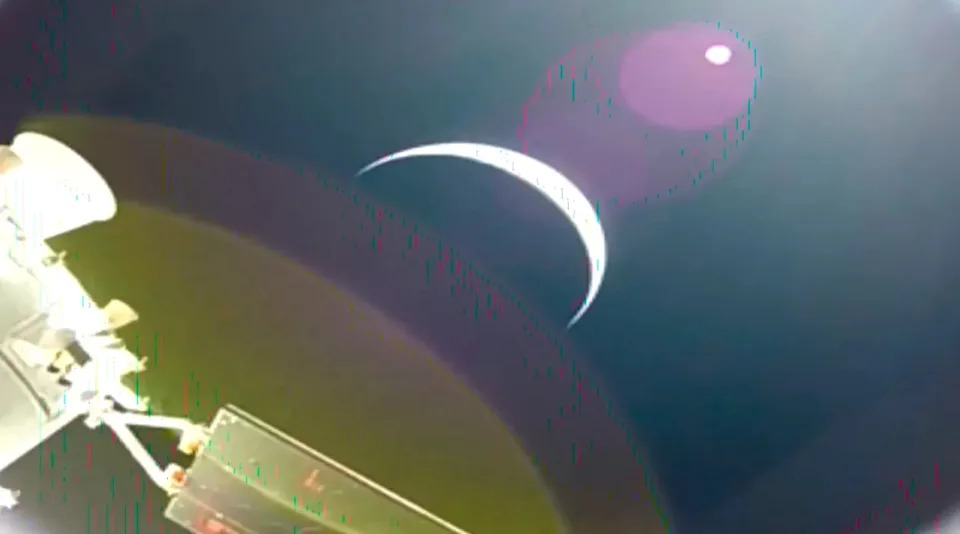
Earth’s crescent is seen from a solar array camera on the Orion spacecraft on the first flight day of the Artemis II mission.
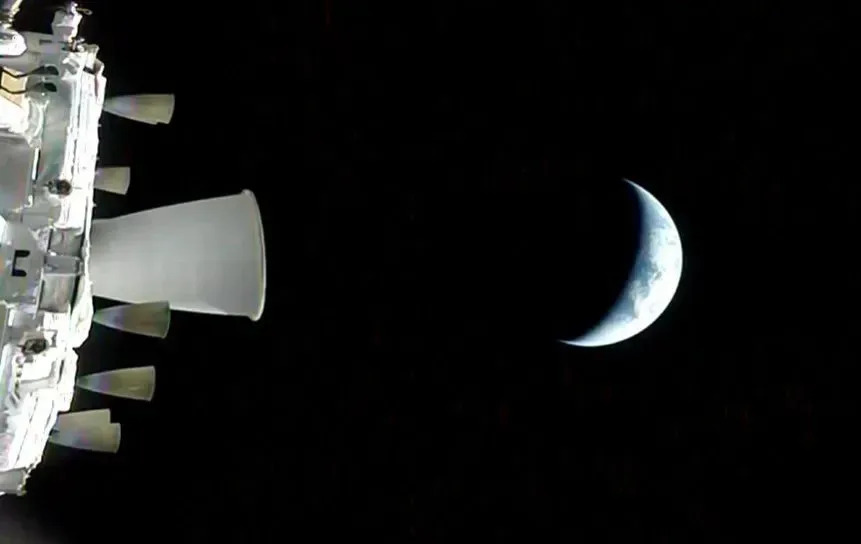
A view of the Earth from NASA’s Orion spacecraft as it orbits above the planet during the Artemis II test flight.
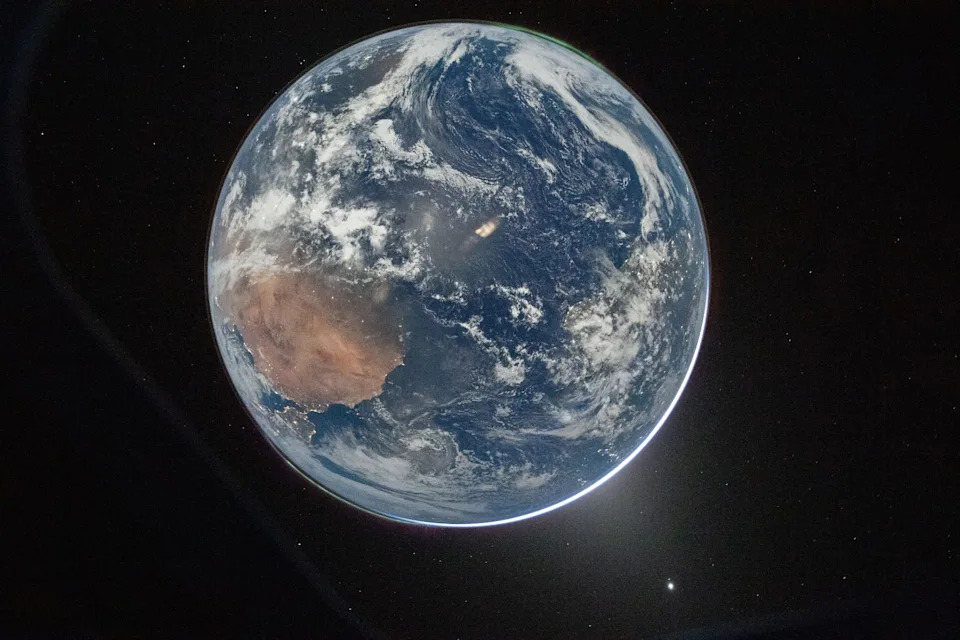
In an image posted by NASA on April 3, 2026, shows a full disk image of Earth, as seen from the Orion capsule. The planet is pale blue, swirling with white clouds and glowing slightly lighter blue in places from reflected light. From the lower left, a large brown landmass is Africa, with the Iberian peninsula twinkling with lights just where the planet curves. In the upper right, aurora glow in a thin green glow, just barely separated from the planet’s surface. Earth is set against the black of space.
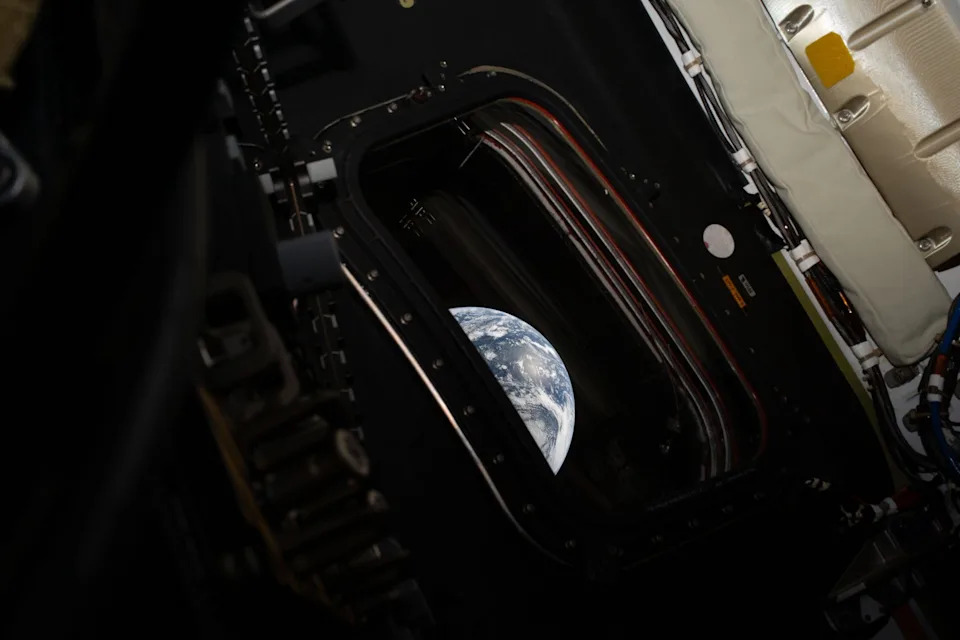
In an image posted by NASA on April 3, 2026, One-third of Earth is seen through the Orion capsule window as the NASA Artemis II mission continues towards the moon.
Although Earth only fills a fraction of the image it is the brightest object in the image. The capsule window is surrounded by a thick frame held in place with bolts. It is dark in the capsule, but the outlines of straps and various components of the capsule are visible.

This screen grab from NASA's feed released on April 3, 2026, shows the four Artemis II crew members (L-R) Canadian Space Agency (CSA) astronaut Jeremy Hansen, Artemis II mission specialist, NASA astronauts Reid Wiseman, Artemis II commander, Christina Koch, Artemis II mission specialist and Victor Glover, Artemis II pilot as they head to orbit the Moon for the first time in more than half a century.

This screen grab from NASA's feed released on April 3, 2026, shows the four Artemis II crew members (L-R) Canadian Space Agency (CSA) astronaut Jeremy Hansen, Artemis II mission specialist (hidden), NASA astronauts Reid Wiseman, Artemis II commander, Christina Koch, Artemis II mission specialist and Victor Glover, Artemis II pilot as they head to orbit the Moon for the first time in more than half a century.
Pomozite nam da budemo bolji.