NASA je objavila četvoro astronauta za misiju Crew‑13, s planiranim lansiranjem sredinom septembra. Posadu čine komandantkinja Jessica Watkins, pilot Luke Delaney, kanadski misijski specijalista Joshua Kutryk i ruski kosmonaut Sergey Teteryatnikov. Astronauti će putovati SpaceX Crew Dragon kapsulom na raketi Falcon 9 i provesti nekoliko meseci na Međunarodnoj svemirskoj stanici, gde će zameniti posadu Crew‑12.
NASA Objavila Posadu Crew‑13: Četvoro Astronauta Spremno Za Let Ka ISS U Septembru
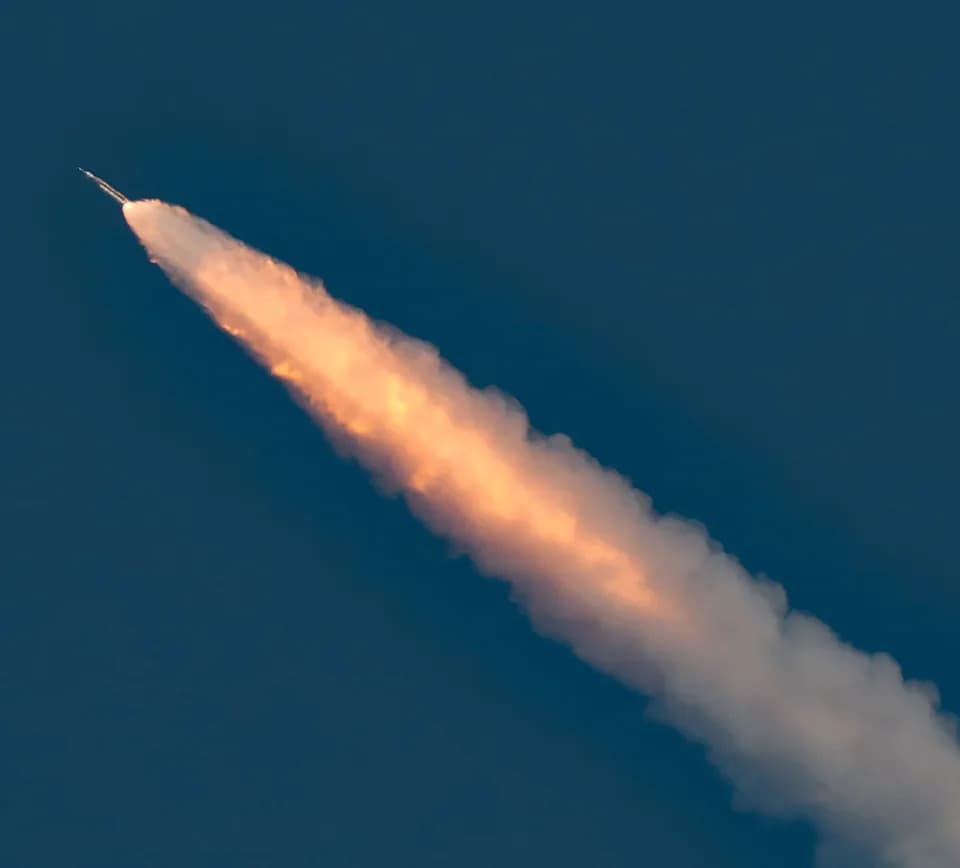
The Artemis II mission launches April 1 from the Kennedy Space Center in Cape Canaveral, Florida. The four-person crew aboard the Orion spacecraft hitched a ride to orbit atop NASA's giant 322-foot Space Launch System rocket. Launching atop 8.8 million pounds of thrust, the SLS is the most powerful rocket NASA ever launched, about 17% more powerful than the iconic Saturn V rocket used during the Apollo era.
Dok se članovi posade misije Artemis II možda vraćaju na Zemlju posle leta oko Meseca, NASA je predstavila narednu grupu astronauta koji se spremaju za let u nisku orbitu — misiju Crew‑13. Planirano lansiranje je sredinom septembra, a posada će provesti nekoliko meseci na Međunarodnoj svemirskoj stanici (ISS).
Ko su članovi posade Crew‑13?
Jessica Watkins — komandantkinja misije. Rođena u Koloradu, Watkins je geološkinja i ovo će joj biti drugi let u svemir nakon što je izabrana u astronautsku grupu 2017. godine.
Luke Delaney — pilot. Delaney, porodično iz Floride, je mornarički pilot (naval aviator). Ovo će mu biti prvi let u svemir nakon izbora u astronautsku grupu 2022. godine.
Joshua Kutryk — misijski specijalista iz Kanadske svemirske agencije (CSA). Kutryk, iz Alberta, iskusni je borbeni pilot i očekuje se da postane prvi astronaut CSA uključen u NASA‑in Commercial Crew Program.
Sergey Teteryatnikov — misijski specijalista iz Roscosmosa. Teteryatnikov je ruski kosmonaut i ovo će mu biti prvi let u svemir.
Šta treba znati o misiji?
Crew‑13 je zajednička misija NASA i SpaceX‑a realizovana u okviru NASA‑inog Programa komercijalne posade. Astronauti će putovati u kapsuli SpaceX Crew Dragon koja će biti lansirana na vrhu rakete Falcon 9 sa Kennedy Space Centra na Floridi.
Lansiranje je ciljano za sredinu septembra, a plan je da posada provede nekoliko meseci na ISS‑u radeći na naučnim eksperimentima i rutinskim operacijama stanice.
Kontekst i trenutna posada
Međunarodna svemirska stanica nalazi se u niskoj Zemljinoj orbiti više od 25 godina (otprilike 260 milja iznad Zemlje) i bila je domaćin više od 290 svemirskih putnika iz 26 zemalja, uključujući oko 170 iz Sjedinjenih Država. ISS funkcioniše kroz međunarodno partnerstvo koje obuhvata NASA, Roscosmos, ESA, JAXA i CSA.
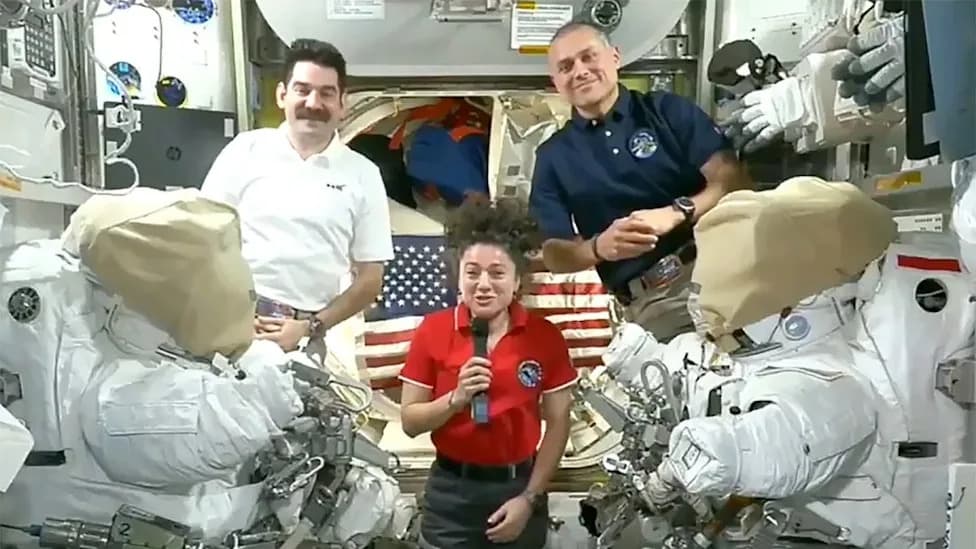
Crew‑13 će zameniti posadu Crew‑12. Trenutna posada uključuje članove Crew‑12 — NASA‑ine astronaute Jessicu Meir i Jacka Hathawaya, predstavnicu ESA Sophie Adenot i ruskog kosmonauta Andreya Fedyaeva — koji su stigli u februaru i planiraju da odu nekoliko dana nakon dolaska naslednika kako bi omogućili period primopredaje. Pored njih, na stanici su i astronaut Chris Williams te ruski kosmonauti Sergey Mikaev i Sergey Kud‑Sverchkov, koji su stigli krajem novembra na Sojuzu MS‑28.
Zašto je ova misija važna? Crew‑13 nastavlja dugotrajan program međunarodne saradnje na ISS‑u, pokazuje održivost komercijalnih lansirnih sistema i uključuje prvi doprinos CSA u okviru NASA‑inog Commercial Crew programa, što je značajan korak u saradnji sa kanadskom svemirskom agencijom.
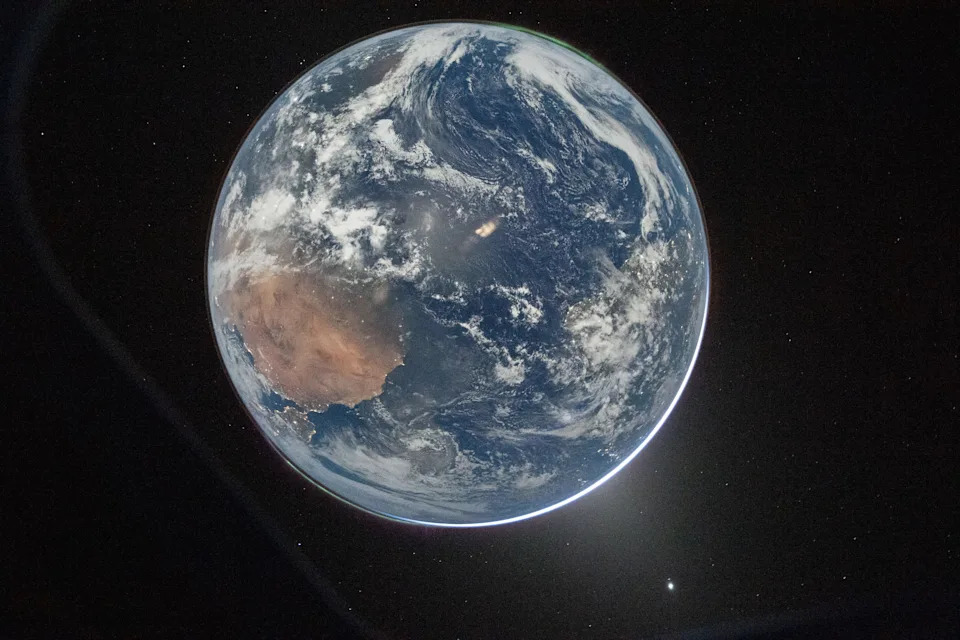
Artemis II Commander Reid Wiseman of NASA took this stunning photograph of Earth from the Orion spacecraft's window on April 2. The image is reminiscent of the iconic "blue marble" image captured during the Apollo 17 mission in 1972.
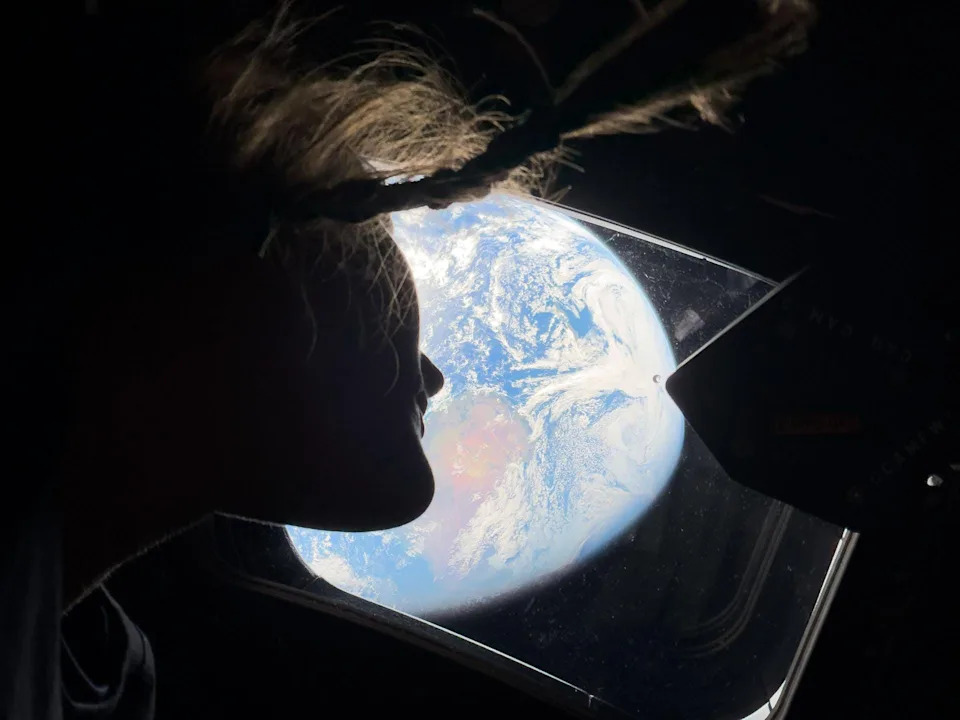
NASA astronaut Christina Koch, a mission specialist on Artemis II, gazes out the windows of the Orion vehicle back at Earth as she and the crew head toward the moon. Koch, who already holds several NASA records from her first spaceflight in 2019 to the International Space Station, became the first woman to fly on a lunar mission.
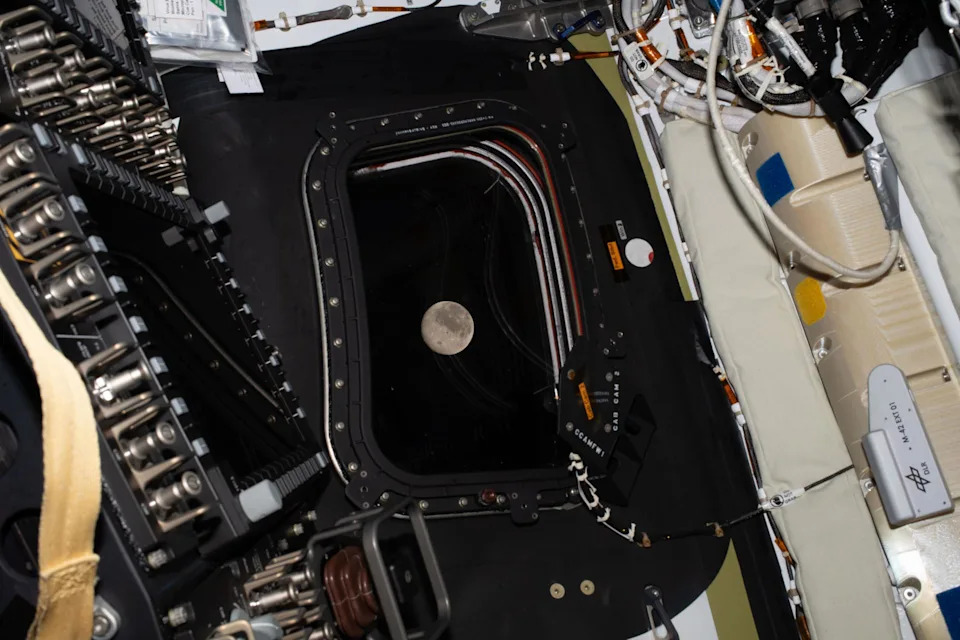
Before going to sleep April 5, the Artemis II crew snapped one more photo of the moon, as it drew close in the window of the Orion spacecraft. Shortly after, the astronauts entered the lunar sphere of influence, where the pull of the moon's gravity became stronger than Earth's.
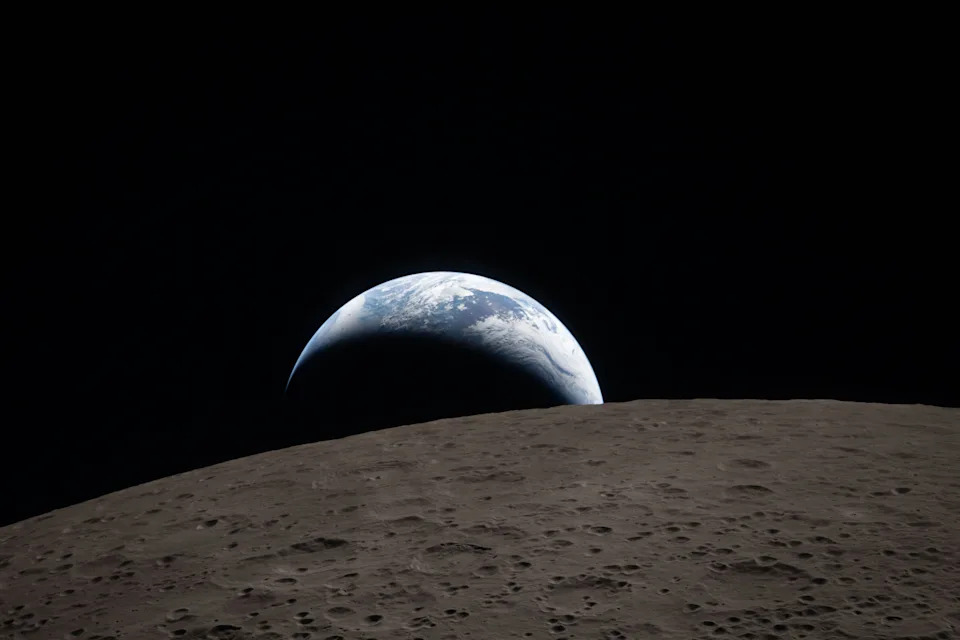
The crew of Artemis II captured a breathtaking image of a celestial event known as an "Earthset," in which the Earth dropped below the lunar horizon. The image is reminiscent of the iconic "Earthrise" photo that NASA astronaut Bill Anders captured in 1968 during the Apollo 8 mission that showed our planet rising on the lunar horizon.
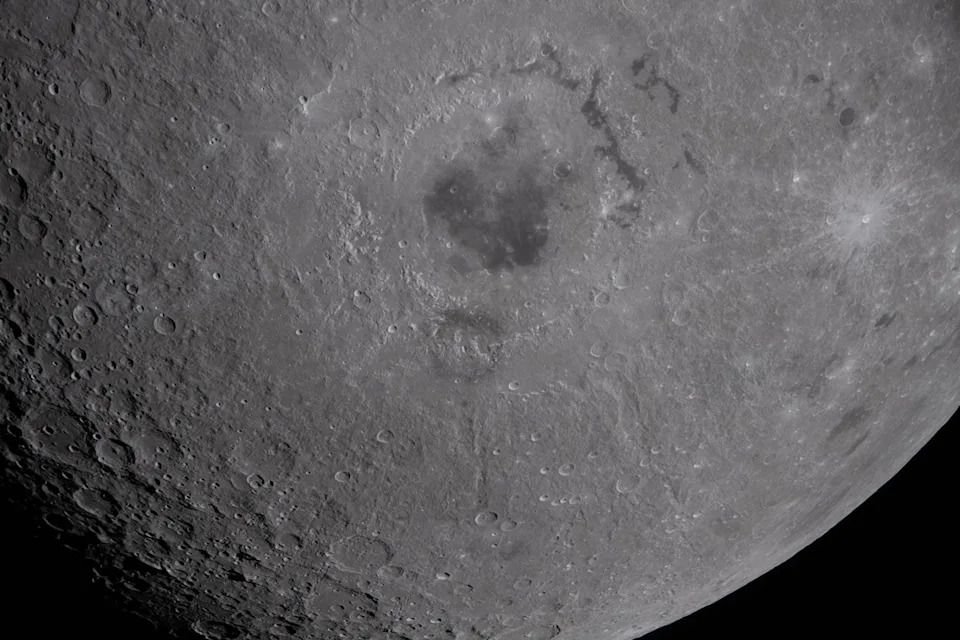
Of the impact craters, ancient lava flows and other lunar features the Artemis II astronauts observed during an April 6 flyby, a crater known as the Orientale basin was perhaps the most prominent. Spanning nearly 600 miles, the 3.8 billion year old crater (seen in the upper center of this photo) had never been seen with the naked eye prior to the mission.
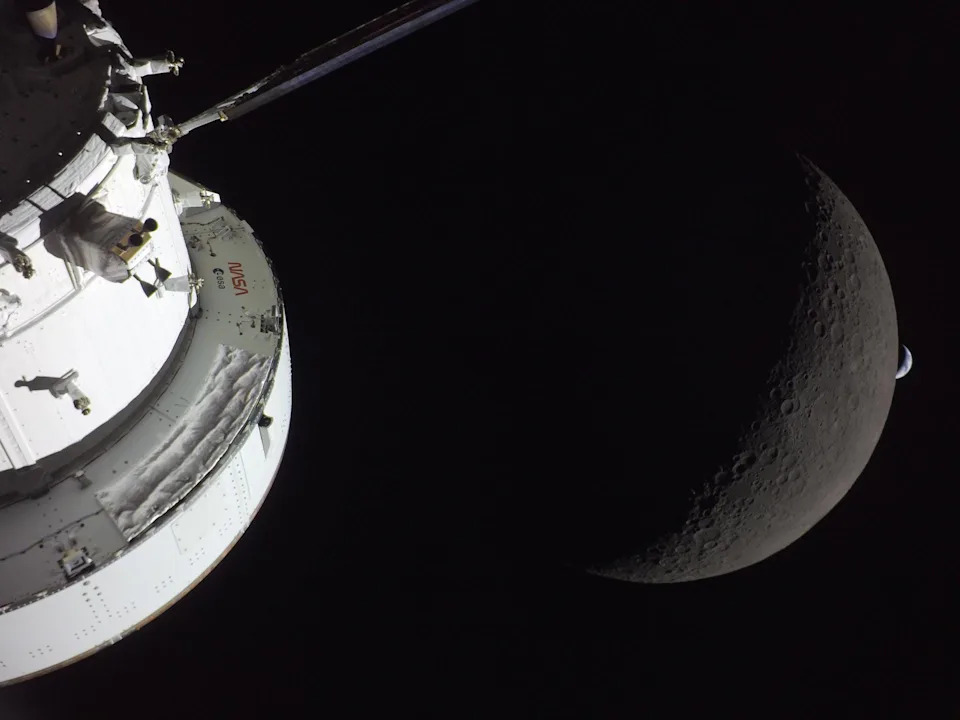
The Orion spacecraft the Artemis II astronauts were aboard is captured in the same frame as both the moon and Earth in this photo captured about four hours into the historic April 6 flyby.
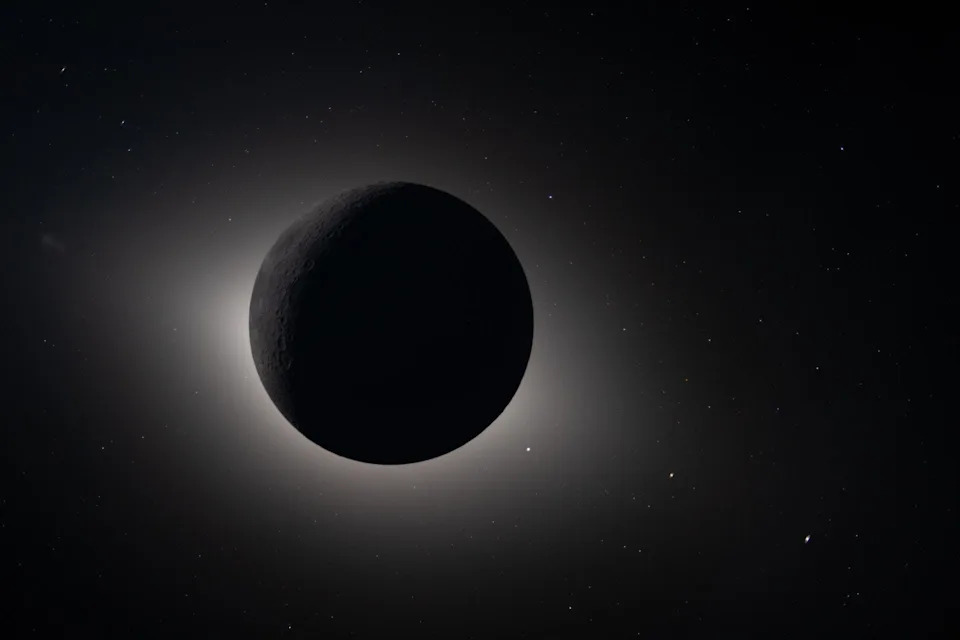
This image shows the moon fully eclipsing the sun from the vantage of the Orion spacecraft, not unlike what millions of people witnessed in April 2024 from Earth. From the crew’s perspective, the moon appeared large enough to completely block the sun, creating nearly 54 minutes of totality and revealing our star's elusive outermost layer, known as the corona.
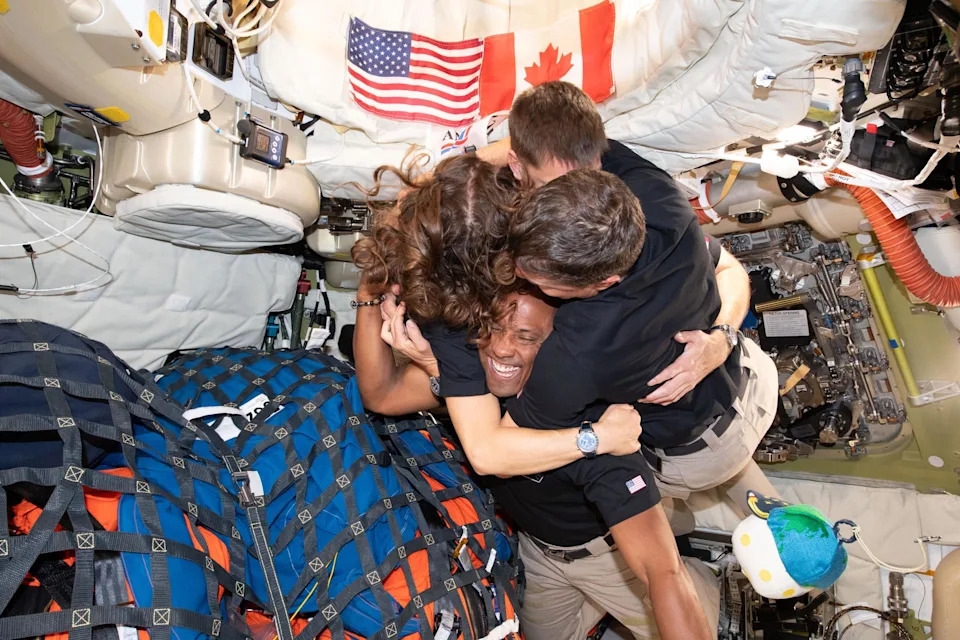
The crew members of Artemis II embrace following the historic lunar flyby April 6, during which the astronauts flew farther from Earth than anyone in human history while seeing sights of the moon's far side never seen in person.
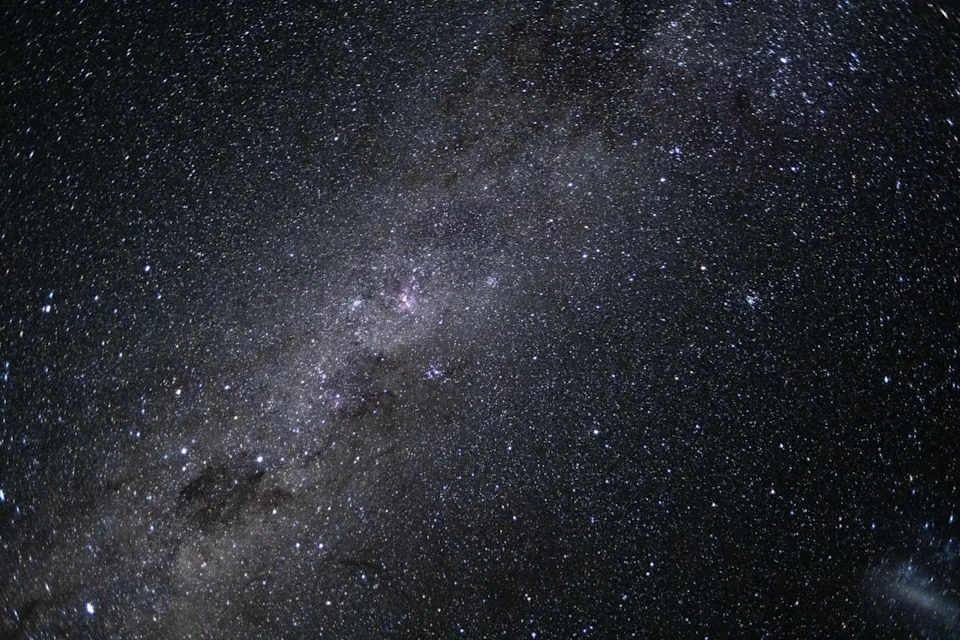
The Artemis II crew captured this breathtaking photo of our galaxy, the Milky Way. Spanning more than 100,000 light-years, Earth is located along one of the galaxy’s spiral arms, about halfway from the center.
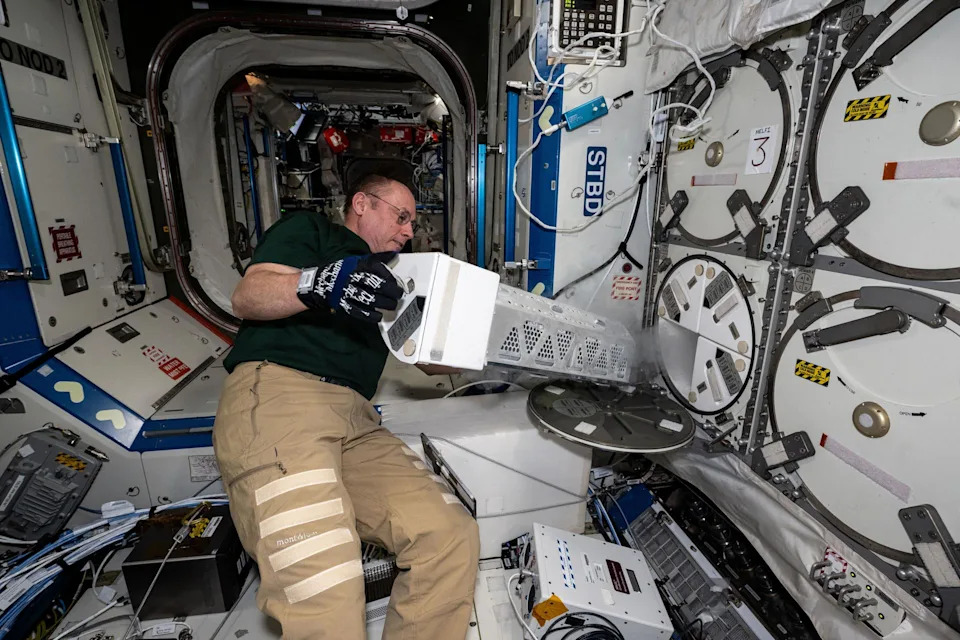
NASA astronaut Mike Fincke inserts a cryogenic storage unit containing research samples into a science freezer for preservation and later analysis on the International Space Station.
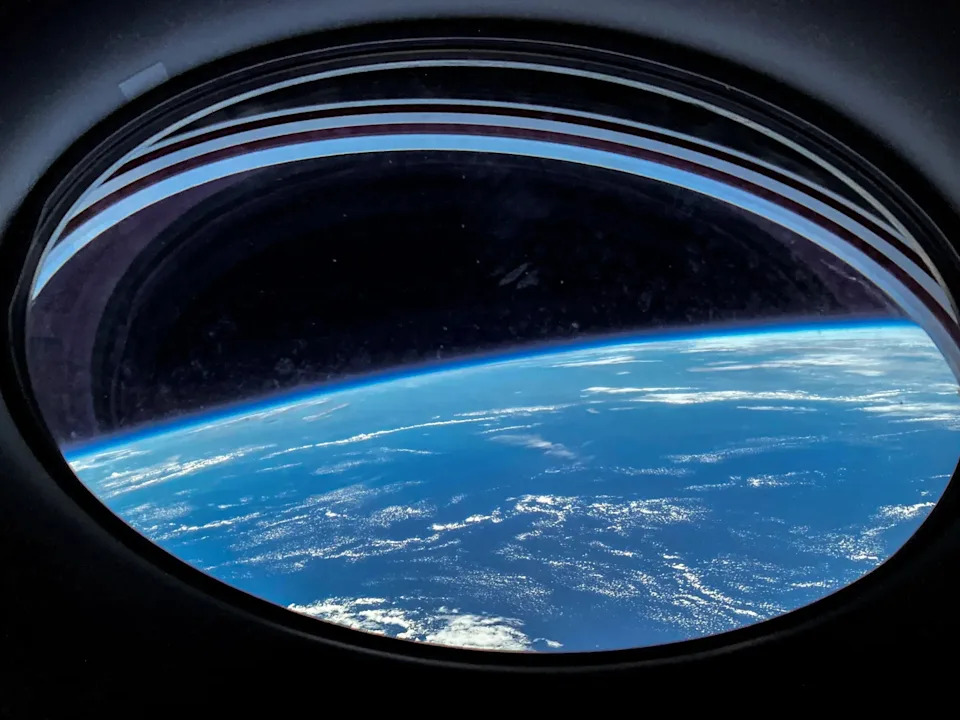
This view of Earth was captured from a window on a SpaceX Dragon spacecraft as it approached the International Space Station.
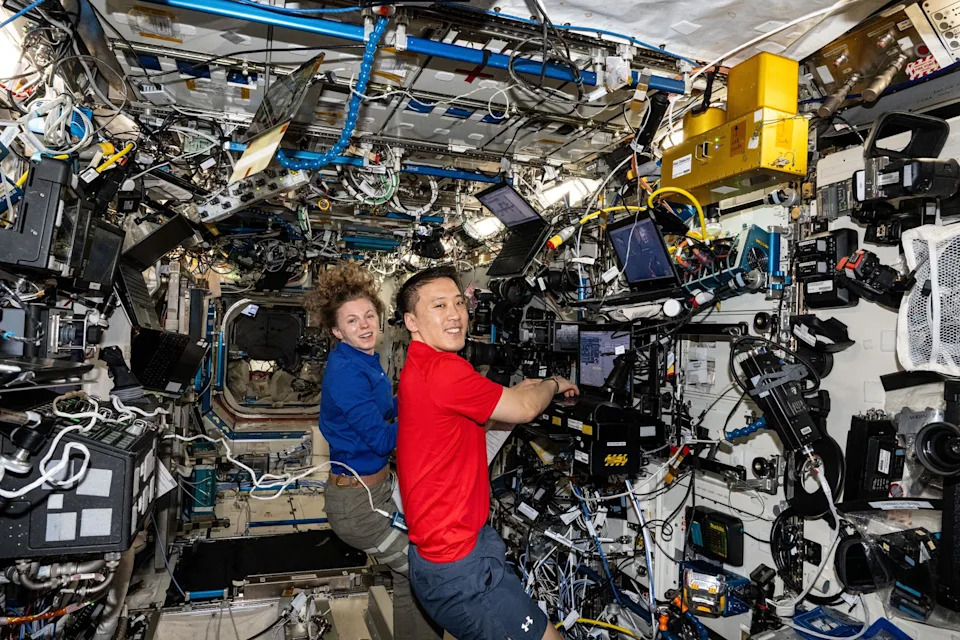
NASA astronauts Zena Cardman and Jonny Kim practice using a robotic arm on the Destiny laboratory module’s robotics workstation on the International Space Station. Kim used the device in September to capture Northrop Grumman’s Cygnus XL cargo craft as it arrived at the outpost.
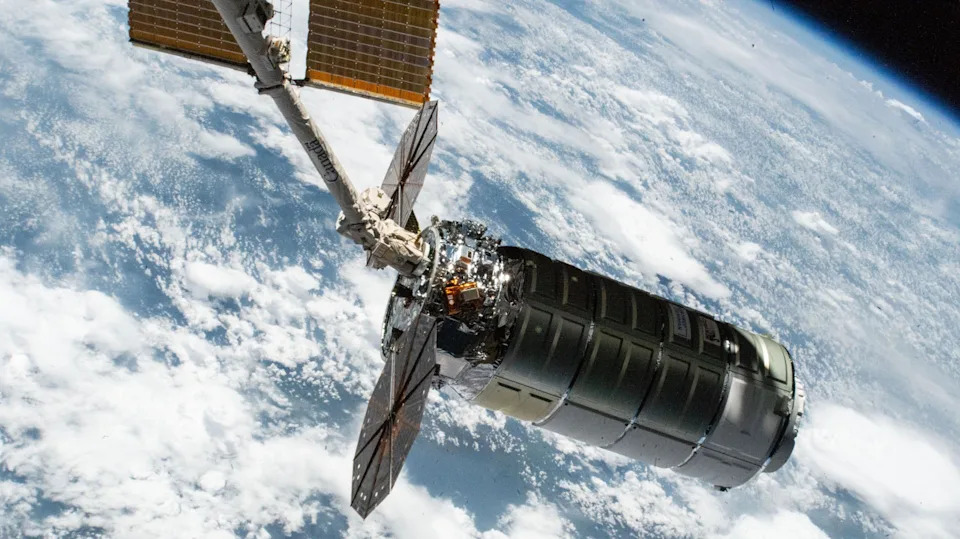
Northrop Grumman’s Cygnus XL cargo craft, carrying over 11,000 pounds of new science and supplies for the Expedition 73 crew, is pictured in the grips of the International Space Station’s Canadarm2 robotic arm following its capture.
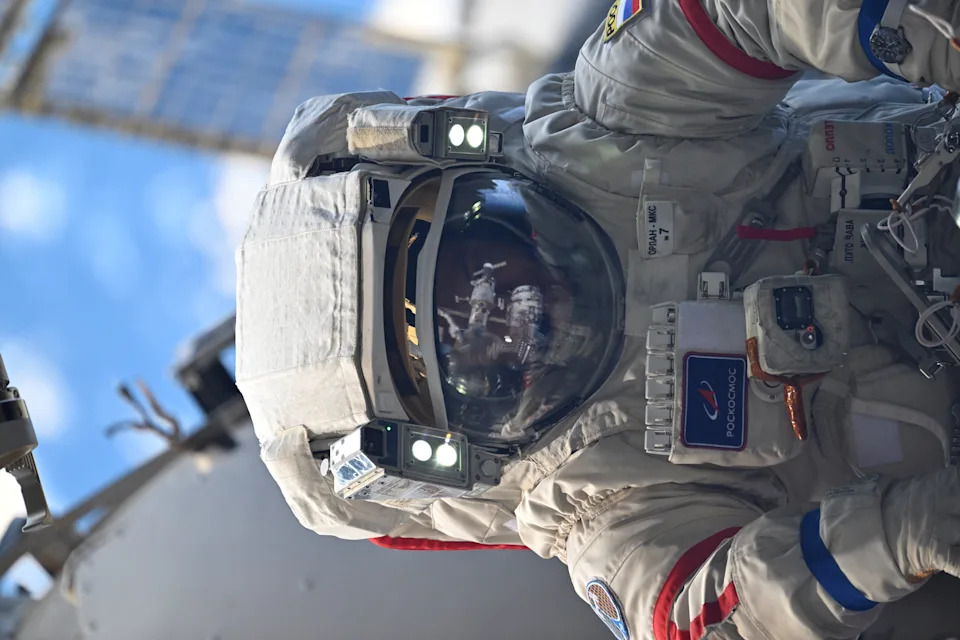
Roscosmos cosmonaut Sergey Ryzhikov conducts a spacewalk Oct. 16 outside the International Space Station.
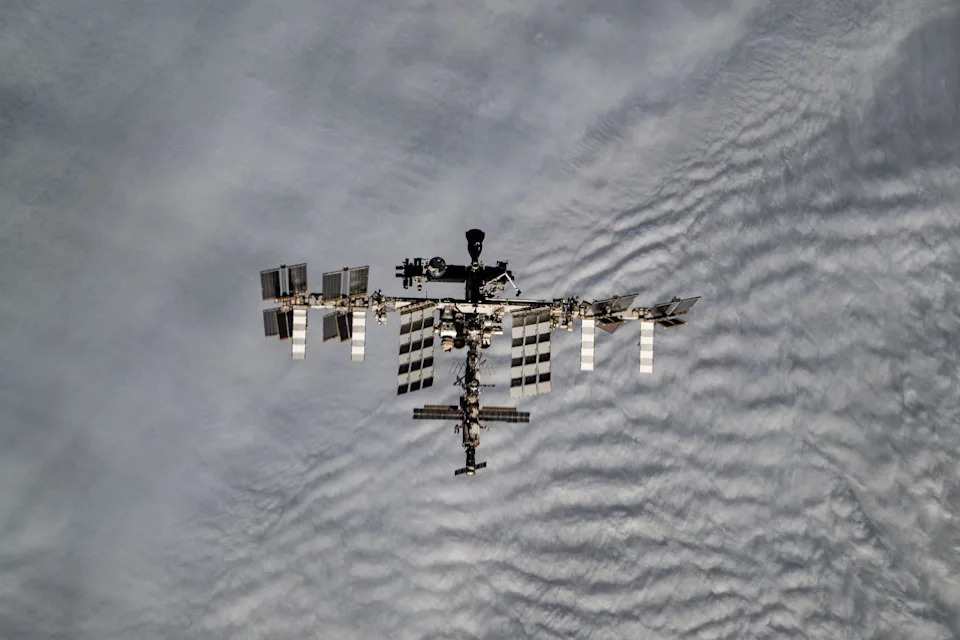
The International Space Station is seen from the Crew 8 SpaceX Dragon during undocking in October 2024.
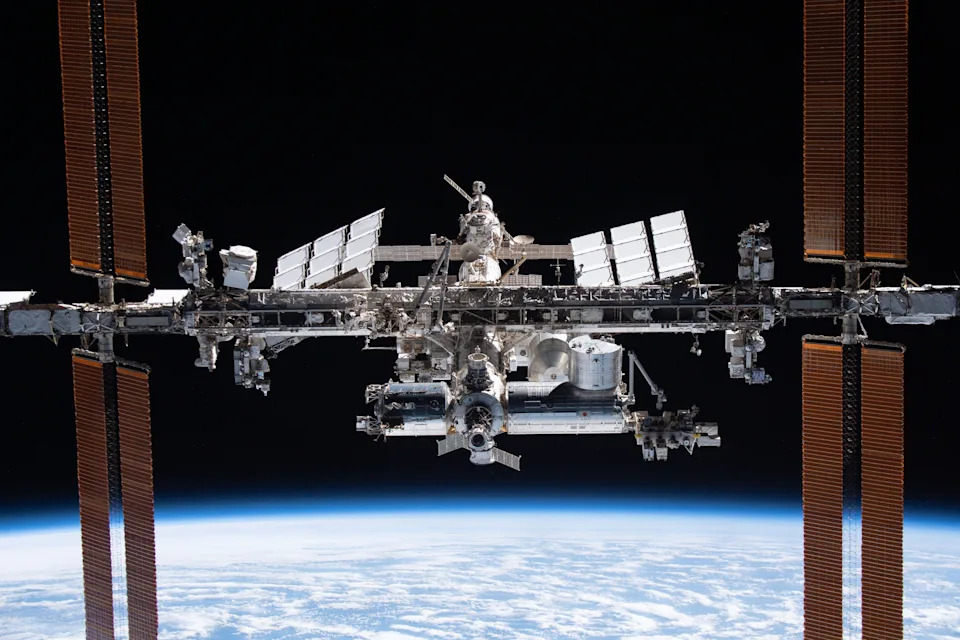
The International Space Station as seen in Nov. 2021 from astronauts aboard a SpaceX Dragon.
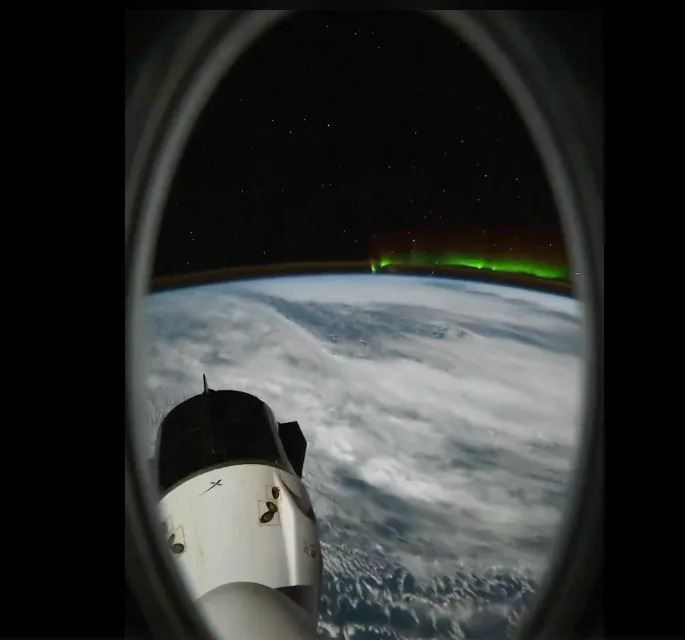
This still from a video captured by NASA astronaut Zena Cardman, a member of Crew-11, from the International Space Station shows auroras above the South Pacific Ocean. Cardman took the footage from a SpaceX Dragon capsule that was docked at the time.
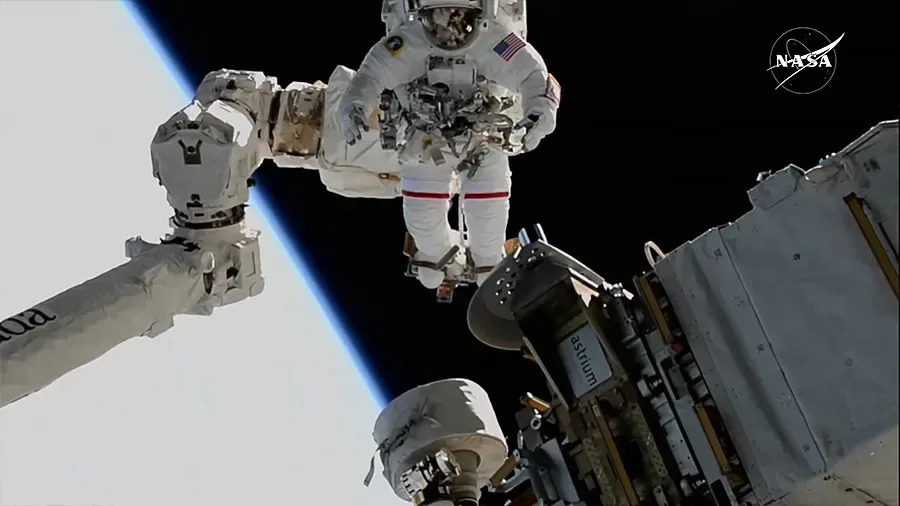
NASA astronaut and Expedition 72 Commander Suni Williams is pictured Thursday, Jan. 30 during her second spacewalk of the month. In this photo, Williams is attached to the tip of the Canadarm2 robotic arm as the International Space Station orbits 260 miles above Earth.
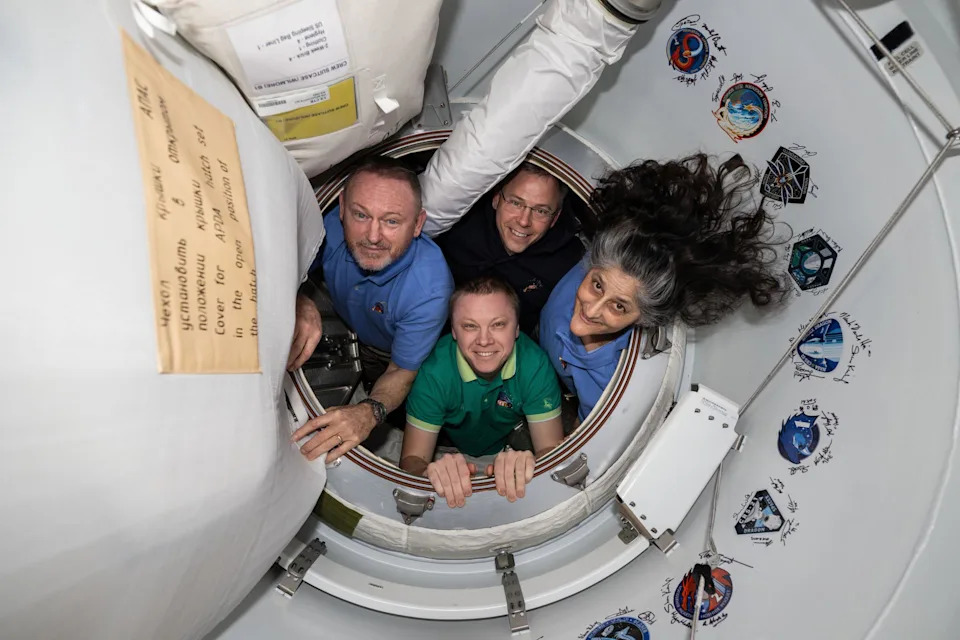
NASA’s SpaceX Crew-9 members pose together for a portrait inside the vestibule between the International Space Station and the SpaceX Dragon crew spacecraft. Clockwise from left, are NASA astronauts Butch Wilmore, Nick Hague, and Suni Williams, and Roscosmos cosmonaut Aleksandr Gorbunov.
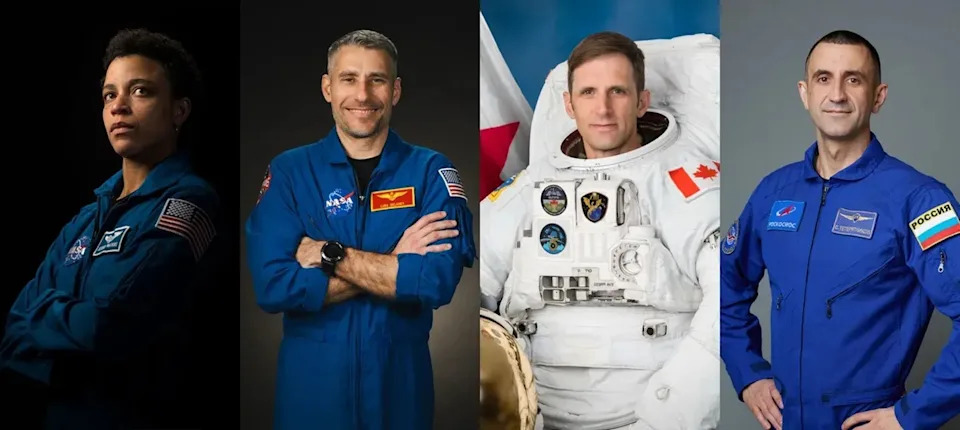
From left to right, NASA astronauts Jessica Watkins and Luke Delaney, CSA (Canadian Space Agency) astronaut Joshua Kutryk, and Roscosmos cosmonaut Sergey Teteryatnikov.
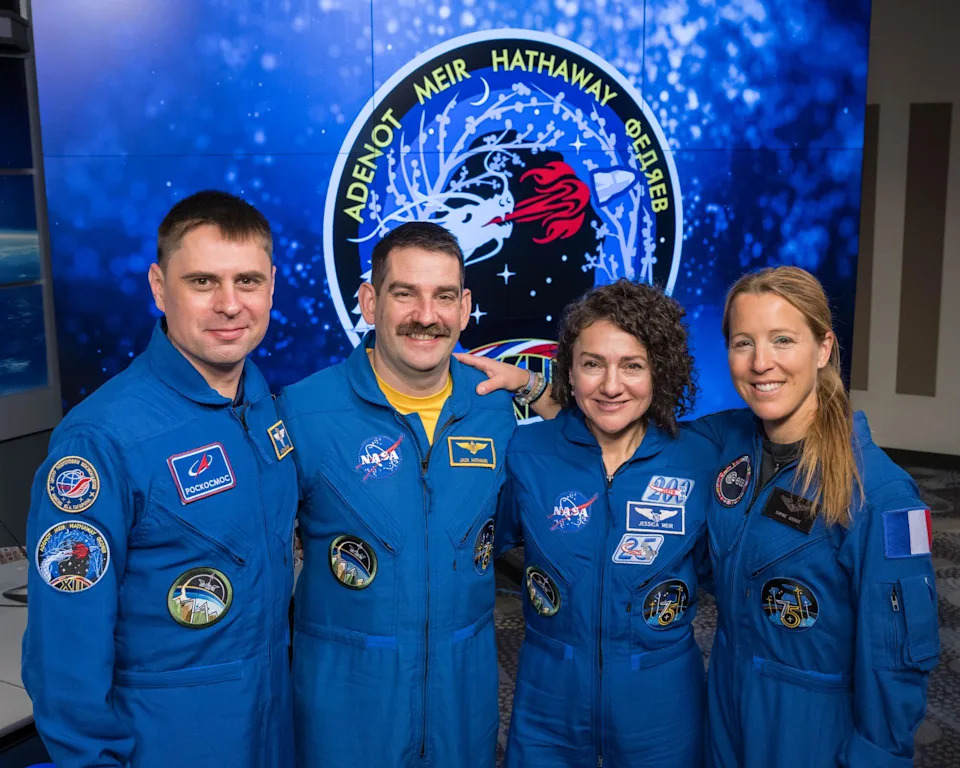
The four crew members representing NASA’s SpaceX Crew-12 mission to the International Space Station pose for a portrait at the Johnson Space Center in Houston, Texas. From left are, Roscosmos cosmonaut and Mission Specialist Andrey Fedyaev, NASA astronauts Jack Hathaway and Jessica Meir, Crew-12 Pilot and Commander respectively, and ESA (European Space Agency) astronaut and Mission Specialist Sophie Adenot.
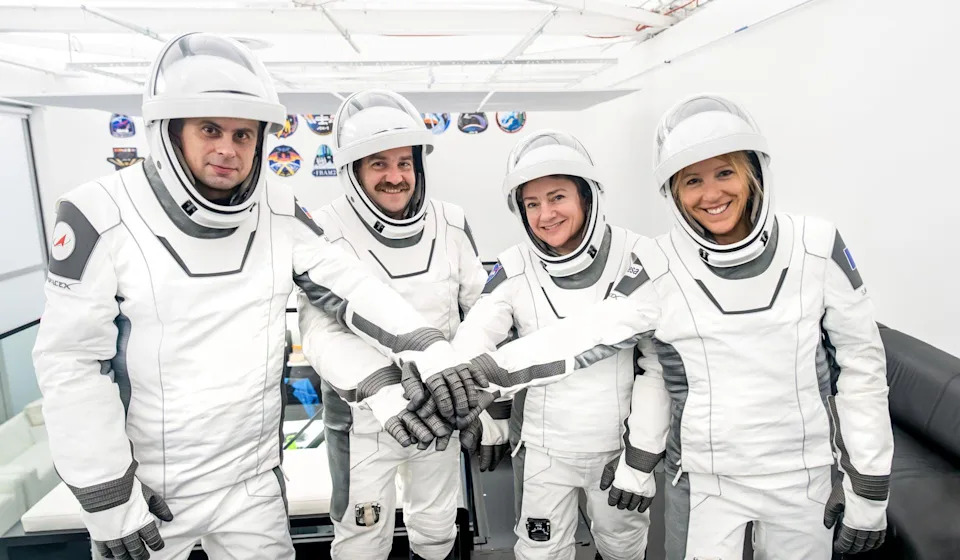
The four members of NASA’s SpaceX Crew-12 mission to the International Space Station pose together for a crew portrait in their pressure suits at SpaceX headquarters in Hawthorne, California. From left are, Roscosmos cosmonaut and Mission Specialist Andrey Fedyaev, NASA astronauts Jack Hathaway and Jessica Meir, Pilot and Commander respectively, and ESA (European Space Agency) astronaut and Mission Specialist Sophie Adenot.
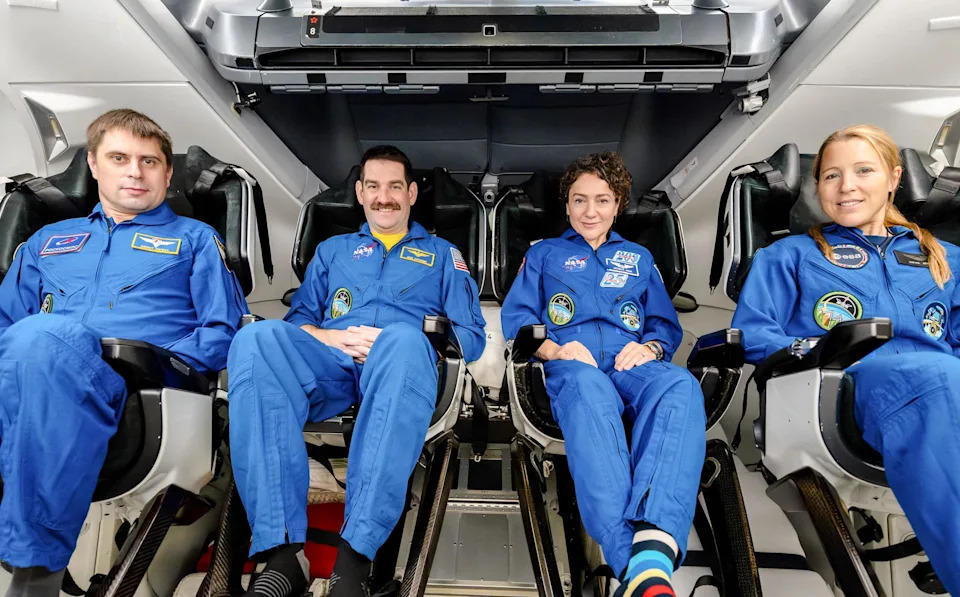
The four members of NASA’s SpaceX Crew-12 mission to the International Space Station pose together for a crew portrait inside a SpaceX Dragon spacecraft. From left are, Roscosmos cosmonaut Andrey Fedyaev, NASA astronauts Jack Hathaway and Jessica Meir, and ESA (European Space Agency) astronaut Sophie Adenot.
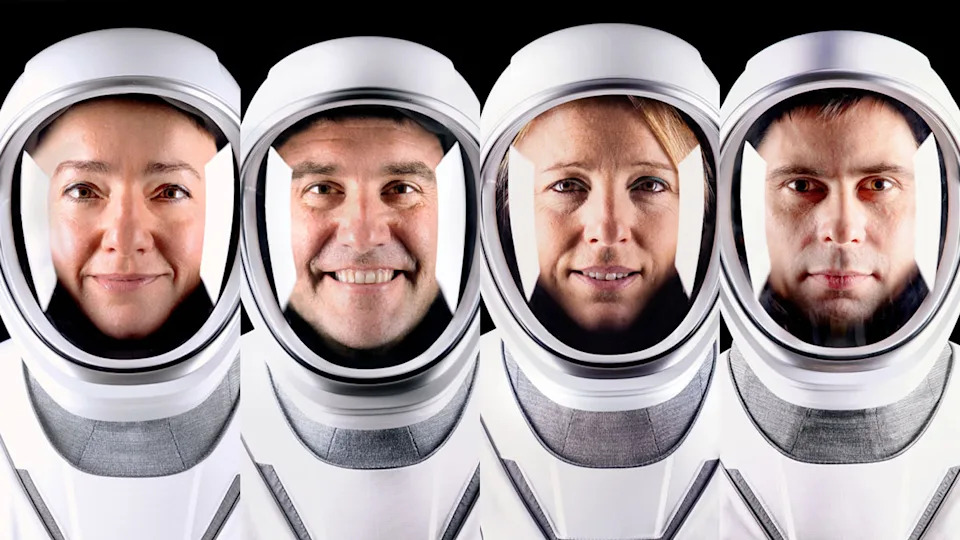
From left to right, NASA astronauts Jessica Meir, Jack Hathaway, ESA (European Space Agency) astronaut Sophie Adenot, and Roscosmos cosmonaut Andrey Fedyaev are NASA’s SpaceX Crew-12 launching to the International Space Station in February.
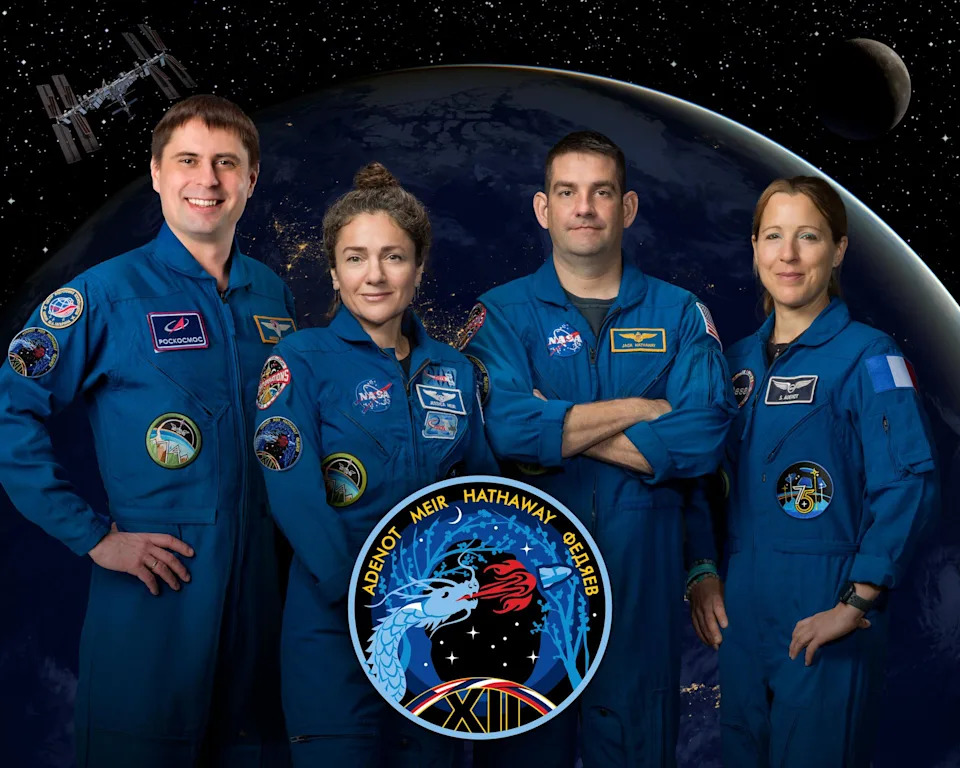
The four members of NASA’s SpaceX Crew-12 mission to the International Space Station pose together for an official crew portrait. From left are, Roscosmos cosmonaut and Mission Specialist Andrey Fedyaev, NASA astronauts Jessica Meir and Jack Hathaway, Commander and Pilot respectively, and ESA (European Space Agency) astronaut and Mission Specialist Sophie Adenot.
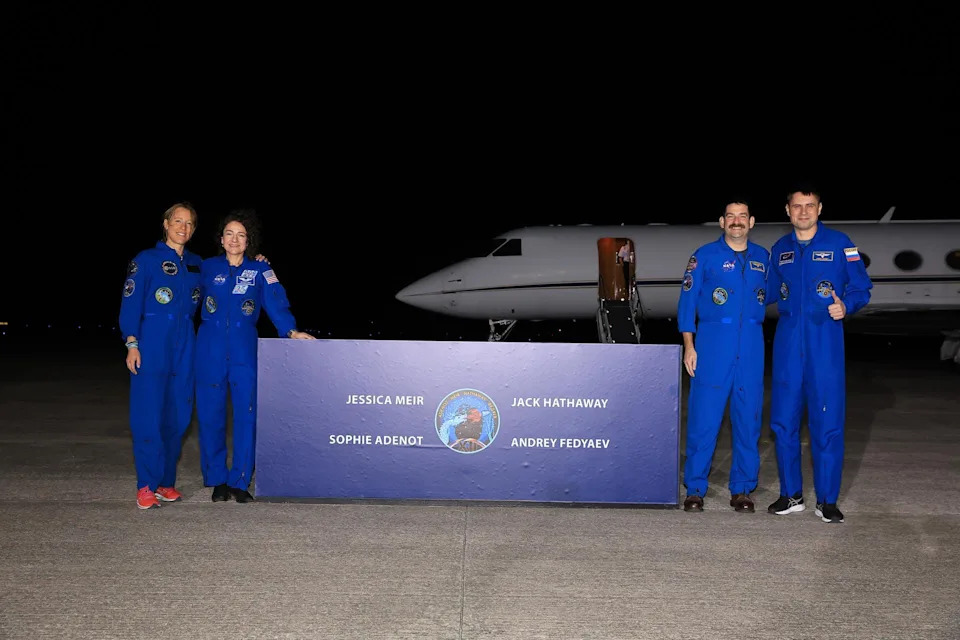
Crew members of NASA’s SpaceX Crew-12 mission, from left to right, ESA (European Space Agency) astronaut Sophie Adenot, NASA astronauts Jessica Meir and Jack Hathaway, and Roscosmos cosmonaut Andrey Fedyaev arrive Friday, Feb. 6, 2026, at the Launch and Landing Facility at the agency’s Kennedy Space Center in Florida. The Crew-12 mission is slated to launch to the International Space Station aboard SpaceX’s Dragon spacecraft atop company’s Falcon 9 rocket from Cape Canaveral Space Force Station’s Space Launch Complex 40 at 6:01 a.m. EST on Wednesday, Feb. 11.
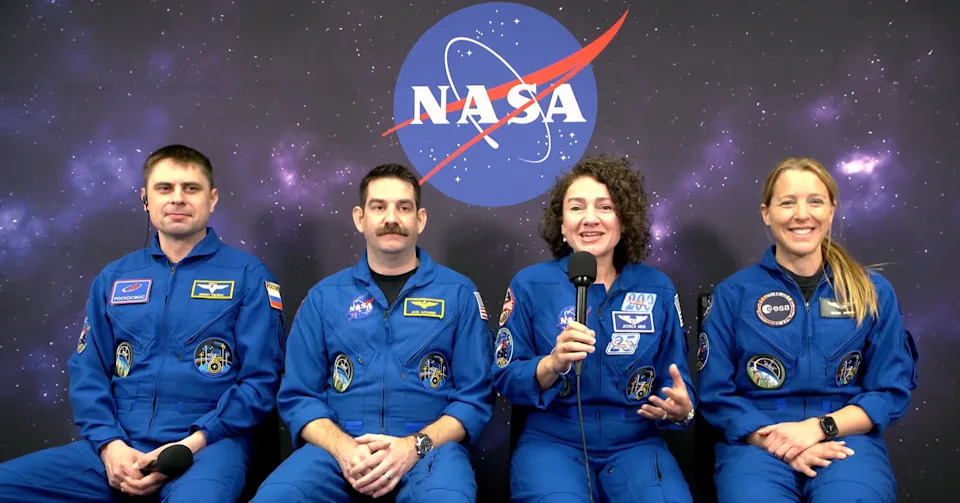
Crew members of NASA’s SpaceX Crew-12 mission, from left to right, Roscosmos cosmonaut Andrey Fedyaev, NASA astronauts Jack Hathaway and Jessica Meir, and ESA (European Space Agency) astronaut Sophie Adenot, participate in a news conference from Astronaut Crew Quarters inside the Neil A. Armstrong Operations and Checkout Building at the agency’s Kennedy Space Center in Florida on Sunday, Feb. 8, 2026.
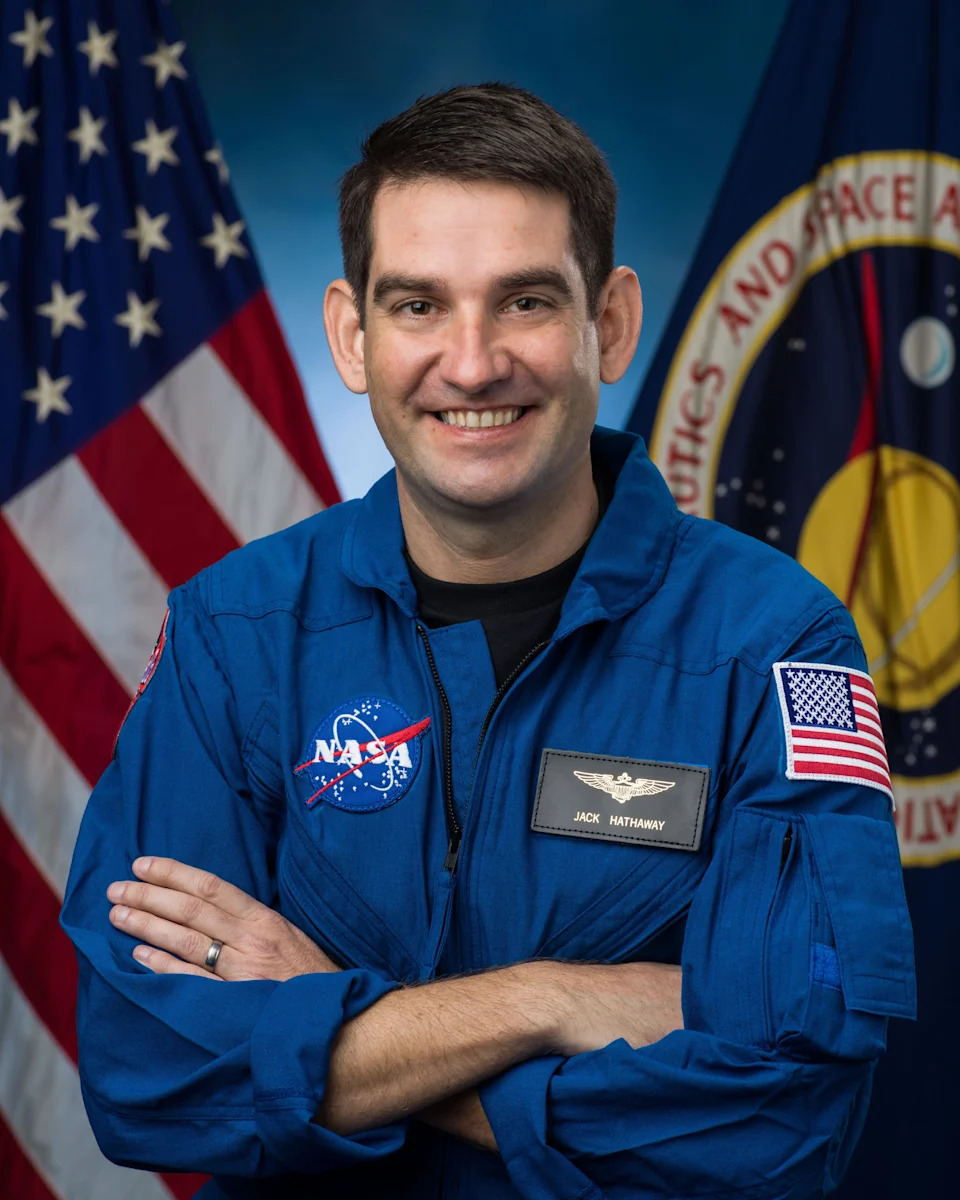
Pilot Jack Hathaway, a Navy pilot from Connecticut who is making his first spaceflight after he was selected as part of the 2021 NASA astronaut class.
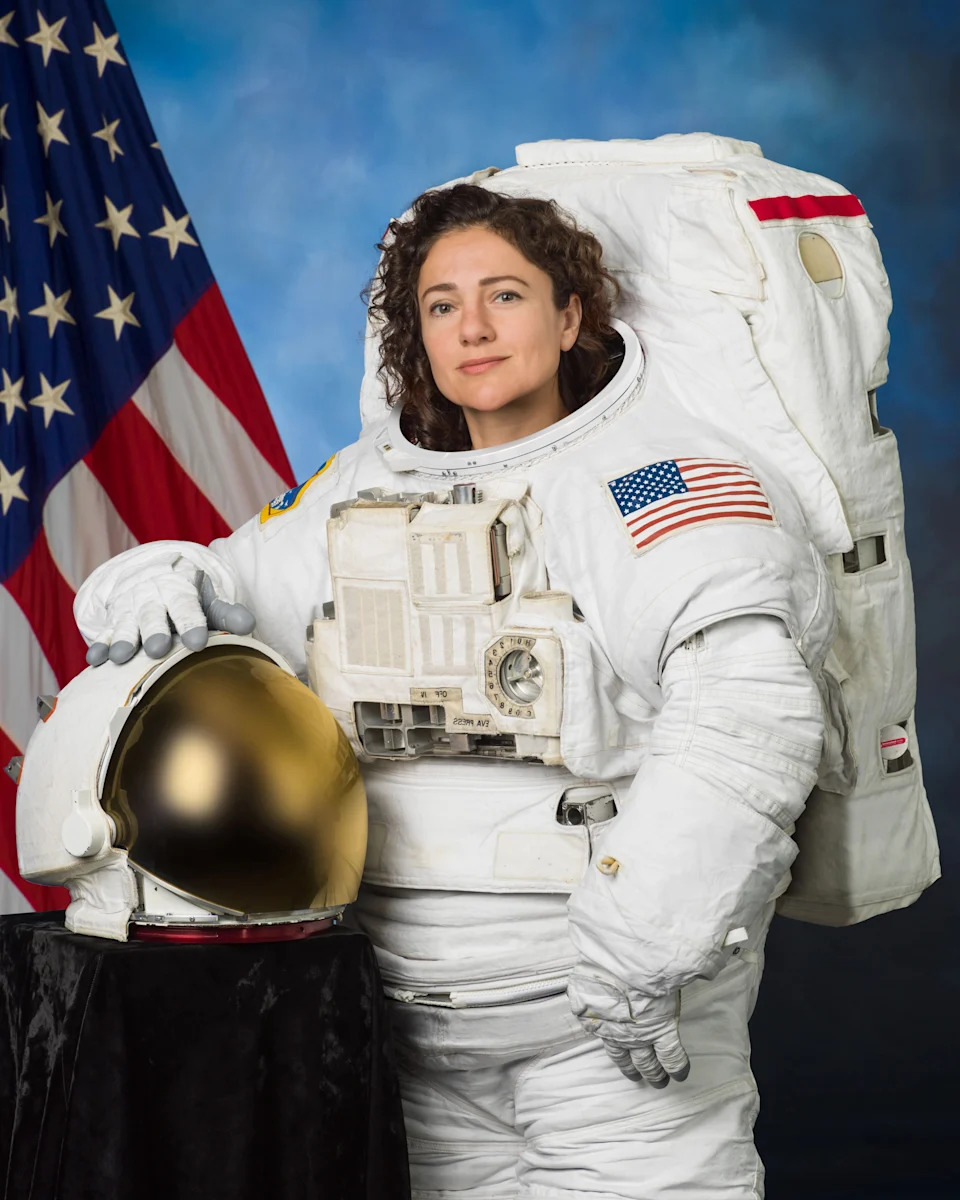
Mission commander Jessica Meir, a marine biologist from Maine who was selected as a NASA astronaut in 2013 and is making her second trip to the space station.
Pomozite nam da budemo bolji.