Mark Zuckerberg je kupio gotički dvorac Strancally na jugoistoku Irske, oko 200 km od evropskog sedišta Mete. Dvorac potiče iz oko 1830. godine i bio je temeljno renoviran 2003. Transakcija nije zabeležena u državnom registru cena nekretnina, a The Irish Times procenjuje vrednost između 20 i 30 miliona evra. Meta u Irskoj zapošljava oko 1.500 ljudi.
Mark Zuckerberg Kupio Gotički Dvorac Strancally u Irskoj — Procena Vrednosti 20–30 Mio €
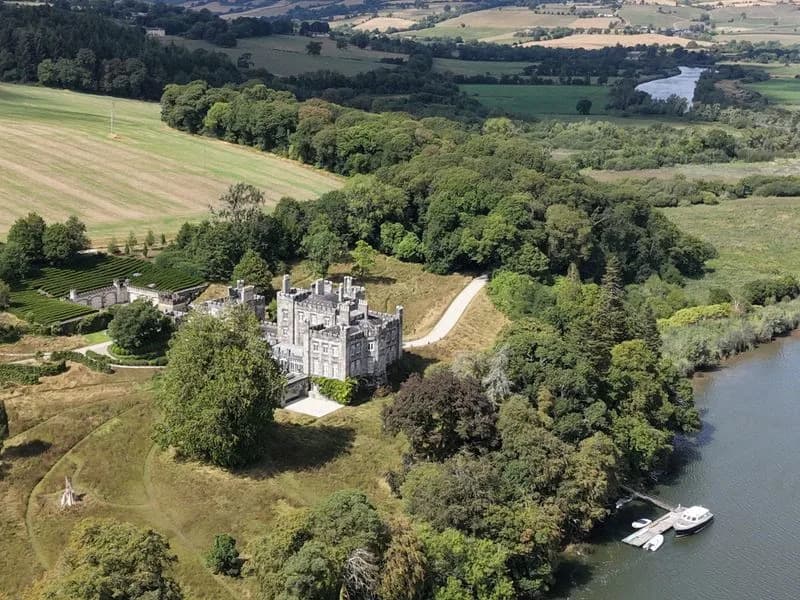
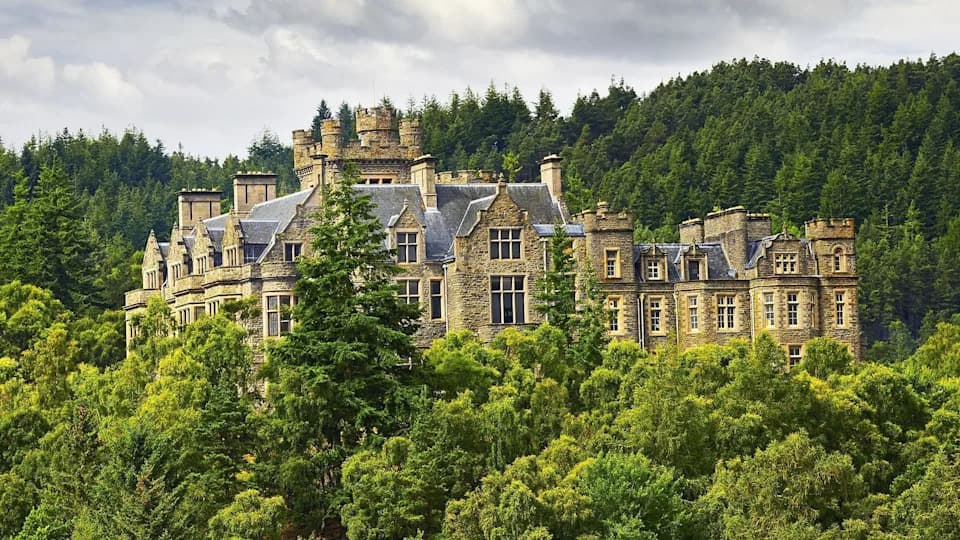
Strancally Castle, that was recently bought by Meta CEO Mark Zuckerberg, in Waterford, Ireland, August 20, 2026. Patrick Kenealy/Handout via REUTERS
DABLIN, 20. avgust (Reuters) - Izvršni direktor kompanije Meta, Mark Zuckerberg, kupio je gotički dvorac Strancally na jugoistoku Irske, koji gleda na reku Blackwater i nalazi se oko 200 kilometara od evropskog sedišta kompanije, saopštio je portparol u četvrtak.
Dvorac Strancally potiče iz oko 1830. godine, a prema državnom arhivu za arhitekturu prošao je opsežnu renovaciju 2003. godine. Objekt je primer 19. vekovne gotičke arhitekture smešten u slikovitom ambijentu uz reku.
Transakcija još nije uneta u irski državni registar cena nekretnina. List The Irish Times, koji je prvi objavio vest, procenio je da bi vrednost imovine mogla iznositi između 20 i 30 miliona evra.
Portparol Zuckerberga izjavio je da su on i njegova porodica "uzbuđeni što će nastaviti da brinu o ovom istorijskom domu i raduju se provodu vremena u Irskoj".
Kontekst
Meta zapošljava oko 1.500 ljudi u Irskoj, zemlji u kojoj su brojna američka tehnološka preduzeća smestila svoja evropska sedišta, delom zahvaljujući povoljnom poreskom režimu i poslovnoj klimi. Kupovina istorijskog imanja dodatno ističe prisustvo velikih tehnoloških kompanija u toj zemlji.
(Izvestio Conor Humphries; uredio William James)
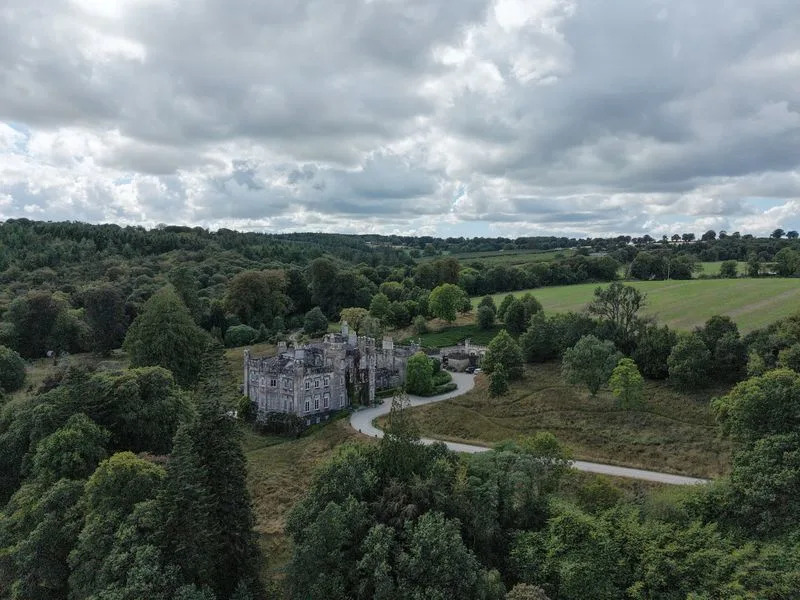
Strancally Castle, that was recently bought by Meta CEO Mark Zuckerberg, in Waterford, Ireland, August 20, 2026. Patrick Kenealy/Handout via REUTERS
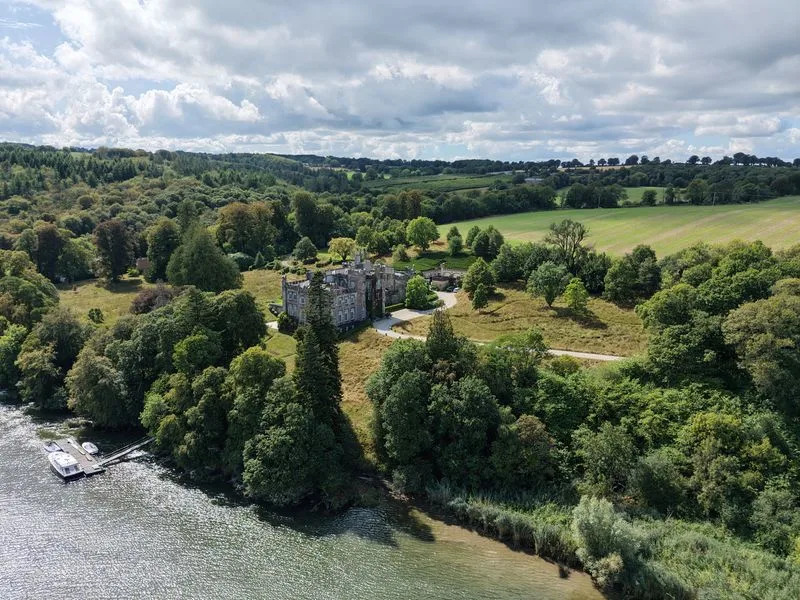
Strancally Castle, that was recently bought by Meta CEO Mark Zuckerberg, in Waterford, Ireland, August 20, 2026. Patrick Kenealy/Handout via REUTERS

Paris 2024 Olympics - Breaking - B-Girls Round Robin - La Concorde 1, Paris, France - August 09, 2024. Raygun of Australia in action. REUTERS/Angelika Warmuth
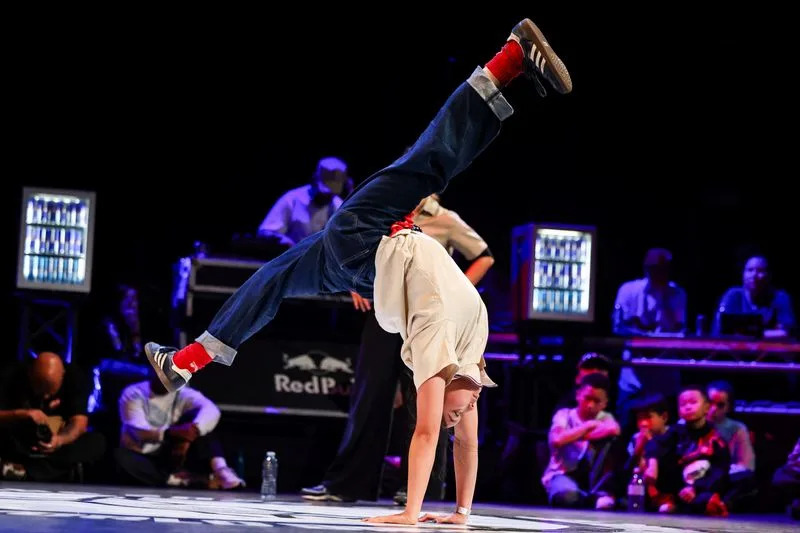
Performer NaNaKa from Japan takes part in the Solo Women Category of the UK B-Boy Championships World Breaking Finals at Aviva Studios, in Manchester, Britain, August 16, 2026. REUTERS/Temilade Adelaja
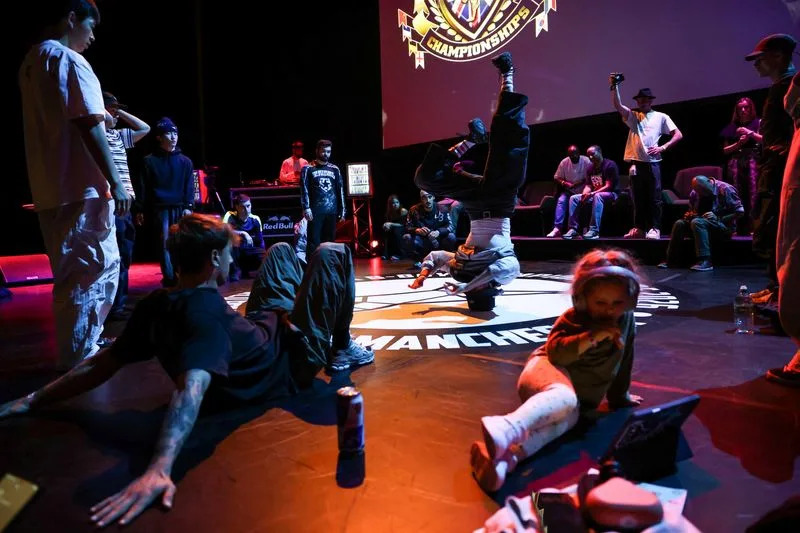
Performers rehearse before taking part in the UK B-Boy Championships World Breaking Finals at Aviva Studios, in Manchester, Britain, August 16, 2026. REUTERS/Temilade Adelaja
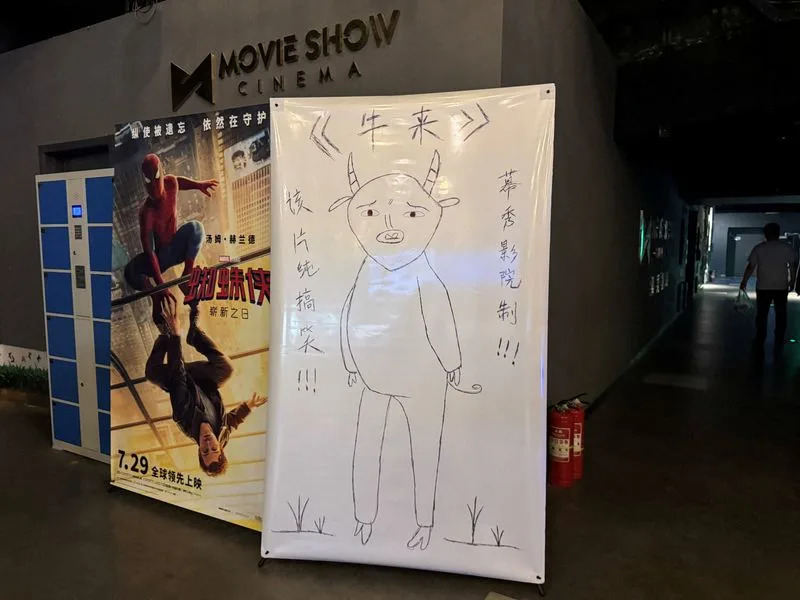
FILE PHOTO: A hand-drawn poster for the Chinese animated film Niu Lai at a cinema in Beijing, China, August 19, 2026. Picture taken with a mobile phone. REUTERS/Xiuhao Chen/File Photo
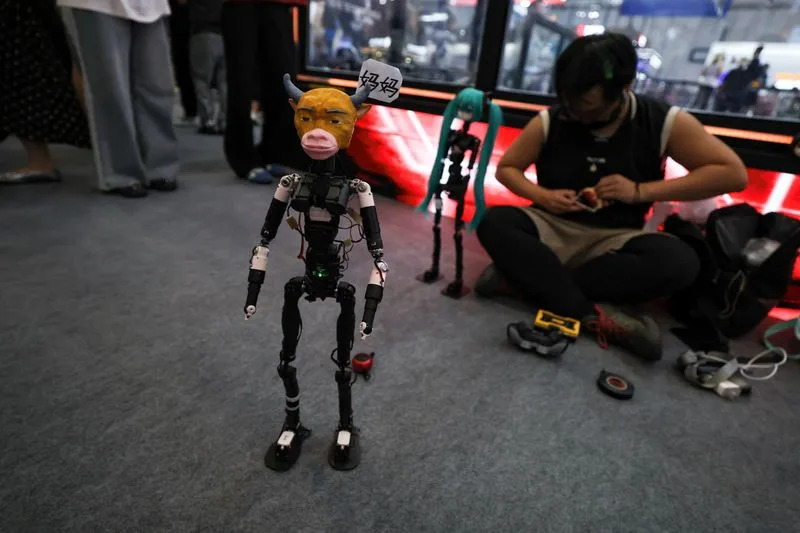
A robot with the head of Niu Lai, a character from a Chinese animated film Niu Lai, stands on the ground of an exhibition hall during the 2026 World Robot Conference in Beijing, China, August 19, 2026. REUTERS/Tingshu Wang
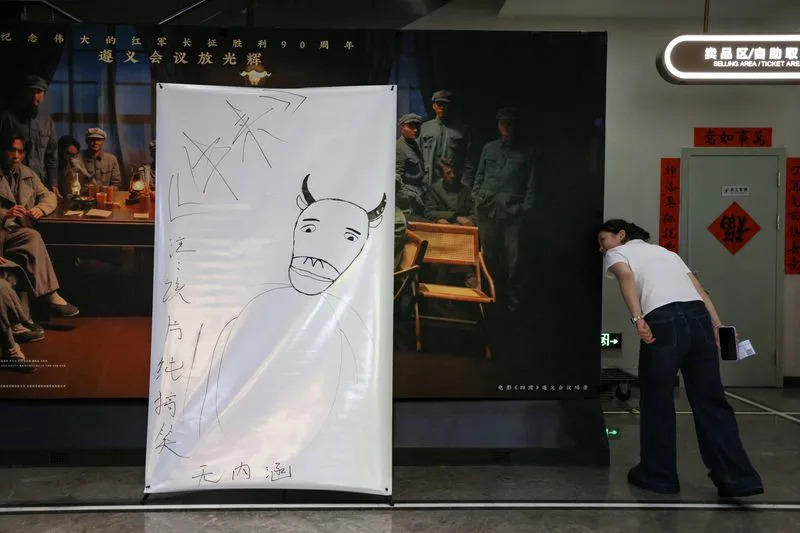
A person checks the back of a hand-drawn poster for the Chinese animated film Niu Lai, at a cinema in Beijing, China, August 20, 2026. REUTERS/Tingshu Wang
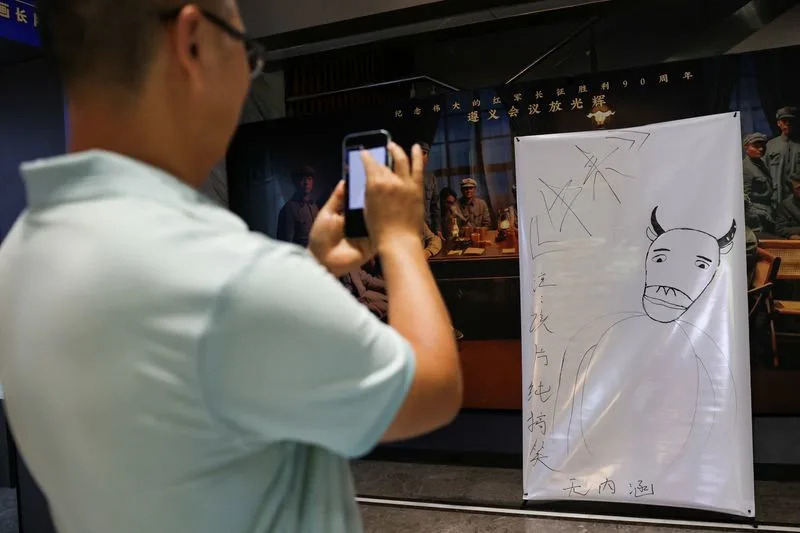
A man uses his phone to photograph a hand-drawn poster for the Chinese animated film Niu Lai at a cinema in Beijing, China, August 20, 2026. REUTERS/Tingshu Wang
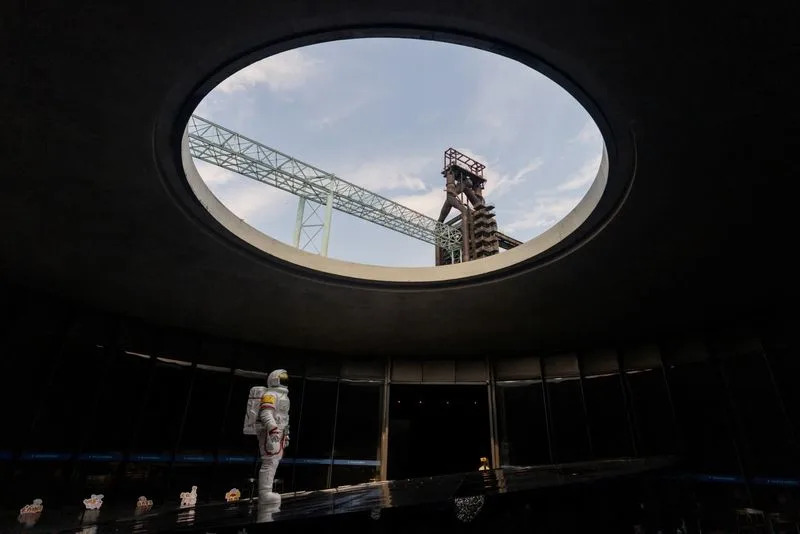
An astronaut figure stands beneath a circular roof opening at the Shou - Wang Tian Gong Beijing Space Exploration Center in Beijing's Shougang Park, China, August 7, 2026. Once highly classified in remote deserts, China's space launches have increasingly been open to public viewing as the country's ambitions accelerate in a race with the United States. Plans include a crewed moon landing by 2030 followed by a crewed mission to Mars. REUTERS/Maxim Shemetov
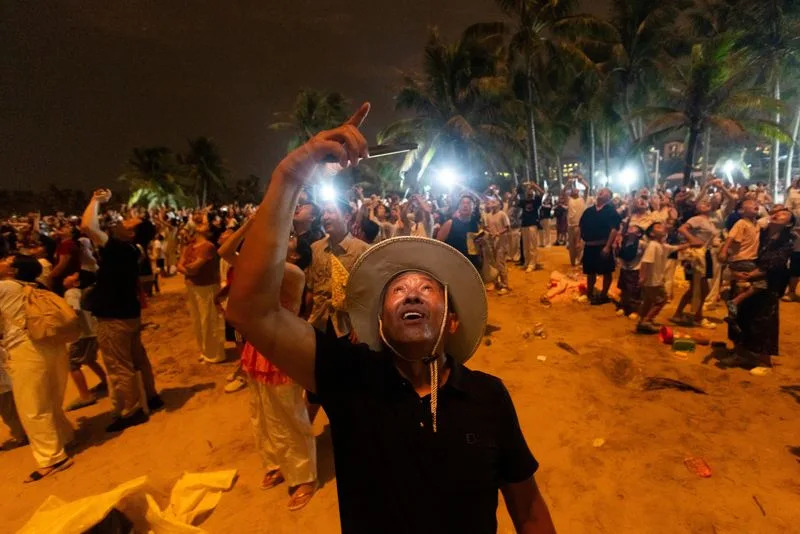
A man films with his smartphone from Qishui Bay Beach during a launch from the Wenchang Space Launch Site in Wenchang, Hainan province, China, August 10, 2026. On a sweltering August night, thousands on China's Hainan island thronged the beaches around the Wenchang Space Launch Site, phones raised, waiting for a show. Shortly after 8 p.m., the Long March 7A rocket blasted off. The crowd roared as its ascent lit up the night sky. Moments later, the uncrewed rocket turned into a ball of fire in midair, an unforeseen blast confirmed by Chinese state media a few hours afterwards. REUTERS/Maxim Shemetov
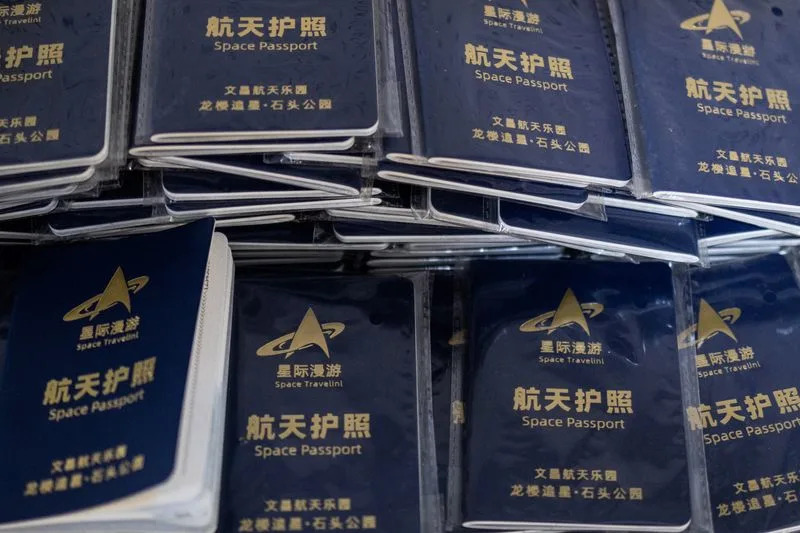
Souvenir space passports are displayed at a tourist store in Wenchang, Hainan province, China, August 10, 2026. Space has become a collective cultural experience, with tourism, art and commercial branding all playing a part. REUTERS/Maxim Shemetov
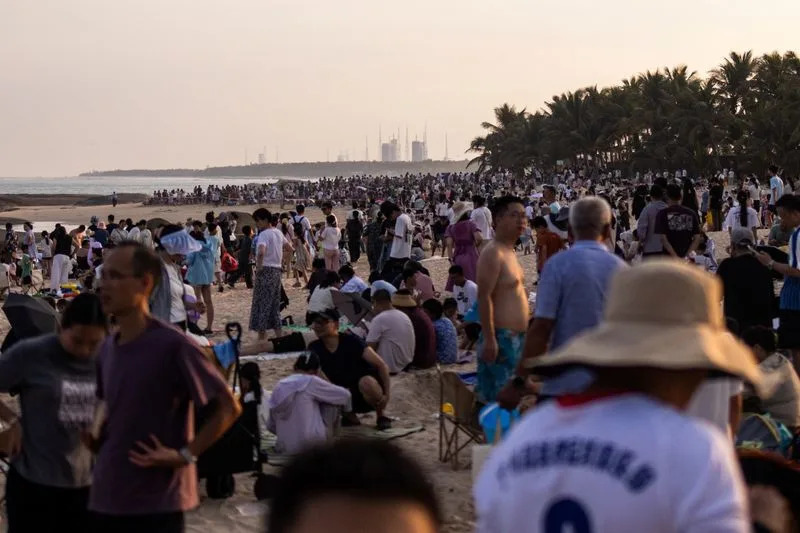
People gather at Qishui Bay Beach, which has a view of the launch pad structures of the Wenchang Space Launch Site, to watch a space launch in Wenchang, Hainan province, China, August 10, 2026. On a sweltering August night, thousands on China's Hainan island thronged the beaches around the Wenchang Space Launch Site, phones raised, waiting for a show. Shortly after 8 p.m., the Long March 7A rocket blasted off. The crowd roared as its ascent lit up the night sky. Moments later, the uncrewed rocket turned into a ball of fire in midair, an unforeseen blast confirmed by Chinese state media a few hours afterwards. REUTERS/Maxim Shemetov
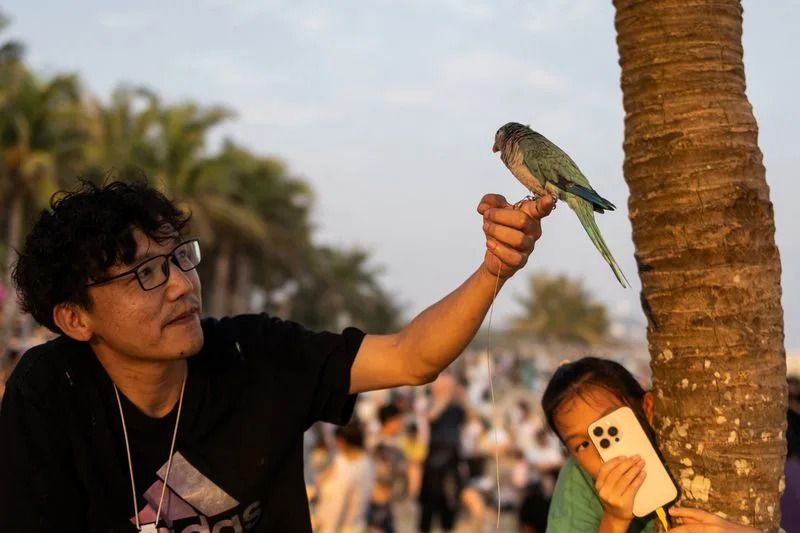
Fu Jinhua, 38, holds his parrot, Yangzai, at Qishui Bay Beach as people gather by the seaside to watch a space launch, in Wenchang, Hainan province, China, August 10, 2026. Fu said he expects that within 20 years, ordinary Chinese people would be able to go to space for fun just like taking a high-speed train or plane. "Maybe in 10 or 20 years, we'll have our own version of Elon Musk, and we might even be able to move to Mars — who knows?" he said. REUTERS/Maxim Shemetov
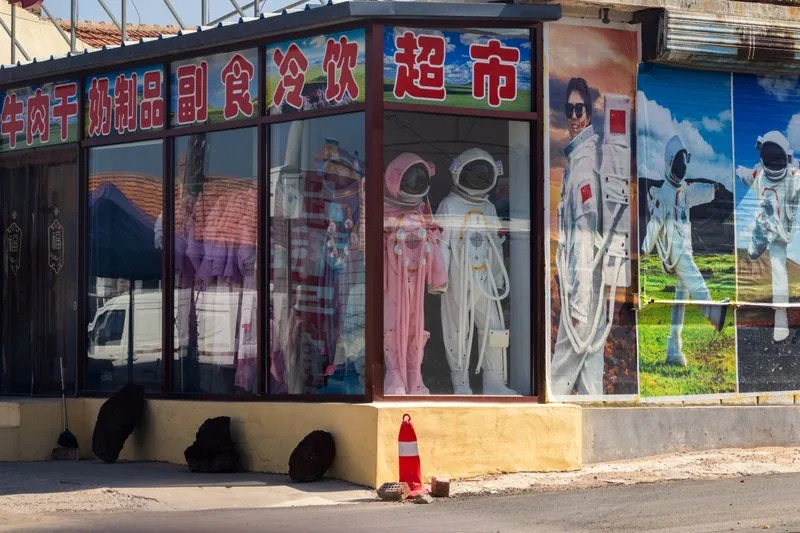
Costume spacesuits are displayed in a shop along the road leading to the Wulanhada Volcano Geopark visitor center, where roadside stores rent astronaut costumes to tourists for photographs with the volcano in the background, in Ulanqab, Inner Mongolia Autonomous Region, China, July 26, 2026. In China's northern region of Inner Mongolia, black volcanic rock formations have become a Mars simulator. Visitors rent white or pink spacesuit costumes to pose against the backdrop of barren terrain while food vendors sell astronaut-shaped, strawberry-flavored ice cream. REUTERS/Maxim Shemetov
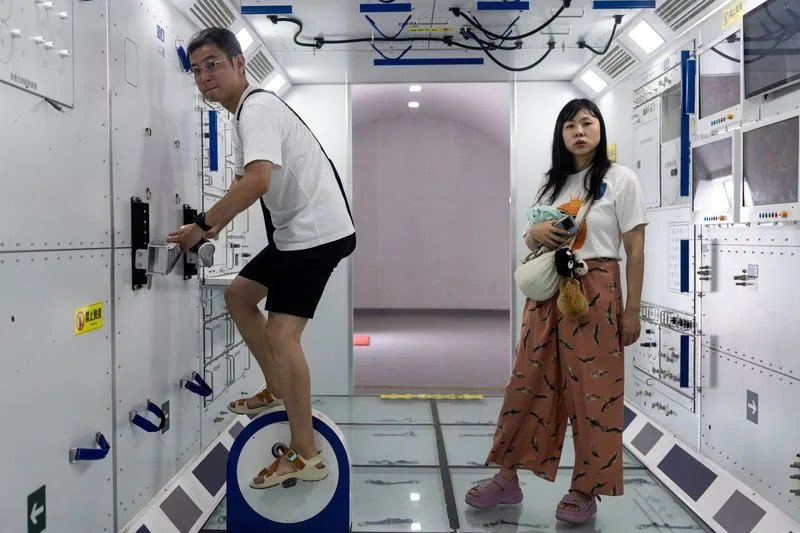
People tour inside a replica of the interior of China's Tiangong space station at the Wenchang Aerospace Science and Education Center in Wenchang, Hainan province, China, August 11, 2026. Space has become a collective cultural experience, with tourism, art and commercial branding all playing a part. REUTERS/Maxim Shemetov
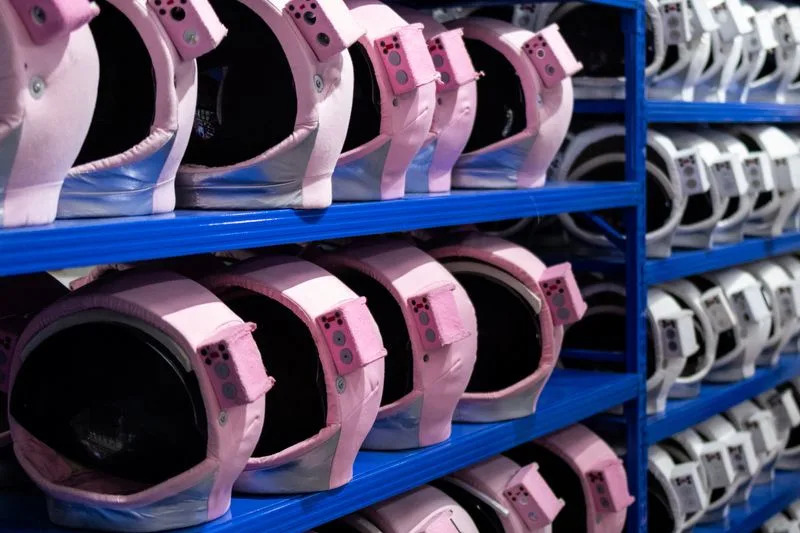
Helmets for spacesuit costumes are displayed on shelves at a rental shop in the Wulanhada Volcano Geopark visitor center in Ulanqab, Inner Mongolia Autonomous Region, China, July 26, 2026. In China's northern region of Inner Mongolia, black volcanic rock formations have become a Mars simulator. Visitors rent white or pink spacesuit costumes to pose against the backdrop of barren terrain while food vendors sell astronaut-shaped, strawberry-flavored ice cream. REUTERS/Maxim Shemetov
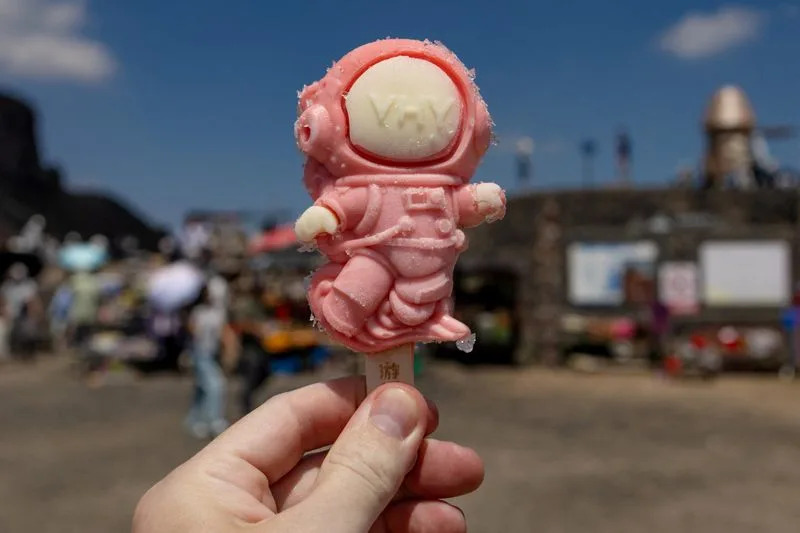
A Reuters photographer holds an ice cream depicting an astronaut, with a full-scale spacecraft lander model in the background, at Volcano No. 6 of the Wulanhada Volcano Geopark, in Ulanqab, Inner Mongolia Autonomous Region, China, July 26, 2026. In China's northern region of Inner Mongolia, black volcanic rock formations have become a Mars simulator. Visitors rent white or pink spacesuit costumes to pose against the backdrop of barren terrain while food vendors sell astronaut-shaped, strawberry-flavored ice cream. REUTERS/Maxim Shemetov
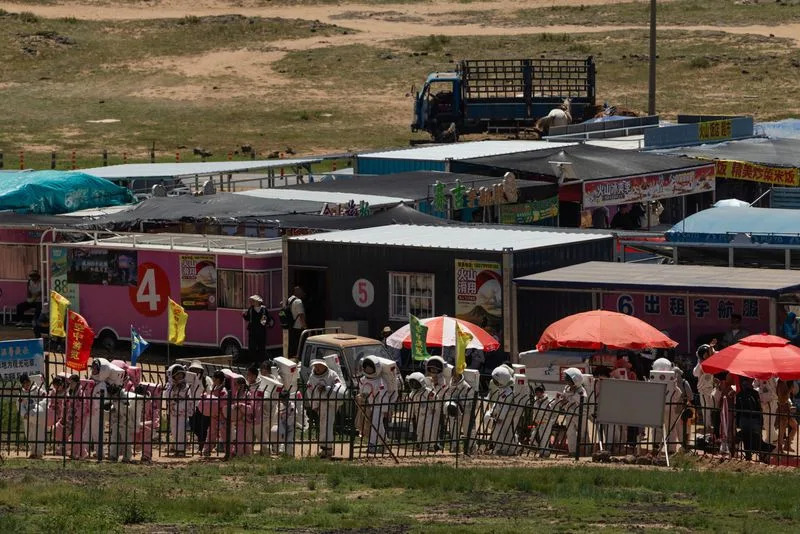
A group of people wearing astronaut costumes walk towards Volcano No. 6, with rental shops and tourist stores in the background, at the Wulanhada Volcano Geopark in Ulanqab, Inner Mongolia Autonomous Region, China, July 26, 2026. In China's northern region of Inner Mongolia, black volcanic rock formations have become a Mars simulator. Visitors rent white or pink spacesuit costumes to pose against the backdrop of barren terrain while food vendors sell astronaut-shaped, strawberry-flavored ice cream. REUTERS/Maxim Shemetov
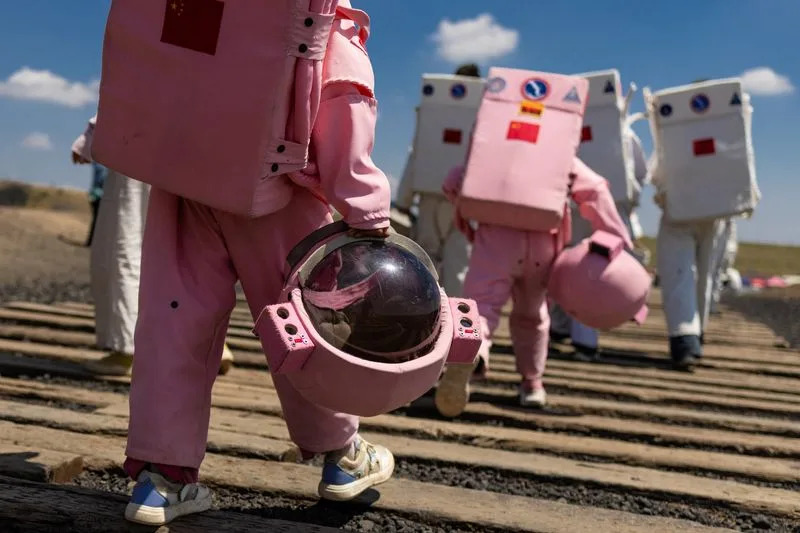
A group of children wearing astronaut costumes carry their helmets at Volcano No. 6 of the Wulanhada Volcano Geopark in Ulanqab, Inner Mongolia Autonomous Region, China, July 26, 2026. In China's northern region of Inner Mongolia, black volcanic rock formations have become a Mars simulator. Visitors rent white or pink spacesuit costumes to pose against the backdrop of barren terrain while food vendors sell astronaut-shaped, strawberry-flavored ice cream. REUTERS/Maxim Shemetov
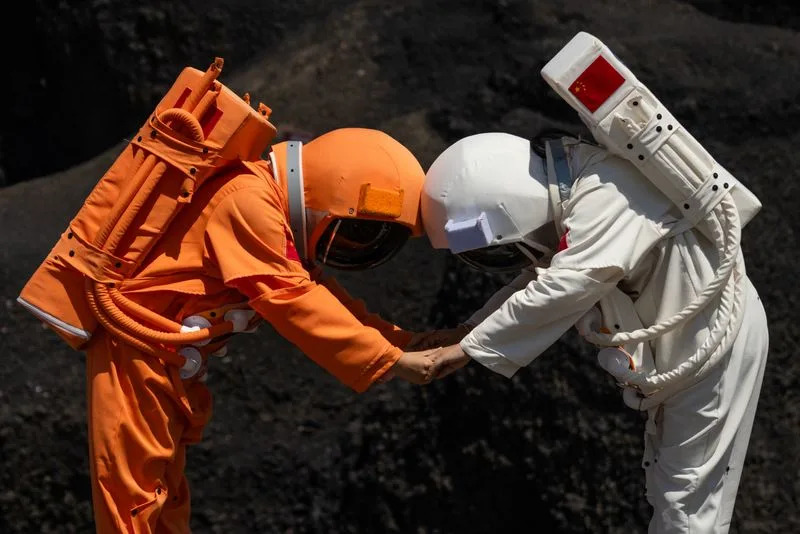
A couple wearing spacesuit costumes pose for photographers at Volcano No. 6 of the Wulanhada Volcano Geopark in Ulanqab, Inner Mongolia Autonomous Region, China, July 26, 2026. In China's northern region of Inner Mongolia, black volcanic rock formations have become a Mars simulator. Visitors rent white or pink spacesuit costumes to pose against the backdrop of barren terrain while food vendors sell astronaut-shaped, strawberry-flavored ice cream. REUTERS/Maxim Shemetov
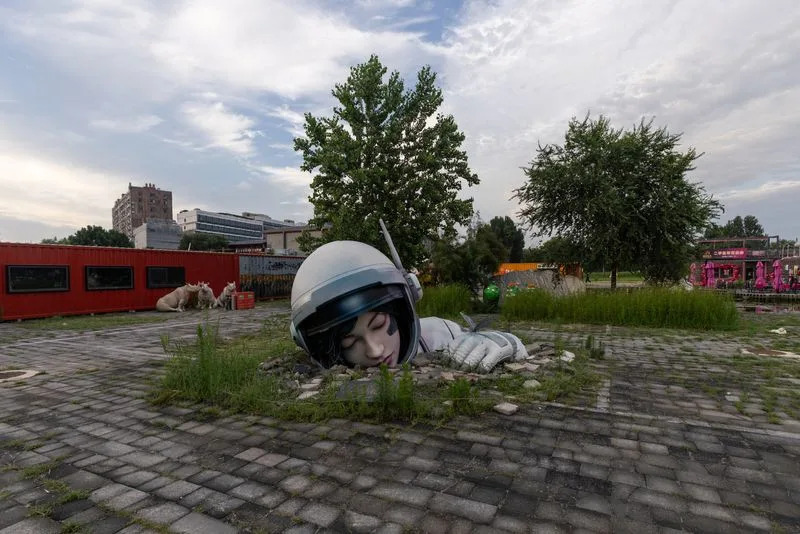
Resonance, a sculpture by Chinese artist Yang Wanting, at Songzhuang Art and Life Square in Beijing's Tongzhou district, China, July 12, 2026. "Every person is very curious about space, and about what might exist in the universe," Yang told Reuters. REUTERS/Maxim Shemetov
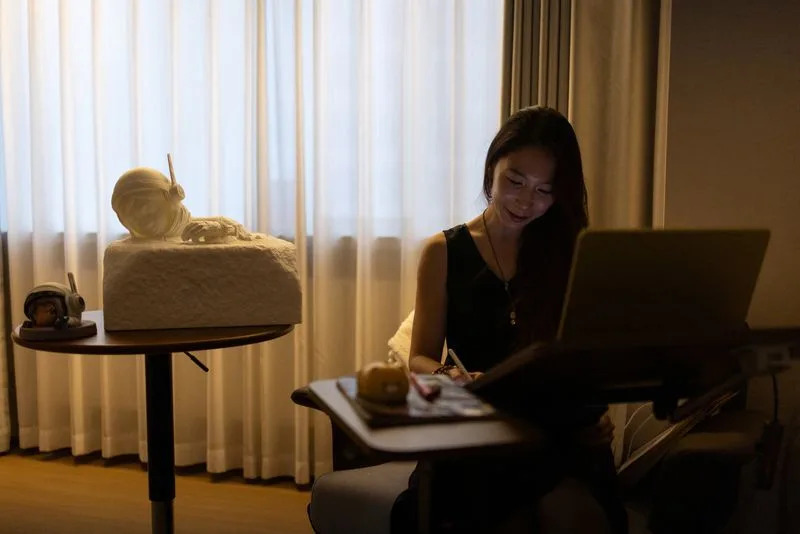
Chinese artist Yang Wanting, 33, draws in her home studio beside a table displaying figures of her character Zilan used in the creation of her sculpture Resonance, in Beijing, China, July 7, 2026. "Every person is very curious about space, and about what might exist in the universe," Yang told Reuters. REUTERS/Maxim Shemetov
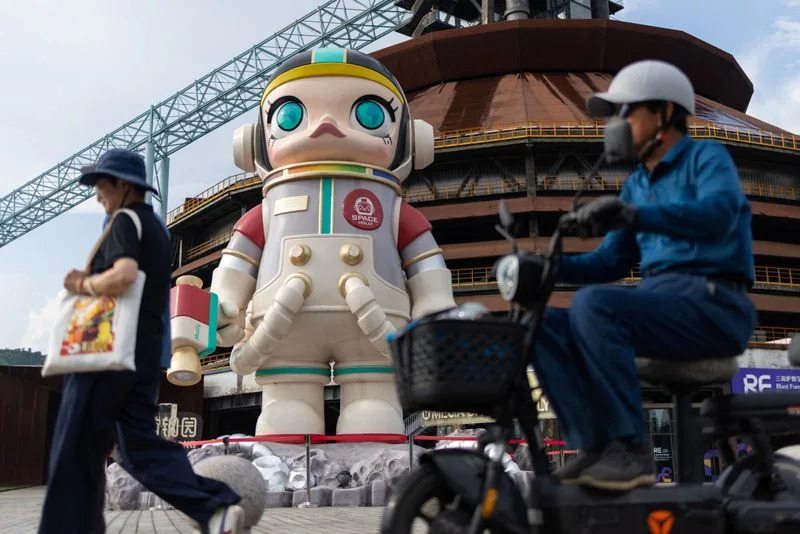
People pass by a giant figure of the Pop Mart art toy character "Space Molly" in Beijing's Shougang Park, China, August 7, 2026. At Shougang Park – a former steel mill turned cultural park – a towering Pop Mart "Space Molly" sculpture, the toy company's astronaut-helmeted doll, looms over visitors snapping photos. REUTERS/Maxim Shemetov
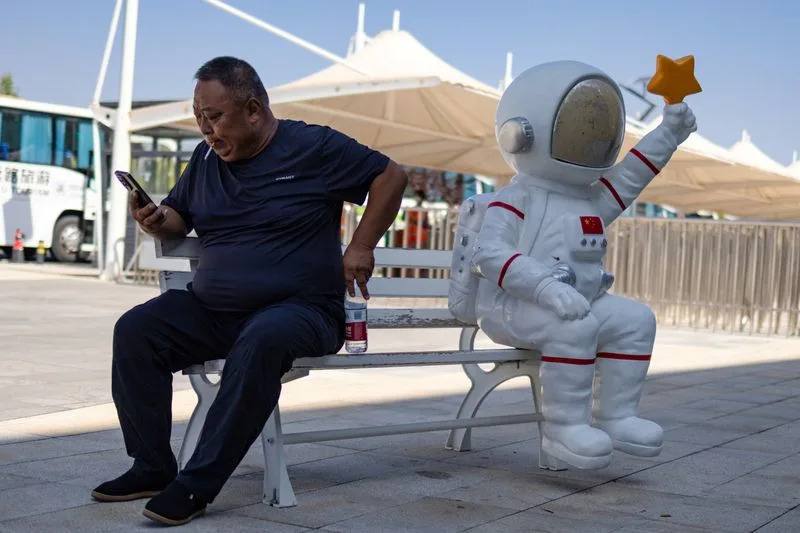
A man smokes a cigarette while sitting on a bench next to a figure of an astronaut at the Wulanhada Volcano Geopark visitor center in Ulanqab, Inner Mongolia Autonomous Region, China, July 26, 2026. Since launching its first rocket in 1960, China's space programme has advanced through a series of milestones: crewed flight in 2003, a first spacewalk in 2008, and by 2022 a completed space station. Its lunar programme since delivered the world's first far side landing and sample return. REUTERS/Maxim Shemetov
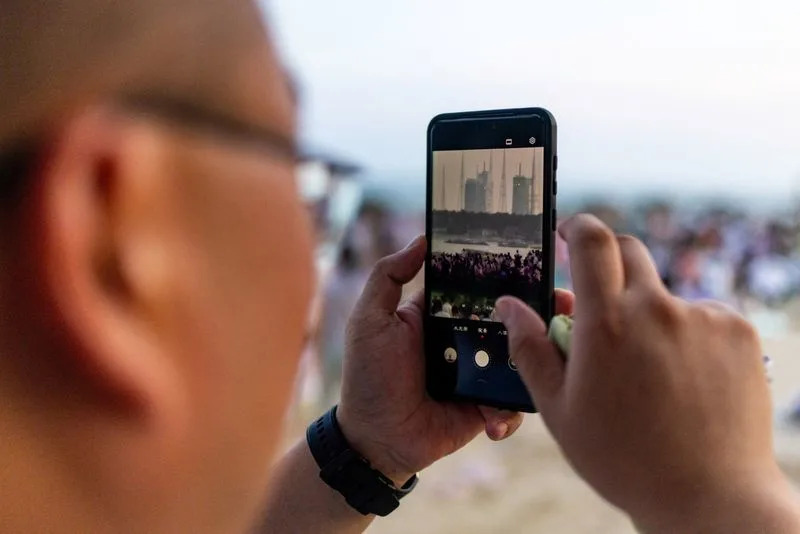
A man photographs launch pad structures of the Wenchang Space Launch Site using his smartphone as people gather at Qishui Bay Beach at sunset to watch a space launch in Wenchang, Hainan province, China, August 10, 2026. On a sweltering August night, thousands on China's Hainan island thronged the beaches around the Wenchang Space Launch Site, phones raised, waiting for a show. Shortly after 8 p.m., the Long March 7A rocket blasted off. The crowd roared as its ascent lit up the night sky. Moments later, the uncrewed rocket turned into a ball of fire in midair, an unforeseen blast confirmed by Chinese state media a few hours afterwards. REUTERS/Maxim Shemetov
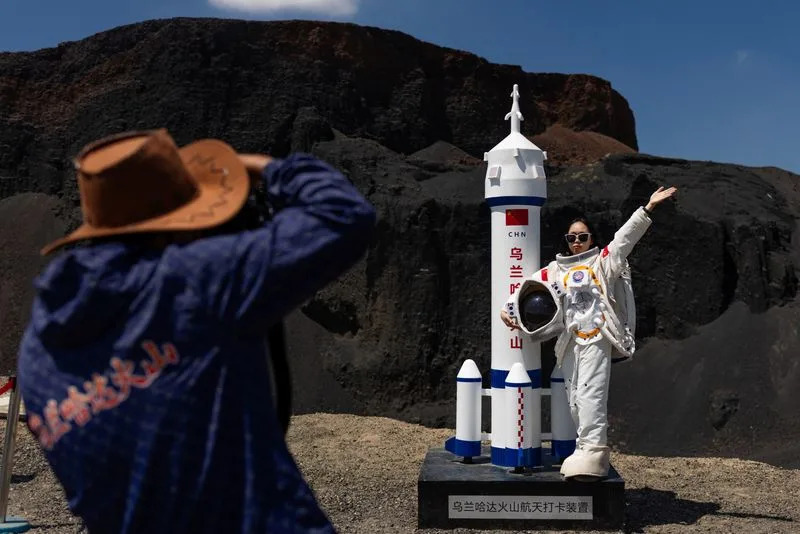
A woman wearing an spacesuit costume poses for a photographer with a figure of a rocket at Volcano No. 6 of the Wulanhada Volcano Geopark in Ulanqab, Inner Mongolia Autonomous Region, China, July 26, 2026. In China's northern region of Inner Mongolia, black volcanic rock formations have become a Mars simulator. Visitors rent white or pink spacesuit costumes to pose against the backdrop of barren terrain while food vendors sell astronaut-shaped, strawberry-flavored ice cream. REUTERS/Maxim Shemetov
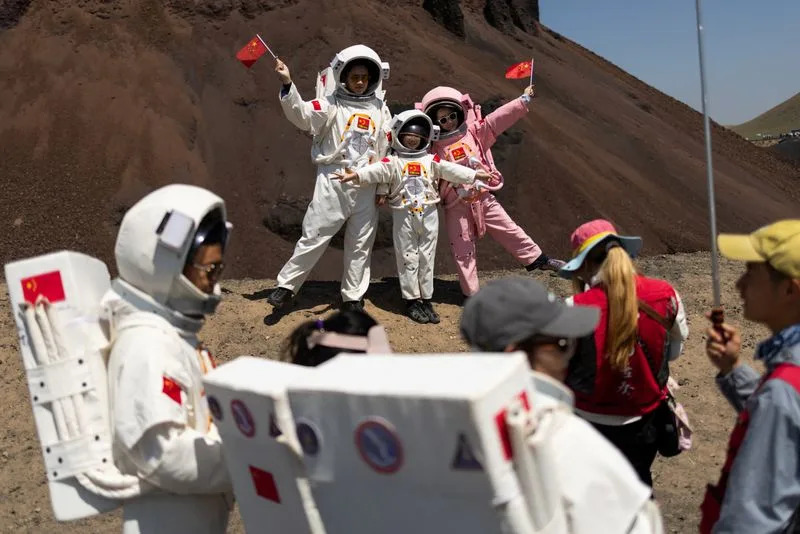
A group of people wearing astronaut costumes pose for pictures at Volcano No. 6 of the Wulanhada Volcano Geopark in Ulanqab, Inner Mongolia Autonomous Region, China, July 26, 2026. In China's northern region of Inner Mongolia, black volcanic rock formations have become a Mars simulator. Visitors rent white or pink spacesuit costumes to pose against the backdrop of barren terrain while food vendors sell astronaut-shaped, strawberry-flavored ice cream. REUTERS/Maxim Shem
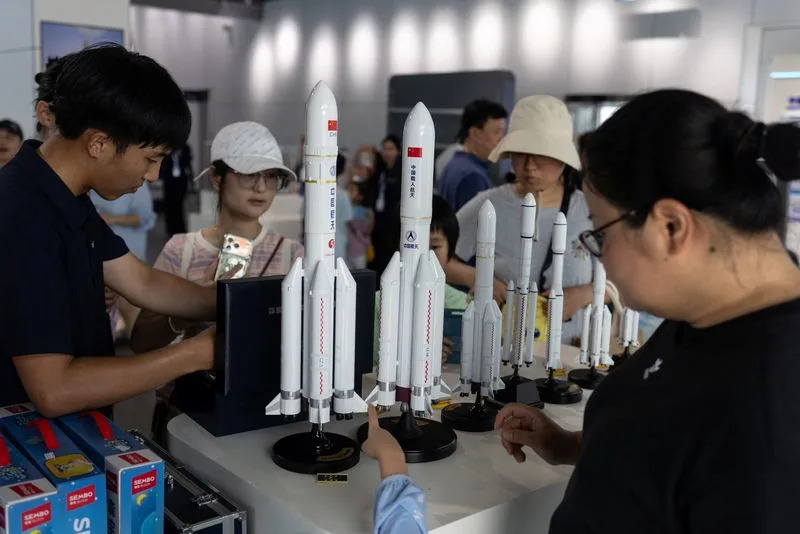
People look at models at a souvenir store at the Wenchang Aerospace Science and Education Center, in Wenchang, Hainan province, China, August 11, 2026. Once highly classified in remote deserts, China's space launches have increasingly been open to public viewing as the country's ambitions accelerate in a race with the United States. Plans include a crewed moon landing by 2030 followed by a crewed mission to Mars. REUTERS/Maxim Shemetov
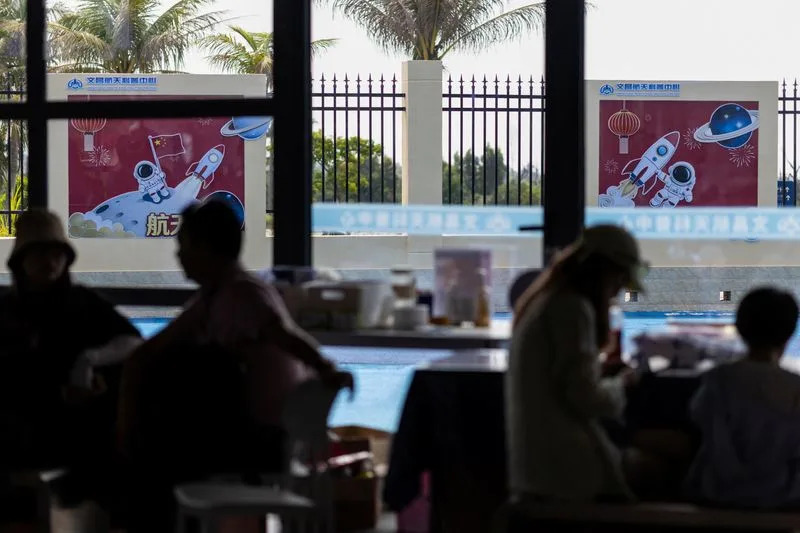
People gather at a souvenir store, with signs depicting space exploration in the background, at the Wenchang Aerospace Science and Education Center in Wenchang, Hainan province, China, August 11, 2026. Space has become a collective cultural experience, with tourism, art and commercial branding all playing a part. REUTERS/Maxim Shemetov
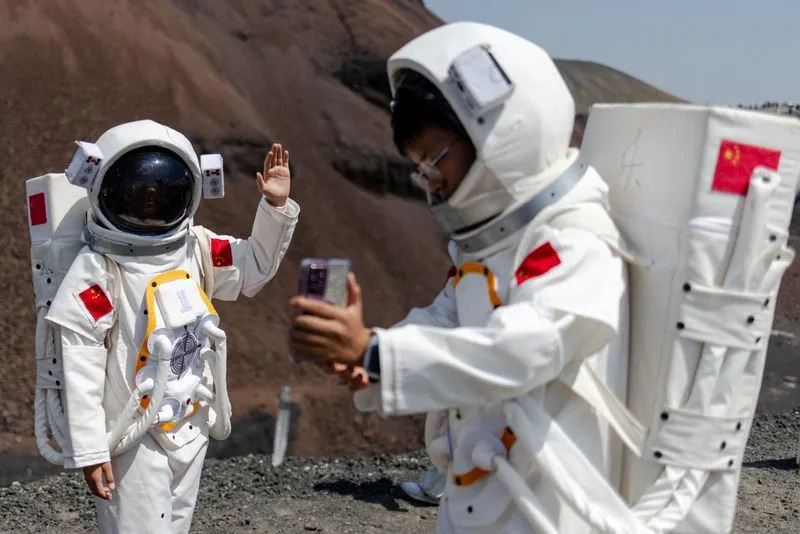
People dressed in astronaut costumes take pictures with a smartphone at Volcano No. 6 of the Wulanhada Volcano Geopark in Ulanqab, Inner Mongolia Autonomous Region, China, July 26, 2026. In China's northern region of Inner Mongolia, black volcanic rock formations have become a Mars simulator. Visitors rent white or pink spacesuit costumes to pose against the backdrop of barren terrain while food vendors sell astronaut-shaped, strawberry-flavored ice cream. REUTERS/Maxim Shemetov
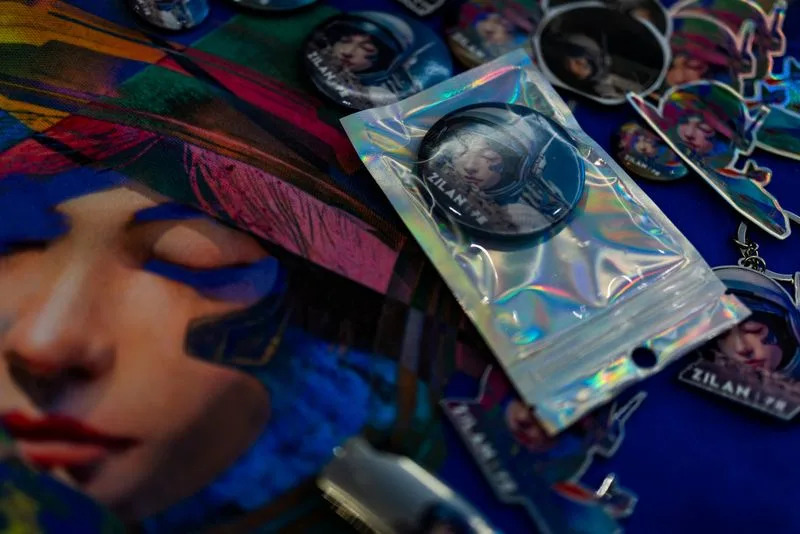
Pins, keychain figures and other artwork featuring Zilan, a character created by Chinese artist Yang Wanting and used in the creation of her sculpture Resonance, are pictured at her home studio in Beijing, China, July 7, 2026. "Every person is very curious about space, and about what might exist in the universe," Yang told Reuters. REUTERS/Maxim Shemetov
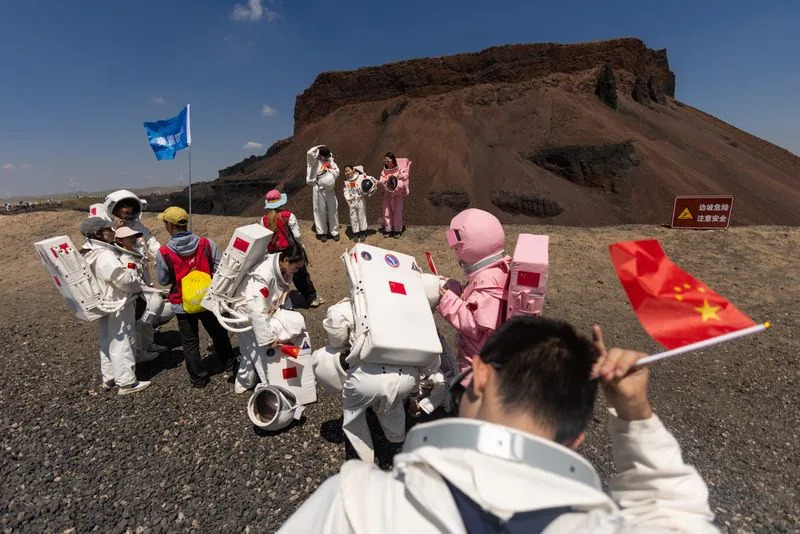
A group of people wearing astronaut costumes gather at Volcano No. 6 of the Wulanhada Volcano Geopark in Ulanqab, Inner Mongolia Autonomous Region, China, July 26, 2026. In China's northern region of Inner Mongolia, black volcanic rock formations have become a Mars simulator. Visitors rent white or pink spacesuit costumes to pose against the backdrop of barren terrain while food vendors sell astronaut-shaped, strawberry-flavored ice cream. REUTERS/Maxim Shemetov
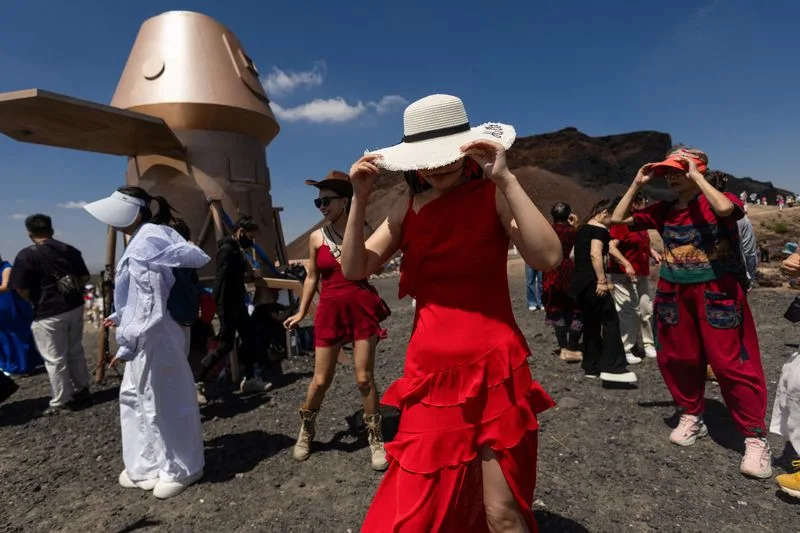
A woman wearing a red dress adjusts her hat as tourists gather by a life-size spacecraft lander at Volcano No. 6 of the Wulanhada Volcano Geopark in Ulanqab, Inner Mongolia Autonomous Region, China, July 26, 2026. In China's northern region of Inner Mongolia, black volcanic rock formations have become a Mars simulator. Visitors rent white or pink spacesuit costumes to pose against the backdrop of barren terrain while food vendors sell astronaut-shaped, strawberry-flavored ice cream. REUTERS/Maxim Shemetov
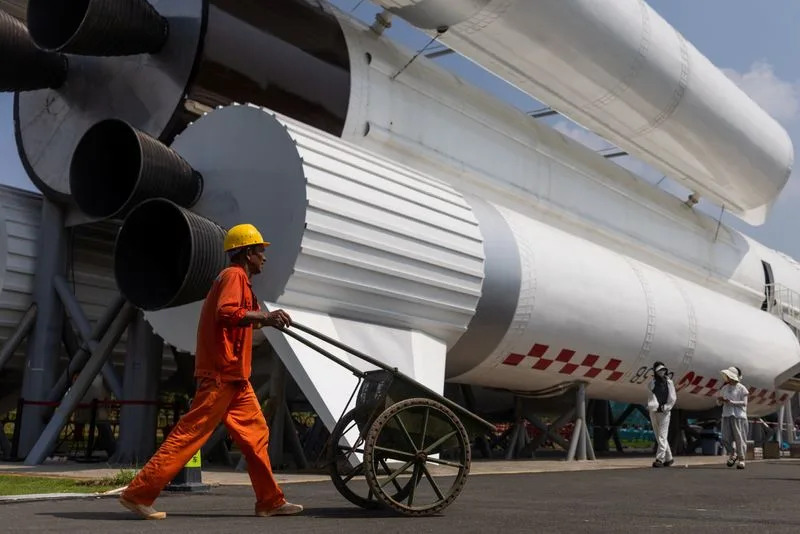
A worker pushes a cart next to a full-scale model of a Long March 5B rocket carrier at the Wenchang Aerospace Science and Education Center in Wenchang, Hainan province, China, August 11, 2026. Once highly classified in remote deserts, China's space launches have increasingly been open to public viewing as the country's ambitions accelerate in a race with the United States. Plans include a crewed moon landing by 2030 followed by a crewed mission to Mars. REUTERS/Maxim Shemetov
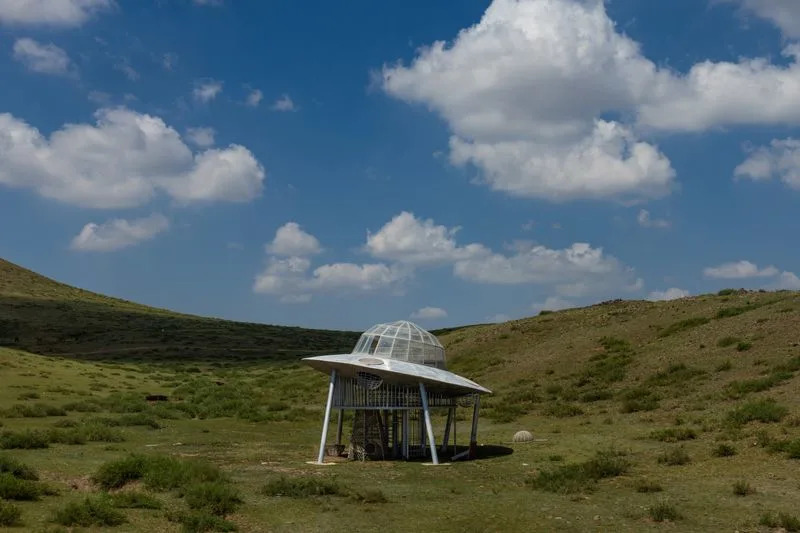
A children's playground shaped like an alien spacecraft in the grassland at the Wulanhada Volcano Geopark in Ulanqab, Inner Mongolia Autonomous Region, China, July 26, 2026. Since launching its first rocket in 1960, China's space programme has advanced through a series of milestones: crewed flight in 2003, a first spacewalk in 2008, and by 2022, a completed space station. Its lunar programme since delivered the world's first far side landing and sample return. REUTERS/Maxim Shemetov
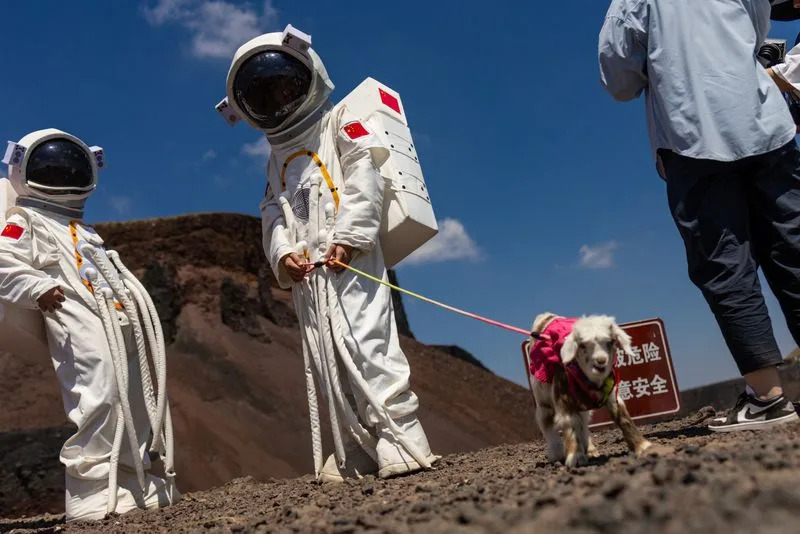
A person wearing an astronaut costume walks a baby goat at Volcano No. 6 of the Wulanhada Volcano Geopark in Ulanqab, Inner Mongolia Autonomous Region, China, July 26, 2026. In China's northern region of Inner Mongolia, black volcanic rock formations have become a Mars simulator. Visitors rent white or pink spacesuit costumes to pose against the backdrop of barren terrain while food vendors sell astronaut-shaped, strawberry-flavored ice cream. REUTERS/Maxim Shemetov
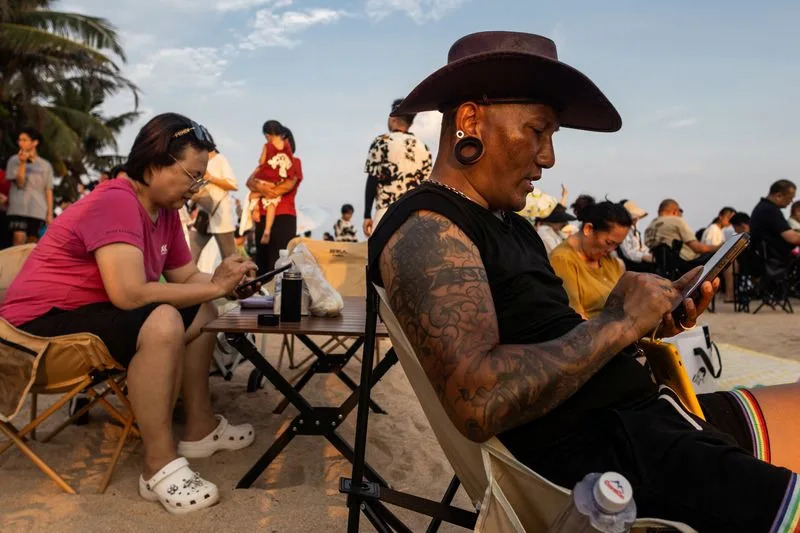
People gather at Qishui Bay Beach at sunset to watch a space launch in Wenchang, Hainan province, China, August 10, 2026. On a sweltering August night, thousands on China's Hainan island thronged the beaches around the Wenchang Space Launch Site, phones raised, waiting for a show. Shortly after 8 p.m., the Long March 7A rocket blasted off. The crowd roared as its ascent lit up the night sky. Moments later, the uncrewed rocket turned into a ball of fire in midair, an unforeseen blast confirmed by Chinese state media a few hours afterwards. REUTERS/Maxim Shemetov
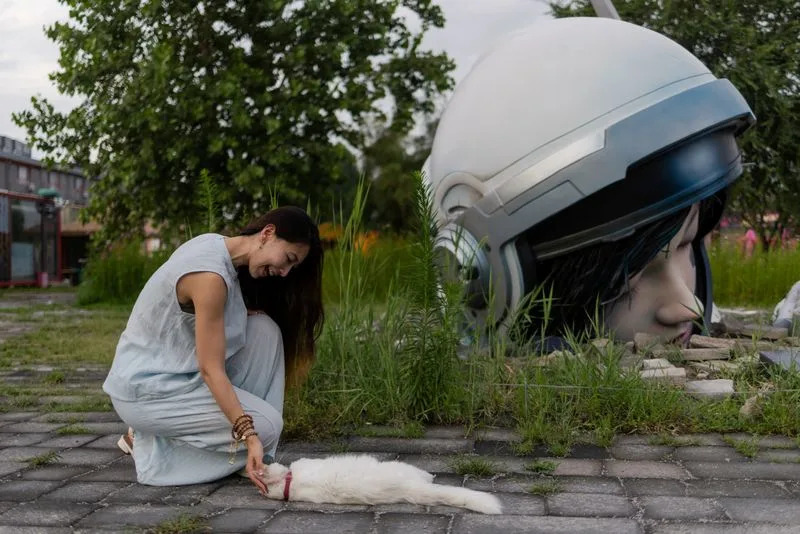
Chinese artist Yang Wanting, 33, plays with a cat next to her sculpture Resonance at Songzhuang Art and Life Square in Beijing's Tongzhou district, China, July 12, 2026. "Every person is very curious about space, and about what might exist in the universe," Yang told Reuters. REUTERS/Maxim Shemetov
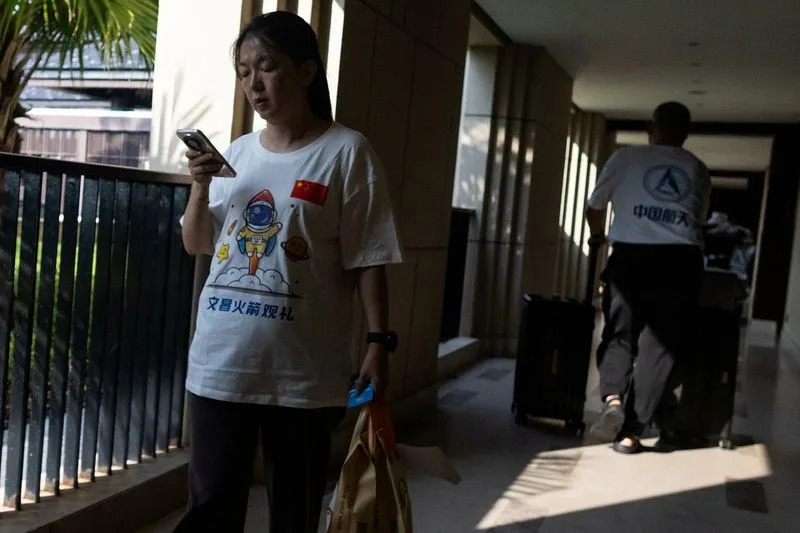
A woman wearing a space-themed T-shirt walks through a hotel on the day of a space launch in Wenchang, Hainan province, China, August 10, 2026. Space has become a collective cultural experience, with tourism, art and commercial branding all playing a part. REUTERS/Maxim Shemetov

Madonna performs during a surprise concert in Times Square, in New York City, U.S., June 4, 2026. REUTERS/Brendan McDermid
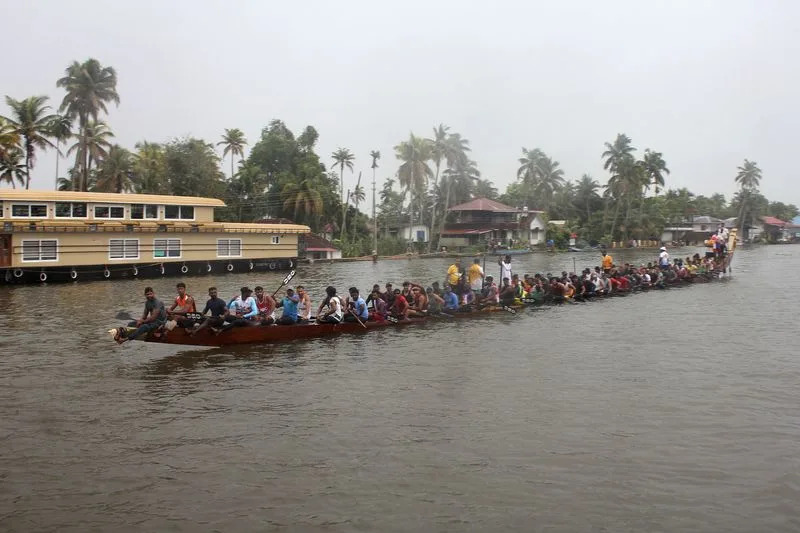
Rowers from the United Boat Club train on the Pamba river in preparation for the Nehru Trophy snake boat race, near Kainakary, Kerala, India, August 7, 2026. REUTERS/Chiranjit Ojha
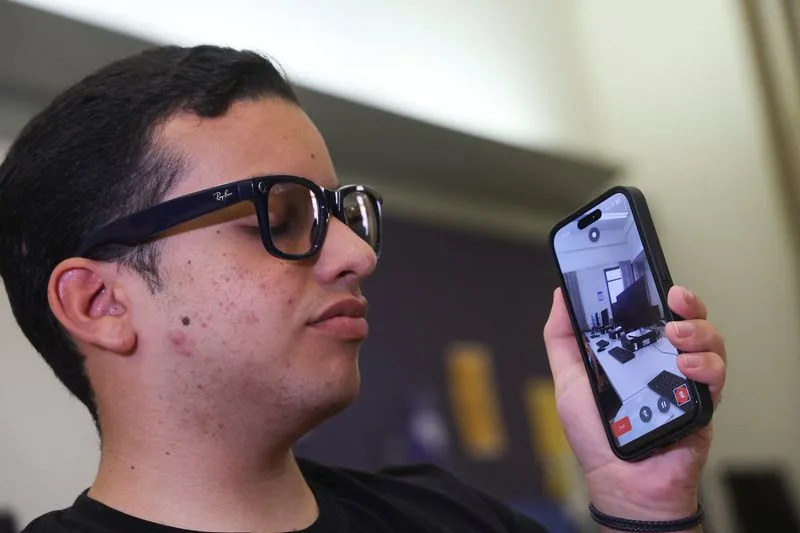
Mark Morad, 20, a visually impaired Egyptian student, entrepreneur and developer of the AI-powered Scribeme application, wears Meta smart glasses while using the Scribeme application in a computer lab at the American University in Cairo (AUC) in Cairo, Egypt, August 12, 2026. REUTERS/Amr Abdallah Dalsh
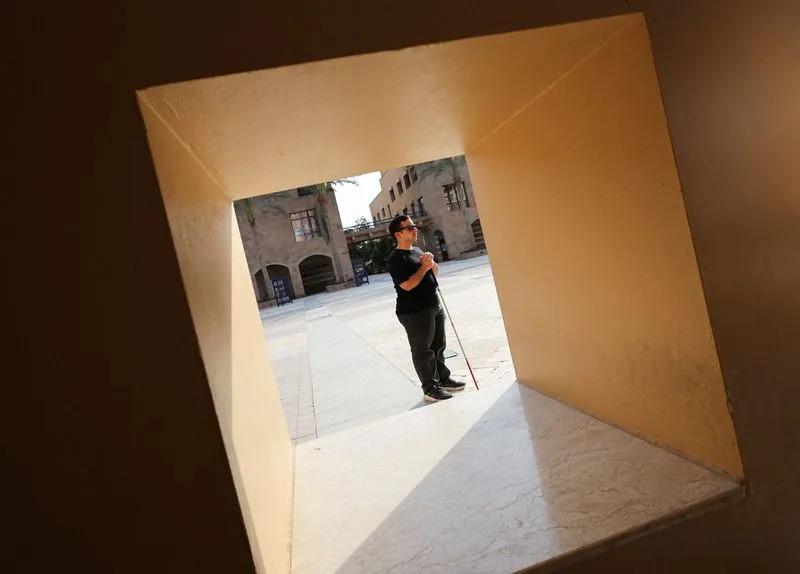
Mark Morad, 20, an Egyptian student, entrepreneur and developer of the AI-powered Scribeme application, stands with a cane at the American University in Cairo (AUC) in Cairo, Egypt, August 12, 2026. REUTERS/Amr Abdallah Dalsh
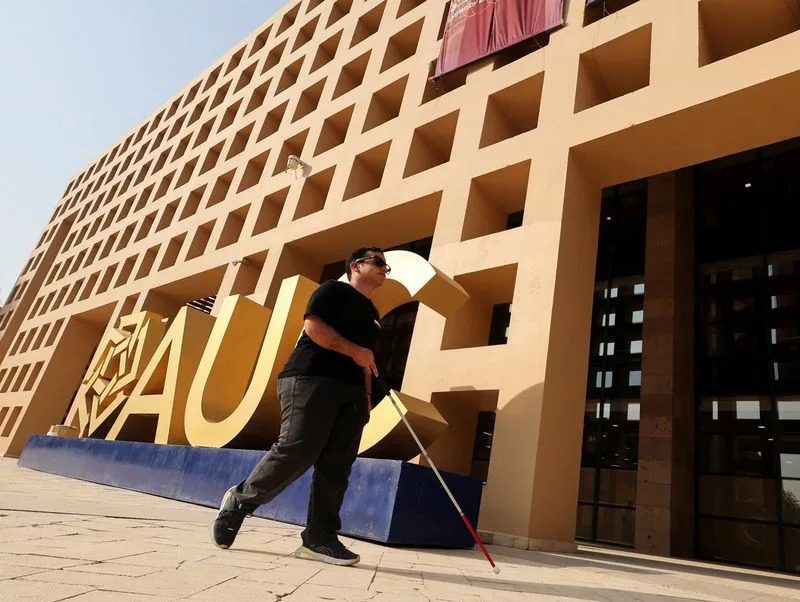
Mark Morad, 20, an Egyptian student, entrepreneur and developer of the AI-powered Scribeme application, walks with a cane past the American University in Cairo (AUC) logo in Cairo, Egypt, August 12, 2026. REUTERS/Amr Abdallah Dalsh
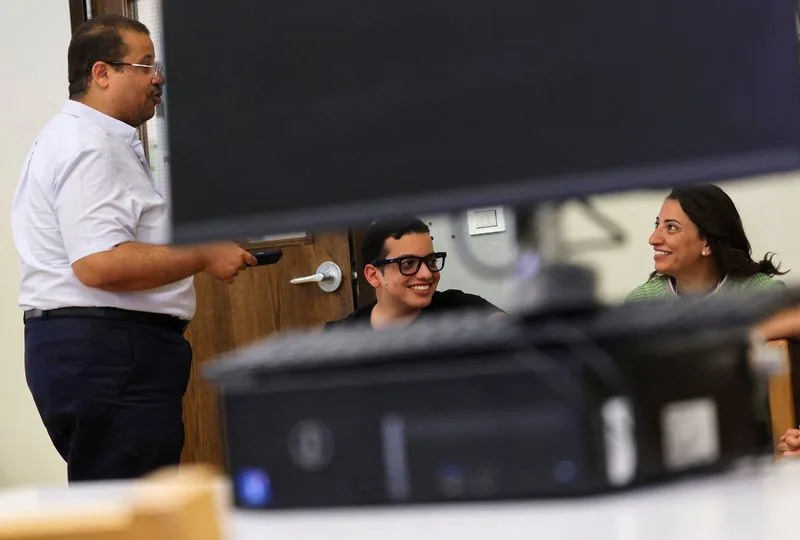
Mark Morad, 20, an Egyptian student, entrepreneur and developer of the AI-powered Scribeme application, talks with his mother, Marian Maurice, and his father, Morad Sedky, before attending a class in a computer lab at the American University in Cairo (AUC) in Cairo, Egypt, August 12, 2026. REUTERS/Amr Abdallah Dalsh
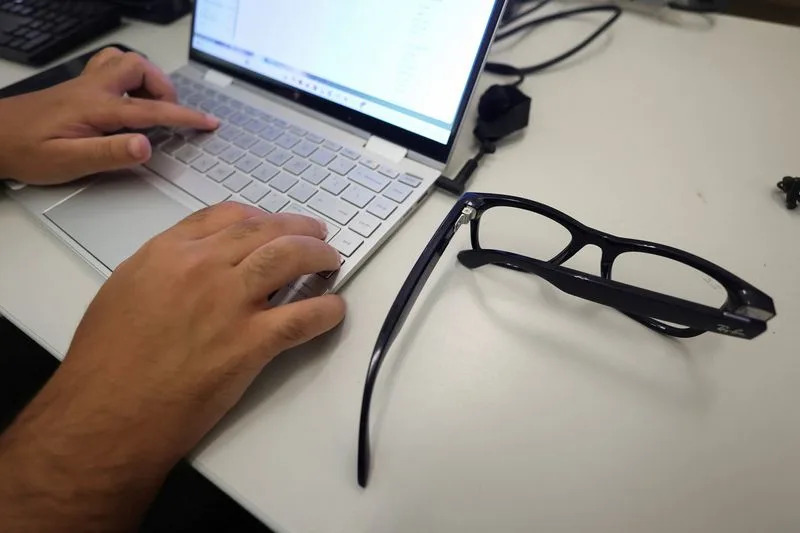
Mark Morad, 20, a visually impaired Egyptian student, entrepreneur and developer of the AI-powered Scribeme application, works on his laptop next to Meta smart glasses while using the Scribeme application in a computer lab at the American University in Cairo (AUC) in Cairo, Egypt, August 12, 2026. REUTERS/Amr Abdallah Dalsh
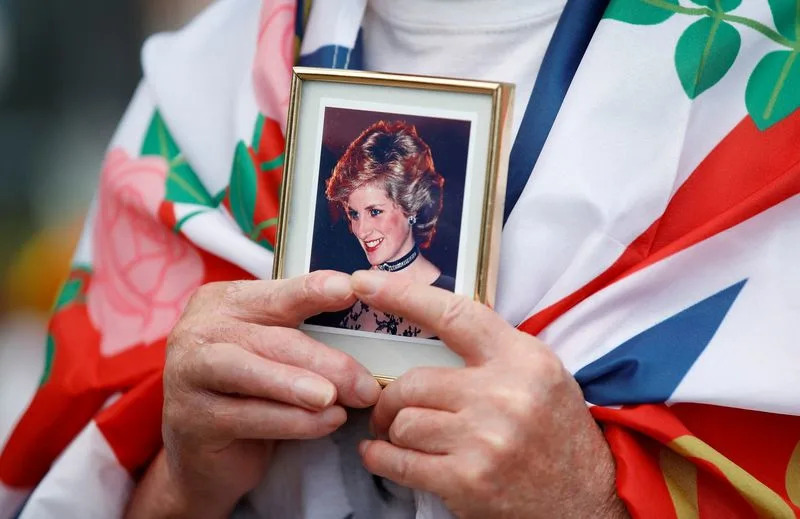
A royal fan holds a picture of Princess Diana as he pays tribute to her, on the 25th anniversary of her death, outside Kensington Palace, in London, Britain, August 31, 2022. REUTERS/Peter Nicholls
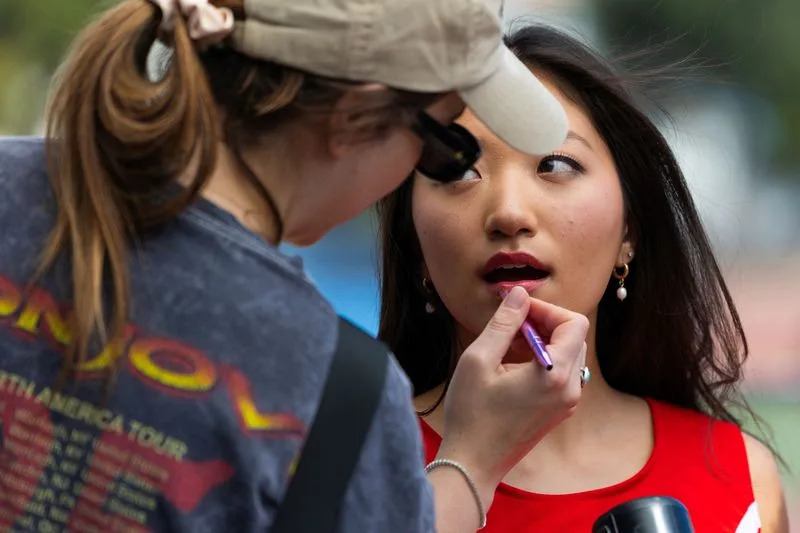
Actor Isabel Feldman has some make-up applied during the filming of a CandyJar microdrama at a high school in Los Angeles, California, U.S. July 7, 2026. REUTERS/Mike Blake
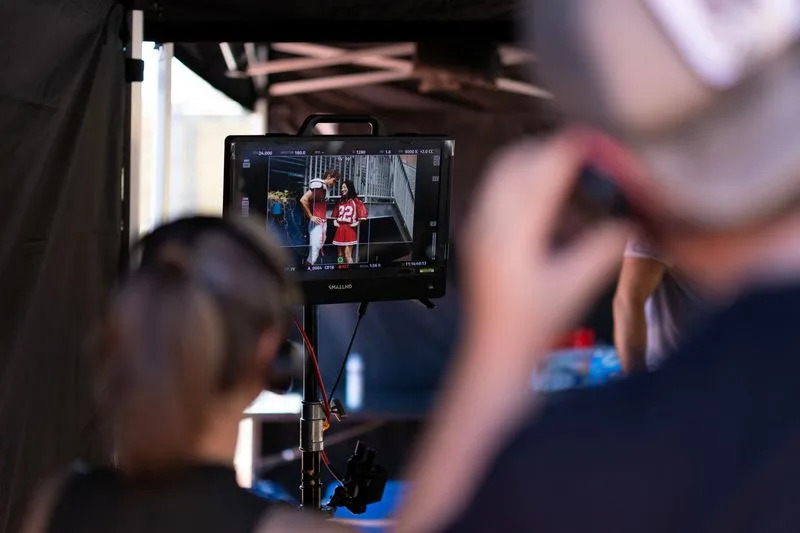
Crew members watch a monitor with vertical framing as actors Isabel Feldman and Evan Adams film a scene during a CandyJar microdrama production at a high school in Los Angeles, California, U.S. July 7, 2026. REUTERS/Mike Blake
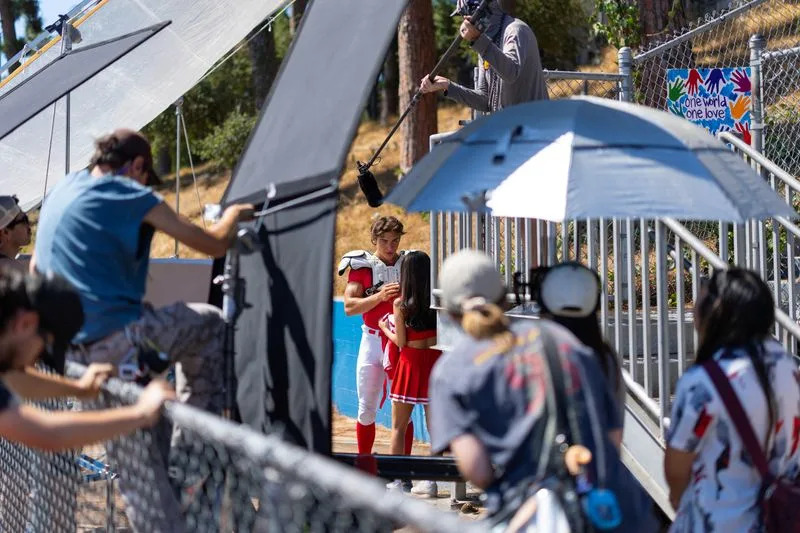
Actors Isabel Feldman and Evan Adams are filmed on the set of a CandyJar microdrama production involving high school football and cheerleaders at a high school in Los Angeles, California, U.S., July 7, 2026. REUTERS/Mike Blake
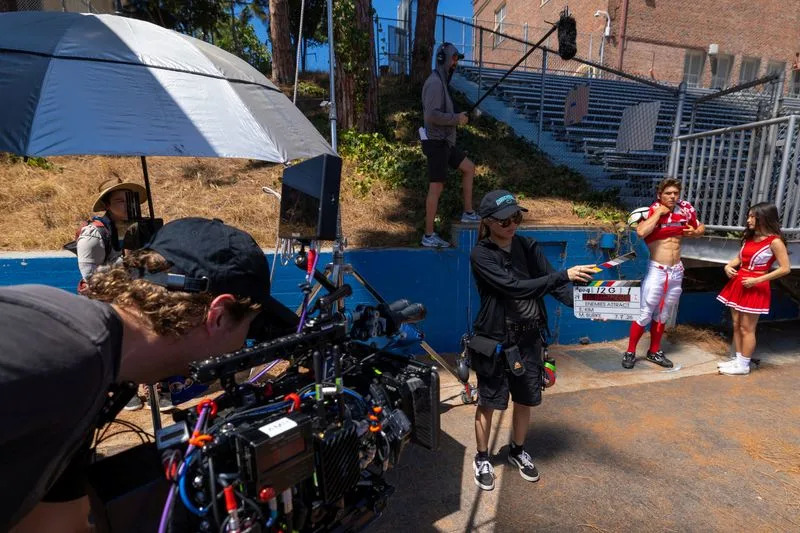
Actors Isabel Feldman and Evan Adams prepare for the filming of a CandyJar microdrama production involving high school football and cheerleaders at a high school in Los Angeles, California, U.S. July 7, 2026. REUTERS/Mike Blake
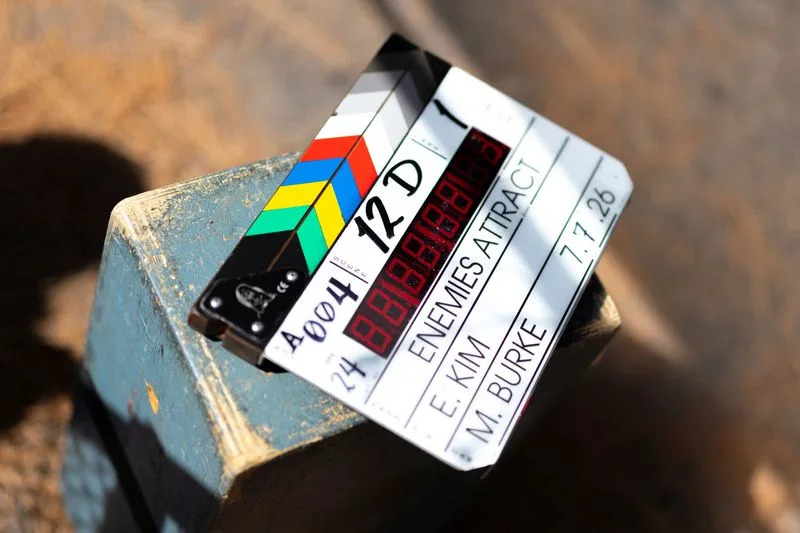
A clapperboard slate on the set of a CandyJar microproduction at a high school in Los Angeles, California, U.S., July 7, 2026. REUTERS/Mike Blake
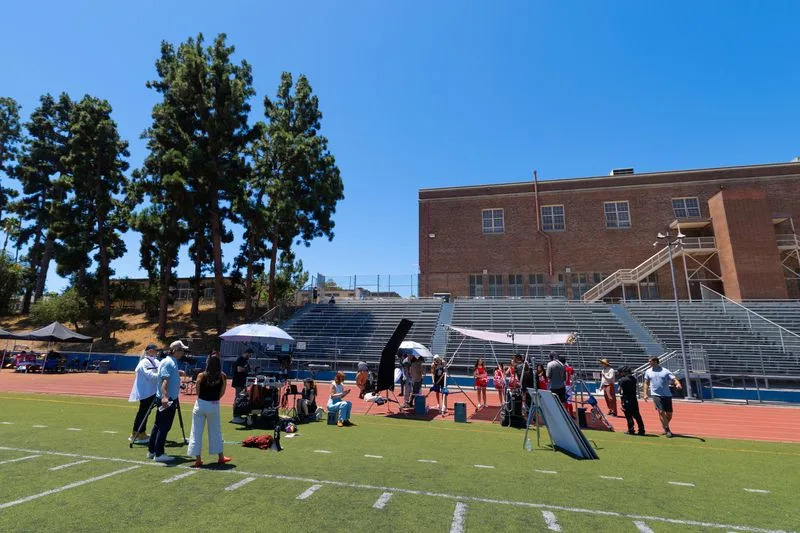
A small crew of actors and production people work in a CandyJar microdrama production involving high school football and cheerleaders at a high school in Los Angeles, California, U.S. July 7, 2026. REUTERS/Mike Blake
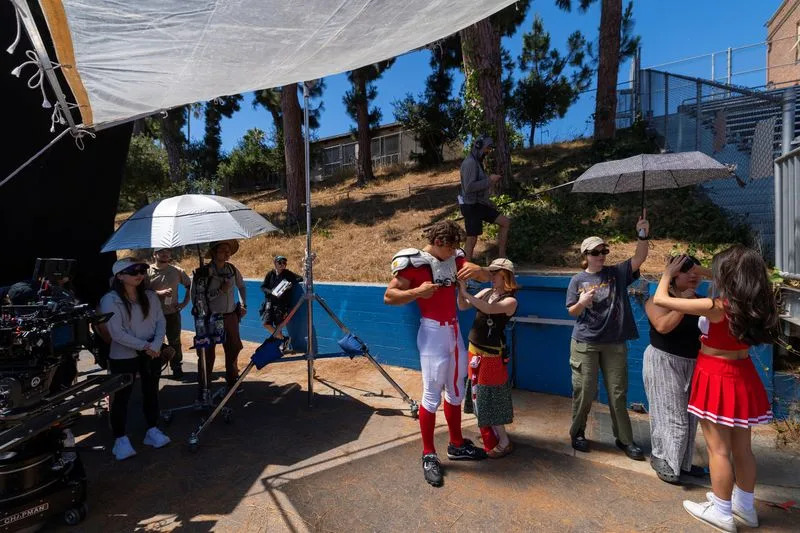
Actors Isabel Feldman and Evan Adams prepare to shoot a scene during a CandyJar microdrama production involving high school football and cheerleaders while filming at a high school in Los Angeles, California, U.S., July 7, 2026. REUTERS/Mike Blake
Pomozite nam da budemo bolji.