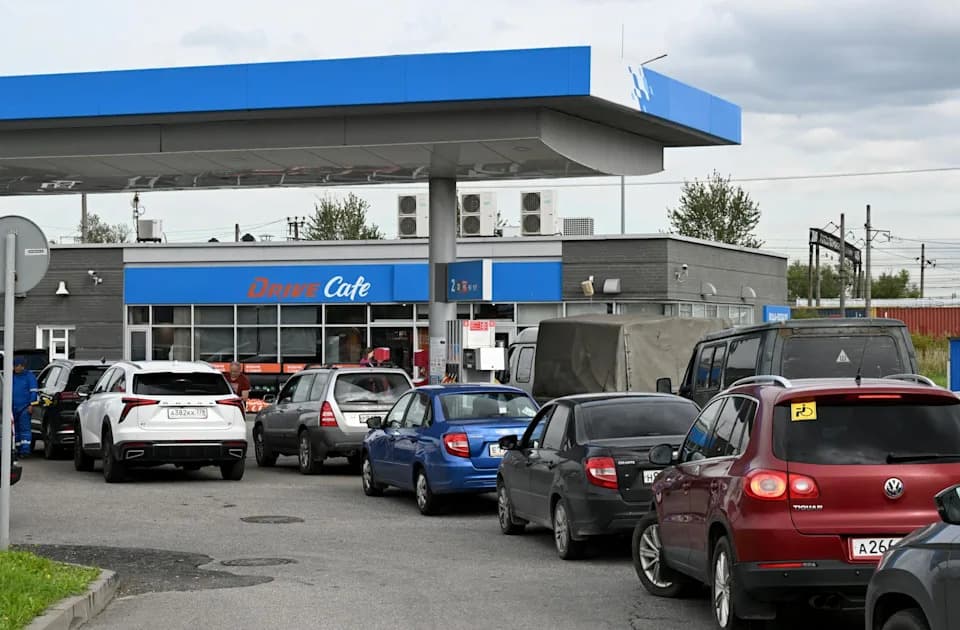
NASA prati neuobičajeno niske temperature u Cape Canaveralu koje bi mogle ugroziti lansiranje Artemis 2. Lansiranje SLS rakete moguće je od 6. februara do 6. aprila, ali konačan datum zavisi od uspešnog wet dress rehearsal testa i provere spremnosti leta. Posada od četiri člana je u karantinu, a misija će kružiti oko Meseca bez sletanja, dosežući oko 4.700 milja iza njegove daleke strane.
Može Li Hladno Vreme Odložiti Lansiranje Artemis 2? NASA Prati Prognozu Na Floridi
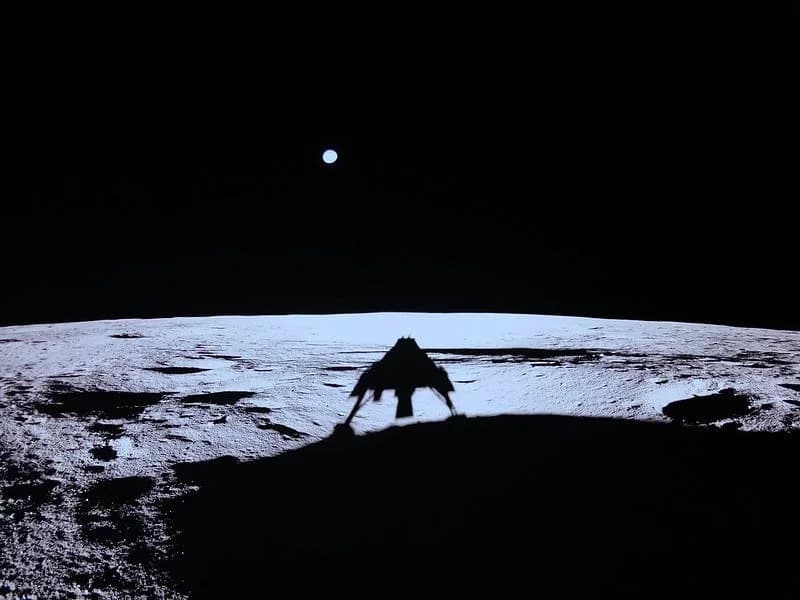
Firefly's Blue Ghost lunar lander captures its shadow on the moon's surface after completing a successful landing March 2 near a volcanic feature on the moon called Mons Latreille. The vehicle became the first of two landers manufactured by a U.S. company to reach the moon is 2025 in crucial missions to lay the groundwork for NASA to return humans to the lunar surface in the years ahead.
NASA pomno prati neuobičajeno niske temperature na Floridi koje bi mogle uticati na lansiranje misije Artemis 2, prve američke posade koja će kružiti oko Meseca posle više od 50 godina. Iako Florida neće imati sneg kakav vlada u severnijim delovima SAD, hladni talas donosi temperature koje nisu idealne za određene prelaunch procedure i sisteme rakete.
Vremenski Uslovi I Njihov Uticaj
Prognoze za Cape Canaveral, gde se nalazi Kennedy Space Center, predviđaju noćne temperature u "20-ima" po Farenhajtu (oko -7 do -1 °C) tokom vikenda, dok se dnevni maksimumi kreću blizu 50 °F (oko 10 °C). NASA u svojim smernicama navodi da lansiranje nije moguće ako se temperature nalaze u opsegu od 38 do 49 °F (približno 3,3–9,4 °C) za određene elemente operacije.
Ključni Prelansirani Testovi
Raketa Space Launch System (SLS) ima prozor lansiranja od 6. februara do 6. aprila sa Kennedy Space Centera. Pre nego što NASA odredi tačan datum, neophodni su wet dress rehearsal (simulacija odbrojavanja uz točenje goriva) i analiza spremnosti leta (flight readiness review). Wet dress rehearsal uključuje punjenje rakete sa oko 700.000 američkih galona kriogenih goriva — približno 2,65 miliona litara — nakon čega se gorivo prazni kao deo provere sistema.
Pripreme Za Hladnoću
U svetlu predviđenih nižih temperatura, tehničari pripremaju sisteme za kontrolu okoline koji održavaju Orion i elemente SLS-a u propisanim uslovima. To uključuje mere za zaštitu osetljive elektronike, cevovoda i sistema za skladištenje kriogenih goriva kako bi se izbegli rizici povezani s hladnim vremenskim uslovima.
Posada I Misija
Posadu Artemis 2 čine NASA-ini astronauti Reid Wiseman, Victor Glover i Christina Koch, i astronaut Kanadske svemirske agencije Jeremy Hansen. Svi su ušli u predlansirni karantin 23. januara kako bi se smanjio rizik od bolesti pred poletanje. Misija neće uključivati sletanje na Mesec — radi se o desetodnevnom letu koji će Orion odvesti otprilike 4.700 milja (oko 7.560 km) iza daleke strane Meseca, što bi putnicima omogućilo najudaljeniju tačku koju su ljudi ikada postigli u svemiru pre povratka na Zemlju.
Širi Kontekst
Artemis 2 sledi uspeh Artemis 1 (lansiranog 16. novembra 2022.), kada je Orion bez posade testiran u misiji oko Meseca. NASA-in Artemis program teži ponovnom uspostavljanju prisustva ljudi na Mesecu i dugoročno stvaranju baze na Južnom polu Meseca, gde se očekuje prisustvo leda koji bi mogao biti korišćen za vodu, vazduh i raketno gorivo, te kao odskočna daska za buduće posade na Mars.
Za kraj, vremenski uslovi su samo jedan od faktora koji određuju kada će se dogoditi lansiranje. Ako hladni talas utiče na ključne procedure ili opremu, NASA ima protokole i rezerve da odloži pokušaj dok se ne obezbede sigurni uslovi za posadu i letelicu.
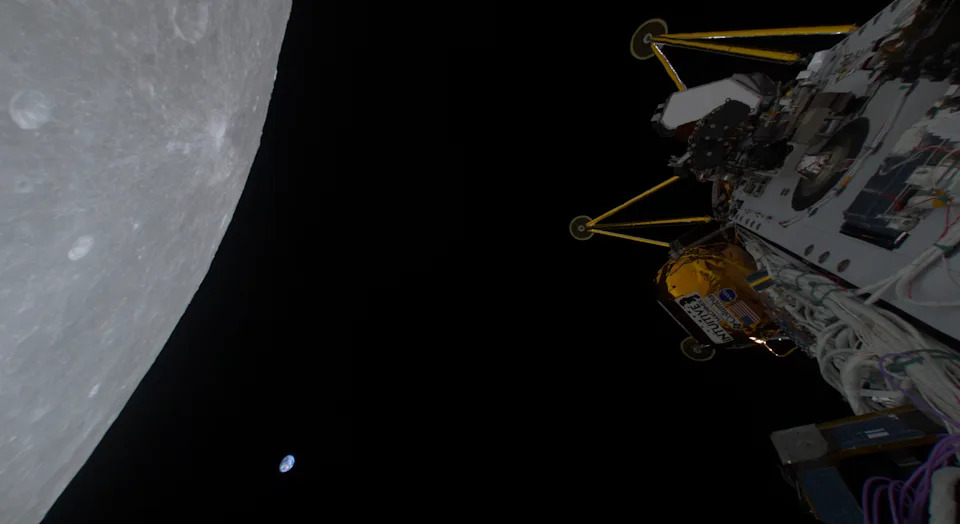
Athena, the lunar lander on Intuitive Machines' IM-2 mission, captured this image of the moon's surface with Earth seen in the distance ahead of a March 6 landing attempt. While the lander was the second U.S. vehicle to reach the moon within a week, it ultimately landed on its side, which hindered much of its mission.
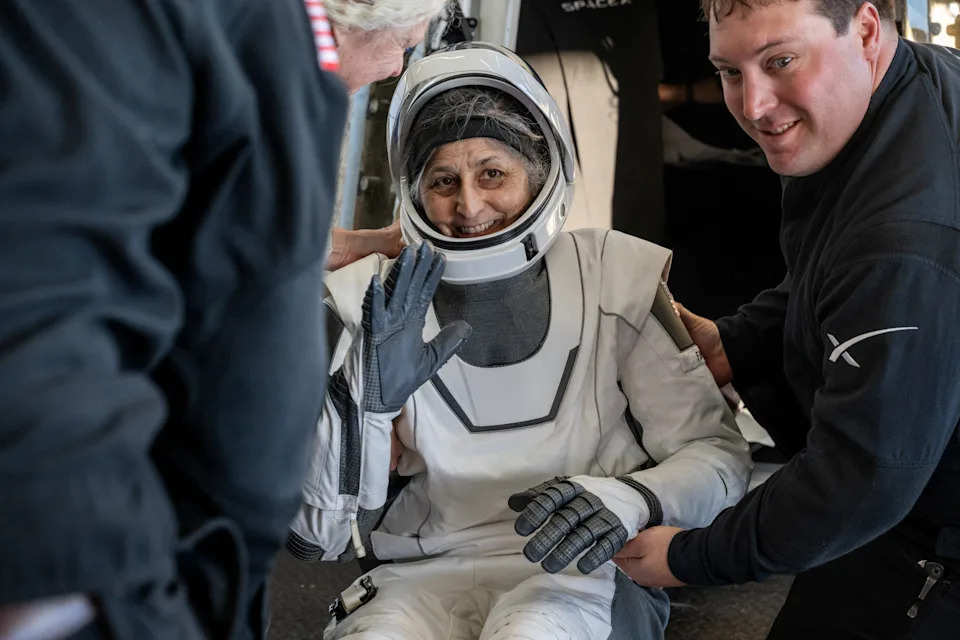
NASA astronaut Suni Williams is helped out of a SpaceX Dragon spacecraft March 18 following a return to Earth after a nine-month stay at the International Space Station. She and NASA astronaut Butch Wilmore crewed the Boeing Starliner, which had launched in June 2024 on a failed test flight that was meant to return them to Earth a few days later.
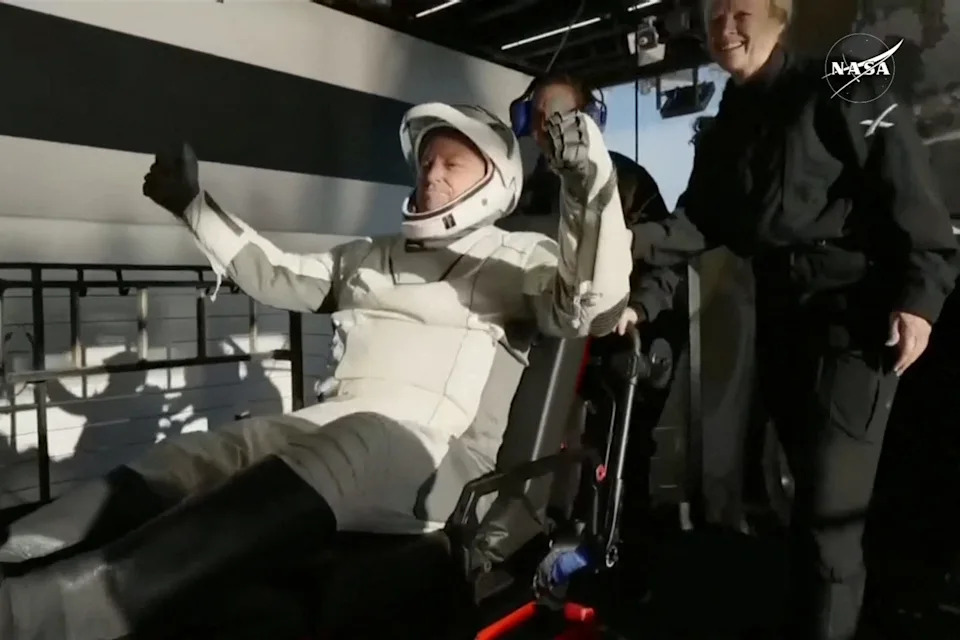
Butch Wilmore reacts after he and Suni Williams and two other astronauts splashed down March 18 in a Crew Dragon space capsule following their return to earth from the International Space Station off the coast of Florida. The astronauts' extended stay at the orbital outpost dominated the news cycle for months.
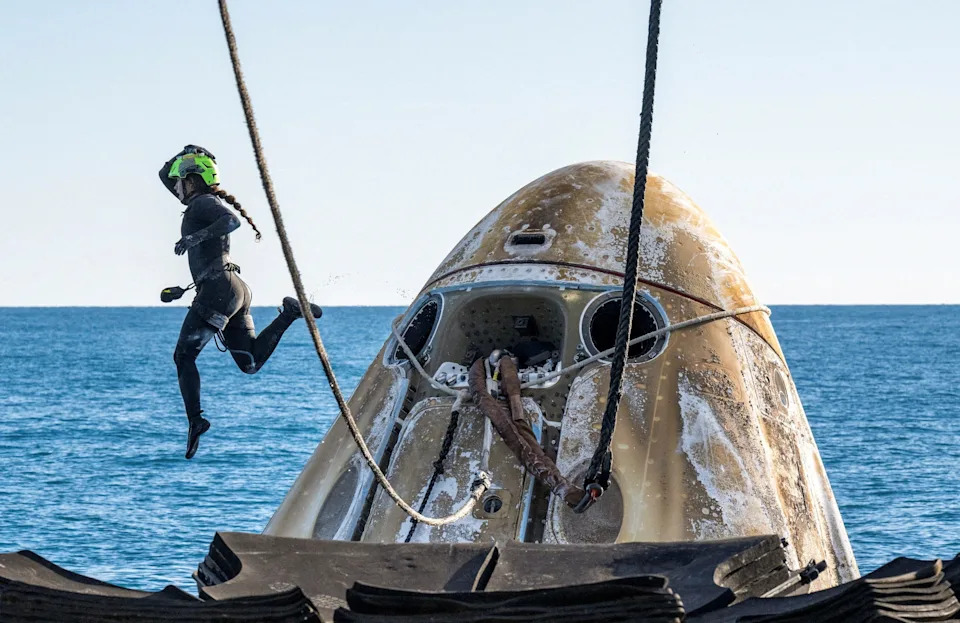
A SpaceX support team member is seen airborne while working to lift the SpaceX Dragon capsule that returned the Starliner astronauts and two others onto a recovery vehicle following its landing off the coast of Florida.

This picture shows the crew of a privately-funded mission known as Fram2, from left to right, mission specialist and medical officer Eric Philips, mission commander Chun Wang, pilot Rabea Rogge and vehicle commander Jannicke Mikkelsen on March 19, 2025 in Hawthorne, California. Launched March 31 from Florida using a SpaceX Dragon capsule, the mission became t first ever human spaceflight over the Earth's polar regions.
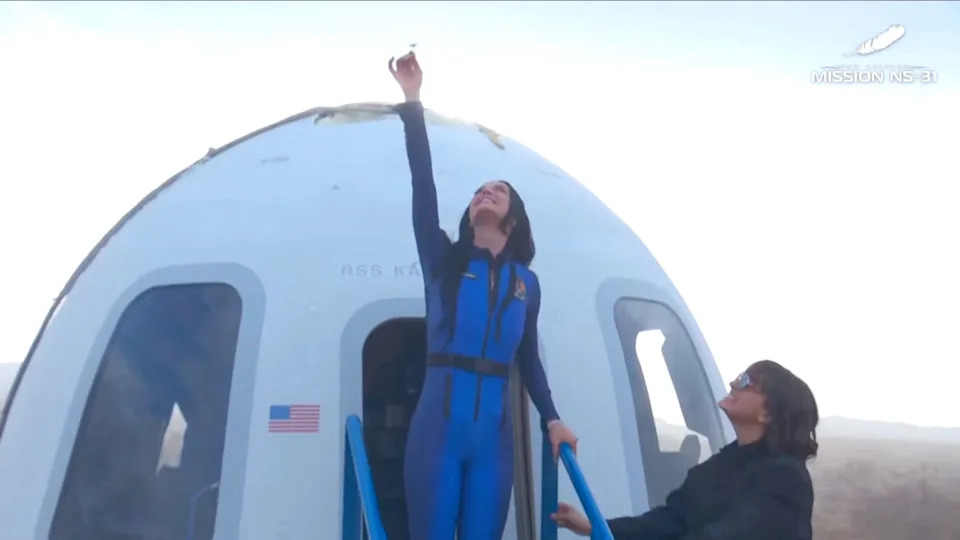
Pop musician Katy Perry emerges April 14 from Blue Origin's New Shepard capsule in West Texas following a brief flight to the edge of space. Perry was part of an all-women crew that also included broadcast journalist Gayle King that took the ride from Blue Origin's facility called Launch Site One. The high-profile launch attracted plenty of headlines and even drew some backlash from those who viewed the mission as a wasteful publicity stunt.
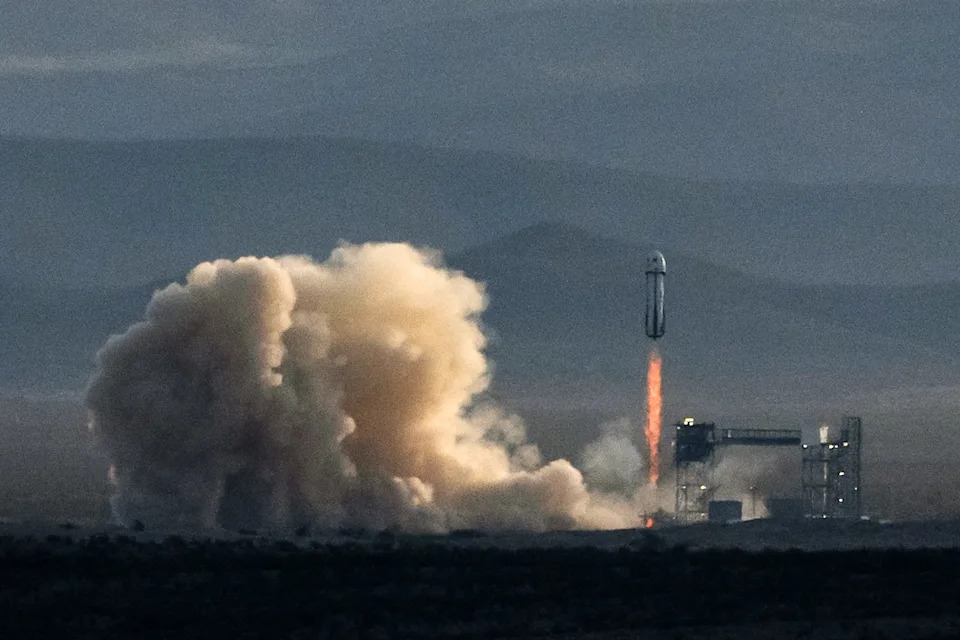
Blue Origin's New Shepard rocket carrying astronauts Aisha Bowe, Amanda Nguyen, Kerianne Flynn, Gayle King, Katy Perry, and Lauren Sanchez lifts off April 14 from Launch Site One near Van Horn, Texas. Blue Origin has since launched five more human spaceflights on the New Shepard in 2025.
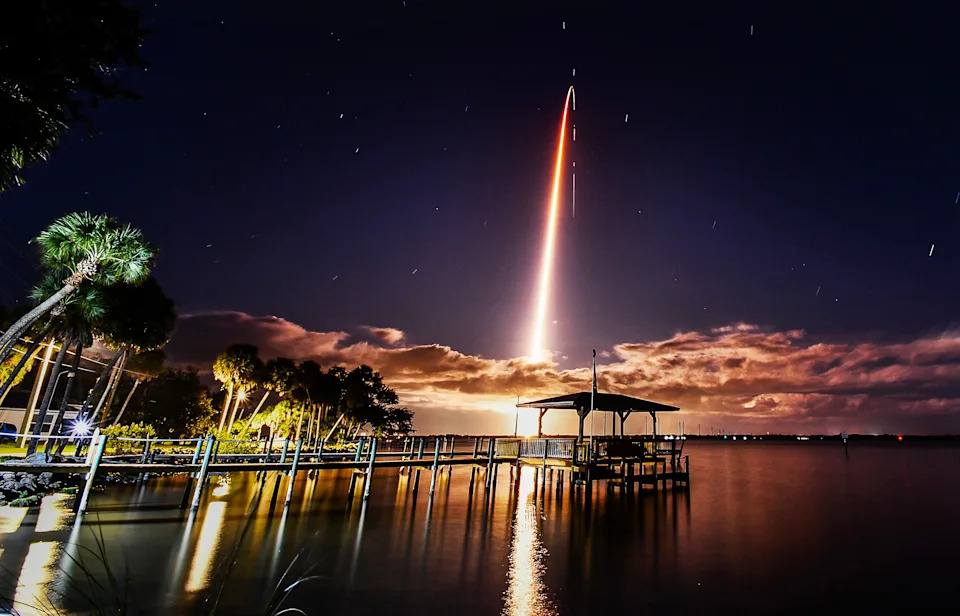
This photo depicts a United Launch Alliance Atlas V rocket carrying the latest batch of Amazon's broadband satellites on Dec. 16 to low-Earth orbit after launching from the Cape Canaveral Space Force Station in Florida. Formerly called Project Kuiper, the venture has since been renamed Amazon Leo. Since its debut April launch, Amazon Leo has deployed 180 of 3,000 satellites planned for its first constellation, which could challenge SpaceX's Starlink.
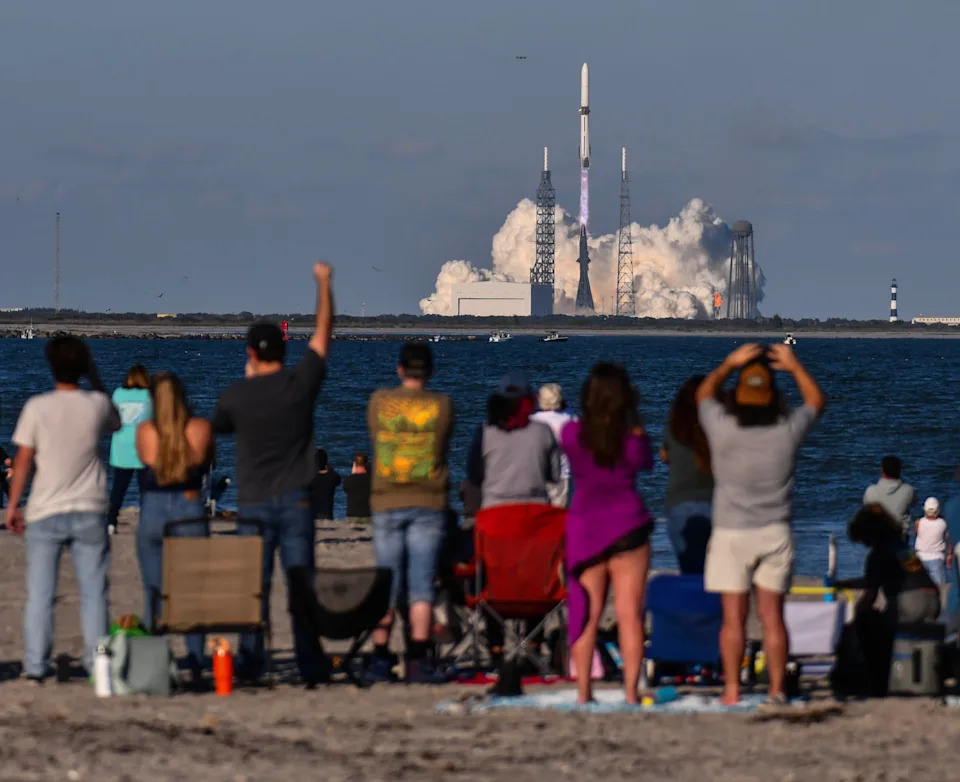
A group of Blue Origin employees with their friends and families gather on the beach in Cape Canaveral for the launch of Blue Origin's second New Glenn rocket in 2025. Following its January debut, the rocket launched for the second time Nov. 13 from Launch Complex 36 at Cape Canaveral Space Force Station, sending NASA's twin ESCAPADE spacecraft on their trek to Mars.
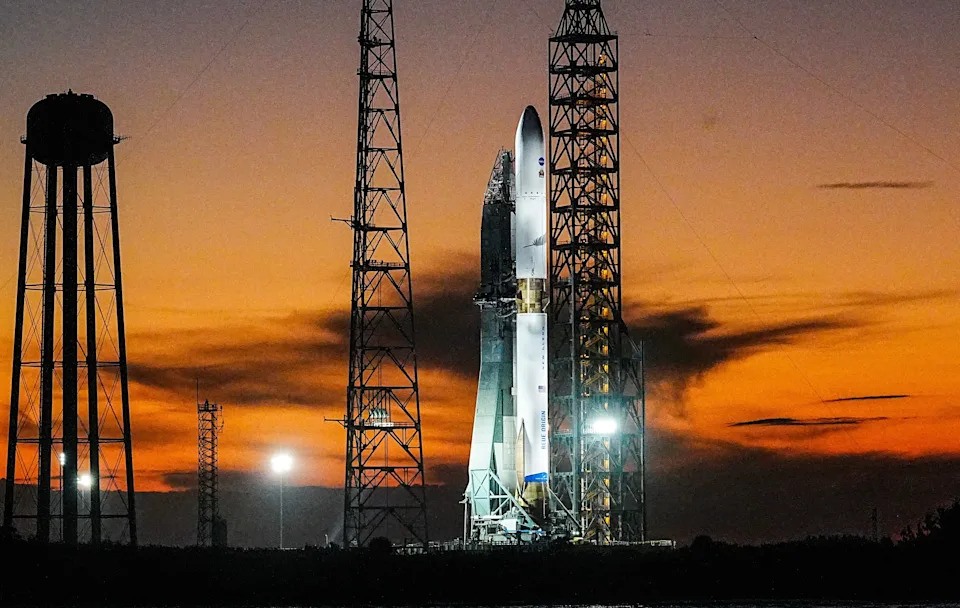
Darkness falls Nov. 9 as a Blue Origin New Glenn rocket is prepped for its second-ever launch from the Cape Canaveral Space Force Station. Blue Origin is developing the towering rocket for heavy-lift missions that could see Jeff Bezos' company compete with Elon Musk and SpaceX.
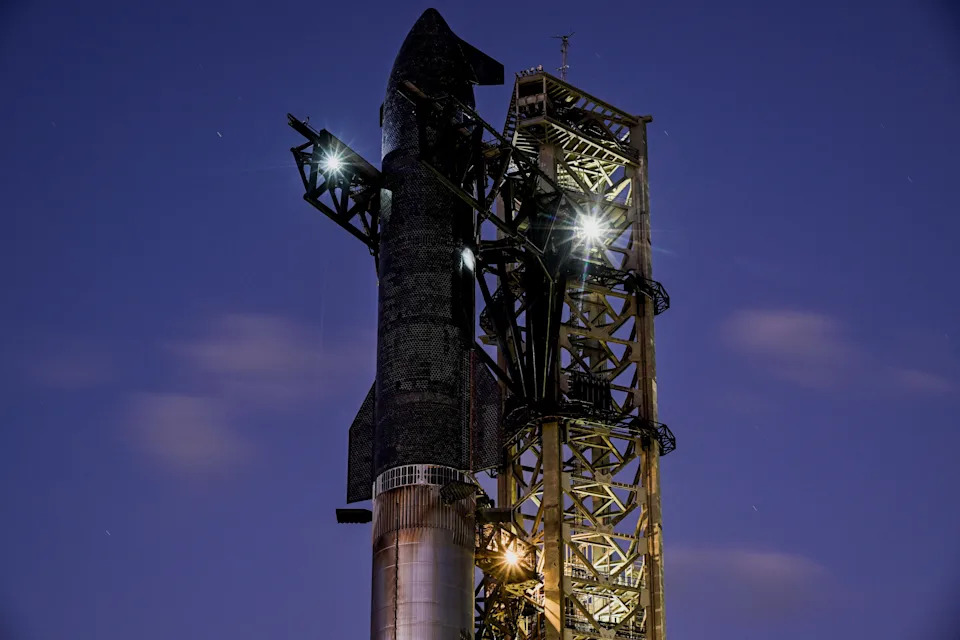
The SpaceX Starship spacecraft sits Oct. 12, 2025 atop the Super Heavy booster before sunrise as preparations continue for its 11th test flight from the company's complex in Starbase, Texas.
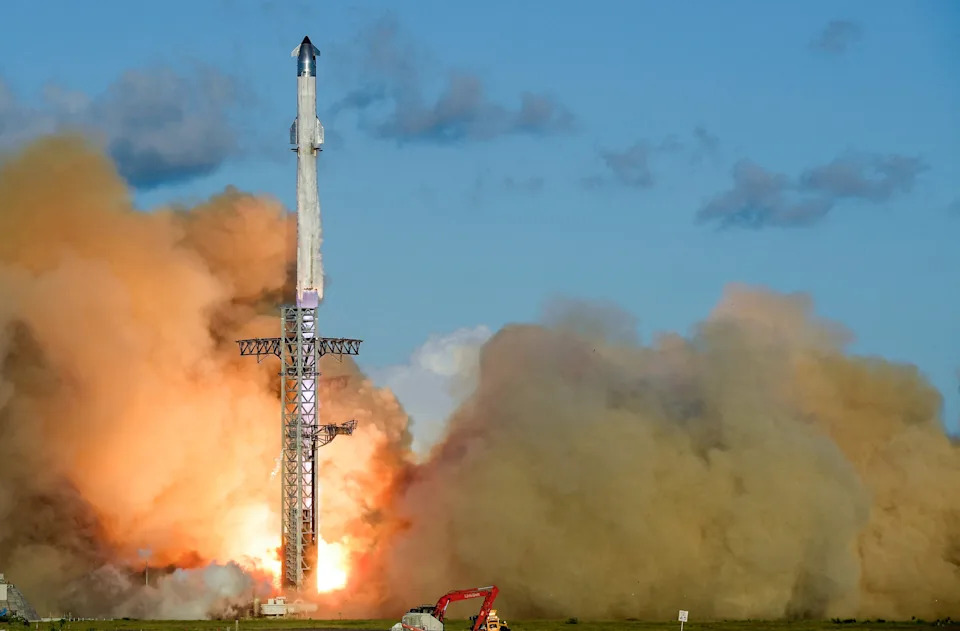
A SpaceX Super Heavy booster carrying the Starship spacecraft lifts off Oct. 13, 2025, on its 11th ever test flight at the company's launch pad in Starbase, Texas. The launch was Starship's fifth of 2025, and second consecutive successful test flight following a year that was early on marked by explosive failures. SpaceX is developing the rocket for future missions that would help NASA astronauts land on the moon and also potentially transport the first humans to Mars.
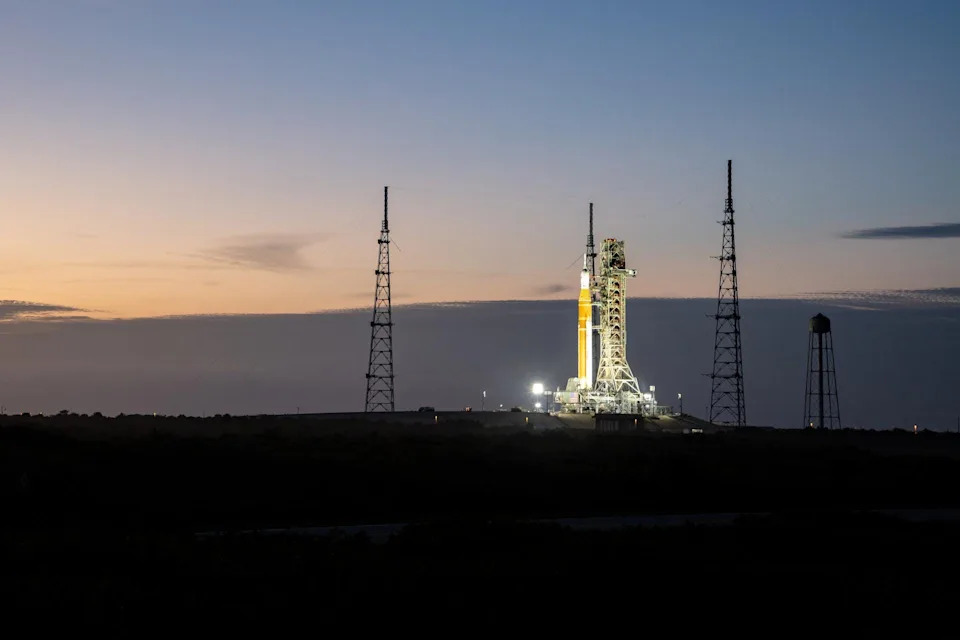
NASA’s Artemis 2 Space Launch System (SLS) rocket and Orion spacecraft are seen illuminated by lights Jan. 17 at Launch Complex 39B at NASA’s Kennedy Space Center in Florida.
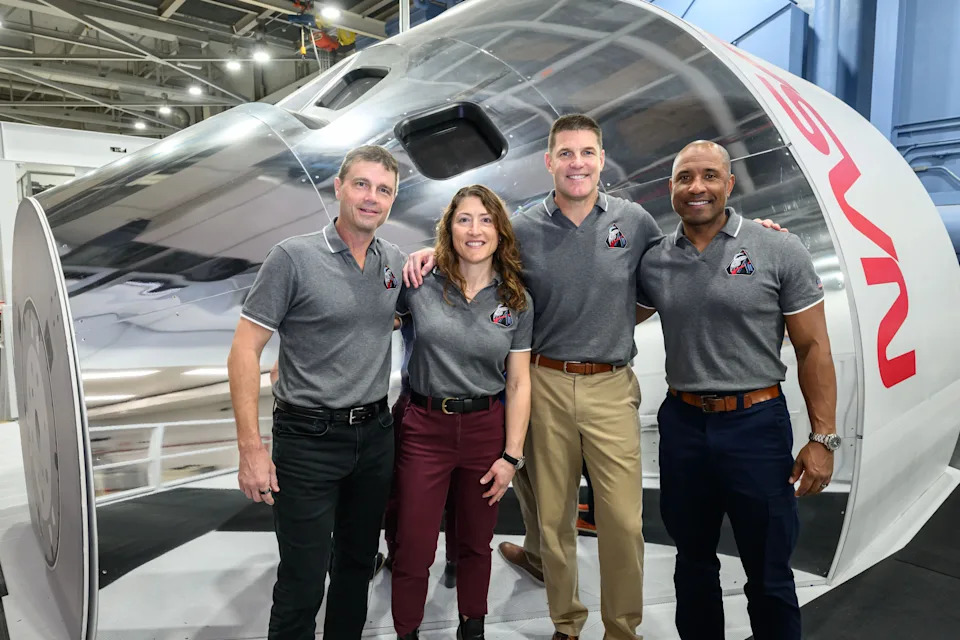
The Artemis II crew poses in front of an Orion simulator Jan. 23, 2026 at NASA’s Johnson Space Center in Houston.
Pomozite nam da budemo bolji.