Pentagon je privremeno obustavio lansiranja rakete Vulcan nakon što su tokom poslednje misije primećeni iskri i varnice. Space Force i ULA započeće zajedničku istragu, koja po rečima pukovnika Erica Zarybniskog može potrajati mesecima. Iako su booster i Centaur V radili nominalno i teret je isporučen u geosinhronu orbitu, svi naredni nacionalno-bezbednosni letovi na Vulcanu ostaju na čekanju dok se ne identifikuje uzrok.
Anomalija Na Raketi Vulcan: Pentagon Navodno Pauzira Lansiranja
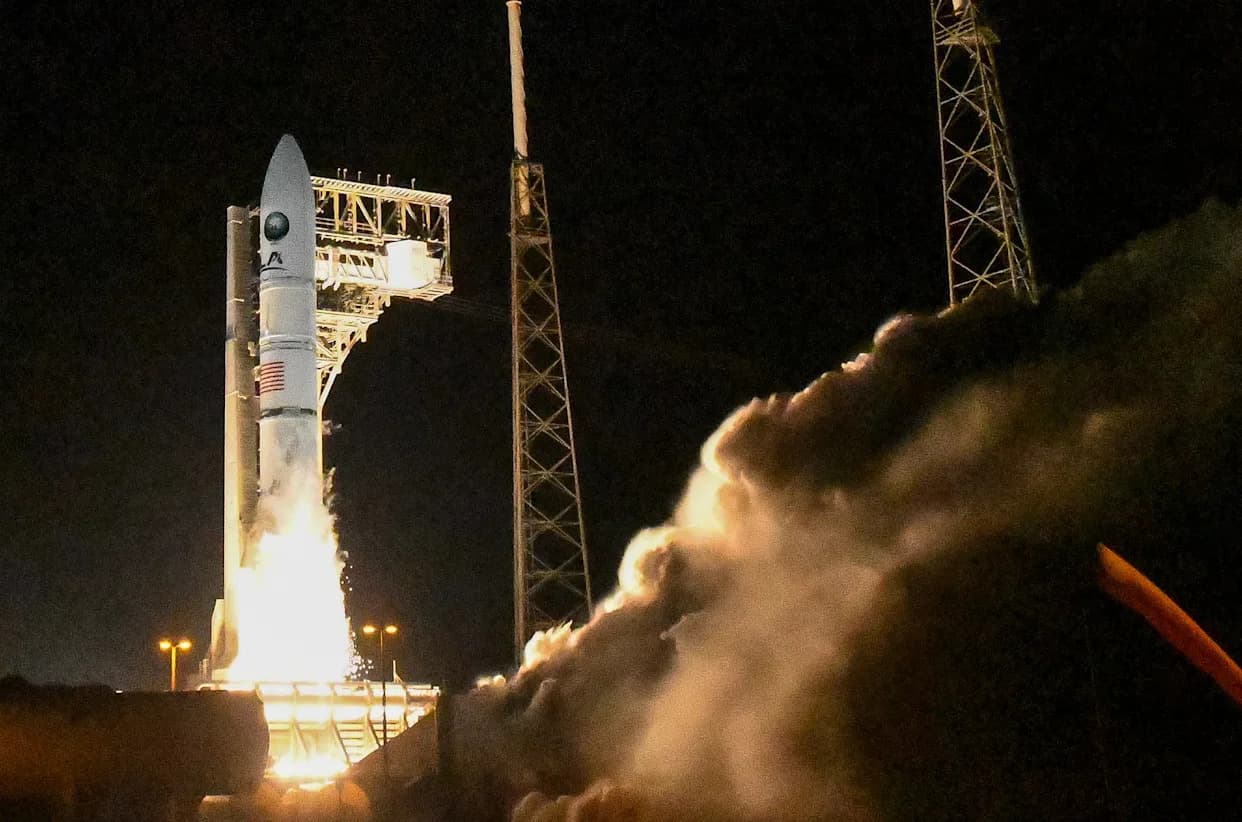
'Anomaly' with ULA Vulcan rocket reportedly prompts missions pause
United Launch Alliance (ULA) je uspešno izvršio najnoviju misiju raketom Vulcan, ali tokom leta je primećena anomalija koja je navela Pentagon da privremeno obustavi sledeća nacionalno-bezbednosna lansiranja dok se ne razjasni uzrok.
Šta se dogodilo
Tokom lansiranja označenog kao USSF-87, 12. februara u 4:22 po istočnoameričkom vremenu sa Cape Canaveral Space Force Station, posmatrani su iskri i varnice koje su se odvajale od rakete u sred leta. ULA je potvrdio da je reč o anomaliji, iako je booster i Centaur V funkcionisao nominalno i isporučio teret u preciznu geosinhronu orbitu.
„Dok se ova anomalija ne reši, nećemo lansirati misije na Vulcanu,” rekao je pukovnik Eric Zarybnisky tokom okruglog stola na Air Warfare Symposium-u.
Zašto je to važno
Space Force je ranije planirao da značajan deo nacionalno-bezbednosnih misija preusmeri na Vulcan, a ULA je najavila ambiciozan raspored — 18 do 22 lansiranja u 2026. godini. Privremeni prekid lansiranja predstavlja ozbiljan logistički i ugovorni izazov za kompaniju i Pentagon dok traje istraga.
Detalji misije USSF-87
USSF-87 je nosio satelit koji je razvio Northrop Grumman za Space Force, namenjen detekciji poremećaja u geosinhronoj orbiti. Raketa je poletela sa četiri kruta bočna pojačivača koji su se naknadno odvojili, nakon čega je Centaur V nastavio let sa svojim dvema motorima i isporučio teret na ciljanu orbitu.
Istraga i naredni koraci
ULA je saopštila da će sprovesti detaljnu istragu — pregledati podatke leta, snimke i poslati tim za oporavak radi prikupljanja potencijalnih ostataka. Space Force će „usko sarađivati sa ULA” pre nastavka nacionalno-bezbednosnih lansiranja. Zarybnisky je upozorio da analiza može potrajati mesecima dok se ne identifikuje i otkloni koren uzroka.
Incident podseća na sličan događaj sa varnićem primećenom u mlaznici pojačivača tokom drugog leta Vulcana u oktobru 2024. Iako dosadašnja opažanja nisu uticala na uspeh misije, ponavljajući simptomi povećavaju potrebu za temeljnom analizom i mogućim korektivnim merama.
Kontakt: Eric Lagatta, Space Connect / USA TODAY Network — elagatta@usatodayco.com
Izvor: USA TODAY — originalni članak: "Vulcan rocket launch schedule on possible pause by Pentagon".
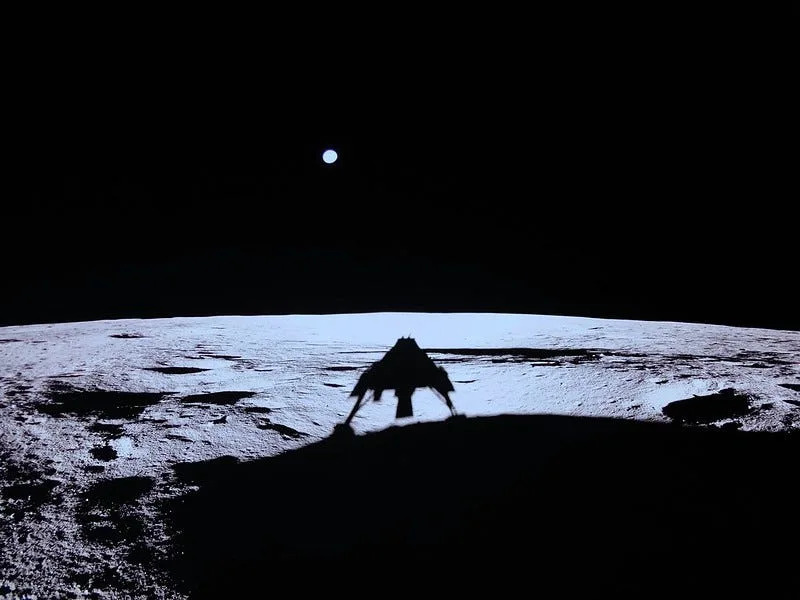
Firefly's Blue Ghost lunar lander captures its shadow on the moon's surface after completing a successful landing March 2 near a volcanic feature on the moon called Mons Latreille. The vehicle became the first of two landers manufactured by a U.S. company to reach the moon is 2025 in crucial missions to lay the groundwork for NASA to return humans to the lunar surface in the years ahead.
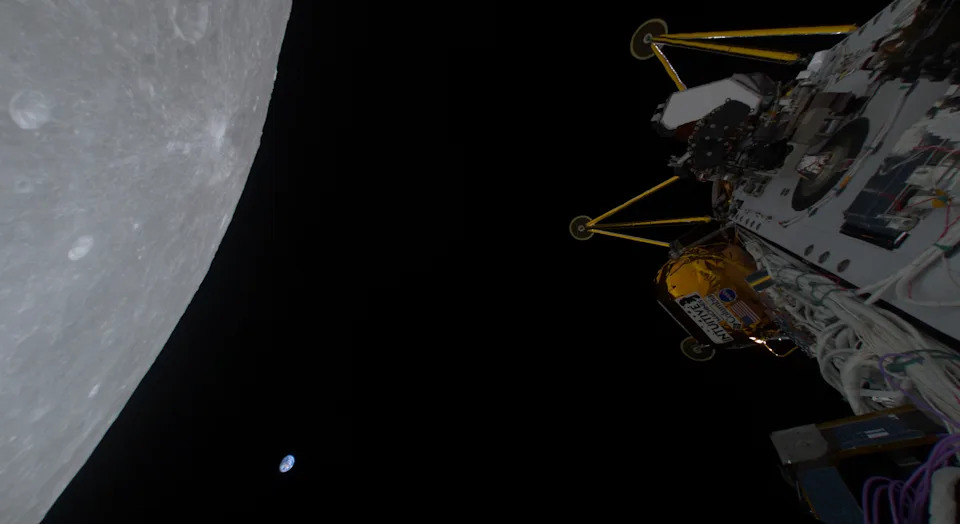
Athena, the lunar lander on Intuitive Machines' IM-2 mission, captured this image of the moon's surface with Earth seen in the distance ahead of a March 6 landing attempt. While the lander was the second U.S. vehicle to reach the moon within a week, it ultimately landed on its side, which hindered much of its mission.
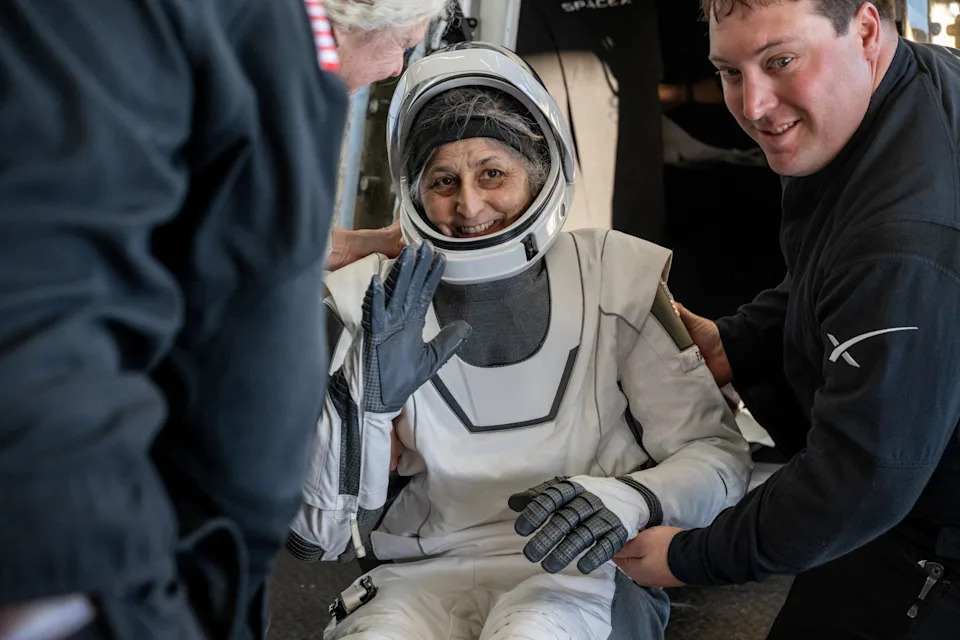
NASA astronaut Suni Williams is helped out of a SpaceX Dragon spacecraft March 18 following a return to Earth after a nine-month stay at the International Space Station. She and NASA astronaut Butch Wilmore crewed the Boeing Starliner, which had launched in June 2024 on a failed test flight that was meant to return them to Earth a few days later.
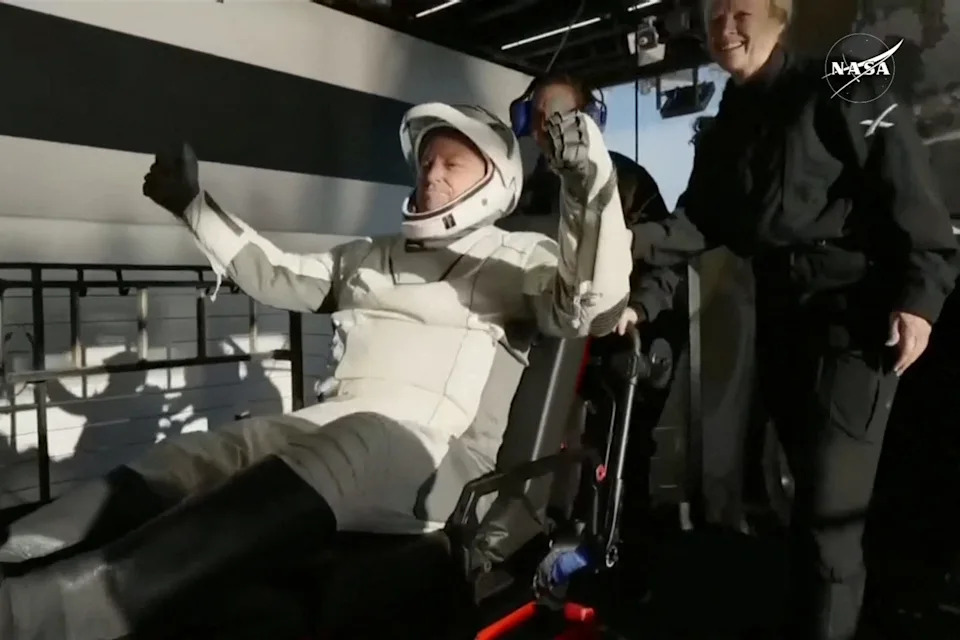
Butch Wilmore reacts after he and Suni Williams and two other astronauts splashed down March 18 in a Crew Dragon space capsule following their return to earth from the International Space Station off the coast of Florida. The astronauts' extended stay at the orbital outpost dominated the news cycle for months.
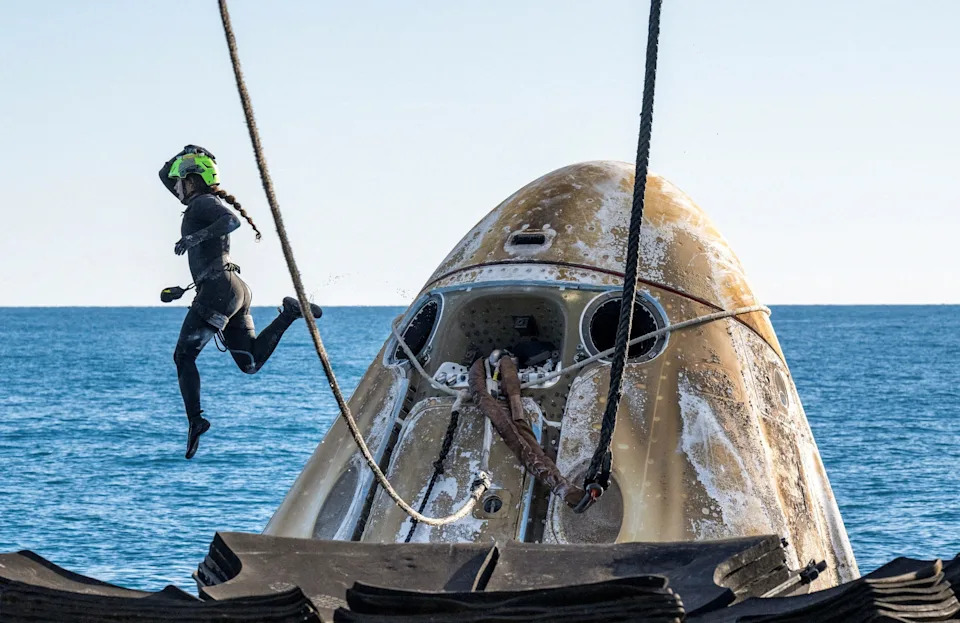
A SpaceX support team member is seen airborne while working to lift the SpaceX Dragon capsule that returned the Starliner astronauts and two others onto a recovery vehicle following its landing off the coast of Florida.

This picture shows the crew of a privately-funded mission known as Fram2, from left to right, mission specialist and medical officer Eric Philips, mission commander Chun Wang, pilot Rabea Rogge and vehicle commander Jannicke Mikkelsen on March 19, 2025 in Hawthorne, California. Launched March 31 from Florida using a SpaceX Dragon capsule, the mission became t first ever human spaceflight over the Earth's polar regions.
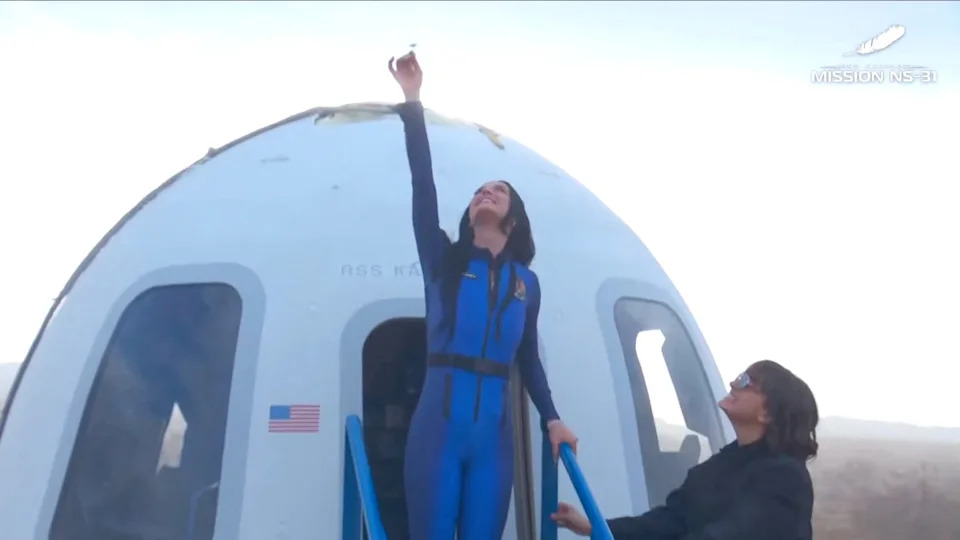
Pop musician Katy Perry emerges April 14 from Blue Origin's New Shepard capsule in West Texas following a brief flight to the edge of space. Perry was part of an all-women crew that also included broadcast journalist Gayle King that took the ride from Blue Origin's facility called Launch Site One. The high-profile launch attracted plenty of headlines and even drew some backlash from those who viewed the mission as a wasteful publicity stunt.
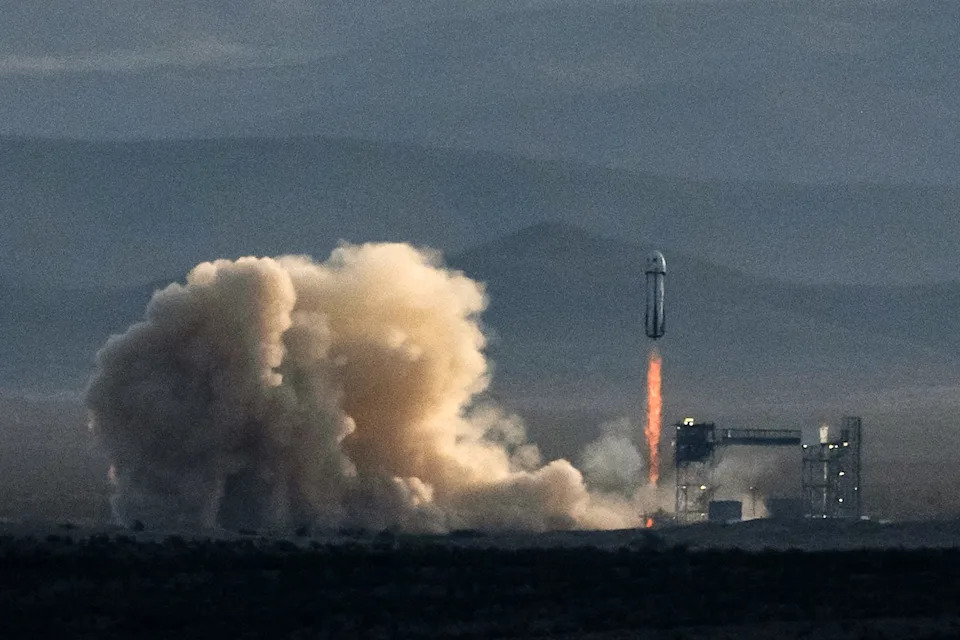
Blue Origin's New Shepard rocket carrying astronauts Aisha Bowe, Amanda Nguyen, Kerianne Flynn, Gayle King, Katy Perry, and Lauren Sanchez lifts off April 14 from Launch Site One near Van Horn, Texas. Blue Origin has since launched five more human spaceflights on the New Shepard in 2025.
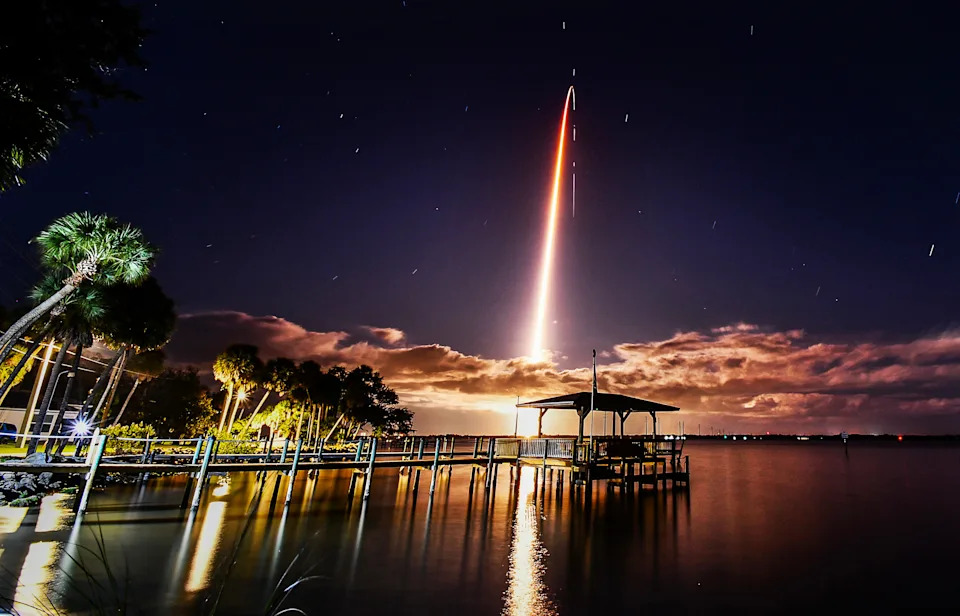
This photo depicts a United Launch Alliance Atlas V rocket carrying the latest batch of Amazon's broadband satellites on Dec. 16 to low-Earth orbit after launching from the Cape Canaveral Space Force Station in Florida. Formerly called Project Kuiper, the venture has since been renamed Amazon Leo. Since its debut April launch, Amazon Leo has deployed 180 of 3,000 satellites planned for its first constellation, which could challenge SpaceX's Starlink.
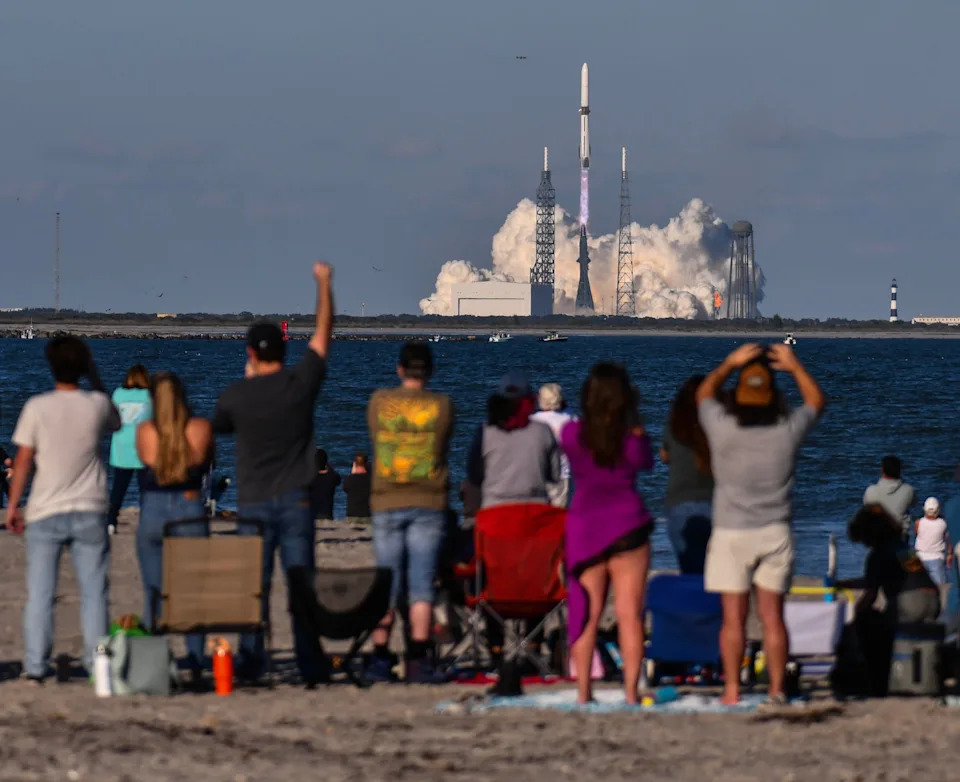
A group of Blue Origin employees with their friends and families gather on the beach in Cape Canaveral for the launch of Blue Origin's second New Glenn rocket in 2025. Following its January debut, the rocket launched for the second time Nov. 13 from Launch Complex 36 at Cape Canaveral Space Force Station, sending NASA's twin ESCAPADE spacecraft on their trek to Mars.
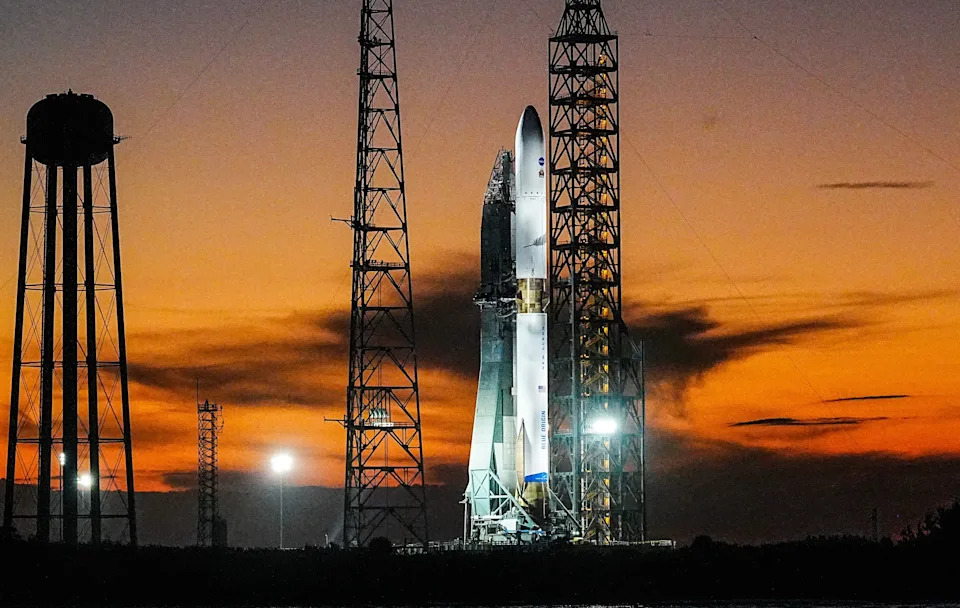
Darkness falls Nov. 9 as a Blue Origin New Glenn rocket is prepped for its second-ever launch from the Cape Canaveral Space Force Station. Blue Origin is developing the towering rocket for heavy-lift missions that could see Jeff Bezos' company compete with Elon Musk and SpaceX.
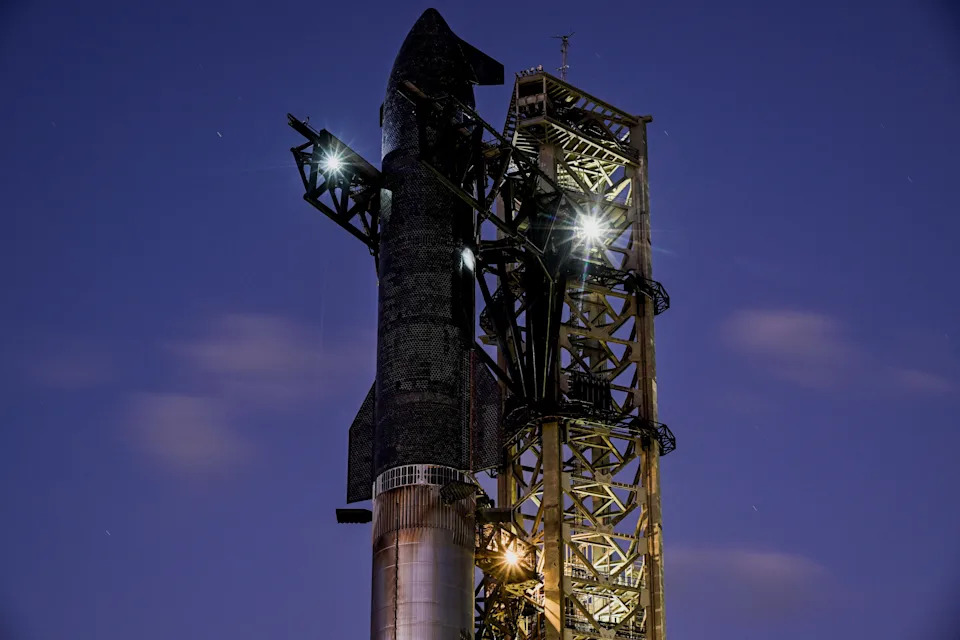
The SpaceX Starship spacecraft sits Oct. 12, 2025 atop the Super Heavy booster before sunrise as preparations continue for its 11th test flight from the company's complex in Starbase, Texas.
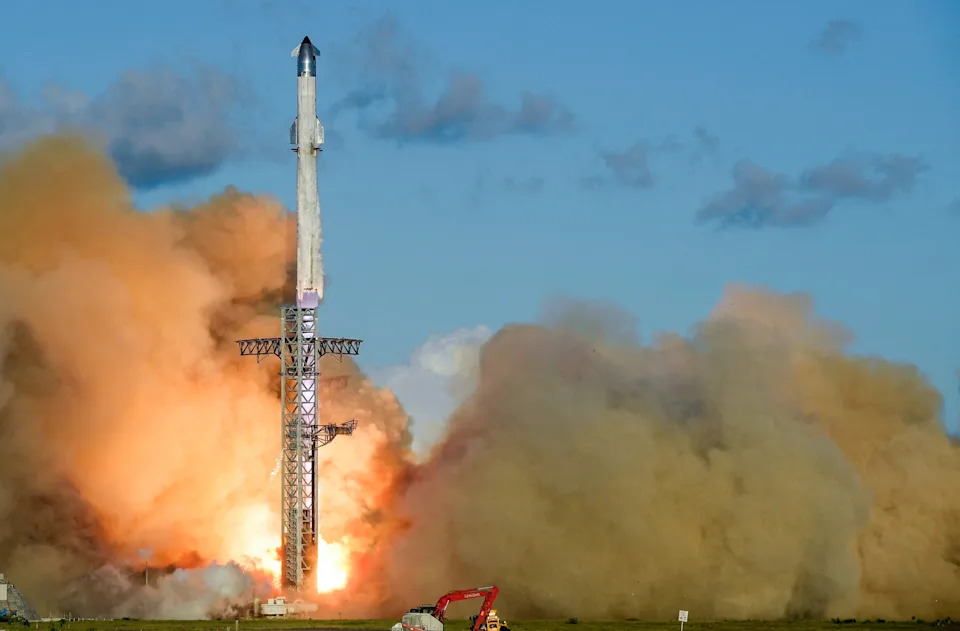
A SpaceX Super Heavy booster carrying the Starship spacecraft lifts off Oct. 13, 2025, on its 11th ever test flight at the company's launch pad in Starbase, Texas. The launch was Starship's fifth of 2025, and second consecutive successful test flight following a year that was early on marked by explosive failures. SpaceX is developing the rocket for future missions that would help NASA astronauts land on the moon and also potentially transport the first humans to Mars.
Pomozite nam da budemo bolji.