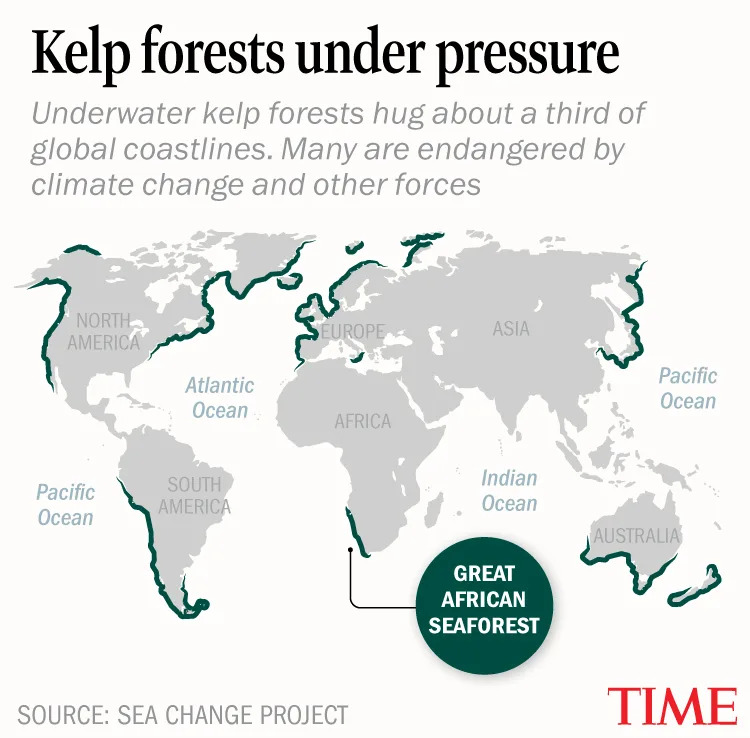
Velika Afrička Morska Šuma je jedinstven kelpski ekosistem koji se prostire više od 1.000 km duž obale Južne Afrike i podržava izuzetno bogat biodiverzitet od kojeg zavise lokalne zajednice. Kelp formira slojevita staništa koja štite obalu, ciklišu hranljive materije i apsorbuju ugljenik — usluge procenjene na preko 500 milijardi dolara godišnje. Ipak, polovina kelpskih šuma je degradirana u poslednjih 50 godina zbog toplotnih talasa, zagađenja i narušene ravnoteže predator–plijen. Projekti poput "1001 Seaforest Species" i lokalne inicijative mapiraju, štite i pokušavaju da obnove ove ključne ekosisteme.
Moć Sakrivenih Podvodnih Šuma: Velika Afrička Morska Šuma i Zaštita Kelpa
—Photograph by Helen Walne—Sea Change Project
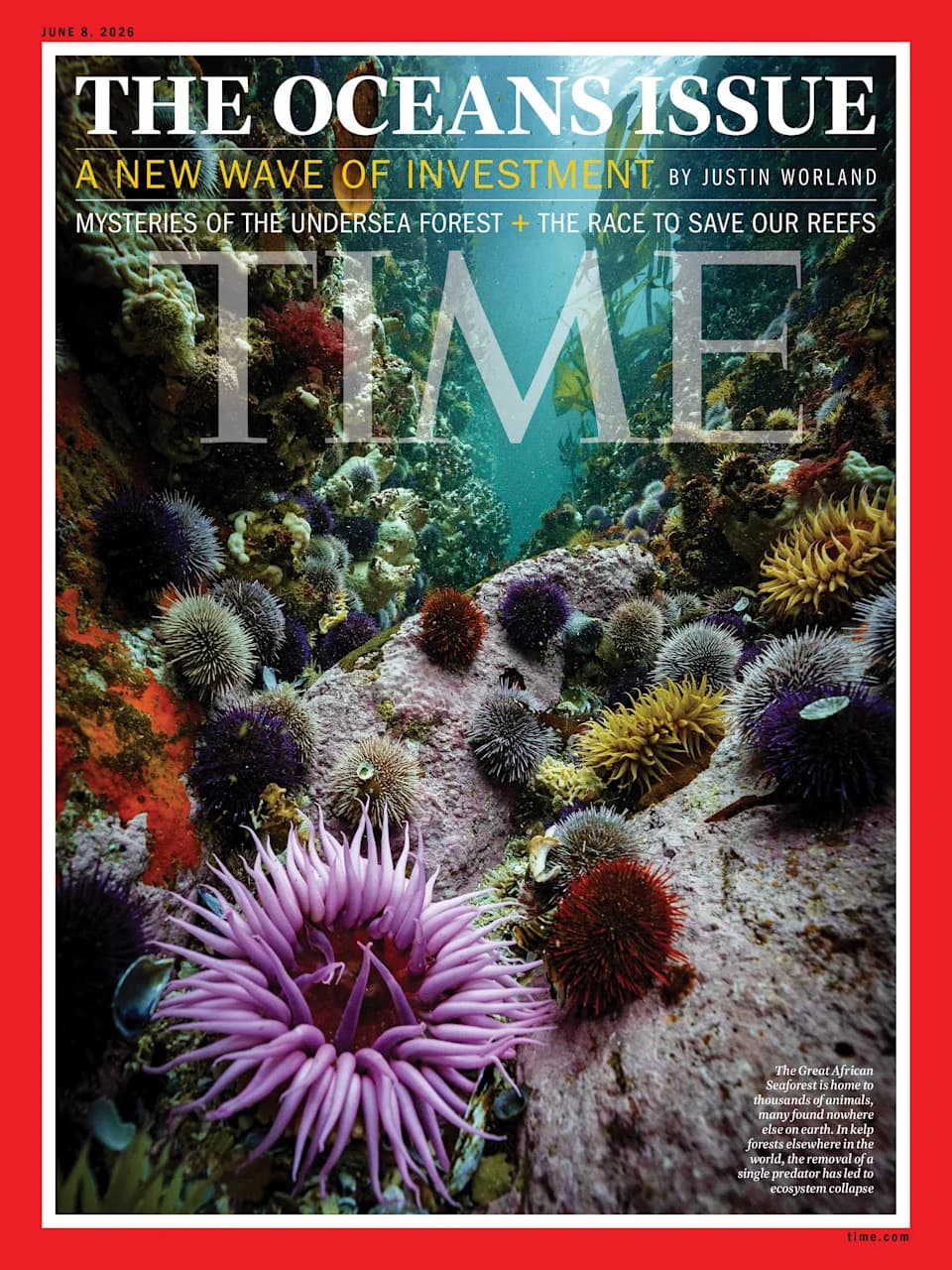
Na rubu svetala Kejptauna, ispod talasajuće krošnje kelpa Velike Afričke Morske Šume, odvija se jedan od najsofisticiranijih morskih ekosistema na svetu. Šlemnik izranja iz peska, sifonom pomirujući miris ježinki; sluzi ih onesposobljava, bodlje razgrađuje, a kiselinom rastvara njihove unutrašnjosti, držeći tako preživače pod kontrolom i štiteći kelpsku šumu od ispašavanja. Hobotnice, ribe, ajkule, male krabe i mladi abaloni — svi učestvuju u mreži međusobnih odnosa koja održava ovaj podvodni svet.
Značaj kelpskih šuma
Kelp (velika morska alga) stvara slojevitu „živnu arhitekturu“: guste krošnje pri površini koje zasenjuju srednji sloj, dok se holdfasti na dnu ponašaju kao korenje i oblikuju stanište. Svaki sloj podržava svoje zajednice — od sitnih nudibrancha i crva do velikih riba i sisara — i zajedno obezbeđuju ribolov, ciklus hranljivih materija, zaštitu obala od oluja i značajnu sposobnost skladištenja ugljenika. Naučnici procenjuju da su ekosistemske koristi kelpa vredne više od 500 milijardi dolara godišnje, a sve te vrednosti zavise od bogatog biodiverziteta.
Pretnje i kolapsi
Ipak, kelpske šume se brzo povlače: procenjuje se da je otprilike polovina svetskih kelpskih staništa degradirana u poslednjih 50 godina. Glavni uzroci su morske toplotne anomalije koje pomeraju temperature iznad tolerancije kelpa, zagađenje i razvoj obale, prekomerno sakupljanje i ribolov koji narušavaju odnose predator–plijen. Kada se ključni predatori izgube, sistem može brzo da se preobrne u tzv. "urchin barren" — pusto polje ježinki koje uništava kelp.
Studija slučaja: Severna Kalifornija
Pre 2014. bull kelp je pokrivao obale Severne Kalifornije. Do 2019. oko 95% tog kelpa — približno 350 km — je nestalo. Kombinacija bolesti koja je decimirala morske zvezde (važan predator ježinki) i dugotrajnih toplotnih talasa oslobodila je ljubičaste ježinke, koje su razorile kelp. Posledice su bile i ekonomske: ribolov crvenog abalona, vredan oko 44 miliona dolara, skoro je kolabirao, a lokalne zajednice su pretrpele velike gubitke.
Zaštita, mapiranje i obnova
Unatoč opadanju, postoje primeri otpornosti. Velika Afrička Morska Šuma još uvek zadržava veliku raznolikost vrsta zahvaljujući relativno manjim pritiscima od prekomernog ubranja i postojanju zaštićenih područja. Međutim, samo ~16% kelpskih šuma nalazi se u nekoj formi zaštite, a manje od 2% pod najstrožim režimima bez eksploatacije — što jasno pokazuje potrebu za ciljanim politikama.
Inicijative kao što su projekat "1001 Seaforest Species" (Sea Change Project u partnerstvu sa Save Our Seas Foundation), Kelp Forest Challenge, naučno mapiranje i lokalne, zajedničke konzervacione akcije već daju rezultate: od zakonske zaštite velikog kelpa u Argentini do prepoznavanja patagonijskih morskih šuma kao klimatskih utočišta.
"Biodiverzitet je imuni sistem planete. Što je raznovrsniji, to je planeta zdravija." — Swati Thiyagarajan, Sea Change
Živa baština i nada za budućnost
Za lokalne i autohtone zajednice kelpske šume su živo nasleđe — izvor hrane, kulture i identiteta. Ljudi kao Loyiso "The Kelp Keeper" Dunga povezuju nauku i tradicionalno znanje u zaštiti ovih mesta. Očuvanje kelpa zahteva politiku koja uključuje biodiverzitet, ciljani menadžment ribarstava, smanjenje lokalnih zagađenja i planove za oporavak nakon toplotnih talasa.
Velika Afrička Morska Šuma pokazuje da, uz pravu zaštitu i naučno-ozemljene akcije zajednica, ostaci ovih ključnih ekosistema mogu opstati i nastaviti da pružaju ogromne prirodne, kulturne i klime koristi. Ako se deluje sada, kelpske šume mogu ostati živa, radna infrastruktura okeana — ne samo simbol lepote, već i praktična odbrana od klimatskih promena.
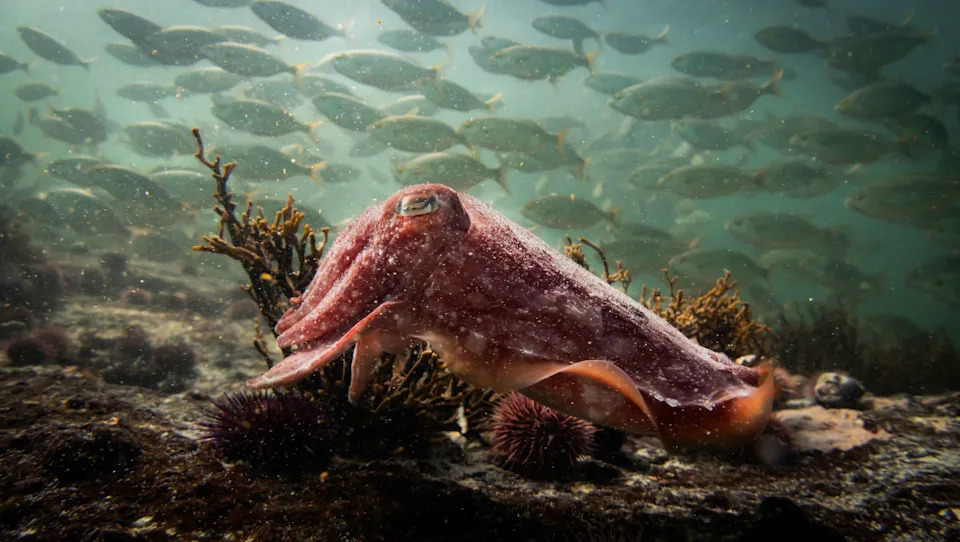
A Simonstown cuttlefish glides over an urchin-covered rock as a swarm of dream fish streams by. These cuttlefish are only found along the south coast of South Africa, where large parts of the Great African Seaforest grows. Over 15 cephalopods occur here, nearly all of them are endemic to the region - the only place on earth they call home. —Craig Foster—Sea Change Project
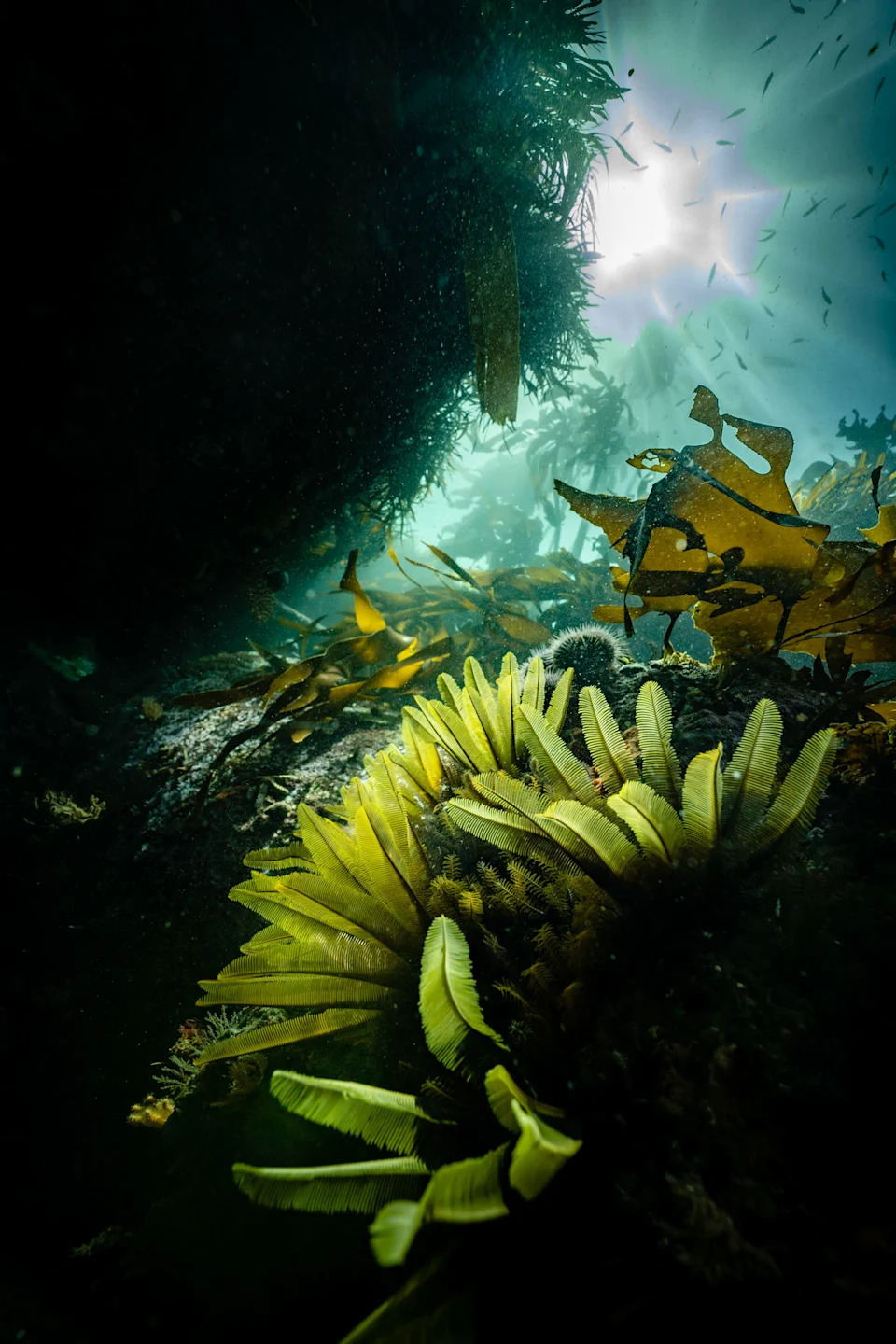
A cluster of yellow crinoids glows in dappled light filtering through the kelp canopy of the Great African Sea Forest. —Helen Walne—Sea Change Project
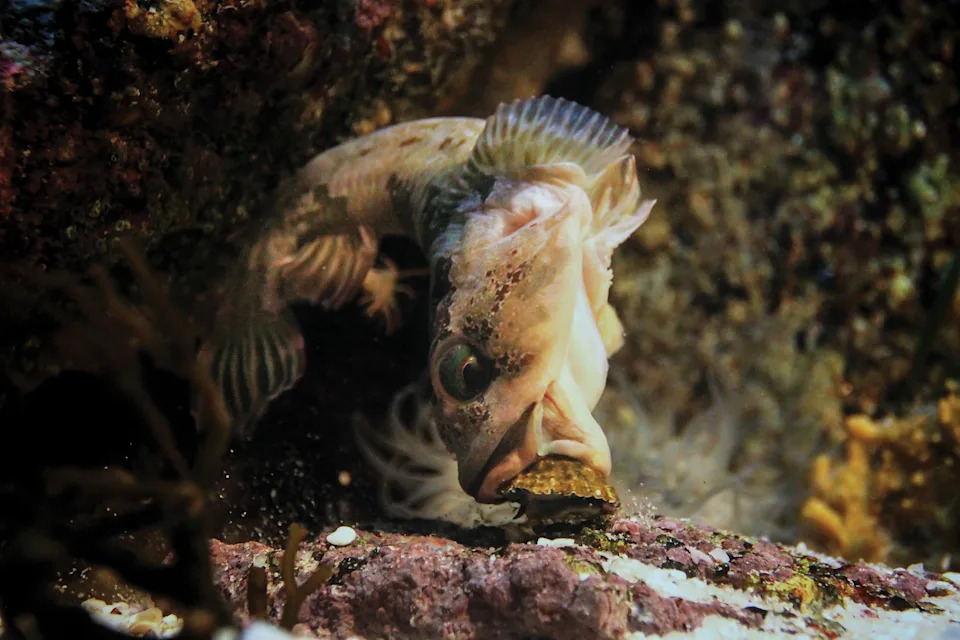
The rocksucker or giant clingfish is the largest fish of this type in the world. It has evolved a large suction pad underneath its body, modified from where its fins used to be. This suction pad can hold hundreds of times the fish’s weight and enables it to hunt in very rough water without getting washed ashore. It is unsurprising that it evolved in South Africa, as this is the global hotspot for limpets. Limpets are the clingfish’s meal of choice – shell and all, which they twist off the rocks in a fraction of a second, as if opening a bottle cap. —Craig Foster—Sea Change Project
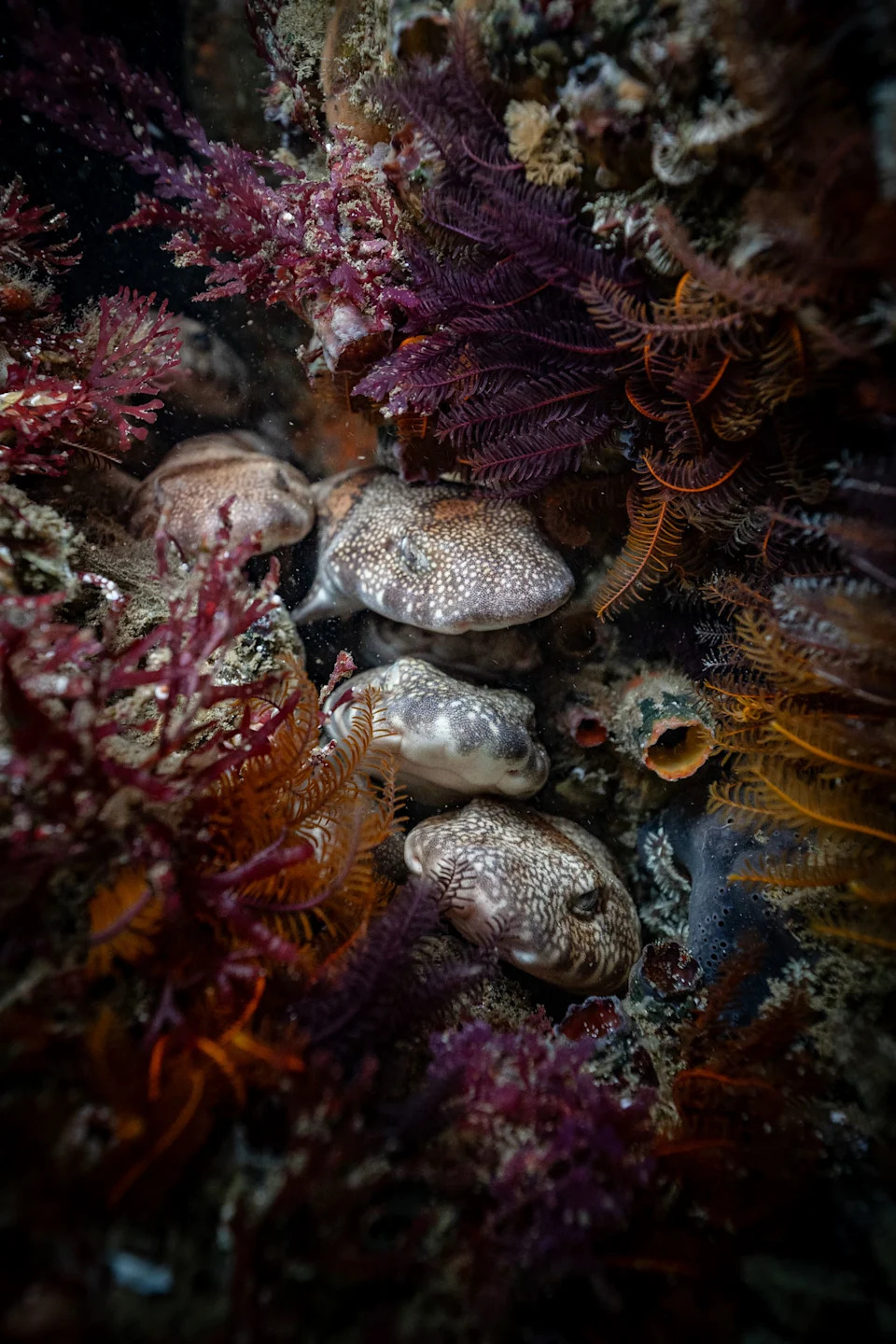
A shiver of puffadder shy sharks huddles together in a crevice. At around 60cm, these are the smallest sharks in the Great African Seaforest which harbours 27 species of sharks and rays. Puffadder shysharks, like most catsharks, are often found resting together in one place. They hatch from eggs and curl into a ball with their tail over their eyes when threatened. Their incredible sense of smell makes them formidable predators, but they are also highly vulnerable and the vast majority are eaten inside of their eggs, long before they become baby sharks. —Helen Walne—Sea Change Project
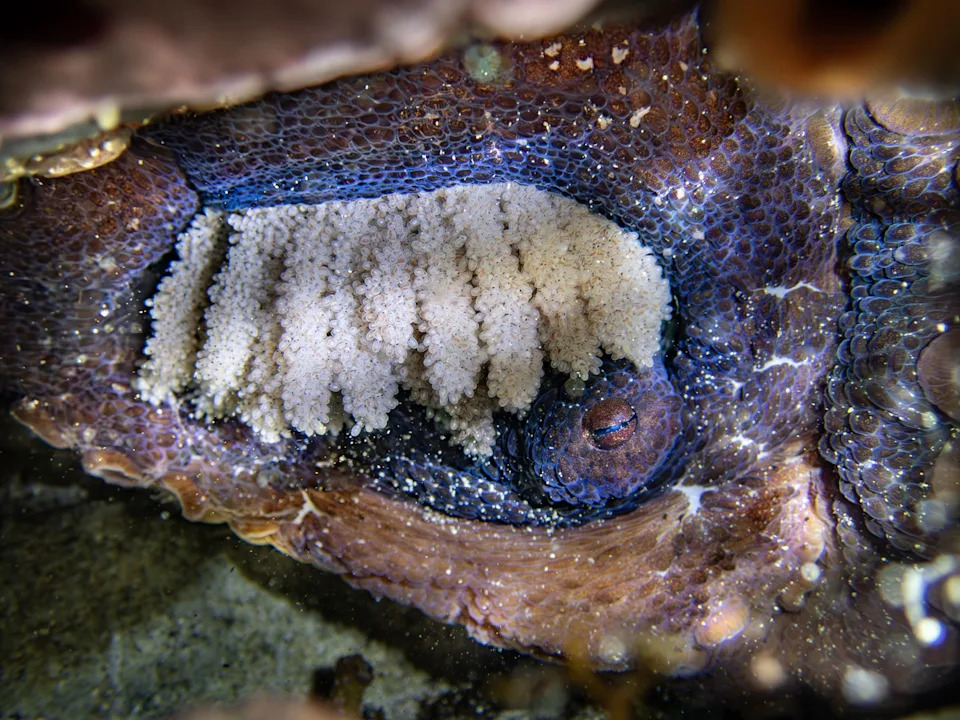
A female octopus tends her eggs in the safety of her den, staying inside for the entire brooding period without feeding. She fans and blows oxygen-rich water over the developing young, keeping them clean, healthy and free from harmful bacteria until the moment they hatch. —Craig Foster—Sea Change Project
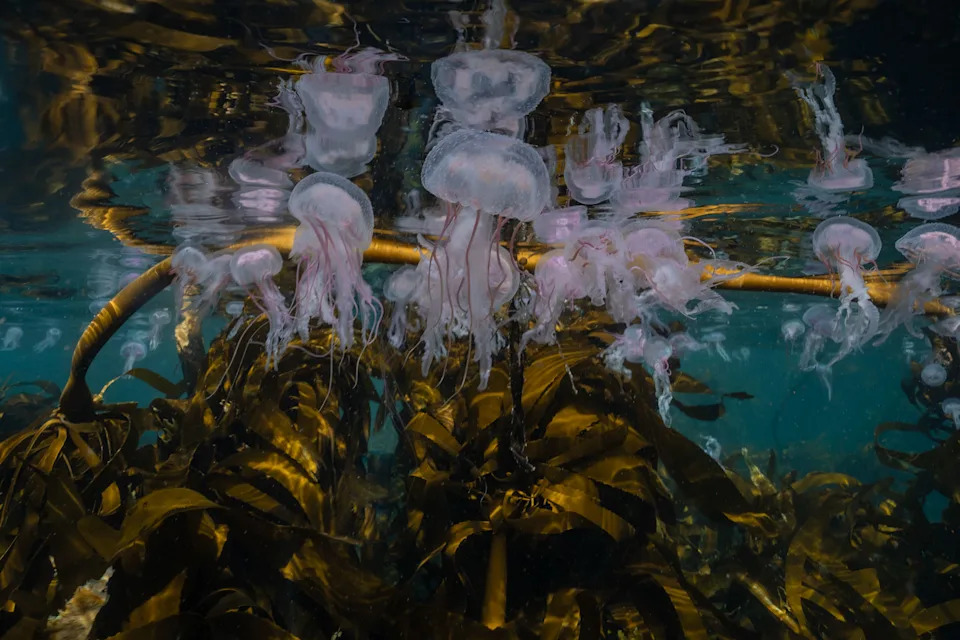
The Great African Seaforest is home to many thousands of resident species, and also an important place for visitors. A few times a year, swarms of jellyfish like these night-light jellies, drift into the kelp forest and become food for sea forest species like anemones. —Helen Walne—Sea Change Project
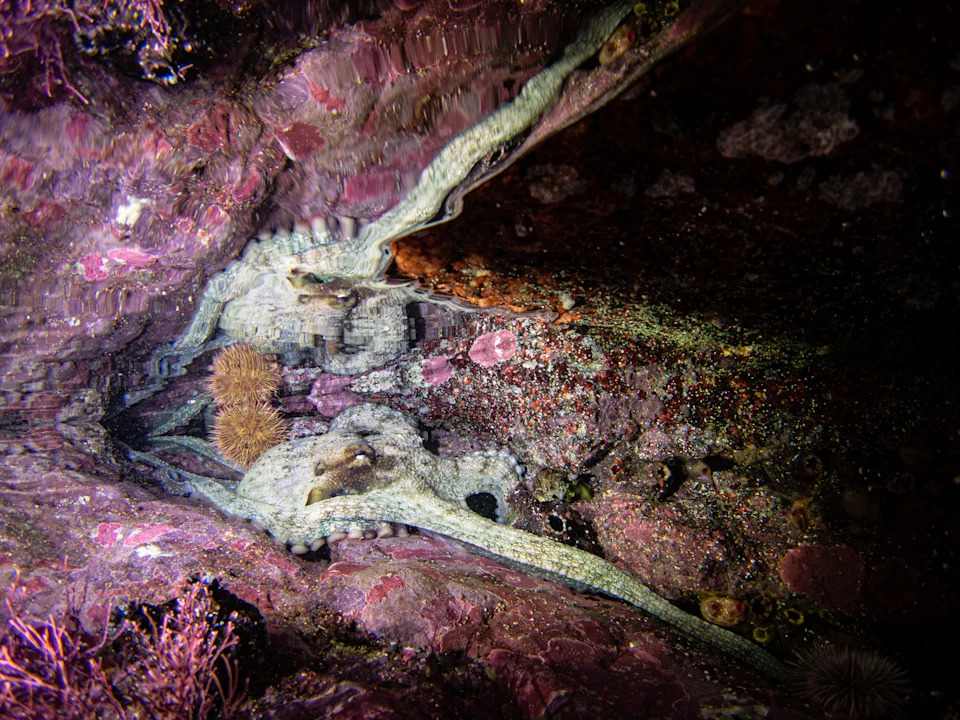
An octopus stretches out its limbs, exploring all corners of a shallow cave where the water is still that the animal casts a perfect reflection. These ingenious creatures have developed incredible ways to thrive in the kelp forest, many of which were showcased in the Netflix hit, My Octopus Teacher. They are at the centre of the seaforest food web, consuming over 50 prey species and in turn being consumed by a multitude of kelp forest animals. —Craig Foster—Sea Change Project
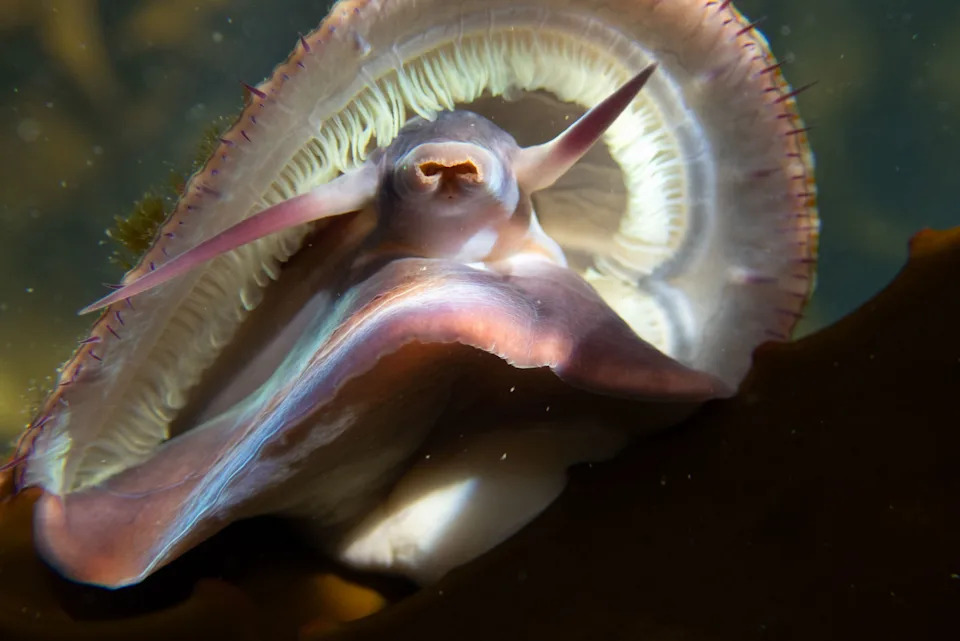
Kelp limpets like this are entirely dependent on the kelp stipes. As young limpets they live and grow in the leaves at the top of the canopy. Then, when they are big enough they will descend down the kelp stipe to claim it as their own. These animals are highly territorial and will spend the rest of their lives feeding on that one stipe and fighting intruding limpets by flipping them onto the seafloor. The GASF is home to 27 limpet species making it a global hotspot for these sea snails. —Craig Foster—Sea Change Project
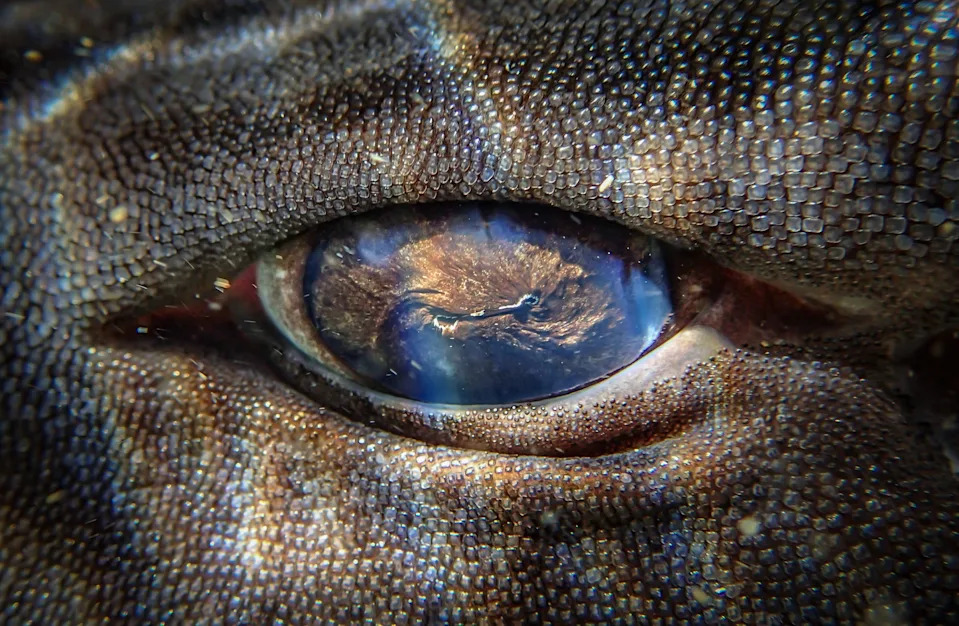
The planet-like eyes of the pyjama catshark are tiny evolutionary marvels. By gathering aragonite -- crystals of calcium carbonate -- from seawater, the shark builds a gleaming mirror at the back of each eye, helping it navigate through the dark forest at night. —Craig Foster—Sea Change Project
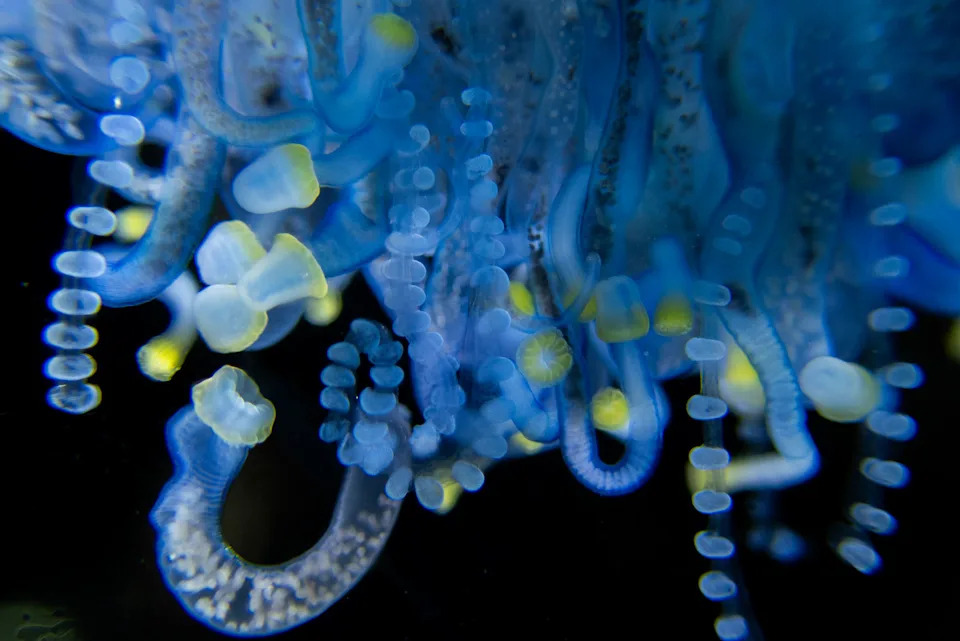
This macro image of a bluebottle -- also known as a Portuguese man o' war -- shows the corkscrew-like tentacles that dangle below the colony's float. These intricate structures are packed with stinging cells that snag prey in the water column and are so venomous they can paralyse even large fish. —Jannes Landschoff—Sea Change Project
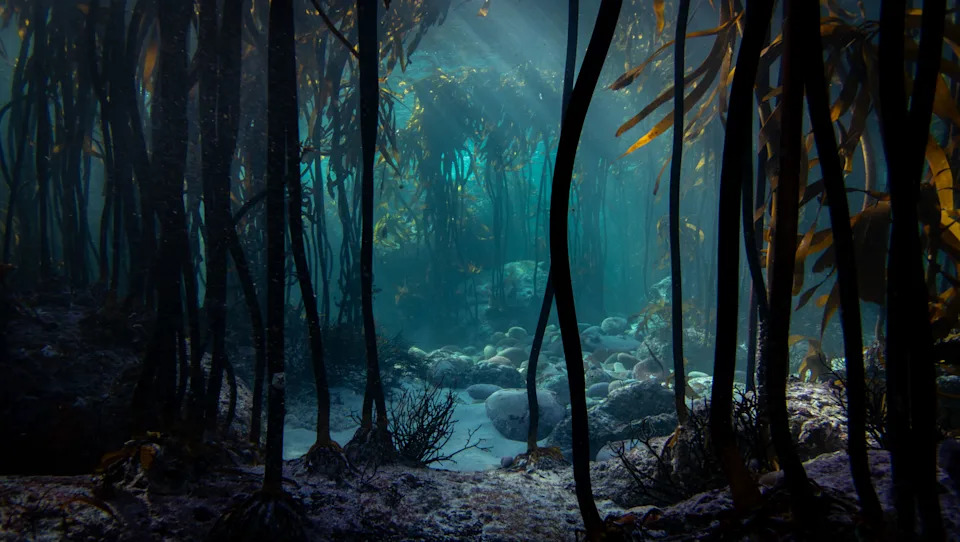
The Great African Seaforest is an underwater wonder that fringes the shores of Cape Town, South Africa and stretches north for more than 1000km into Namibia. It is the only forest of giant bamboo kelp (Ecklonia maxima) on our planet. —Jannes Landschoff—Sea Change Project
Pomozite nam da budemo bolji.