NASA je promenila pravila i sada dozvoljava astronautima da ponesu sertifikovane iPhone i Android telefone na službene misije. Posada Artemis II (Reid Wiseman, Christina Koch, Victor Glover i Jeremy Hansen) nosi pametne telefone tokom desetodnevnog leta oko Meseca kako bi dokumentovala misiju i delila materijal sa Zemljom. Telefoni su prošli sertifikaciju, a promena je stupila na snagu pre misije Crew‑12. Lansiranje je bilo 1. aprila 2026., prolaz pored Meseca planiran je za 6. april, a povratak i sletanje u vodu očekuju se 10. aprila.
Artemis II Astronauti Ponesli Sertifikovane Pametne Telefone Na Let Do Meseca
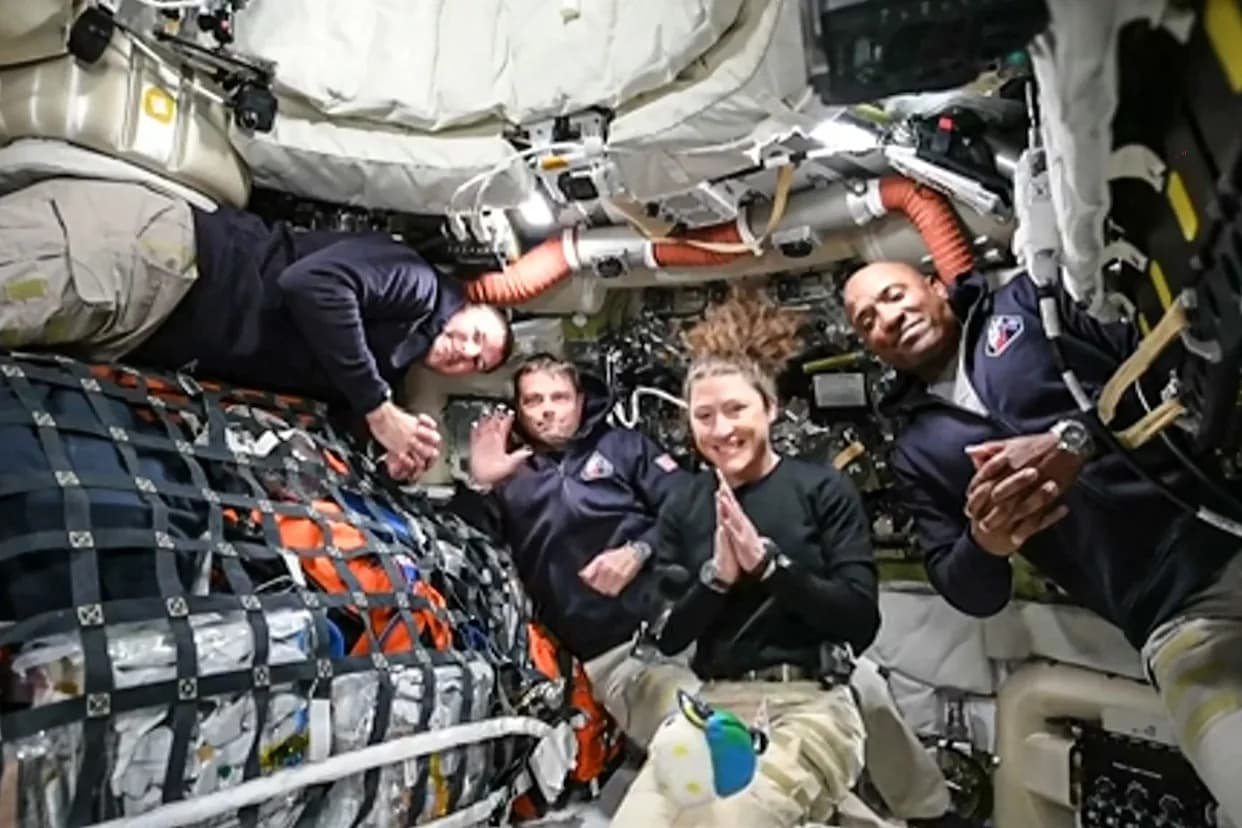
Artemis II astronauts among 1st to take smartphones to space
Ako pratite misiju NASA-inog Artemis II, posada od četvoro astronauta beleži niz istorijskih trenutaka — od prvih predstavnika različitih grupa u blizini Meseca do nošenja pametnih telefona koji su sada dozvoljeni na zvaničnim misijama.
Šta je novo
Pod promenjenom politikom, NASA sada dopušta astronautima da ponesu najnovije iPhone i Android telefone na službene svemirske misije, pod uslovom da uređaji prođu odgovarajući proces sertifikacije. Pravila su stupila na snagu pre lansiranja februarske misije SpaceX Crew-12, pa su članovi te posade bili prvi koji su iskoristili ovu mogućnost.
Ko nosi telefone na Artemis II
Posada Artemis II čine NASA-ini astronauti Reid Wiseman, Christina Koch i Victor Glover, kao i astronaut Jeremy Hansen iz Canadian Space Agency. NASA je potvrdila da sva četvorica nose sertifikovane pametne telefone tokom desetodnevnog leta oko Meseca.
Zašto je to značajno
Prema izjavi agencije, cilj dozvole za nošenje pametnih telefona je da se olakša dokumentovanje misije, snimanje posebnih trenutaka za članove porodice i deljenje inspirativnih fotografija i videa sa javnošću. Telefoni koji se koriste u misiji prošli su testove i sertifikaciju kako bi se osigurala bezbedna upotreba tokom leta.
Napomena: Iako su privatne misije ranije koristile sertifikovane pametne telefone, ovo je prva šira primena takve politike na zvaničnim NASA misijama nakon promene pravila.
Tehnička i bezbednosna pitanja
Pre nego što su dozvoljeni, telefoni su prošli procenu kompatibilnosti sa svemirskim sistemima i sigurnosne provere kako bi se smanjio rizik od smetnji u komunikaciji ili opremi. NASA ističe da će službeni foto‑i video‑materijali i dalje nastajati i profesionalnim kamerama, ali da pametni telefoni daju dodatnu fleksibilnost za brze i spontano snimljene kadrove.
Raspored misije
Artemis II je lansiran 1. aprila 2026. sa Kennedy Space Centra (planirano vreme 18:24 lokalno). Posada će ostvariti prolaz pored Meseca 6. aprila i vratiti se sa sletanjem u Tihi okean blizu San Dijega 10. aprila. Misija neće uključivati sletanje na površinu Meseca, već će služiti kao važan test pre budućih sletanja koja su planirana već od 2028. godine.
Istorijski aspekti
Tokom misije biće oboren rekord po udaljenosti od Zemlje koji je držala posada Apolo 13 iz 1970. godine. Victor Glover će postati prvi crni muškarac u blizini Meseca na ovoj misiji, Christina Koch će biti prva žena u toj blizini, a Jeremy Hansen prvi Kanađanin koji učestvuje u takvom letu.
Ova promena politike predstavlja manji, ali simboličan korak ka modernizaciji načina na koji astronauti dokumentuju svoje misije i komuniciraju sa zemaljskom publikom — sve uz poštovanje strogih sigurnosnih procedura za operacije u svemiru.
Autor originalnog izveštaja: USA TODAY. Lokalna prilagodba i uređivanje za srpsko tržište.
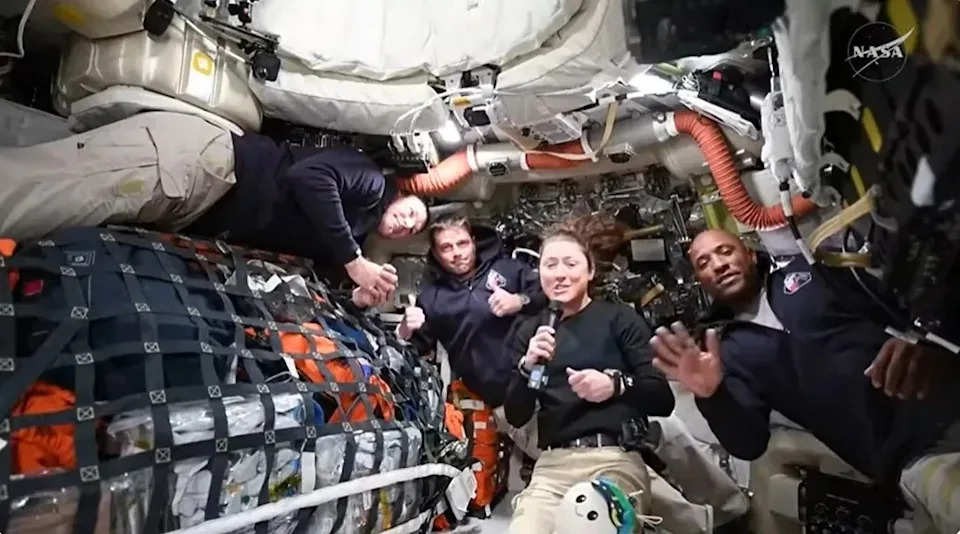
Artemis II crew members Jeremy Hansen, Reid Wiseman, Christina Koch, and Victor Glover answer questions from reporters during the first downlink event of their mission.
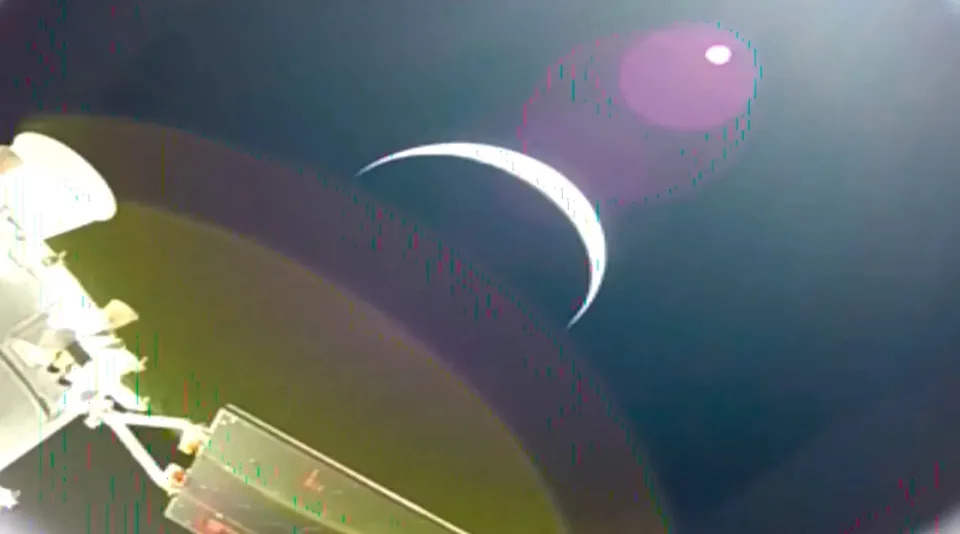
Earth’s crescent is seen from a solar array camera on the Orion spacecraft on the first flight day of the Artemis II mission.
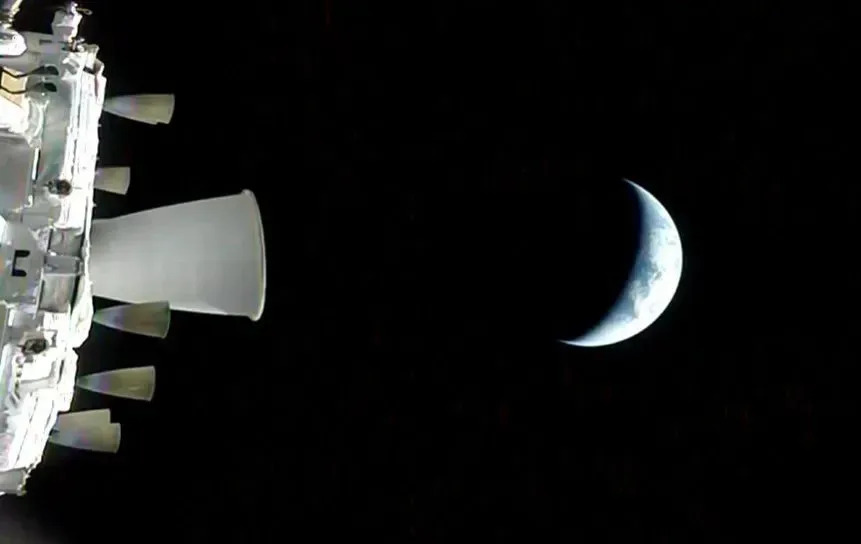
A view of the Earth from NASA’s Orion spacecraft as it orbits above the planet during the Artemis II test flight.
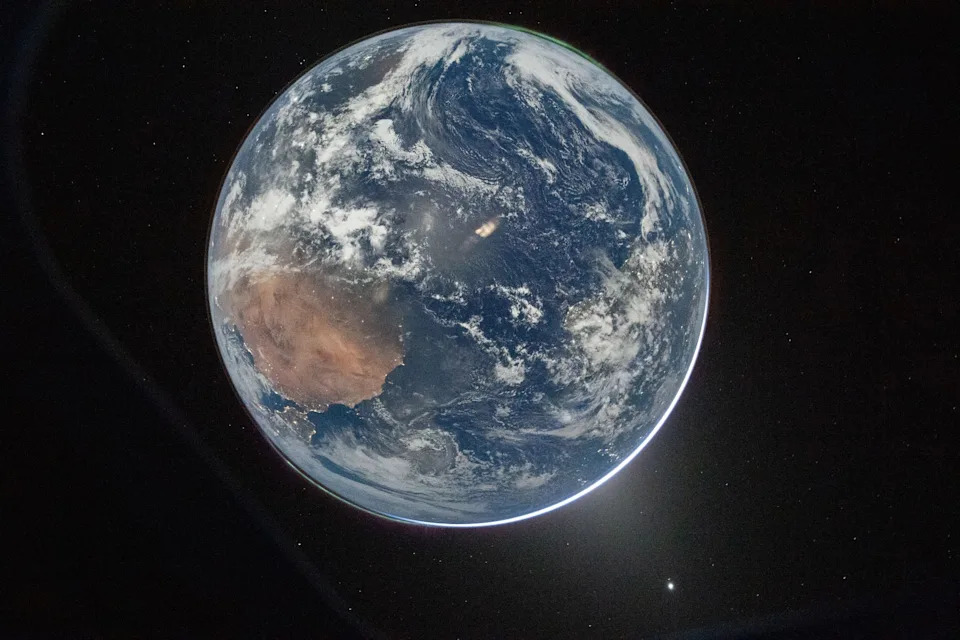
In an image posted by NASA on April 3, 2026, shows a full disk image of Earth, as seen from the Orion capsule. The planet is pale blue, swirling with white clouds and glowing slightly lighter blue in places from reflected light. From the lower left, a large brown landmass is Africa, with the Iberian peninsula twinkling with lights just where the planet curves. In the upper right, aurora glow in a thin green glow, just barely separated from the planet’s surface. Earth is set against the black of space.
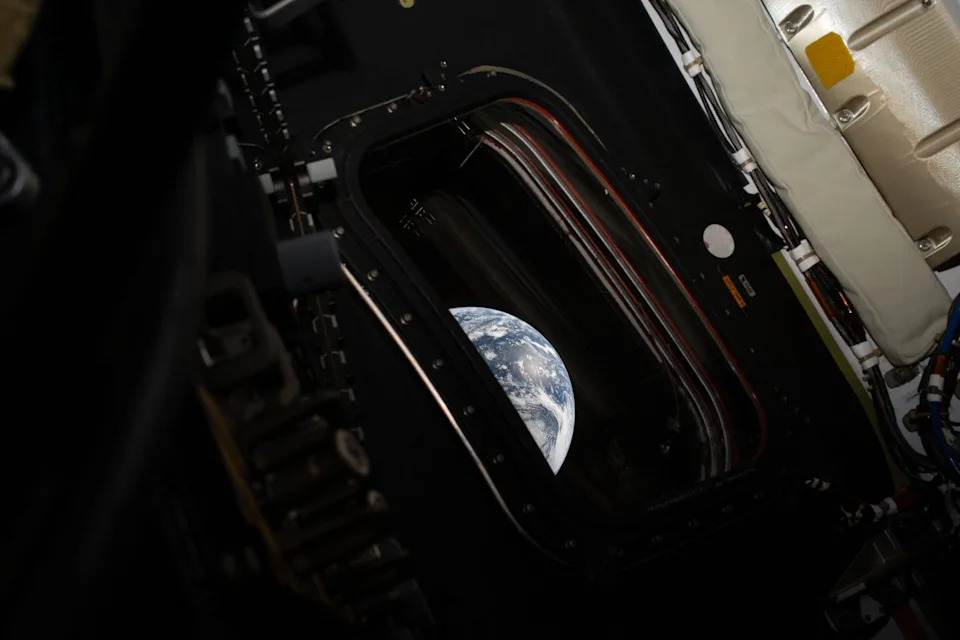
In an image posted by NASA on April 3, 2026, One-third of Earth is seen through the Orion capsule window as the NASA Artemis II mission continues towards the moon.
Although Earth only fills a fraction of the image it is the brightest object in the image. The capsule window is surrounded by a thick frame held in place with bolts. It is dark in the capsule, but the outlines of straps and various components of the capsule are visible.
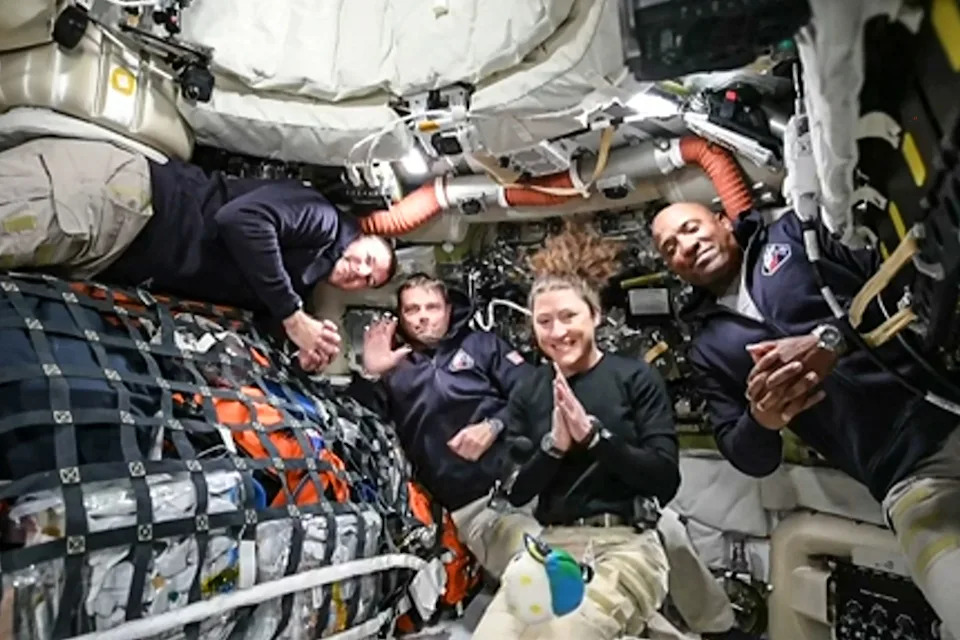
This screen grab from NASA's feed released on April 3, 2026, shows the four Artemis II crew members (L-R) Canadian Space Agency (CSA) astronaut Jeremy Hansen, Artemis II mission specialist, NASA astronauts Reid Wiseman, Artemis II commander, Christina Koch, Artemis II mission specialist and Victor Glover, Artemis II pilot as they head to orbit the Moon for the first time in more than half a century.
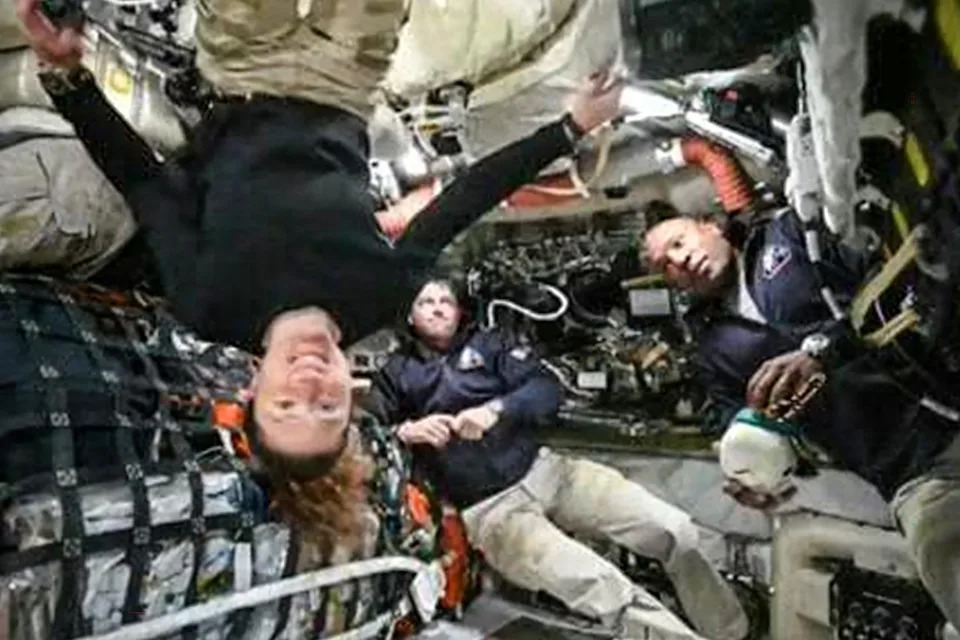
This screen grab from NASA's feed released on April 3, 2026, shows the four Artemis II crew members (L-R) Canadian Space Agency (CSA) astronaut Jeremy Hansen, Artemis II mission specialist (hidden), NASA astronauts Reid Wiseman, Artemis II commander, Christina Koch, Artemis II mission specialist and Victor Glover, Artemis II pilot as they head to orbit the Moon for the first time in more than half a century.
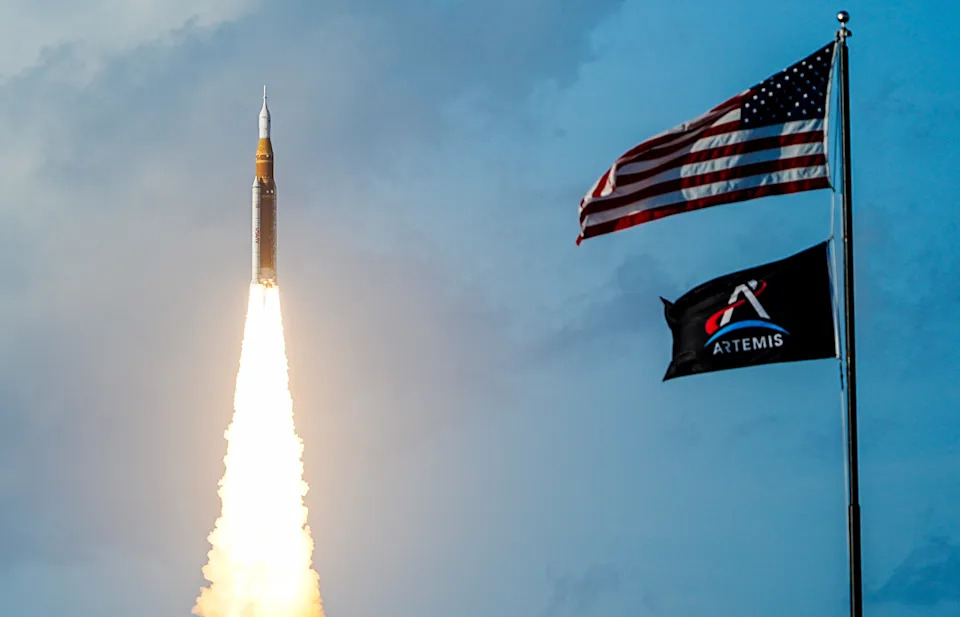
Artemis IIand it’s crew of four lift off from Kennedy Space Center April 1, 2026 on a 10-day mission around the Moon and back. Craig Bailey, FLORIDA TODAY via USA TODAY NETWORK
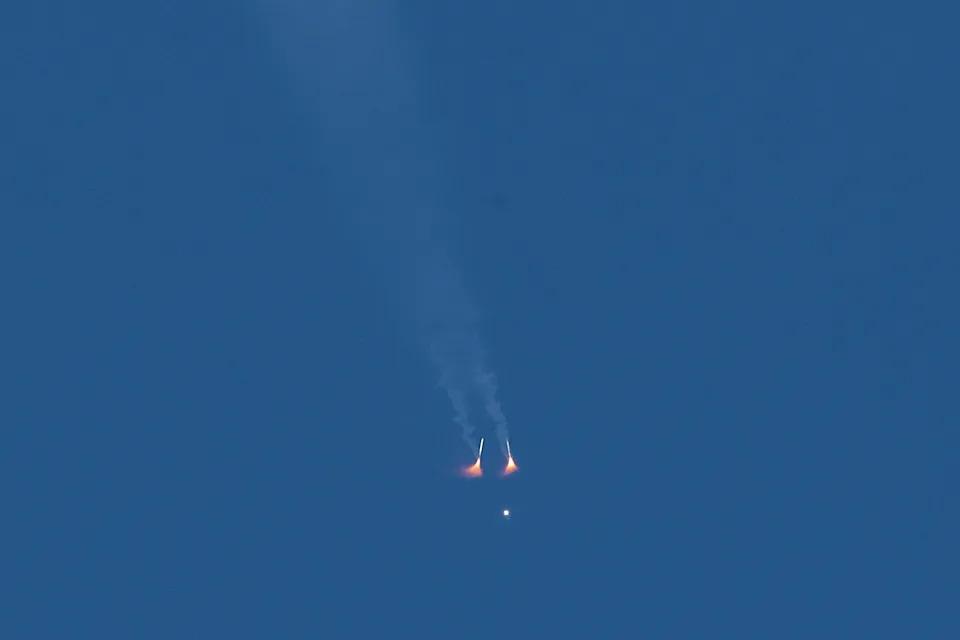
The solid rocket boosters (SRBs) detach after NASA's Artemis II Space Launch System rocket carrying the Orion spacecraft lifts off from Launch Complex 39B at Kennedy Space Center on April 1, 2026 in Cape Canaveral, Florida. The 10-day mission will take NASA astronauts Commander Reid Wiseman, Pilot Victor Glover and Mission Specialist Christina Koch and CSA (Canadian Space Agency) Mission Specialist Jeremy Hansen around the moon and back. The astronauts are supposed to fly 230,000 miles out into space, the farthest any human has ever traveled from Earth.
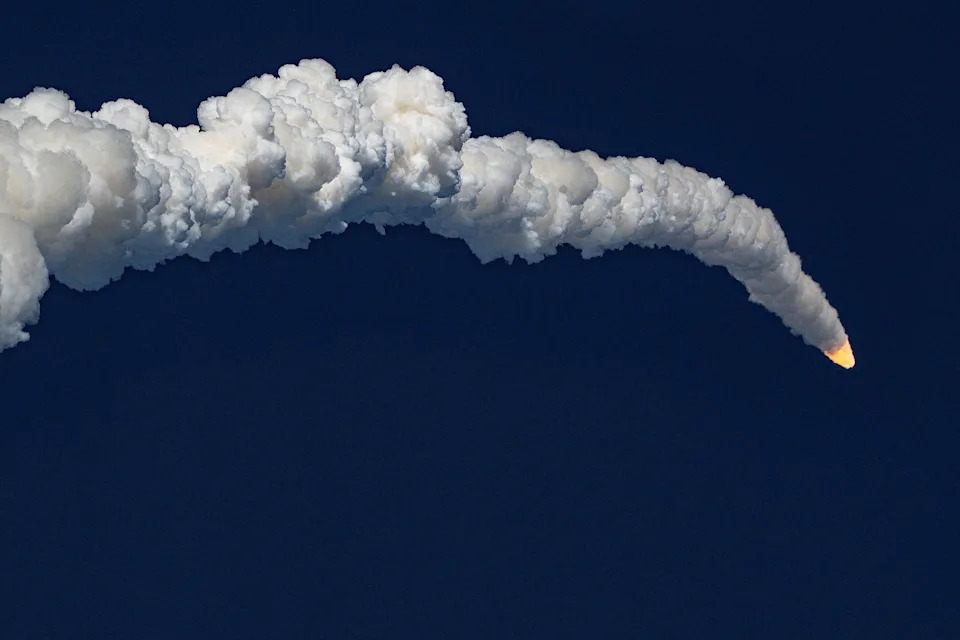
The Artemis II crewed lunar mission launches at Kennedy Space Center in Cape Canaveral, Florida, on April 1, 2026. Four astronauts blasted off aboard a massive NASA rocket April 1 on a long-anticipated journey around the Moon, the first crewed lunar flyby in more than 50 years.
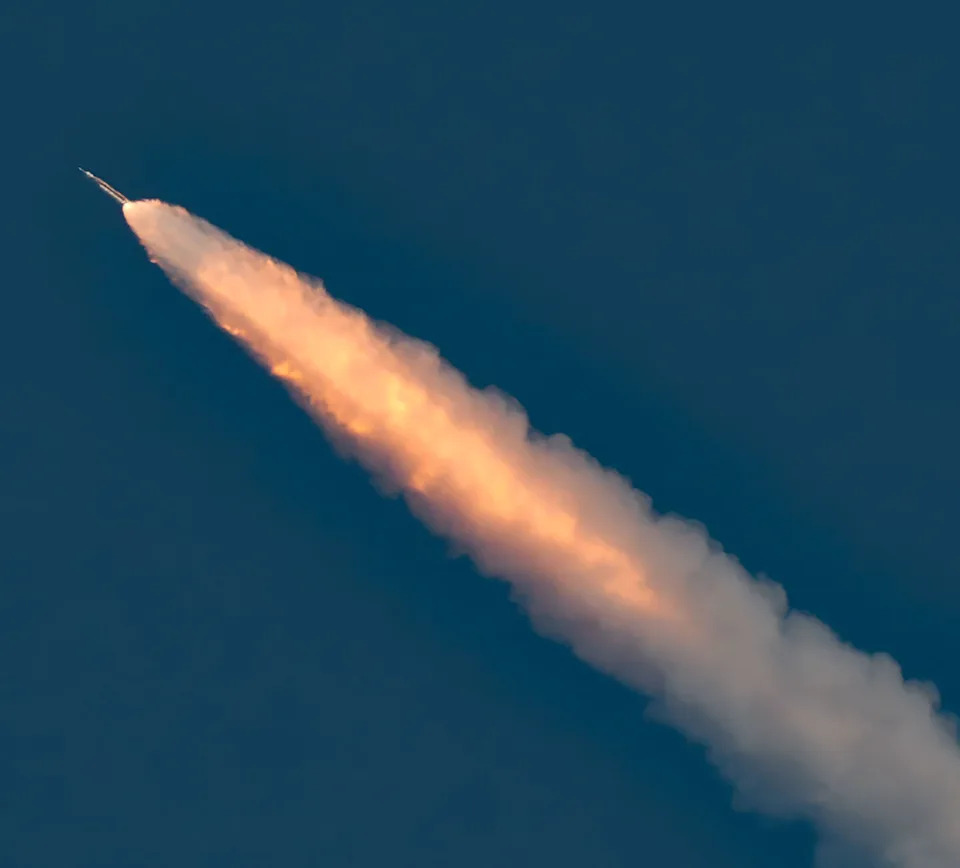
View from Port Orange, Fla. as Artemis II lifts off and heads to the moon, April 1, 2026 .
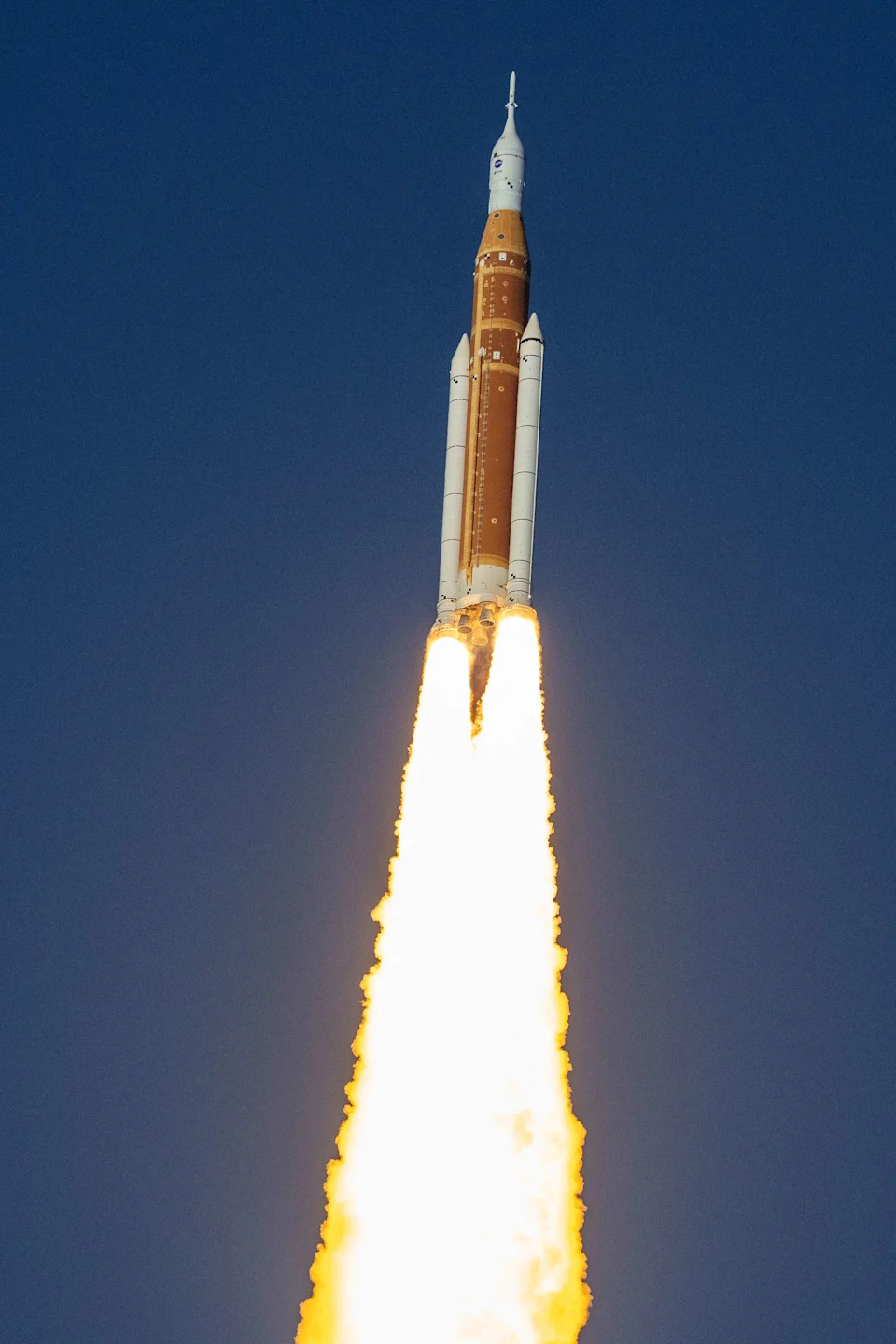
The Artemis II crewed lunar mission launches at Kennedy Space Center in Cape Canaveral, Florida, on April 1, 2026. Artemis II is a 10-day flight with four astronauts on a loop around the Moon, marking the first time humans have traveled beyond low Earth orbit since the Apollo 17 mission in 1972.
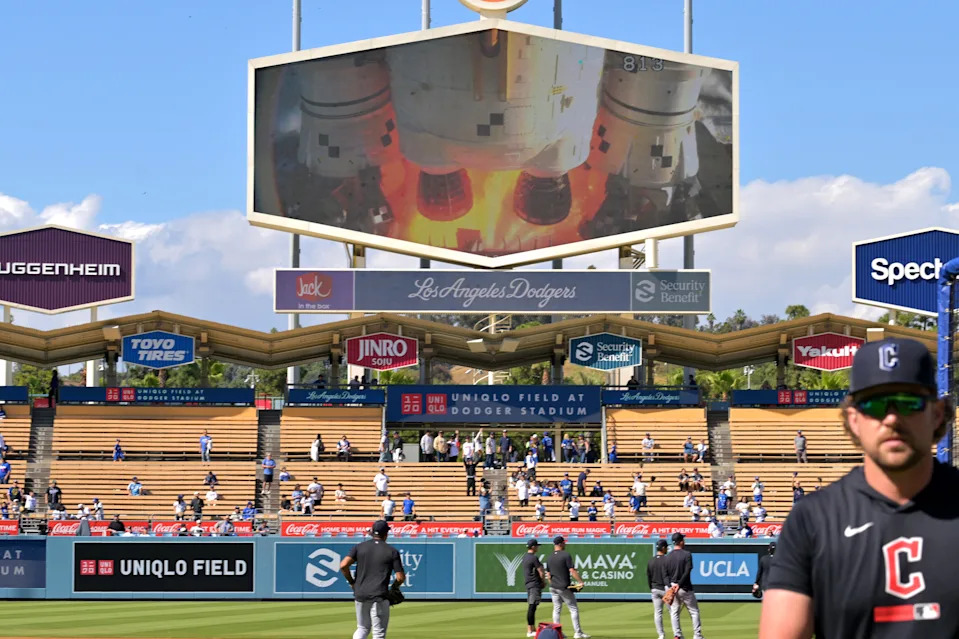
Cleveland Guardians players warm up as the NASA's Artemis II launches from Kennedy Space Center in Florida prior to the game against the Los Angeles Dodgers at Dodger Stadium.

People watch the Artemis II crewed lunar mission launch on a television outside of the News Corp building on April 1, 2026 in New York City. The 10-day mission will take NASA astronauts Commander Reid Wiseman, Pilot Victor Glover and Mission Specialist Christina Koch and CSA (Canadian Space Agency) Mission Specialist Jeremy Hansen around the moon and back. The astronauts are supposed to fly 230,000 miles out into space, the farthest any human has ever traveled from Earth.
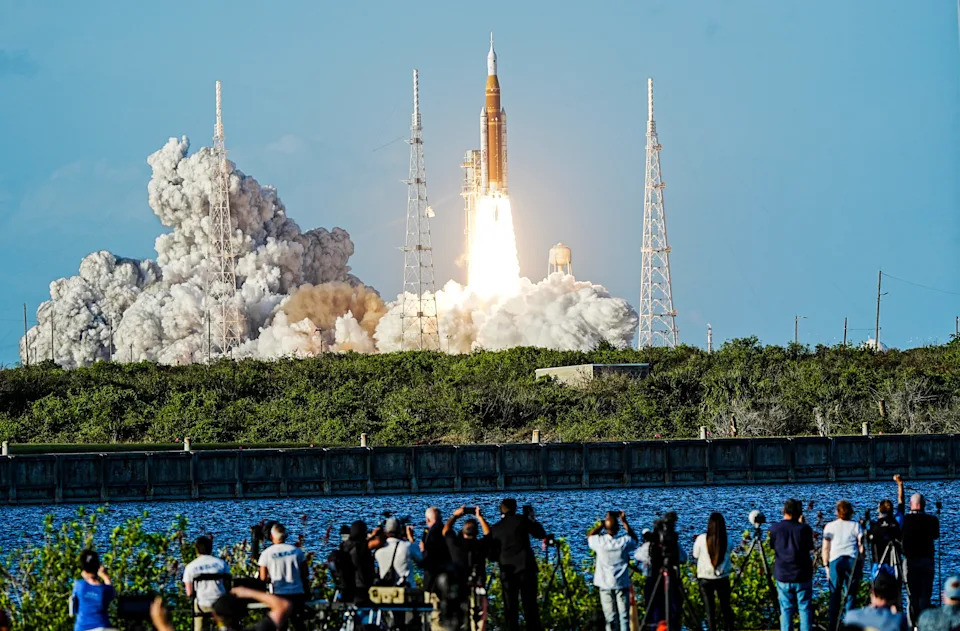
Artemis II and it’s crew of four lift off from Kennedy Space Center April 1, 2026 on a 10-day mission around the Moon and back.
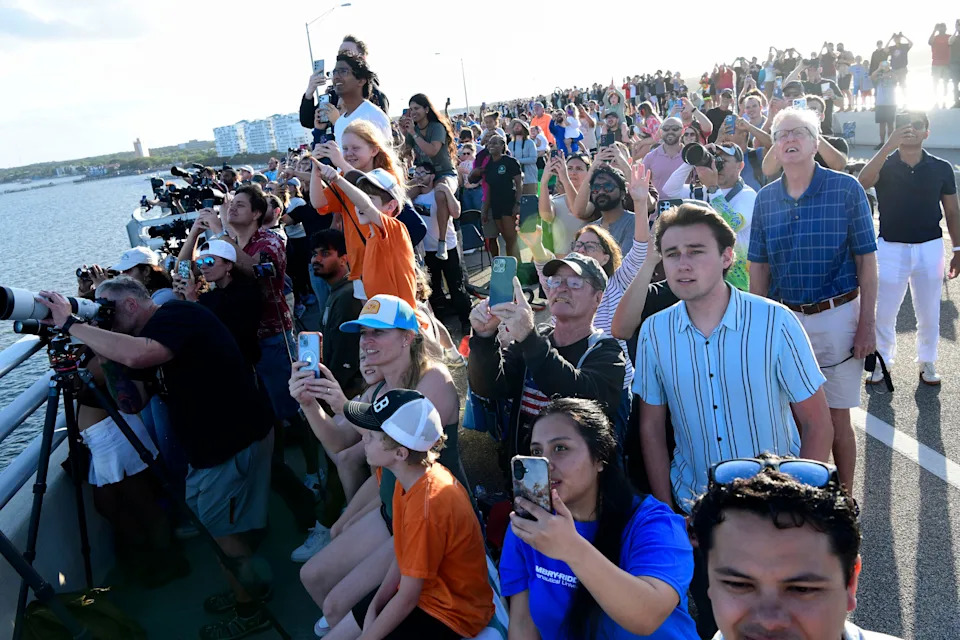
People observe the launch of Artemis II from the A. Max Brewer Bridge in Titusville, Florida on April 1, 2026 in Cape Canaveral, Fla. The 322-foot-tall rocket will take astronauts around the moon and back, 230,000 miles out into space and the farthest any human has ever traveled from Earth.
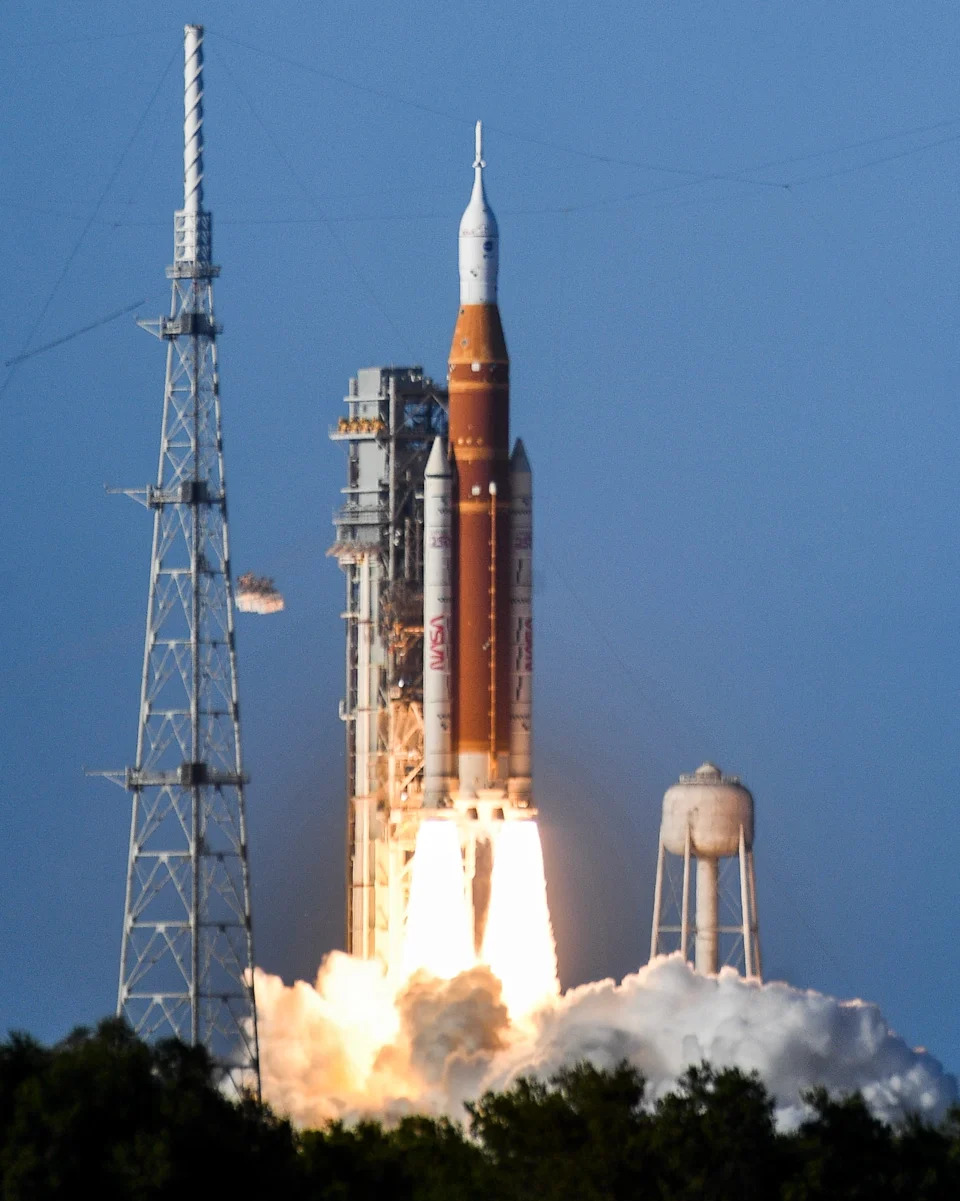
Artemis II and it’s crew of four lift off from Kennedy Space Center April 1, 2026 on a 10-day mission around the Moon and back. Craig Bailey, FLORIDA TODAY via USA TODAY NETWORK
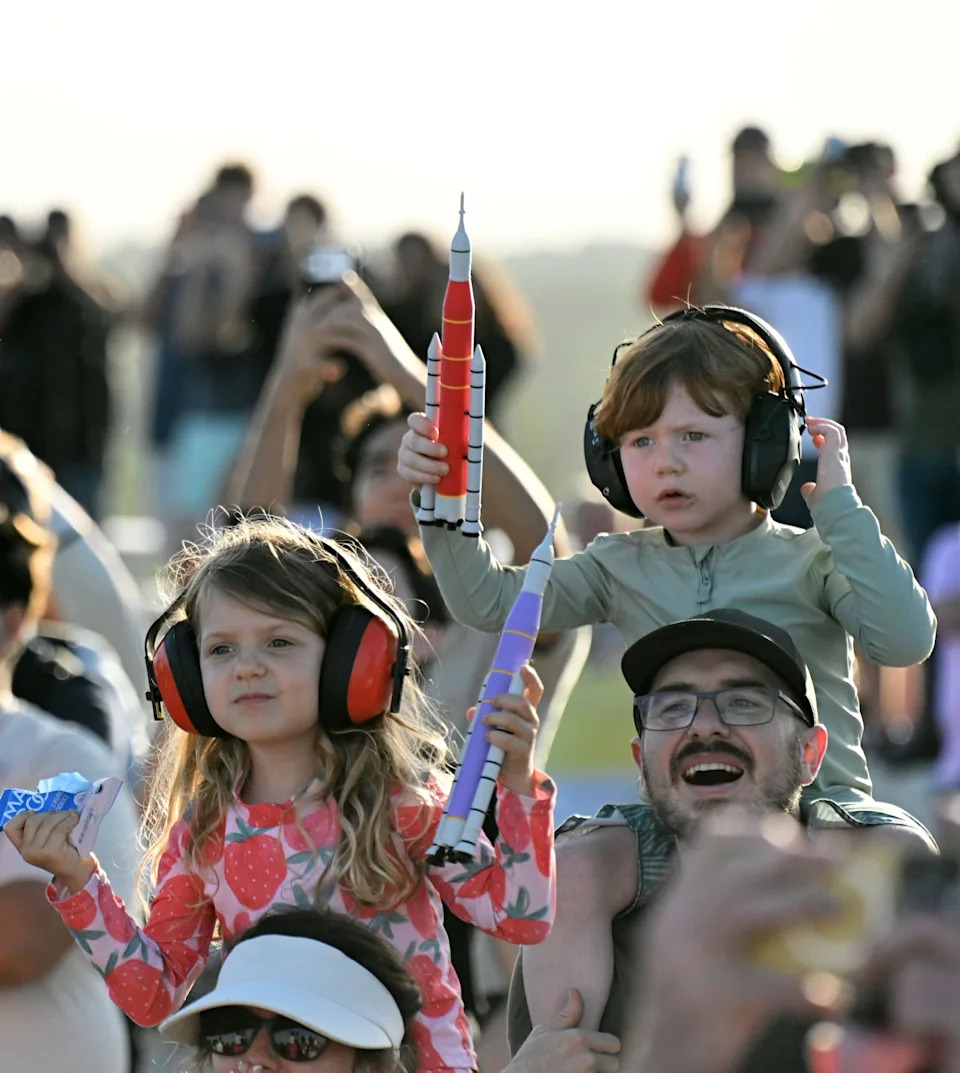
People observe and celebrate the launch of the Artemis II from the A. Max Brewer Bridge in Titusville, Florida on April 01, 2026 in Cape Canaveral, Florida. The 322-foot-tall rocket will take astronauts around the moon and back, 230,000 miles out into space and the farthest any human has ever traveled from Earth.

The Artemis II astronauts leave crew quarters at Kennedy Space Center, FL April 1, 2026 headed to Pad 39B for launch on an 10-day rendezvous with the Moon. Craig Bailey, FLORIDA TODAY via USA TODAY NETWORK
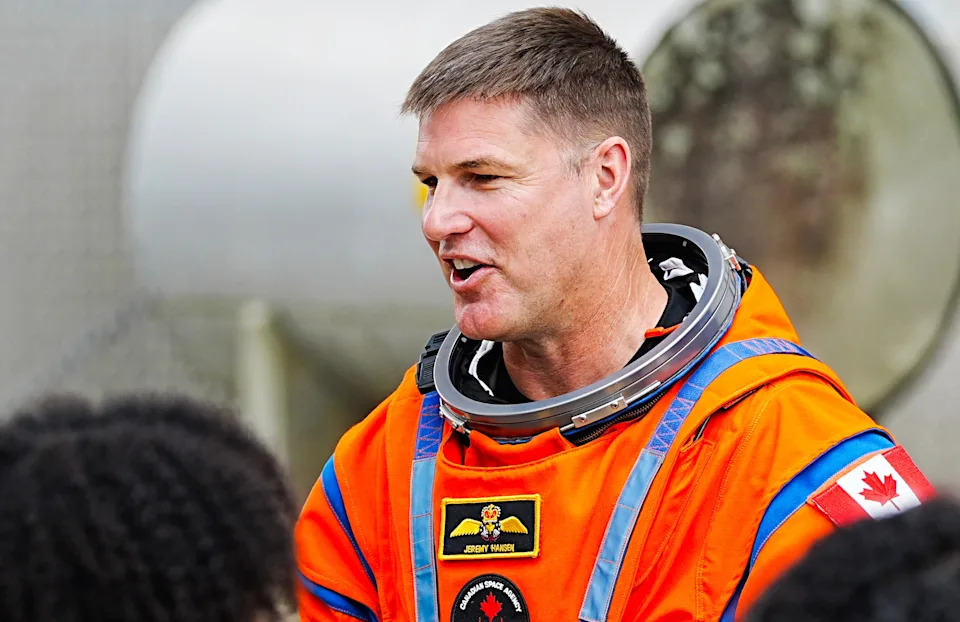
Artemis II Mission Specialist Jeremy Hansen talks with family as the crew leaves crew quarters at Kennedy Space Center, FL April 1, 2026. They’re headed to Pad 39B for launch on an 10-day rendezvous with the Moon. Craig Bailey, FLORIDA TODAY via USA TODAY NETWORK
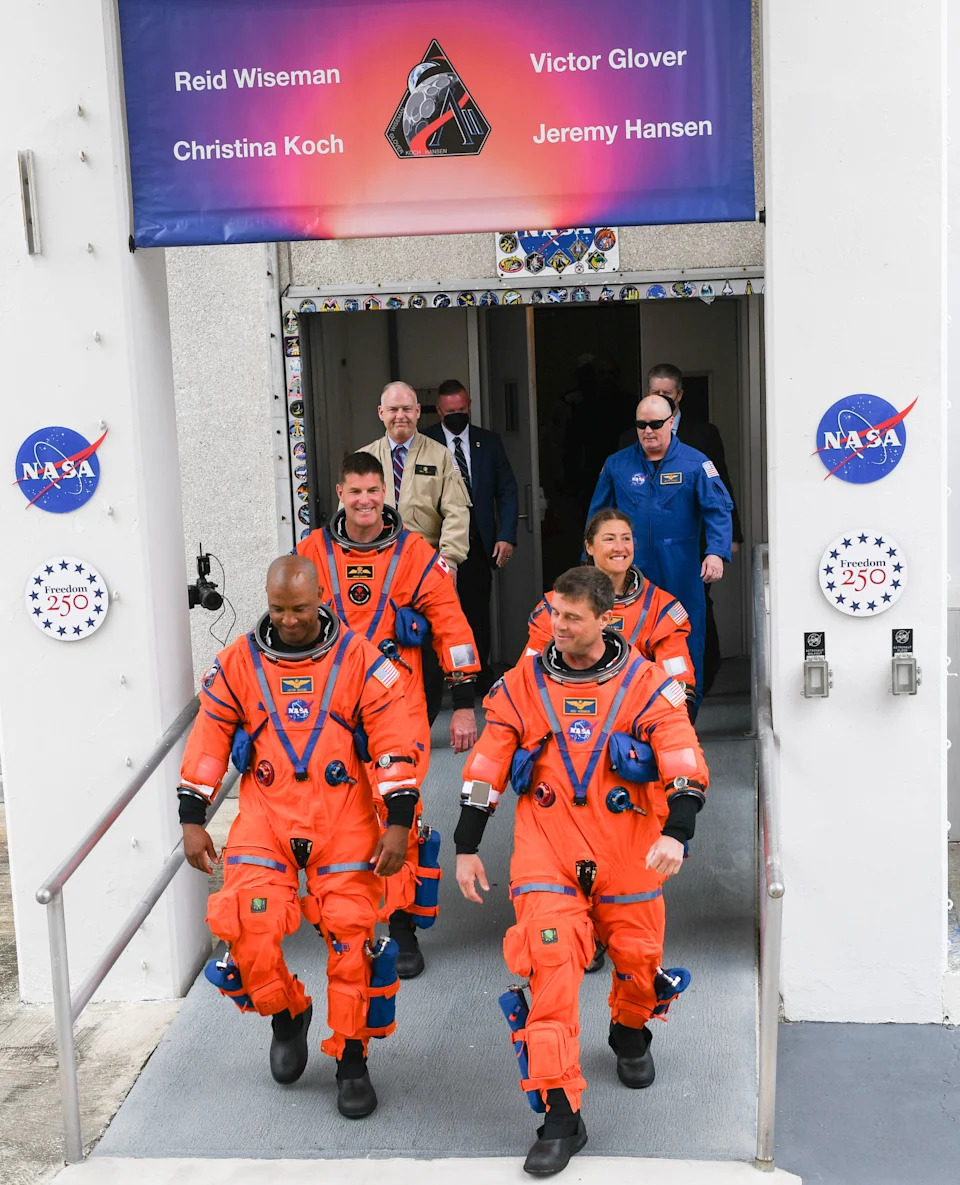
The Artemis II astronauts leave crew quarters at Kennedy Space Center, FL April 1, 2026 headed to Pad 39B for launch on an 10-day rendezvous with the Moon. Craig Bailey, FLORIDA TODAY via USA TODAY NETWORK
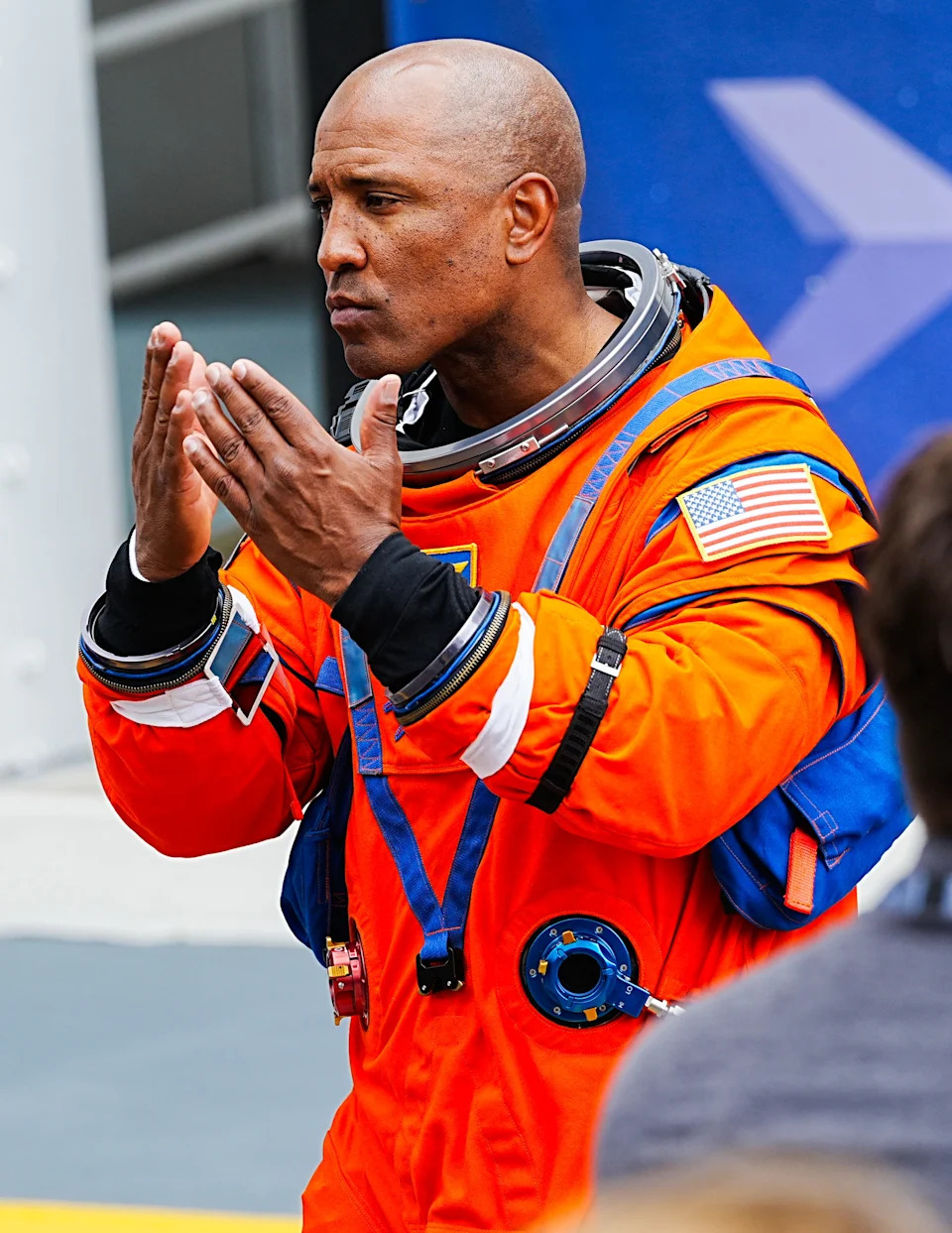
Artemis II Pilot Victor Glover blows kisses to his family as the crew leaves crew quarters at Kennedy Space Center, FL April 1, 2026. They’re headed to Pad 39B for launch on an 10-day rendezvous with the Moon.

The Artemis II astronauts (from left) Mission Specialist Jeremy Hansen, Pilot Victor Glover, Commander Reid Wiseman and Mission Specialist Christina Koch leave crew quarters at Kennedy Space Center, FL April 1, 2026 headed to Pad 39B for launch on an 10-day rendezvous with the Moon. Craig Bailey, FLORIDA TODAY via USA TODAY NETWORK
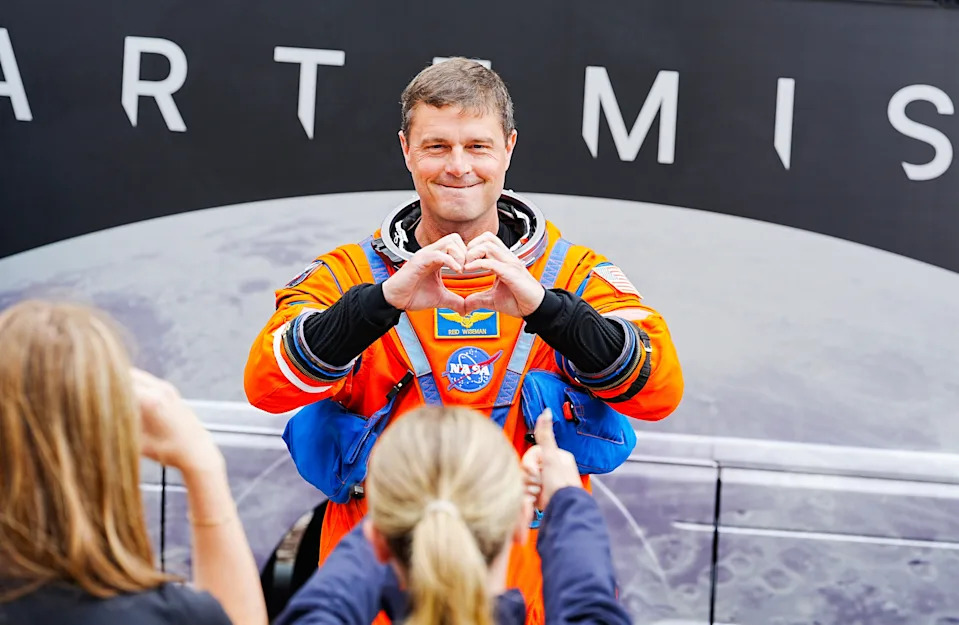
Artemis II Commander Reid Wiseman sends a heart of loved ones as the crew leaves crew quarters at Kennedy Space Center, FL April 1, 2026. They’re headed to Pad 39B for launch on an 10-day rendezvous with the Moon. Craig Bailey, FLORIDA TODAY via USA TODAY NETWORK
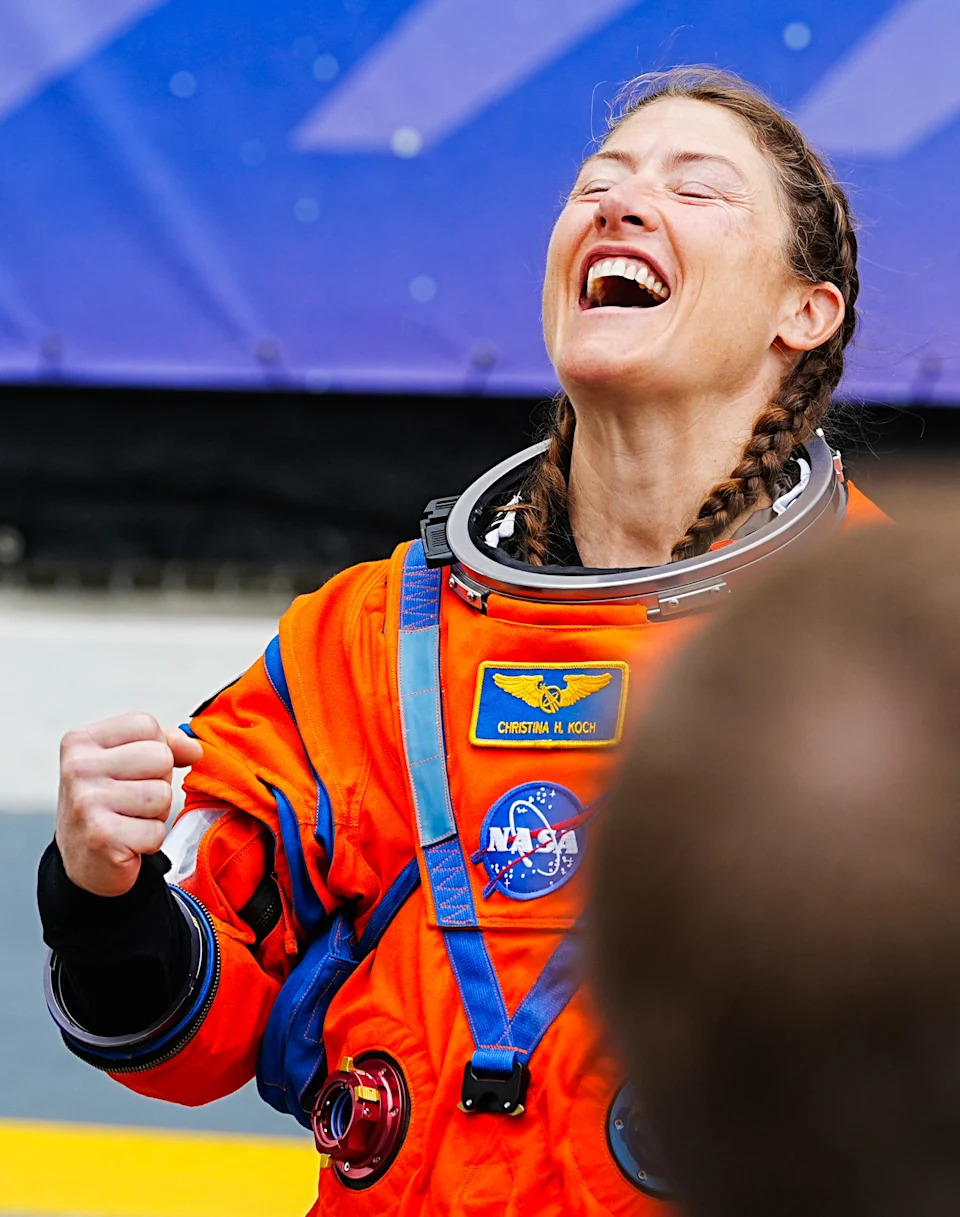
Artemis II Mission Specialist Christina Koch laughs as the crew leaves crew quarters at Kennedy Space Center, FL April 1, 2026. They’re headed to Pad 39B for launch on an 10-day rendezvous with the Moon. Craig Bailey, FLORIDA TODAY via USA TODAY NETWORK
Photographers set up remote cameras inside Pad 39B March 31, 2026 in advance of the launch of Artemis II. Craig Bailey, FLORIDA TODAY via USA TODAY NETWORK
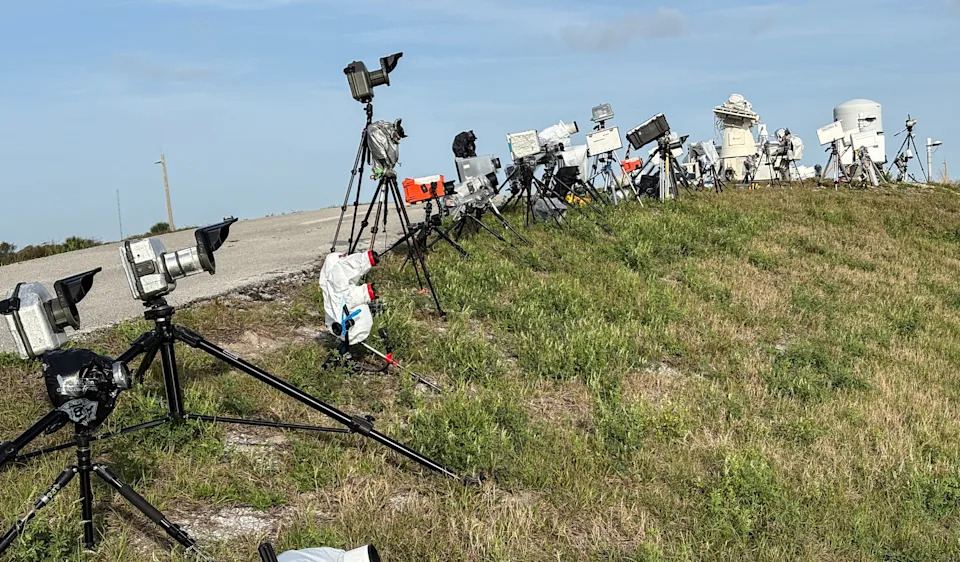
Remote camerasa are set up inside Pad 39B March 31, 2026 in advance of the launch of Artemis II. Craig Bailey, FLORIDA TODAY via USA TODAY NETWORK
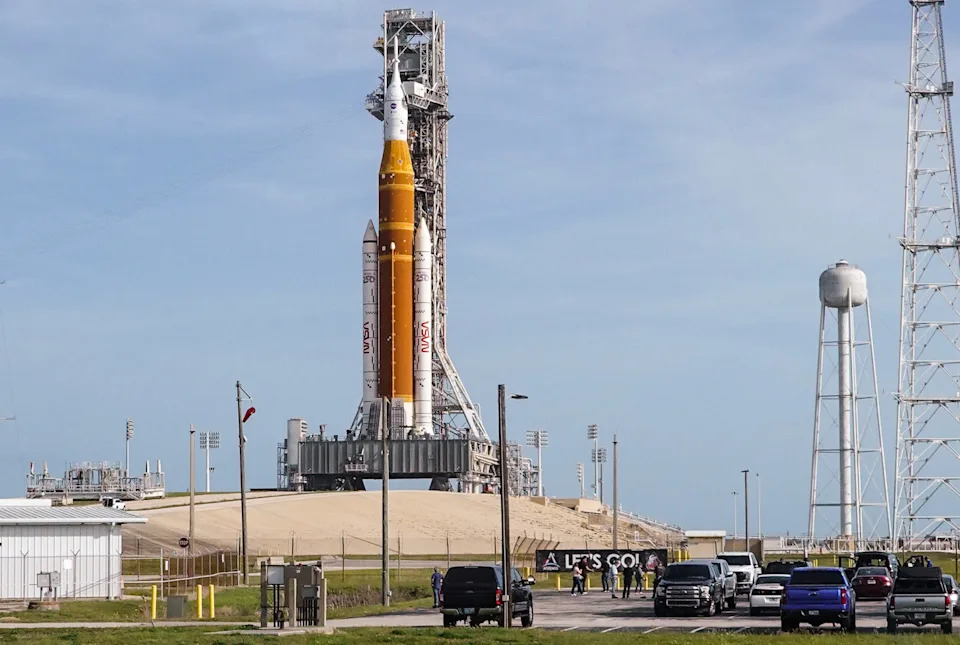
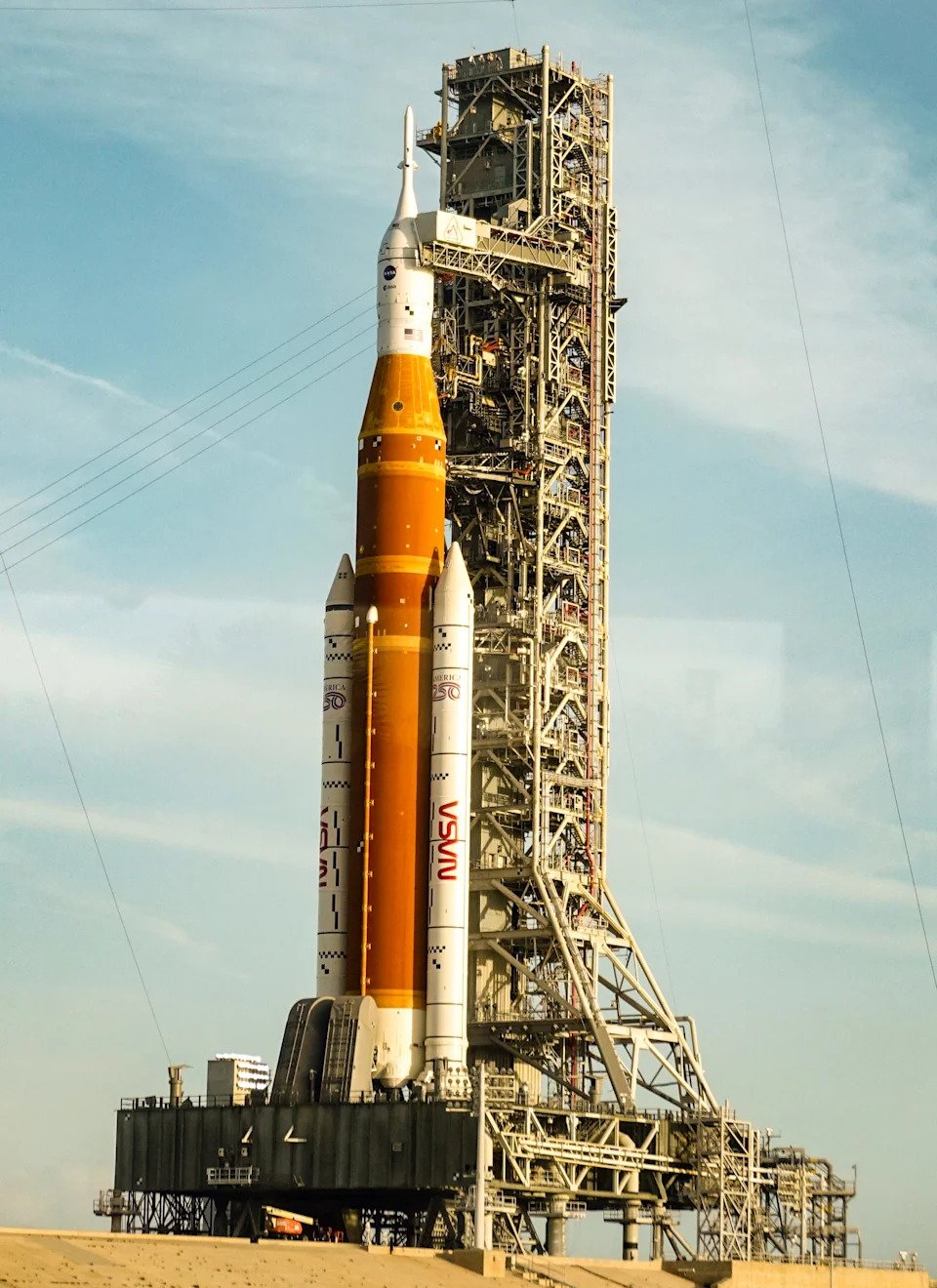
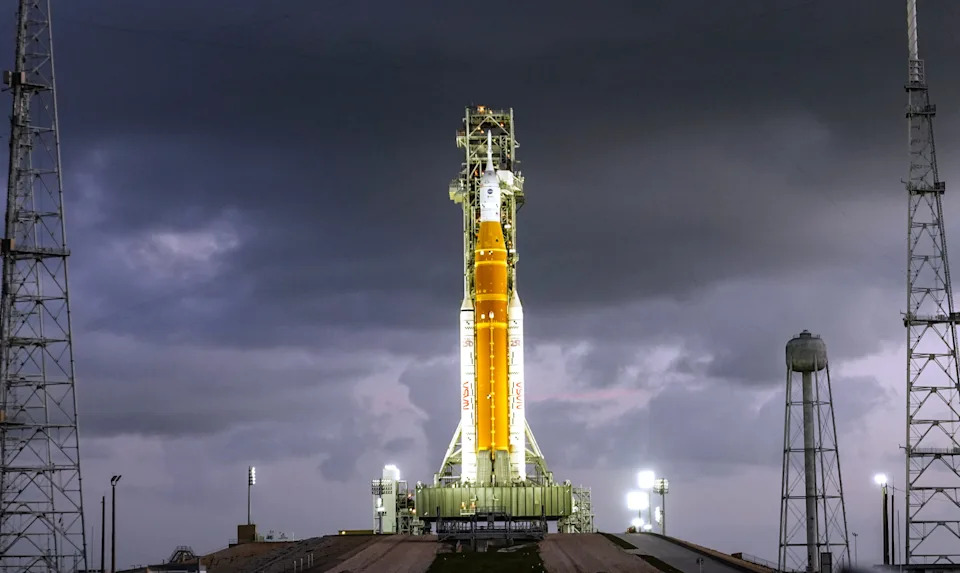
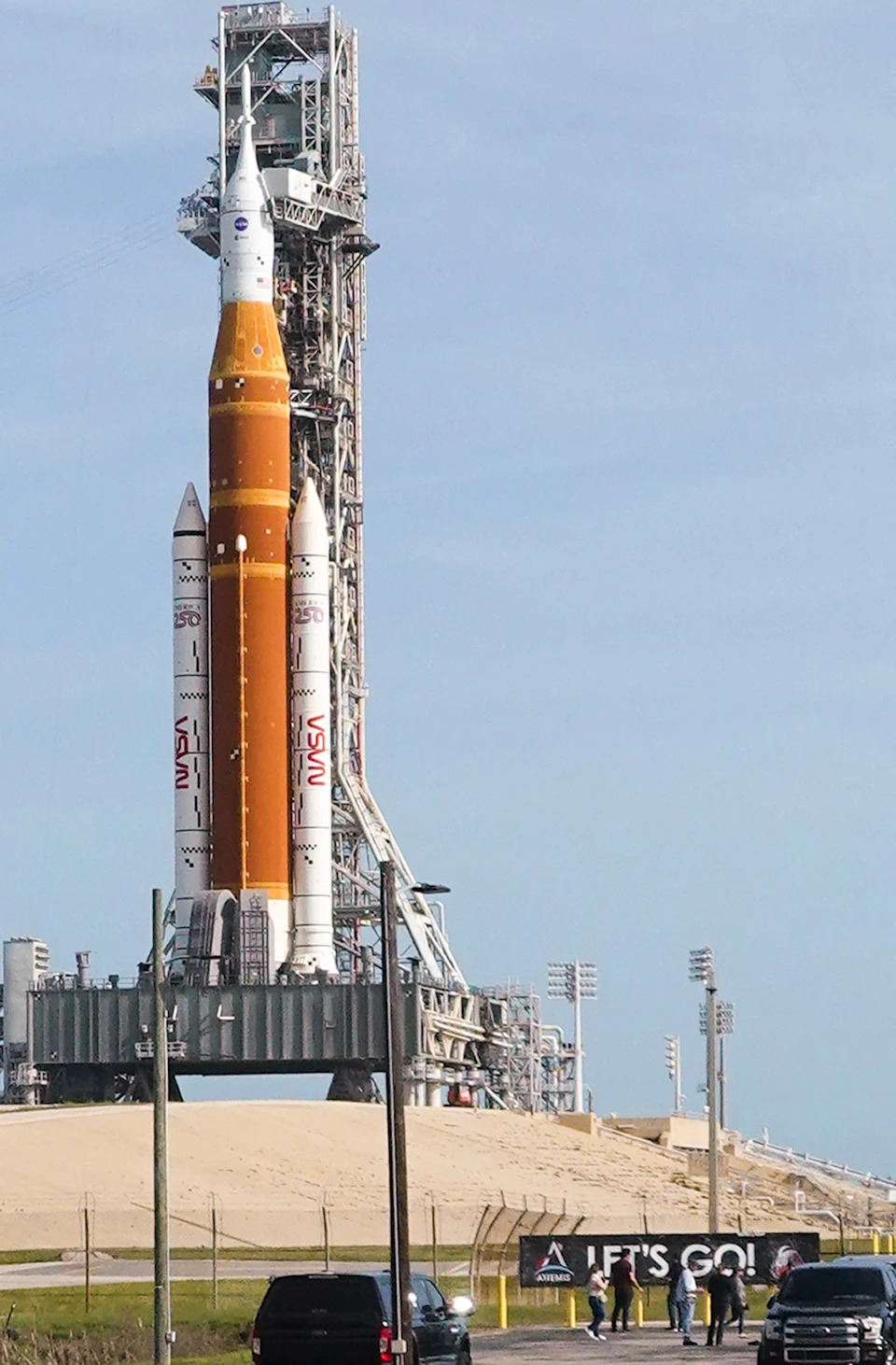
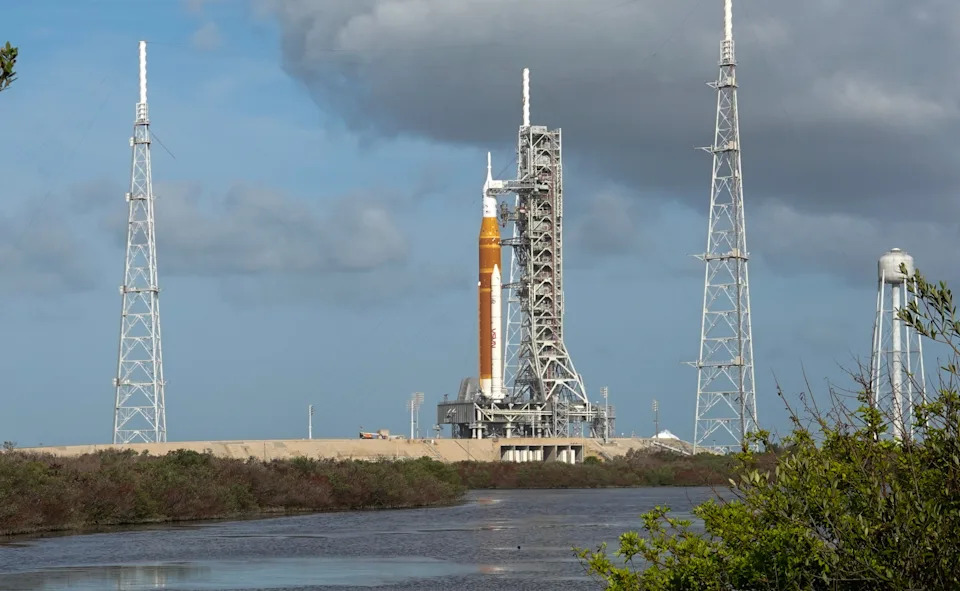
NASAÕs Space Launch System rocket Artemis II is readied for launch on Pad 39B at Kennedy Space Center, FL, March 31, 2026. Artemis II is scheduled to launch April 4, taking 4 astronauts around the Moon and back. Craig Bailey, FLORIDA TODAY via USA TODAY NETWORK
Photographers set up remote cameras inside Pad 39B March 31, 2026 in advance of the launch of Artemis II. Craig Bailey, FLORIDA TODAY via USA TODAY NETWORK
Photographers set up remote cameras inside Pad 39B March 31, 2026 in advance of the launch of Artemis II. Craig Bailey, FLORIDA TODAY via USA TODAY NETWORK
Photographers set up remote cameras inside Pad 39B March 31, 2026 in advance of the launch of Artemis II. Craig Bailey, FLORIDA TODAY via USA TODAY NETWORK
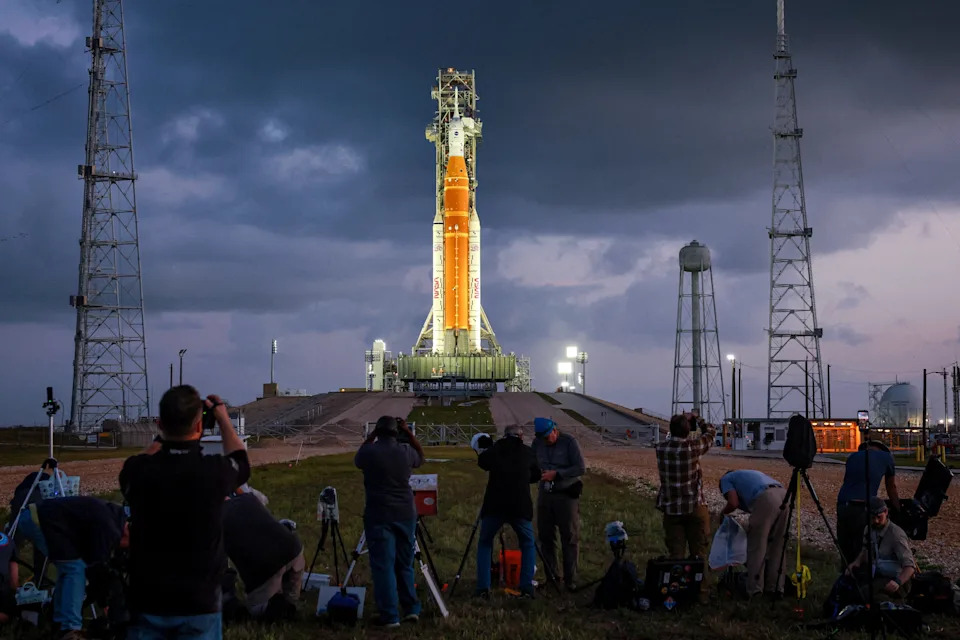
People set cameras to photograph NASA's Artemis II lunar flyby mission, with the next-generation moon rocket, the Space Launch System (SLS) rocket and the Orion crew capsule, on Pad 39B ahead of the launch of theArtemis II missionat the Kennedy Space Center in Cape Canaveral, Fla., March 31, 2026. The rocket is scheduled for an April 1, 2026, 6:24 p.m. launch of the 10-day mission.
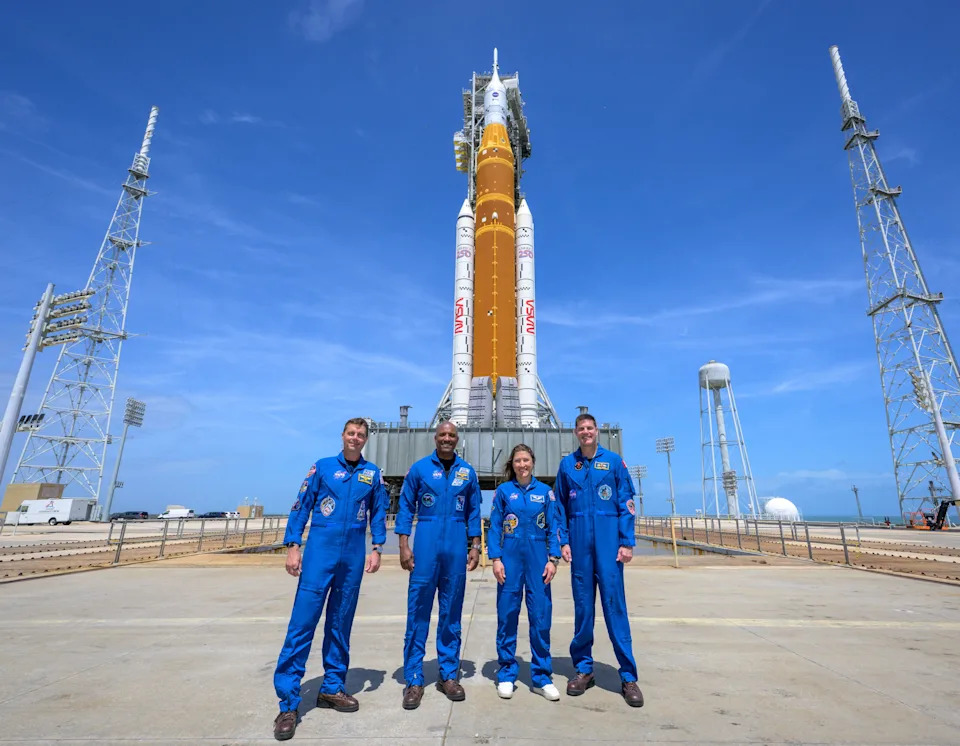
This NASA handout image shows NASA astronauts Reid Wiseman, Artemis II commander (L), Victor Glover, Artemis II pilot (2L), Christina Koch, Artemis II mission specialist (2R), and CSA (Canadian Space Agency) astronaut Jeremy Hansen, Artemis II mission specialist (R), as they pose for a group photo during a visit to NASA's Artemis II SLS (Space Launch System) rocket and Orion spacecraft, on March 30, 2026, at Launch Complex 39B of NASA's Kennedy Space Center in Florida.
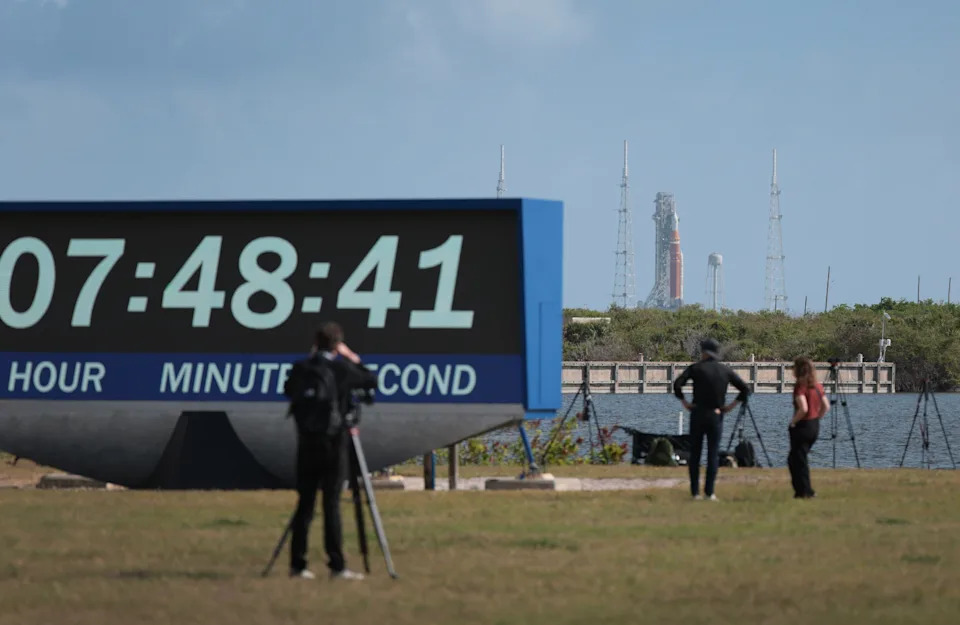
The countdown clock runs as NASA's Artemis II Space Launch System rocket and Orion spacecraft sit on Launch Pad 39B at the Kennedy Space Center on April 1, 2026 in Cape Canaveral, Fla.
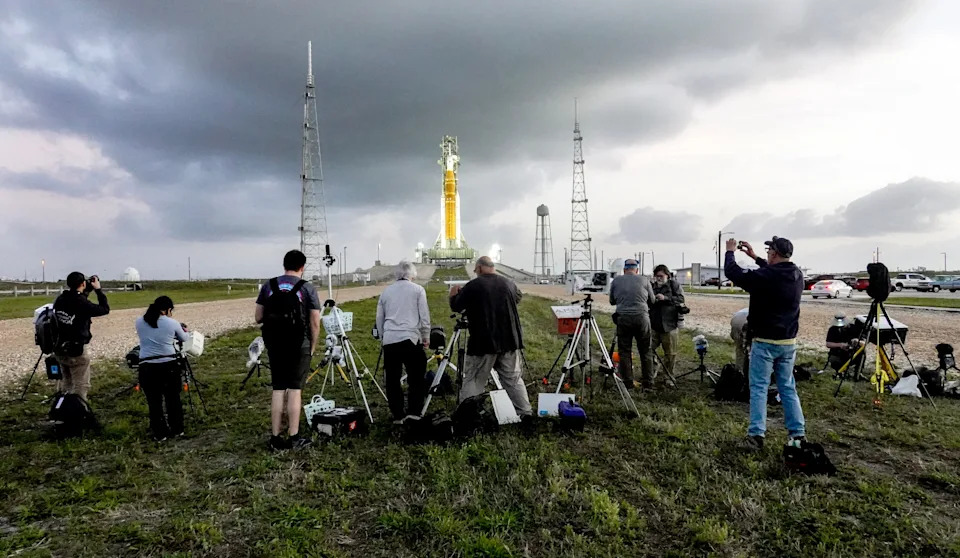
Photographers set up remote cameras inside Pad 39B March 31, 2026 in advance of the launch of Artemis II.

People gather ahead of the launch of the next-generation moon rocket, the Space Launch System (SLS) rocket and the Orion crew capsule, part of NASA's Artemis II lunar flyby mission, from NASA's Kennedy Space Center, in Titusville, Fla., April 1, 2026.
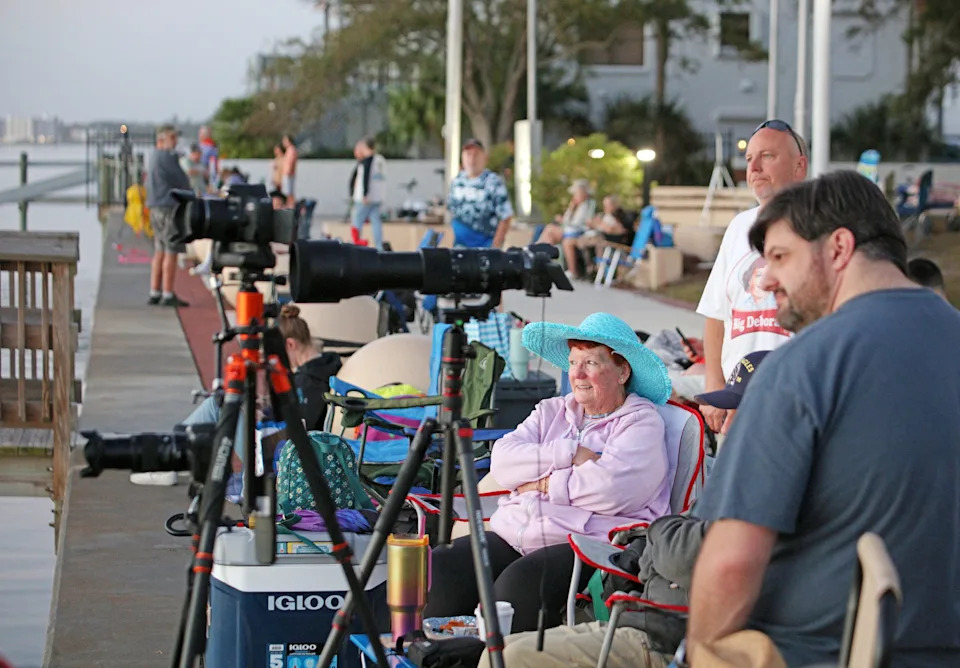
Space enthusiasts watch the sunrise from a park in Titusville, Fla. several hours before NASA's Artemis II Space Launch System (SLS) rocket is scheduled to launch from the Kennedy Space Center on April 1, 2026.
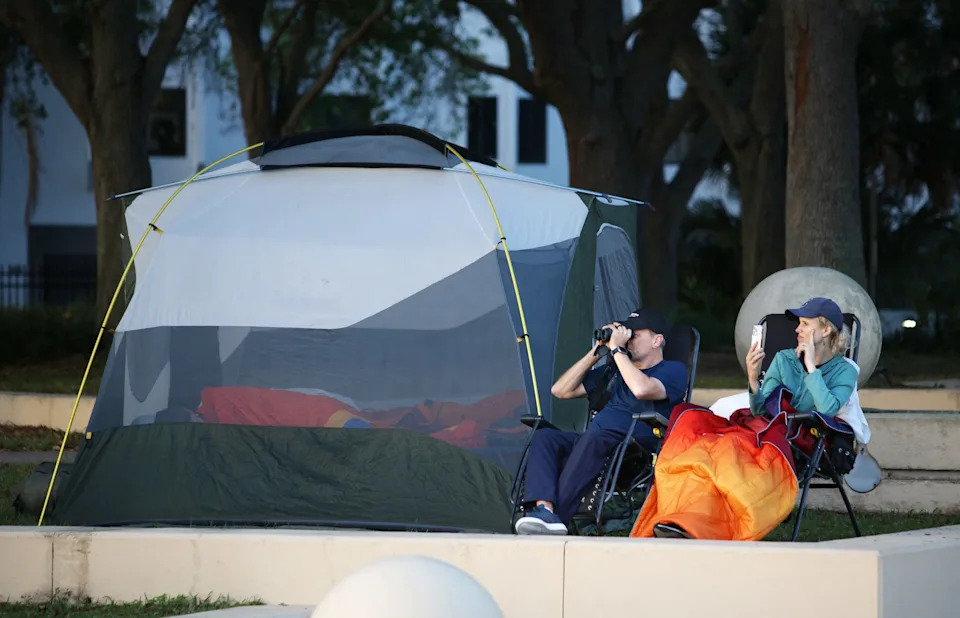
Space enthusiasts watch the sunrise from a park in Titusville, Florida several hours before NASA's Artemis II Space Launch System (SLS) rocket is scheduled to launch from the Kennedy Space Center on April 1, 2026.
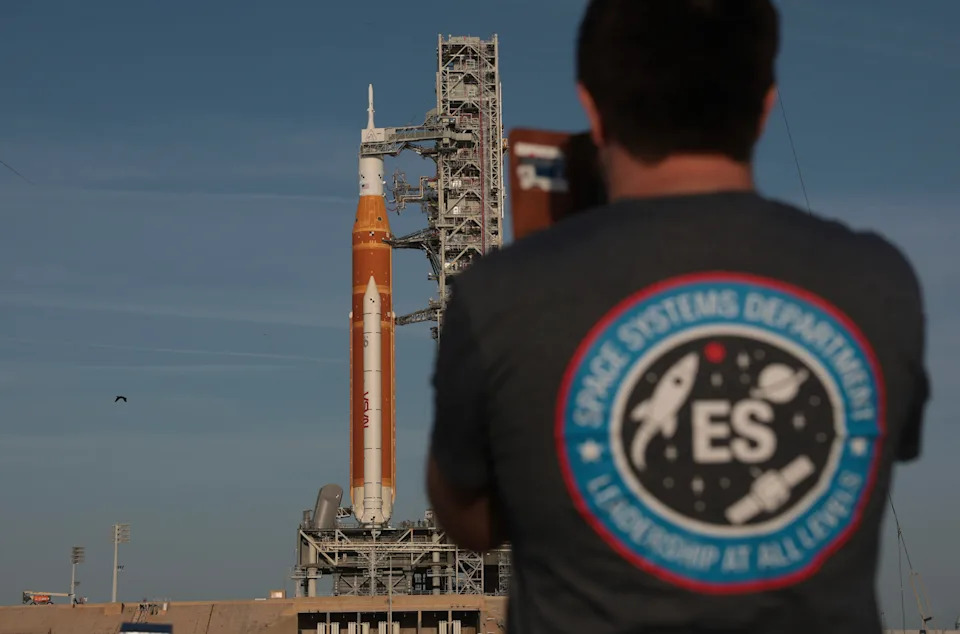
NASA's Artemis II Space Launch System rocket and Orion spacecraft sit on Launch Pad 39B at the Kennedy Space Center on March 31, 2026 in Cape Canaveral, Fla.

Brenda Mulberry, president of Pike Products and Space Shirts, holds up one of the thousands of Artemis II t-shirts she has printed in their north Merritt Island shop.
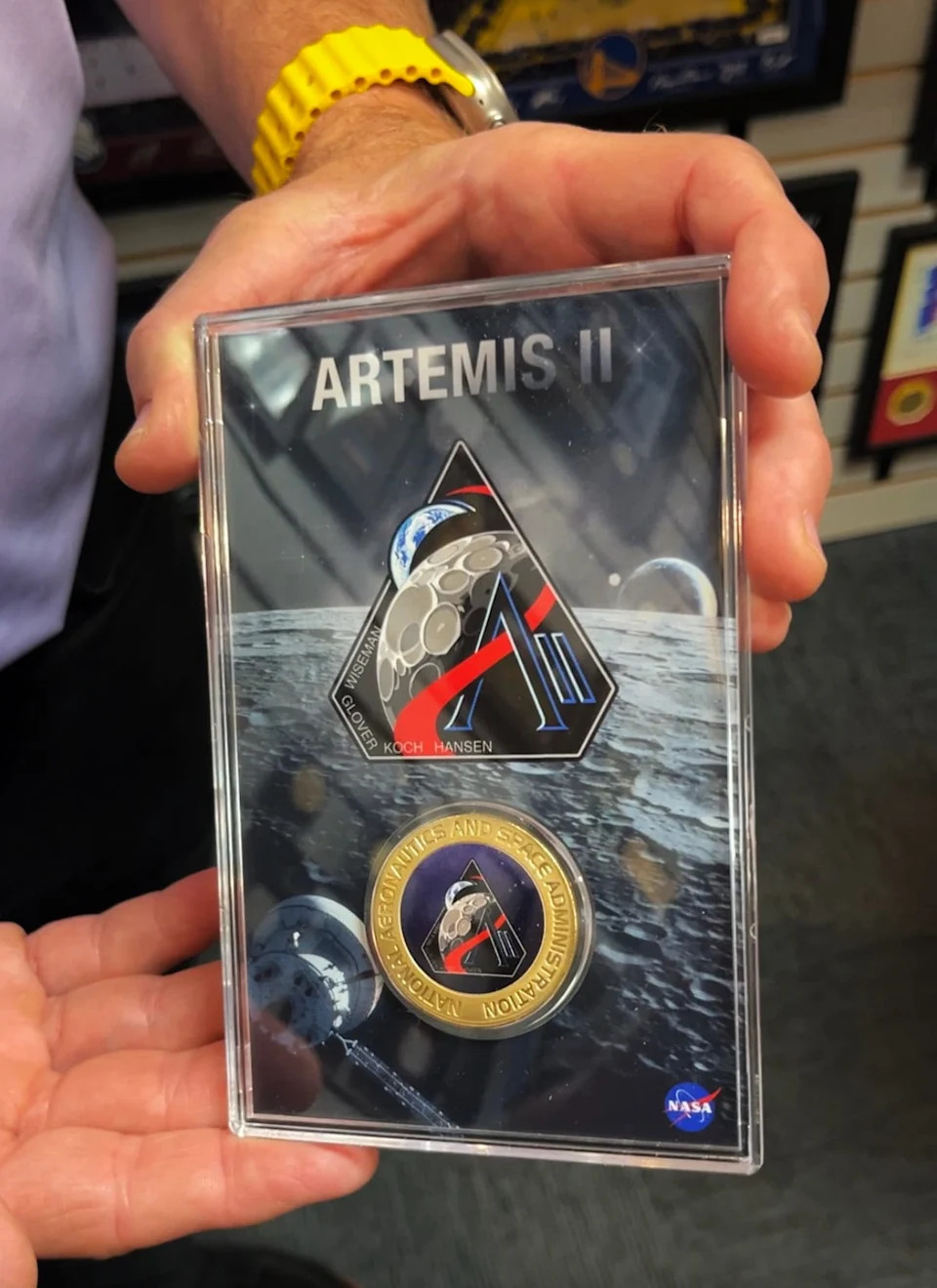
The Highland Mint in Melbourne, Fla. has minted an Artemis II collector coin.
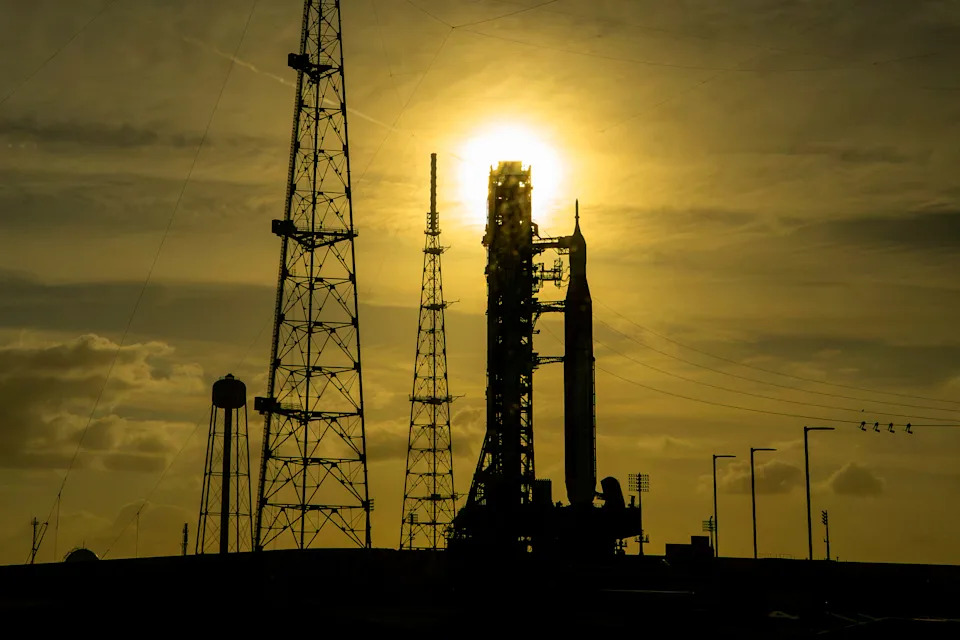
NASA's Artemis II Space Launch System rocket and Orion spacecraft rest on Launch Pad 39B at Kennedy Space Center in Cape Canaveral, Fla., on March 31, 2026, ahead of the crewed lunar mission.
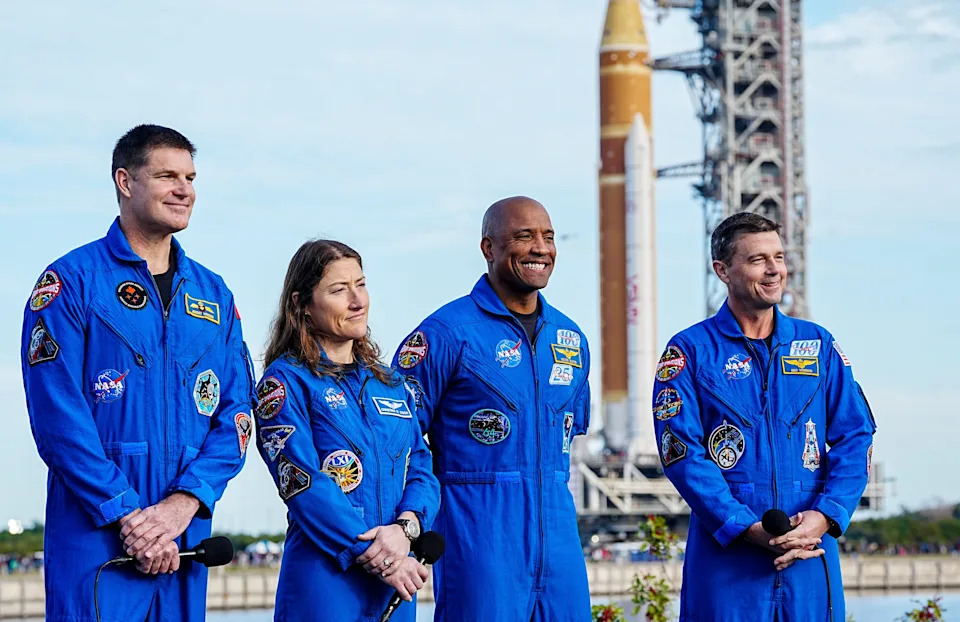
The crew of Artemis II (from left) Jeremy Hansen, Christina Koch, Victor Glover and Reid Wiseman pose for pictures as their ride to the moon is transported from the Vehicle Assembly Building at Kennedy Space Center, Fla. to the launch pad Jan. 17, 2026.
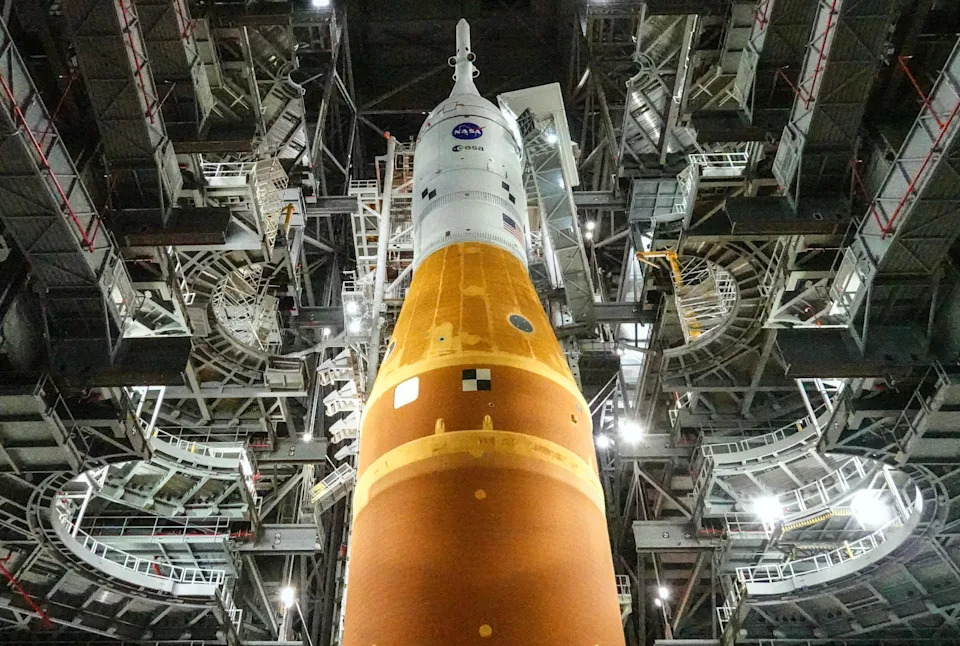
The Space Launch System rocket Artemis II begins its journey from the Vehicle Assembly Building to Pad 39B March 19, 2026.
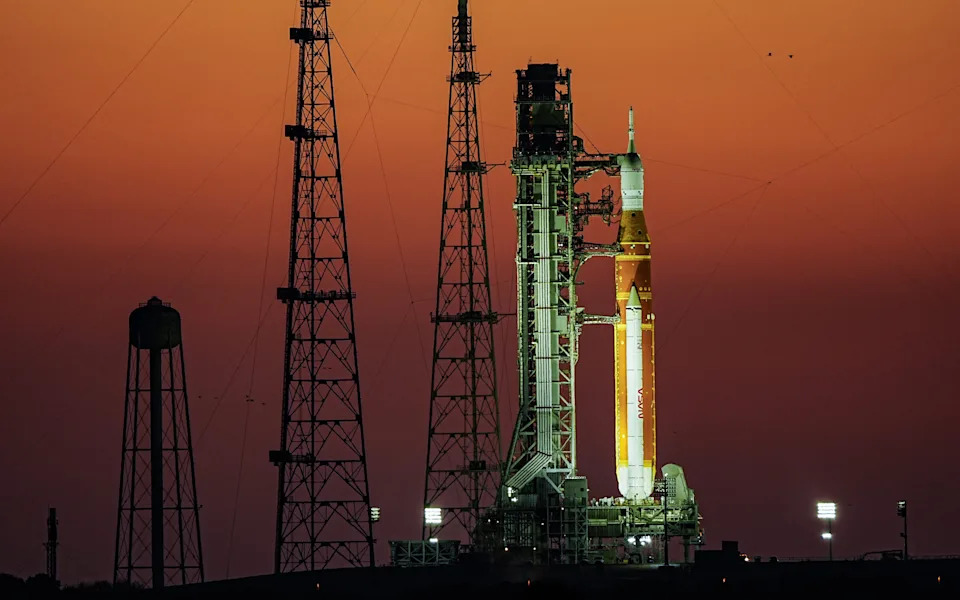
The sun rises over Kennedy Space Center and NASA’s Space Launch System vehicle Artemis II, March 24, 2026.
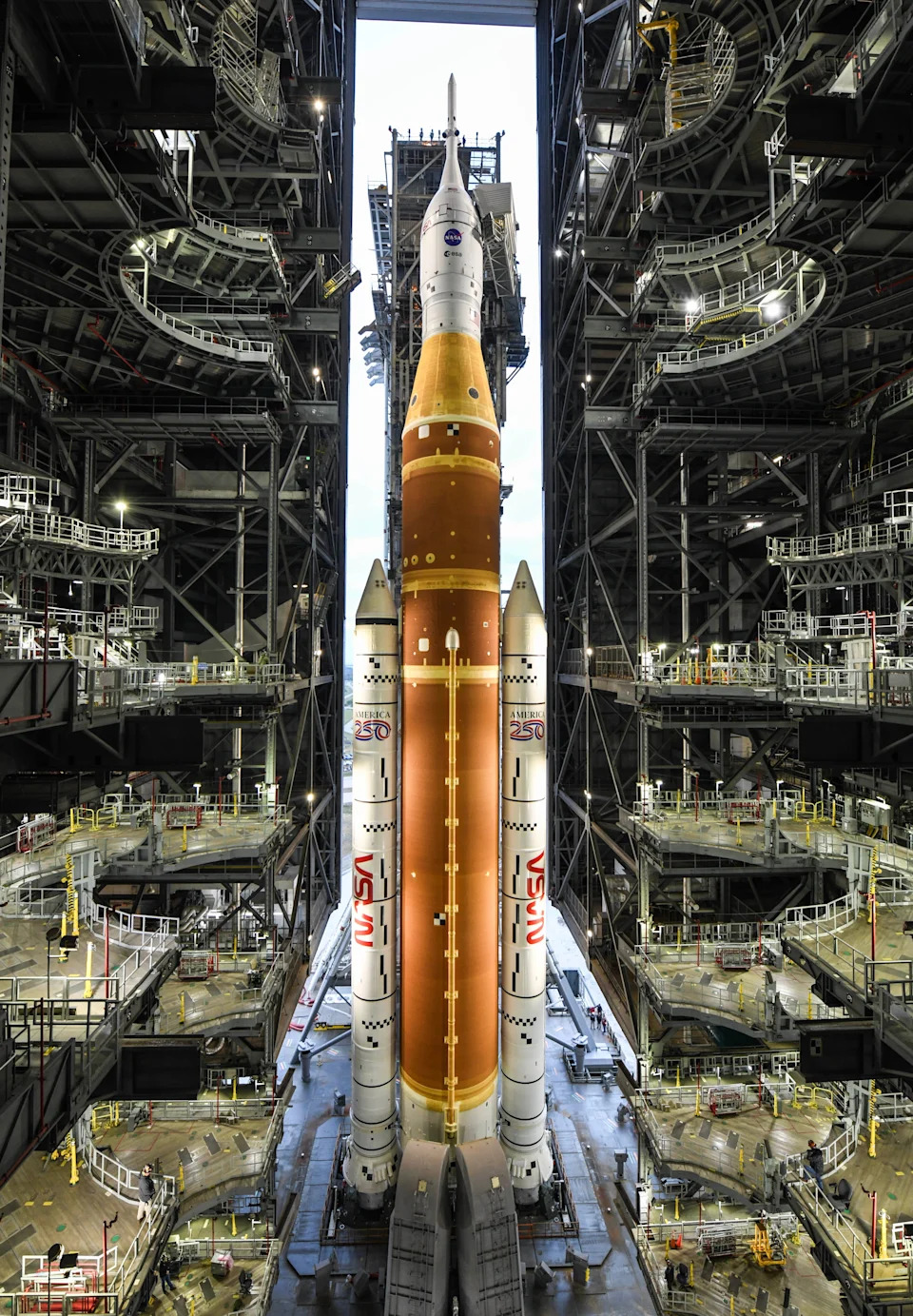
Artemis II begins its journey from the Vehicle Assembly Building at Kennedy Space Center, Fla. to the launch pad Jan. 17, 2026.
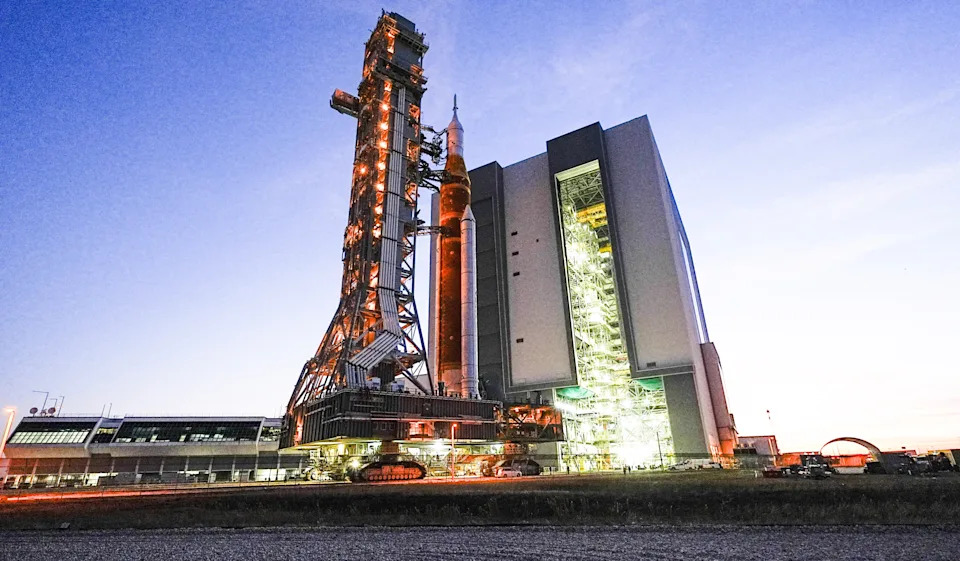
NASA’s Space Launch System rocket Artemis II is rolled back into the Vehicle Assembly Building at Kennedy Space Center, Fla,, February 25, 2026.
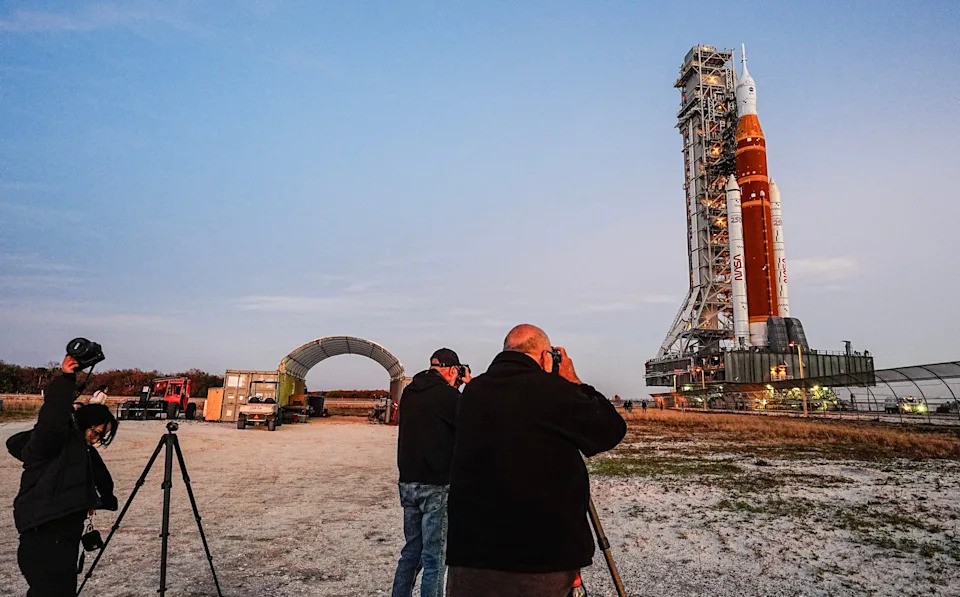
NASA’s Space Launch System rocket Artemis II is rolled back into the Vehicle Assembly Building at Kennedy Space Center, FL February 25, 2026.
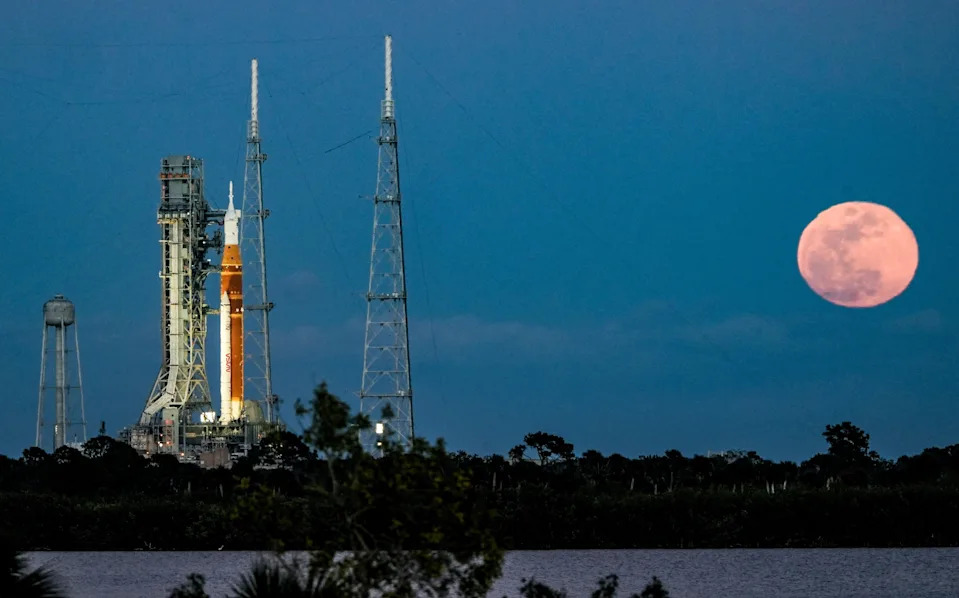
The full moon rises as Artemis II sits on Pad 39B at Kennedy Space Center Feb. 1, 2026.
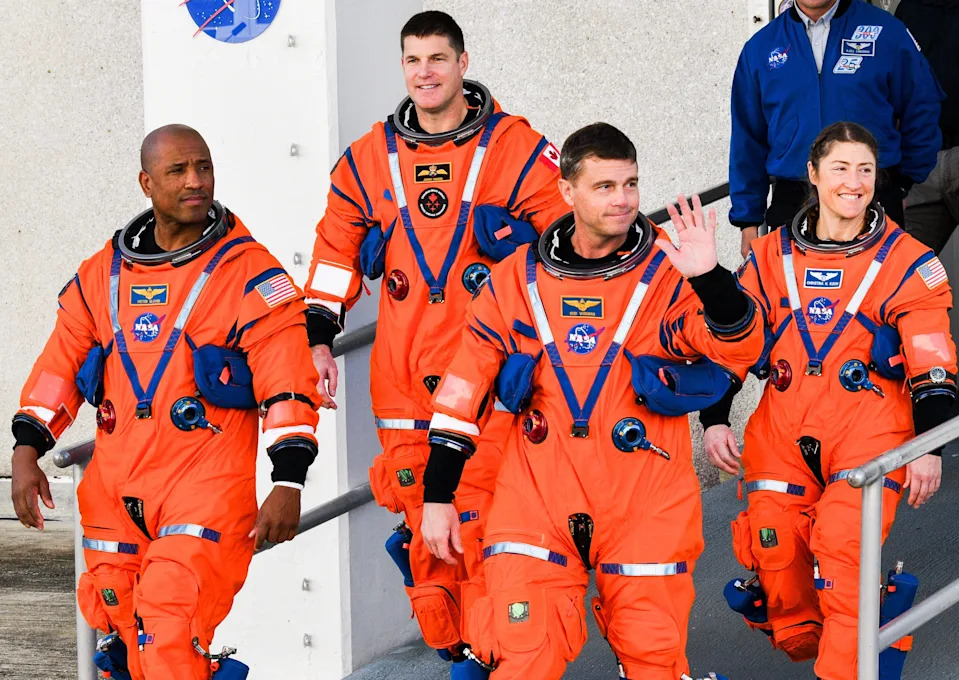
The astronauts of Artemis II (from left) Victor Glover, Jeremy Hansen, Reid Wiseman and Christina Koch leave crew quarters Dec. 20, 2025 during their pre-launch rehearsal.
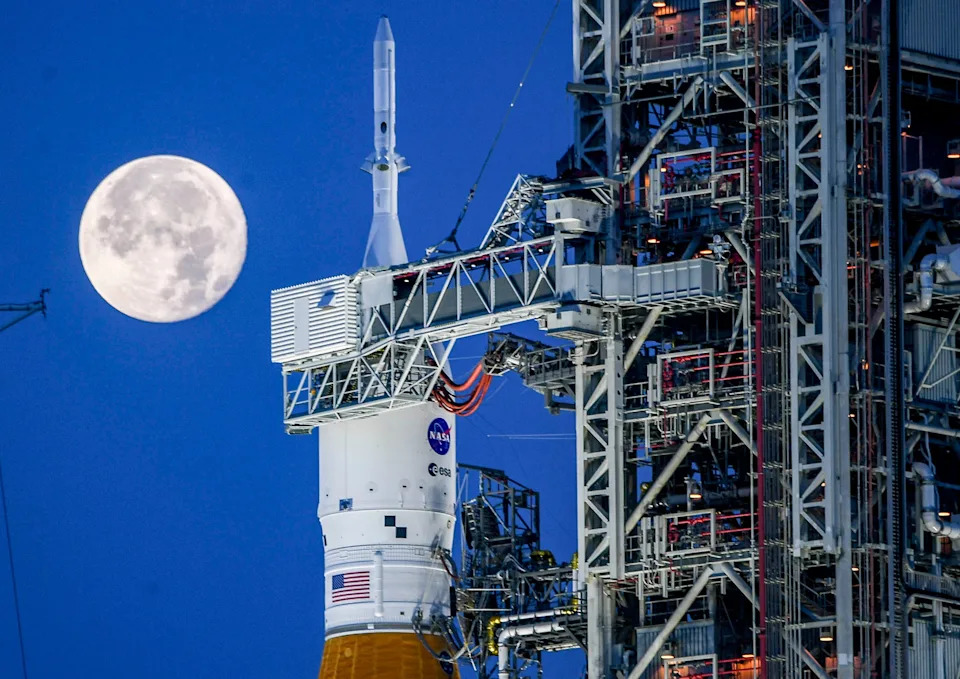
The first full moon in June, called the Strawberry Moon, sets over the Orion capsule atop NASA’s Space Launch System rocket just before dawn at Kennedy Space Center on June 15, 2022.
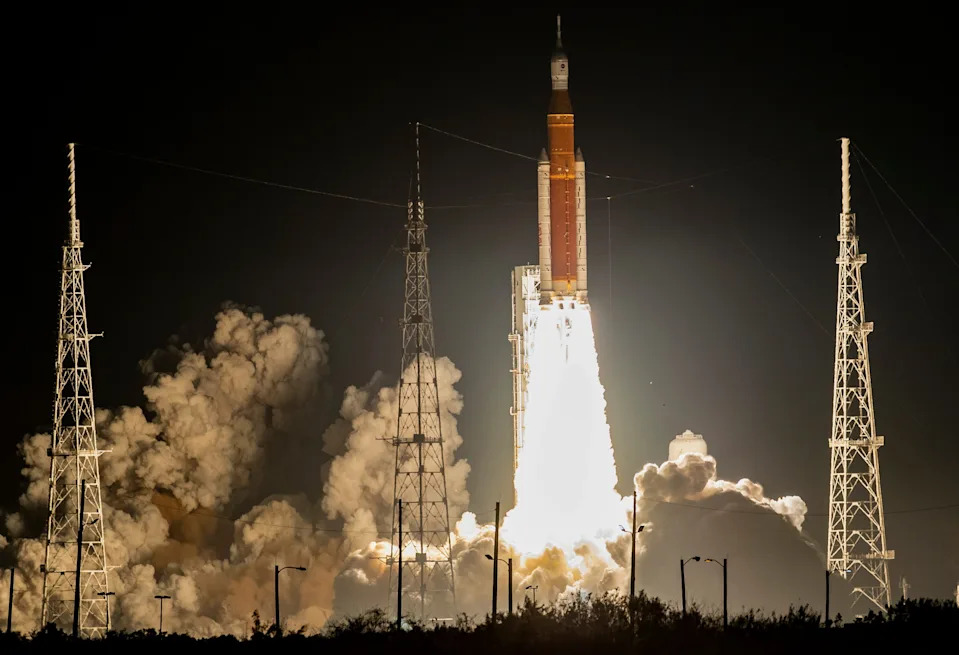
NASA’s Artemis I lifts off from Pad 39B at Kennedy Space Center on Merritt Island, Fla., Nov. 16, 2022
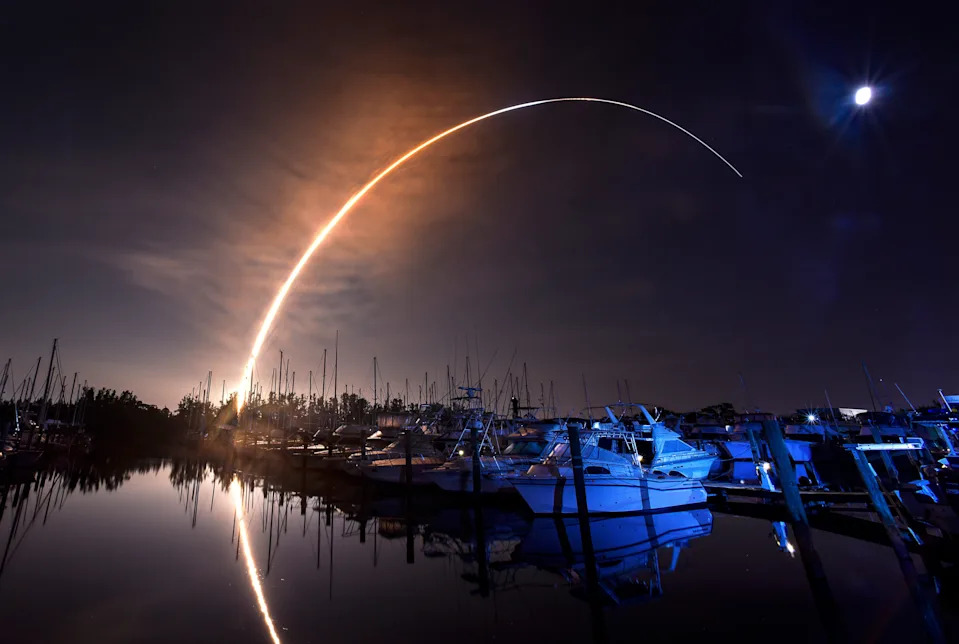
NASA’s Space Launch System rocket arcs into the sky on its maiden voyage, as seen from Harbortown Marina in Merritt Island. The moon, the destination of the Artemis I mission, is visible at top right. After delays and scrubs, the rocket lifted off from Kennedy Space Center at 1:47 a.m., Nov. 16, 2022.
Pomozite nam da budemo bolji.