Tim NASA-inog Artemis II projekta koristio je popularne numere da budi astronaute Reid Wiseman, Christinu Koch, Victora Glovera i Jeremyja Hansena tokom istorijskog preleta Meseca. Misija je 6. aprila dostigla rekordnu udaljenost od 252.756 milja od Zemlje, nadmašivši rekord Apolla 13. Posada je po prvi put u više od 50 godina videla delove daleke strane Meseca golim okom i sada se vraća na Zemlju sa planiranim sletanjem u Tihi okean kod San Dijega 10. aprila.
Od Chappell Roan do Johna Legenda: Plejlista Koja Je Budila Posadu Artemis II Tokom Istorijskog Preleta Meseca
From Chappell Roan to John Legend. See Artemis II's wake-up playlist.
Tim za kontrolu misije Artemis II u Johnson Space Centeru u Houstonu koristio je popularne pesme kao jutarnje buđenje za članove posade dok su posmatrali Mesec iz blizine. Među pesmama koje su puštane bile su numere izvođača koji su popularni kod publike, od Chappell Roan do John Legenda. Buđenje je bilo namenjeno astronautima Reid Wiseman, Christini Koch, Victoru Gloveru i Jeremyju Hansenu iz Kanadske svemirske agencije.
Istorijski prelet
Misija je dostigla značajan rekord tokom preleta Meseca 6. aprila: posada je stigla do maksimuma od 252.756 milja od Zemlje, čime je nadmašila rekord Apolla 13 iz 1970. godine za više od 4.000 milja. Tokom leta posada je po prvi put u više od pola veka golim okom videla delove daleke strane Meseca i posmatrala solarno pomračenje sa lunarne putanje.
Putovanje i povratak
Lansiranje je obavljeno sa Kennedy Space Centera na Floridi 1. aprila, a posada je napustila Zemljinu orbitu i uputila se ka Mesecu 3. aprila. Posada trenutno putuje ka povratku na Zemlju i očekuje se spuštanje u Tihi okean, nedaleko od San Dijega, Kalifornija, 10. aprila, čime bi bila završena desetodnevna misija.
Impresije posade
Članovi posade su u međuvremenu delili nezaboravne trenutke misije — od prvog pogleda na Zemlju posle prelaska iza Meseca, preko posmatranja solarnog pomračenja do snimanja fotografija i selfija unutar kabine Orion. Posada je koristila i lične pametne telefone, a za bezbedno posmatranje pomračenja korišćene su specijalne naočare, što je bio prvi put da su takve naočare iskorišćene u blizini Meseca.
Plejlista za buđenje
Evo spiska pesama koje su članovi Artemis II slušali od prvog dana leta:
- 2. april: "Green Light" — John Legend & Andre 3000 (puštena u 14:35) i "Sleepyhead" — Young & Sick (07:06)
- 3. april: "…In a Daydream" — The Freddy Jones Band
- 4. april: "Pink Pony Club" — Chappell Roan
- 5. april: "Working Class Heroes (Work)" — CeeLo Green
- 6. april: "Good Morning" — Mandisa & TobyMac
- 7. april: "Tokyo Drifting" — Glass Animals & Denzel Curry
Fotografije i oprema
Tokom misije napravljene su brojne fotografije kroz prozore Oriona i pomoću zaštićenih okvira za objektiv koji sprečavaju refleksiju kabinskog svetla. Posada je takođe snimila zajednički "lunarni selfi" i obavljala precizna optička zapažanja tokom preleta daleke strane Meseca.
Napomena o izvoru
Tekst i podaci su zasnovani na izveštaju USA TODAY i izjavama članova posade sa misije Artemis II.
Artemis II crew members Jeremy Hansen, Reid Wiseman, Christina Koch, and Victor Glover answer questions from reporters during the first downlink event of their mission.
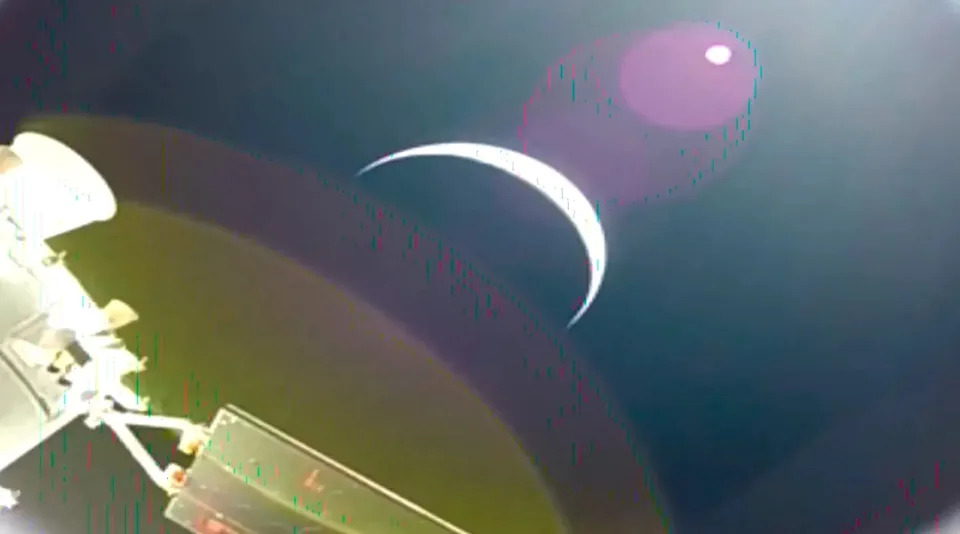
Earth’s crescent is seen from a solar array camera on the Orion spacecraft on the first flight day of the Artemis II mission.
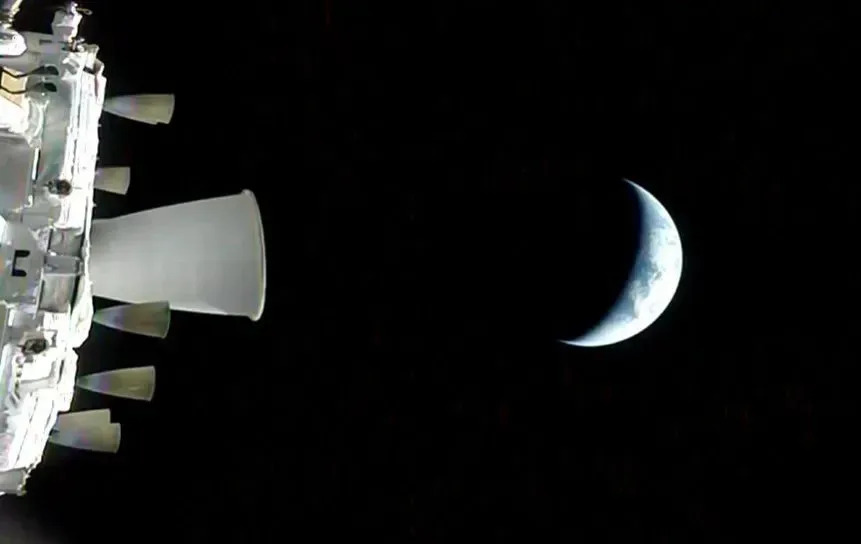
A view of the Earth from NASA’s Orion spacecraft as it orbits above the planet during the Artemis II test flight.
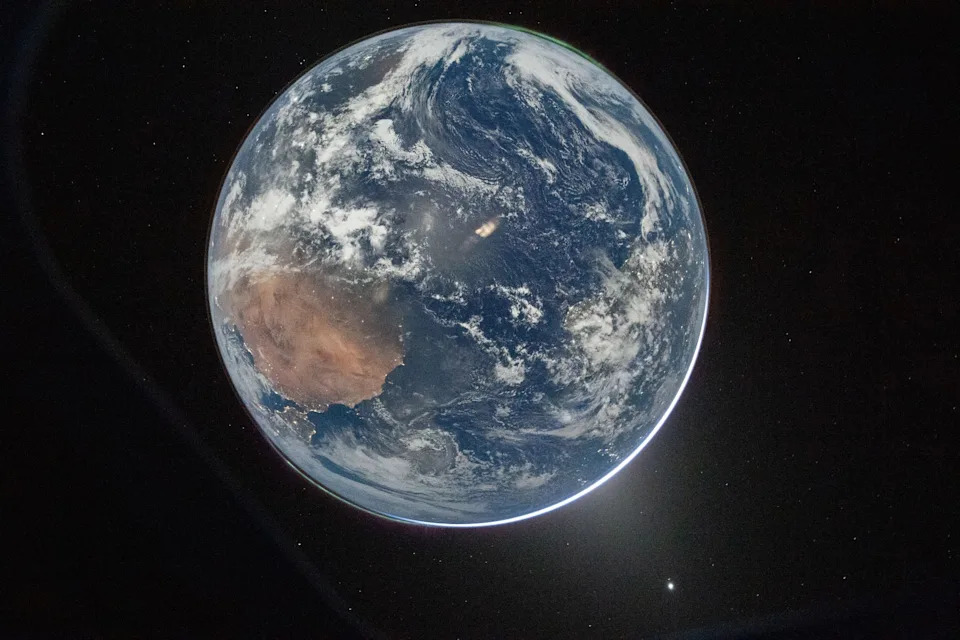
In an image posted by NASA on April 3, 2026, shows a full disk image of Earth, as seen from the Orion capsule. The planet is pale blue, swirling with white clouds and glowing slightly lighter blue in places from reflected light. From the lower left, a large brown landmass is Africa, with the Iberian peninsula twinkling with lights just where the planet curves. In the upper right, aurora glow in a thin green glow, just barely separated from the planet’s surface. Earth is set against the black of space.
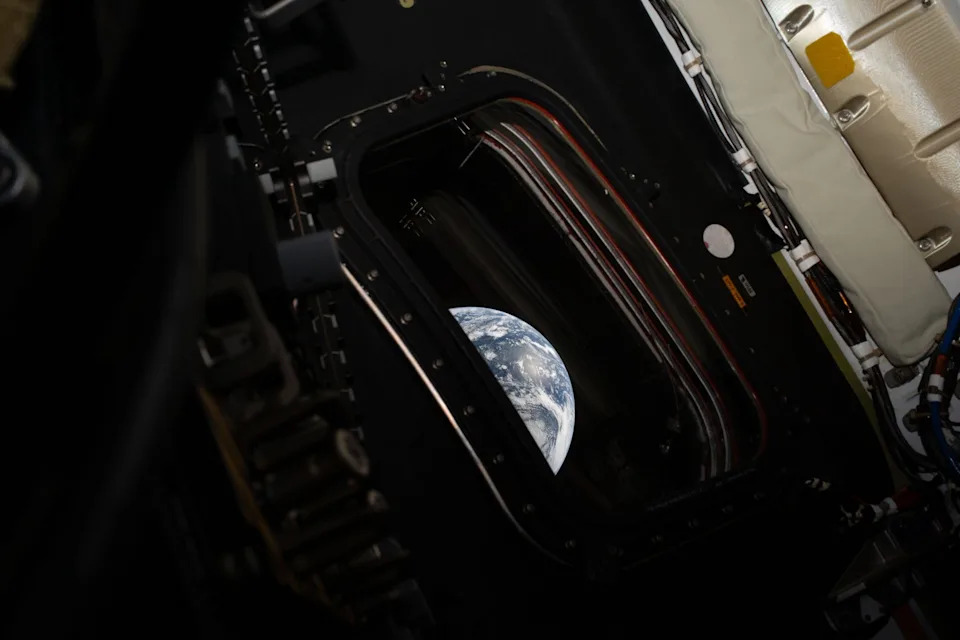
In an image posted by NASA on April 3, 2026, One-third of Earth is seen through the Orion capsule window as the NASA Artemis II mission continues towards the moon.
Although Earth only fills a fraction of the image it is the brightest object in the image. The capsule window is surrounded by a thick frame held in place with bolts. It is dark in the capsule, but the outlines of straps and various components of the capsule are visible.
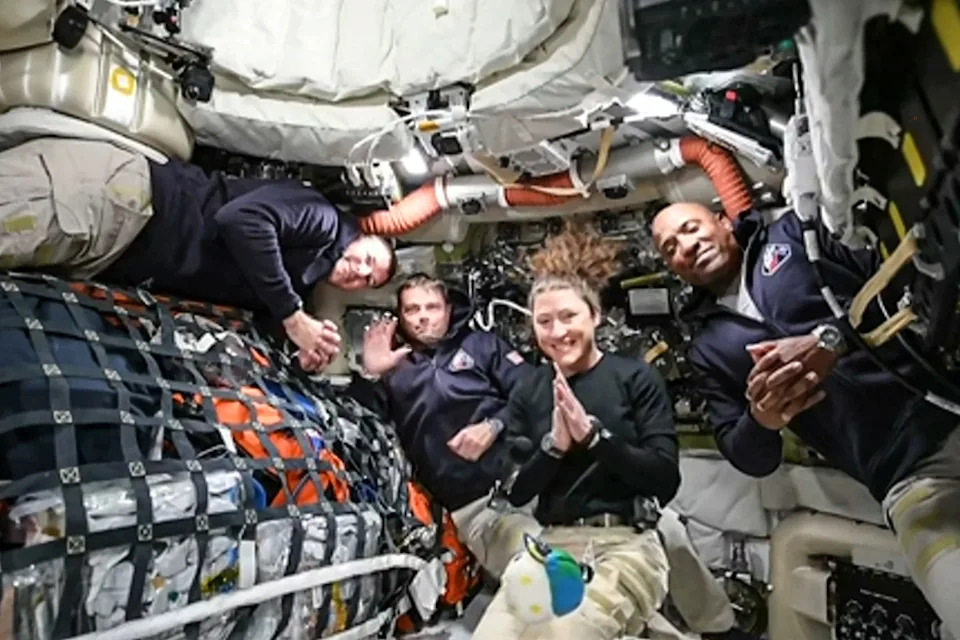
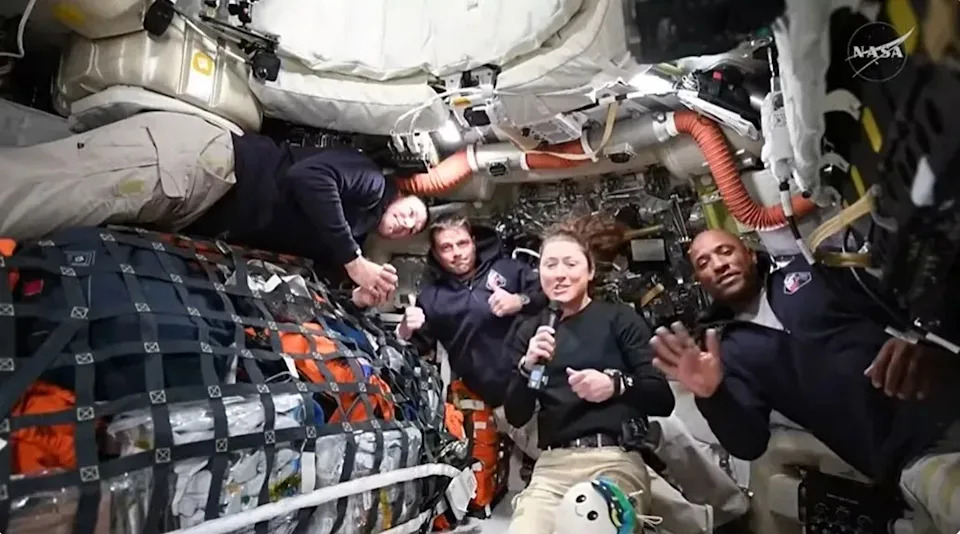
This screen grab from NASA's feed released on April 3, 2026, shows the four Artemis II crew members (L-R) Canadian Space Agency (CSA) astronaut Jeremy Hansen, Artemis II mission specialist, NASA astronauts Reid Wiseman, Artemis II commander, Christina Koch, Artemis II mission specialist and Victor Glover, Artemis II pilot as they head to orbit the Moon for the first time in more than half a century.
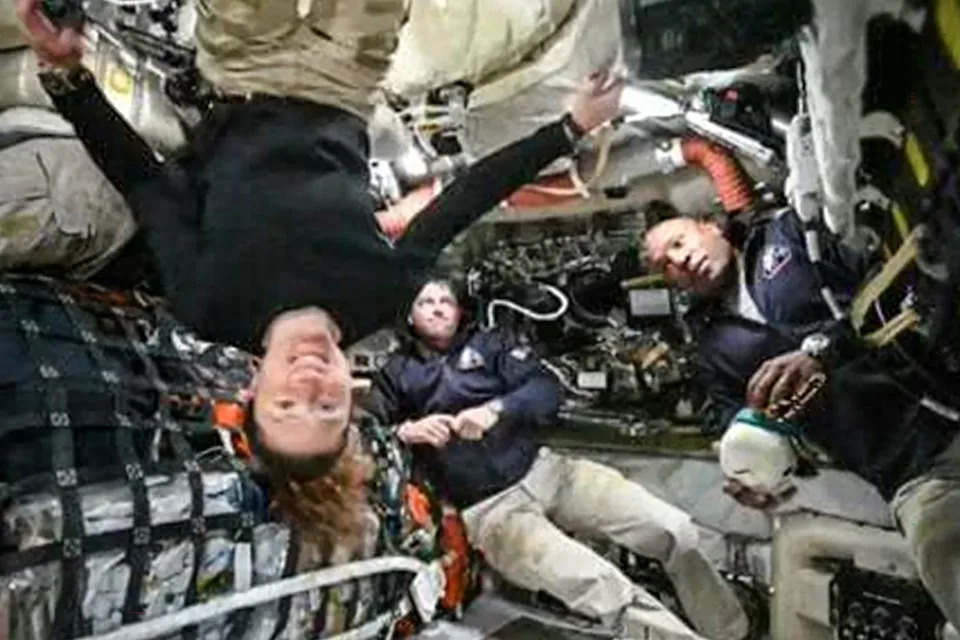
This screen grab from NASA's feed released on April 3, 2026, shows the four Artemis II crew members (L-R) Canadian Space Agency (CSA) astronaut Jeremy Hansen, Artemis II mission specialist (hidden), NASA astronauts Reid Wiseman, Artemis II commander, Christina Koch, Artemis II mission specialist and Victor Glover, Artemis II pilot as they head to orbit the Moon for the first time in more than half a century.
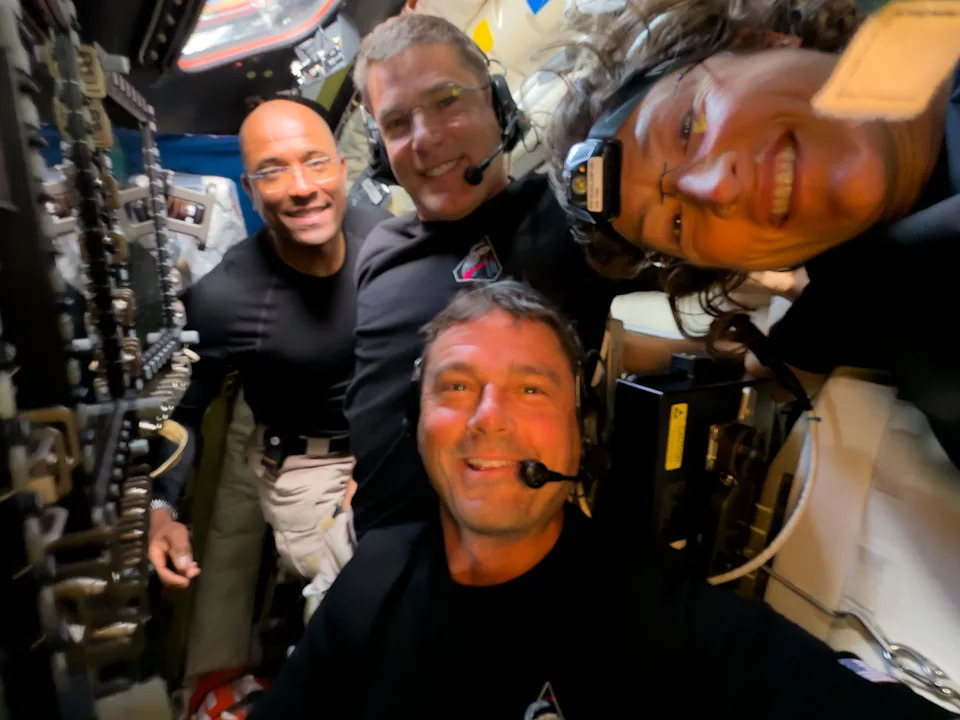
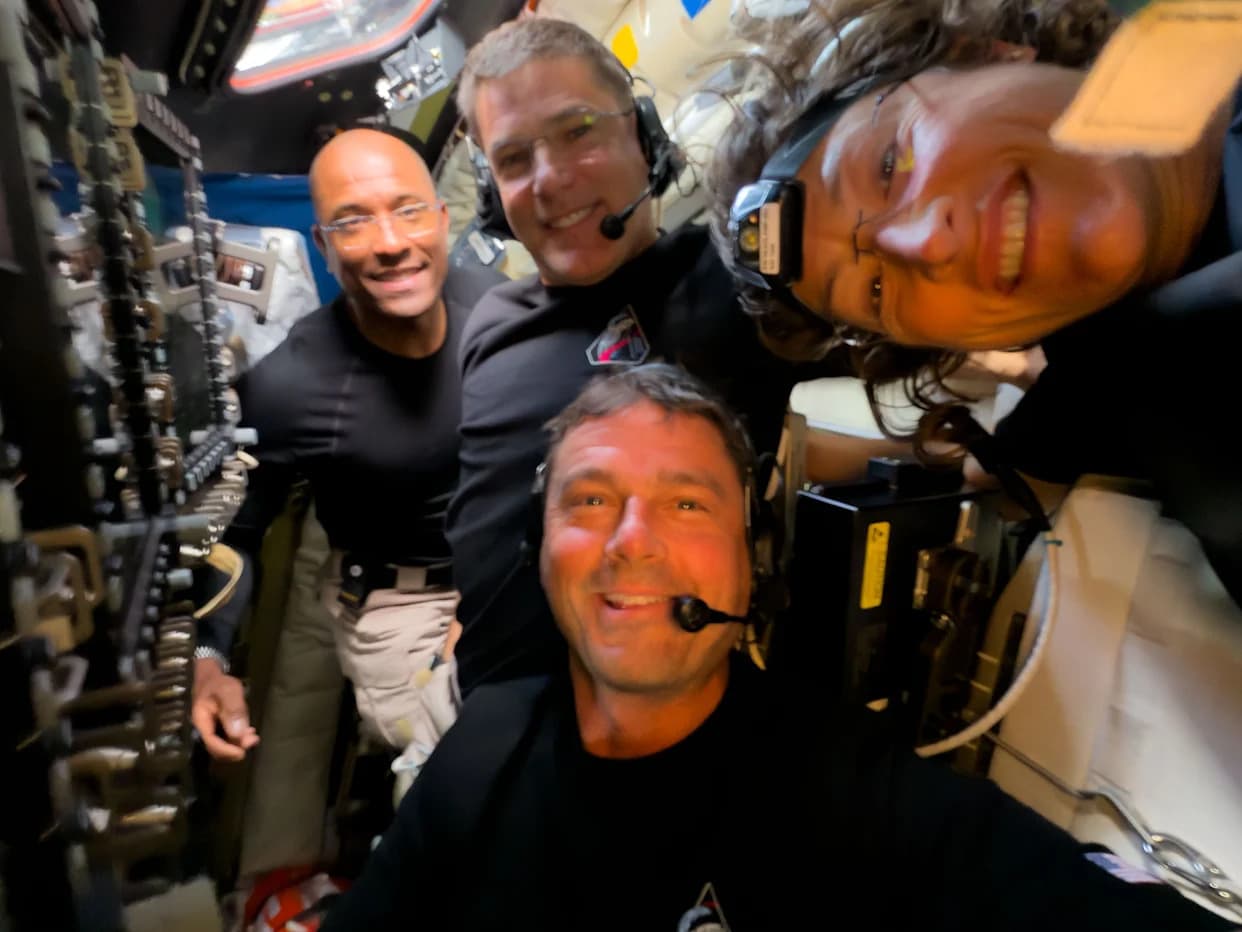
Lunar SelfieMidway through their lunar observation period, the Artemis II crew members, seen here (From left to right: Victor Glover, Jeremy Hansen, Reid Wiseman, and Christina Koch), pause to turn the camera around for a selfie inside the Orion spacecraft.NASA's Artemis II astronautsare among the first government spacefarers to bring personal smartphones to space.
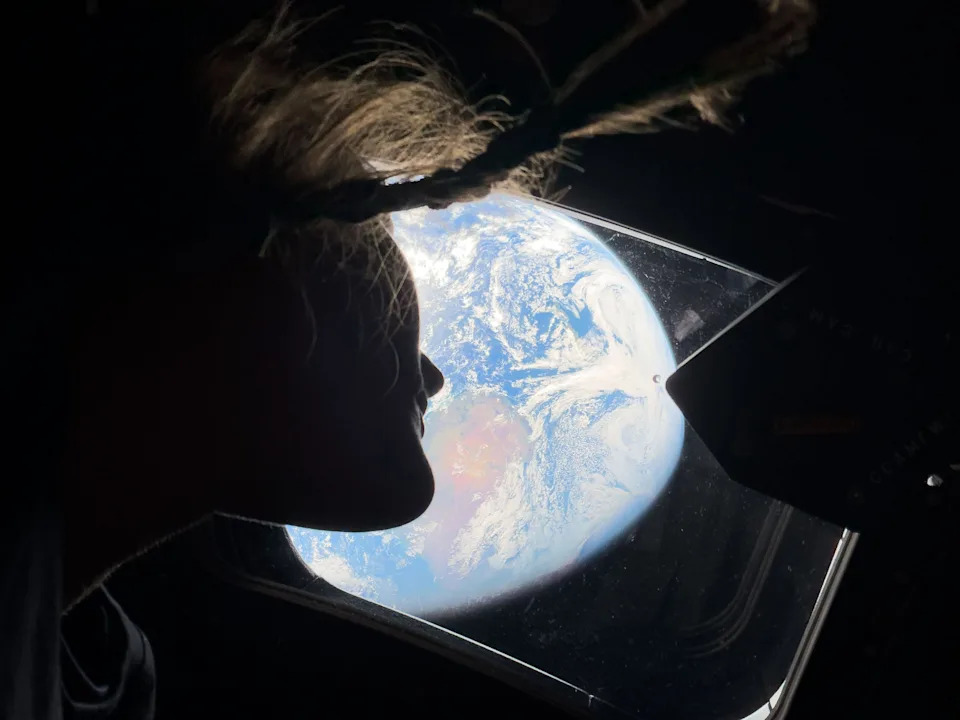
Spaceship EarthNASA astronaut and Artemis II mission specialist Christina Koch peers out of one of the Orion spacecraft's main cabin windows, looking back at Earth, as the crew travels towards the Moon.
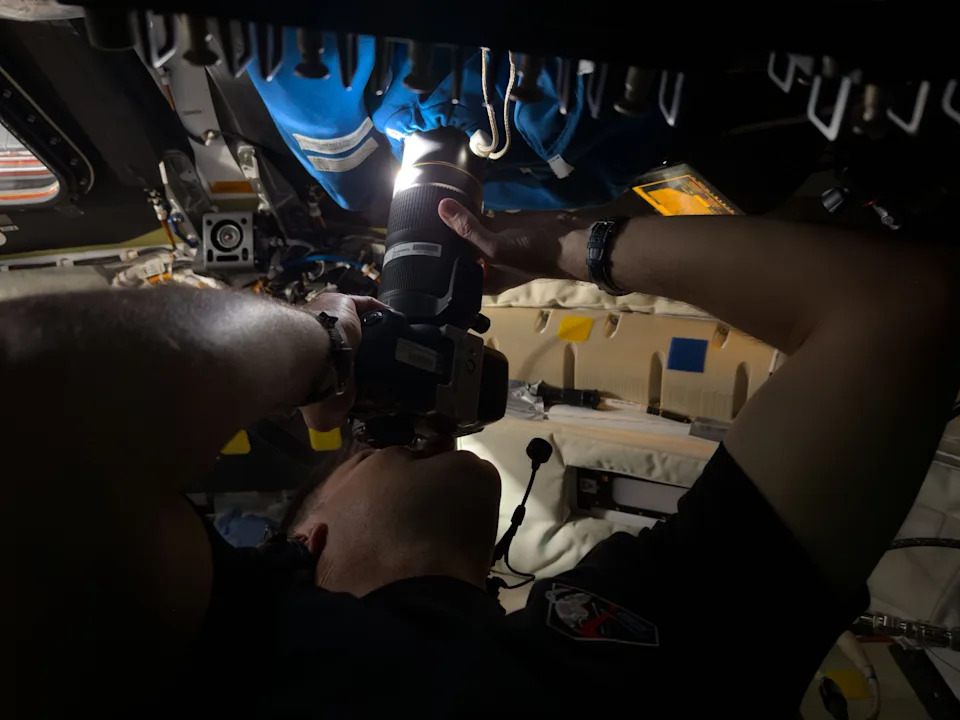
Photographer at WorkAstronaut Jeremy Hansen captures an image through the camera shroud covering window 2 of the Orion spacecraft. The camera shroud, essentially a curtain with a hole for the lens to pass through, is used to prevent light from the cabin from reflecting on the windowpanes.
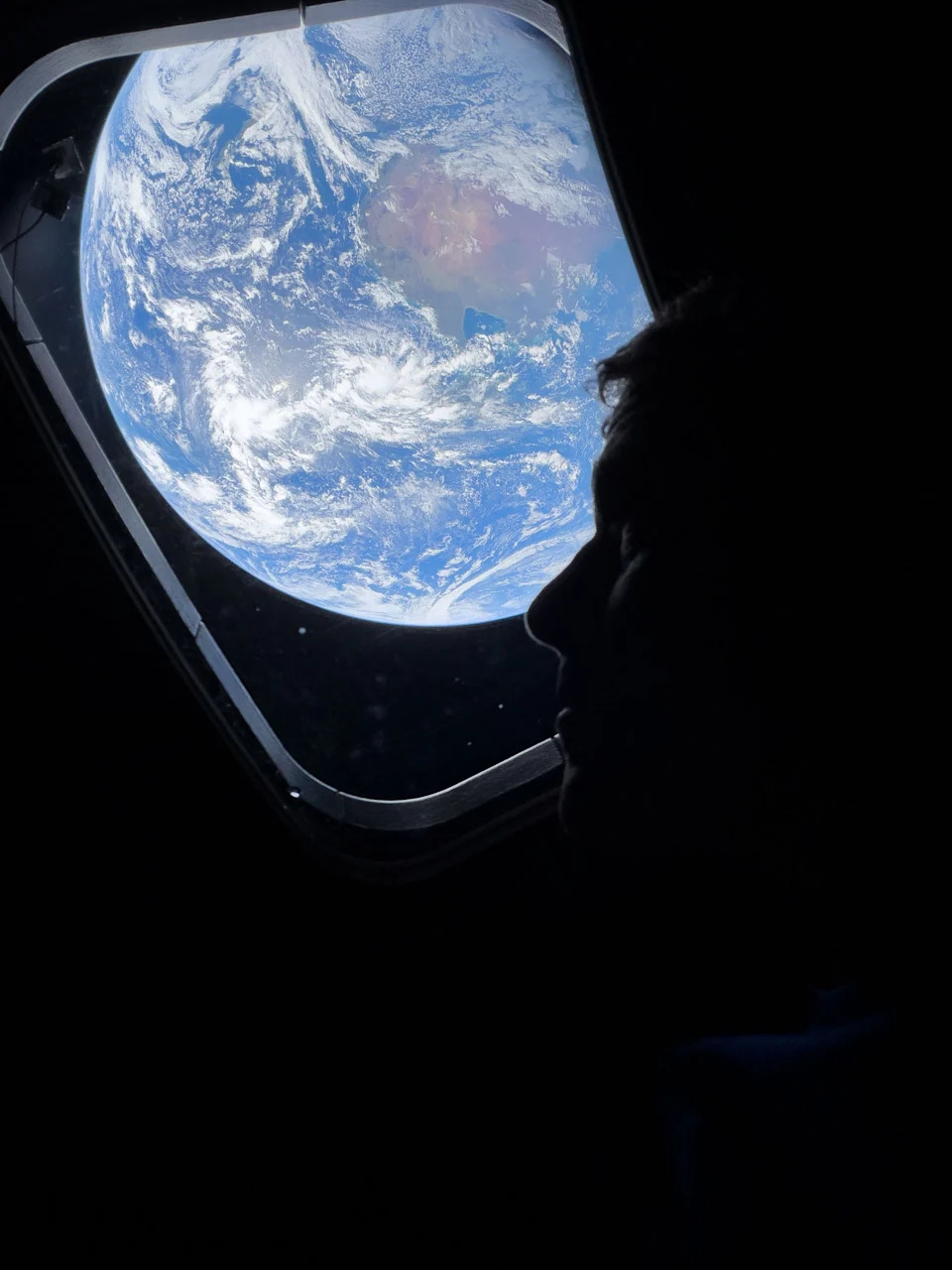
Home, Seen from OrionNASA astronaut and Artemis II Commander Reid Wiseman peers out of one of the Orion spacecraft's main cabin windows, looking back at Earth, as the crew travels towards the Moon.
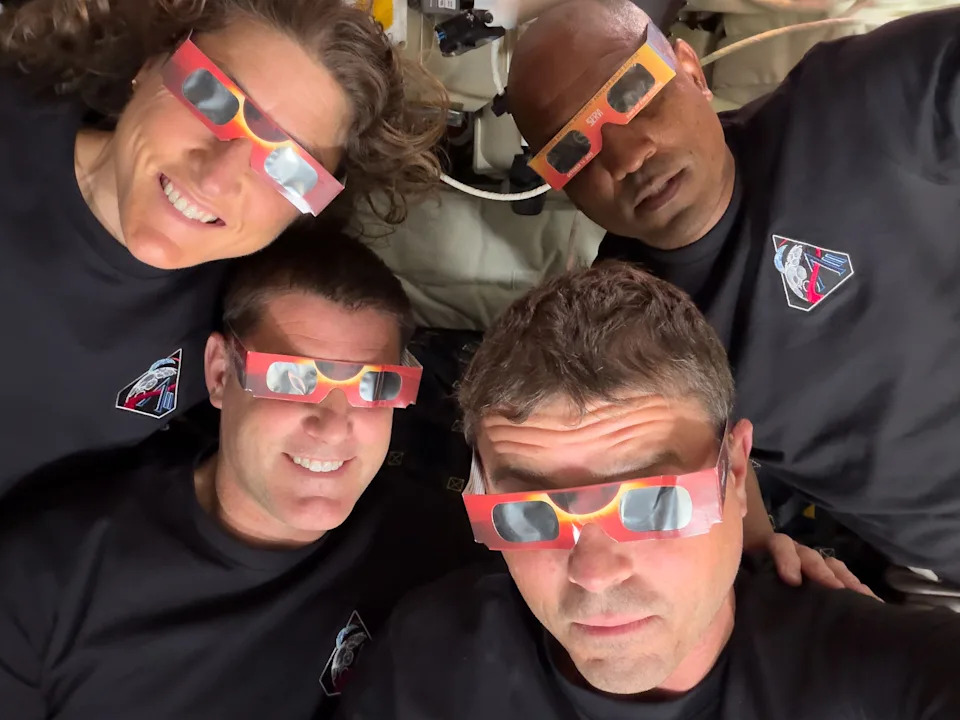
Eclipse SafetyFirst The Artemis II crew – Mission Specialist Christina Koch (top left), Mission Specialist Jeremy Hansen (bottom left), Commander Reid Wiseman (bottom right), and Pilot Victor Glover (top right) – uses eclipse viewers, identical to what NASA produced for the 2023 annular eclipse and 2024 total solar eclipse, to protect their eyes at key moments during the solar eclipse they experienced during their lunar flyby. This was the first use of eclipse glasses at the Moon to safely view a solar eclipse.
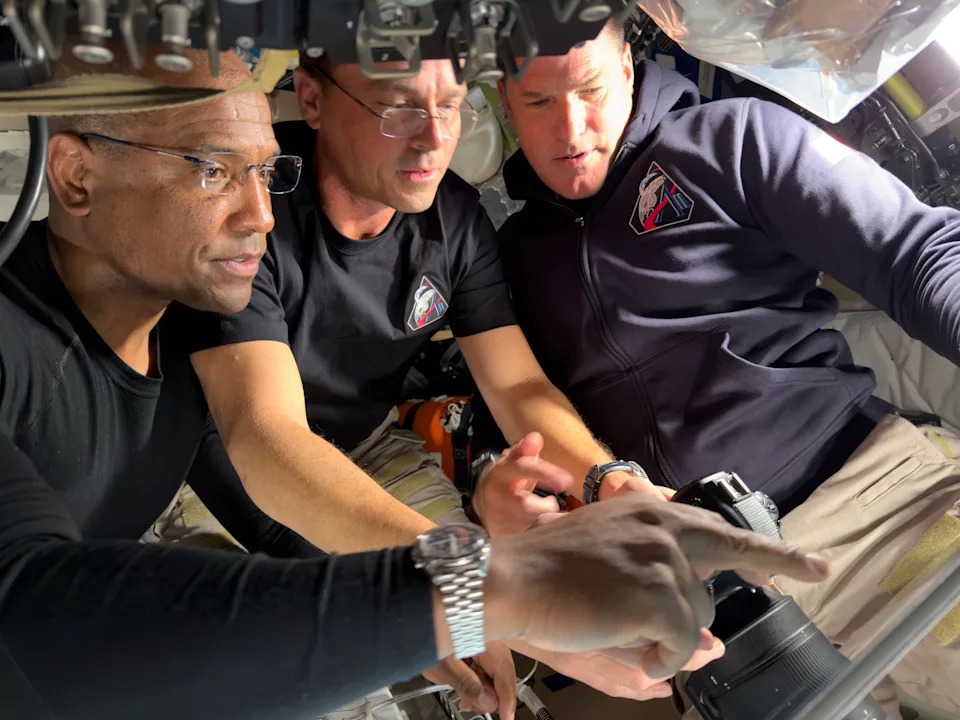
Final Flyby PreparationsArtemis II Pilot Victor Glover (Left), Commander Reid Wiseman (Center), and Mission Specialist Jeremy Hansen (Right) prepare for their journey around the far side of the Moon by configuring their camera equipment shortly before beginning their lunar flyby observations.
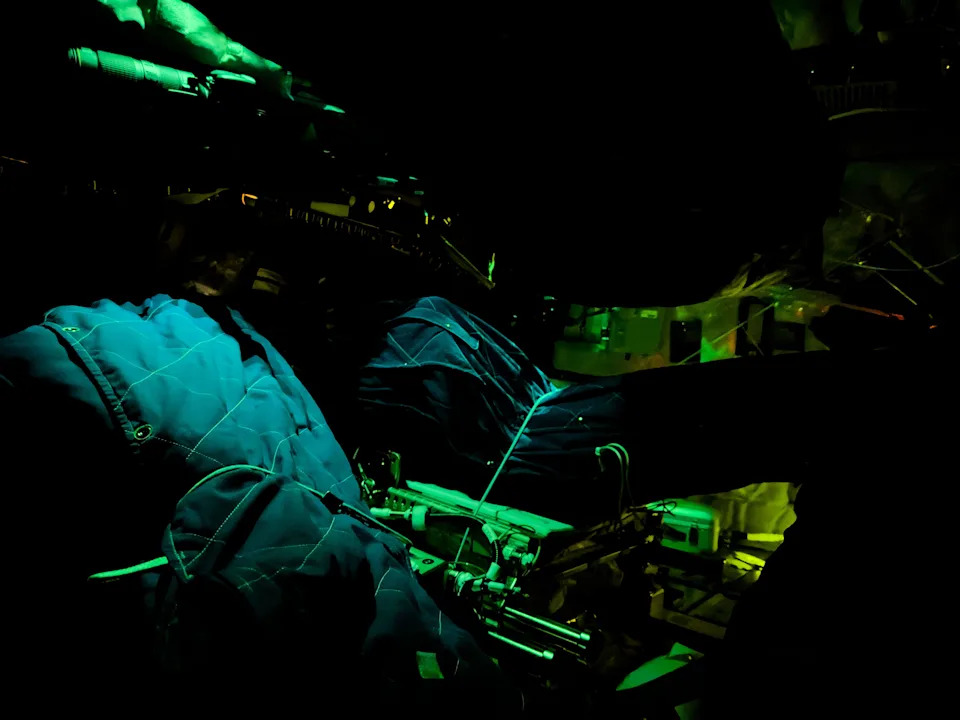
Rest Before Lunar FlybyArtemis II crewmember sleeping bags are illuminated inside the Orion spacecraft on Flight Day 5 of the mission and ahead of the crew's lunar flyby on April 6, 2026.
Pomozite nam da budemo bolji.