Posada Artemis II održava 20‑minutnu virtuelnu konferenciju za novinare 8. aprila u 21:45 ET (03:45 CEST, 9. aprila) dok se vraća ka Zemlji nakon istorijskog preleta Meseca 6. aprila. U konferenciji učestvuju Reid Wiseman, Victor Glover, Christina Koch (NASA) i Jeremy Hansen (CSA), a prenos je na NASA‑in YouTube kanal. Tokom misije posada je dostigla ~252.756 milja (~406.830 km), prišla najbliže ~4.067 milja (~6.547 km) Mesecu i posmatrala totalnu solarnu eklipsu iz perspektive Oriona. Planirani reentry i splashdown su 10. aprila oko 20:07 ET; povratak i evakuacija očekuju se u roku od ~2 sata.
Artemis II danas za medije — virtuelna konferencija posade nakon istorijskog preleta Meseca
Artemis II crew to appear for media call today. Time, how to watch
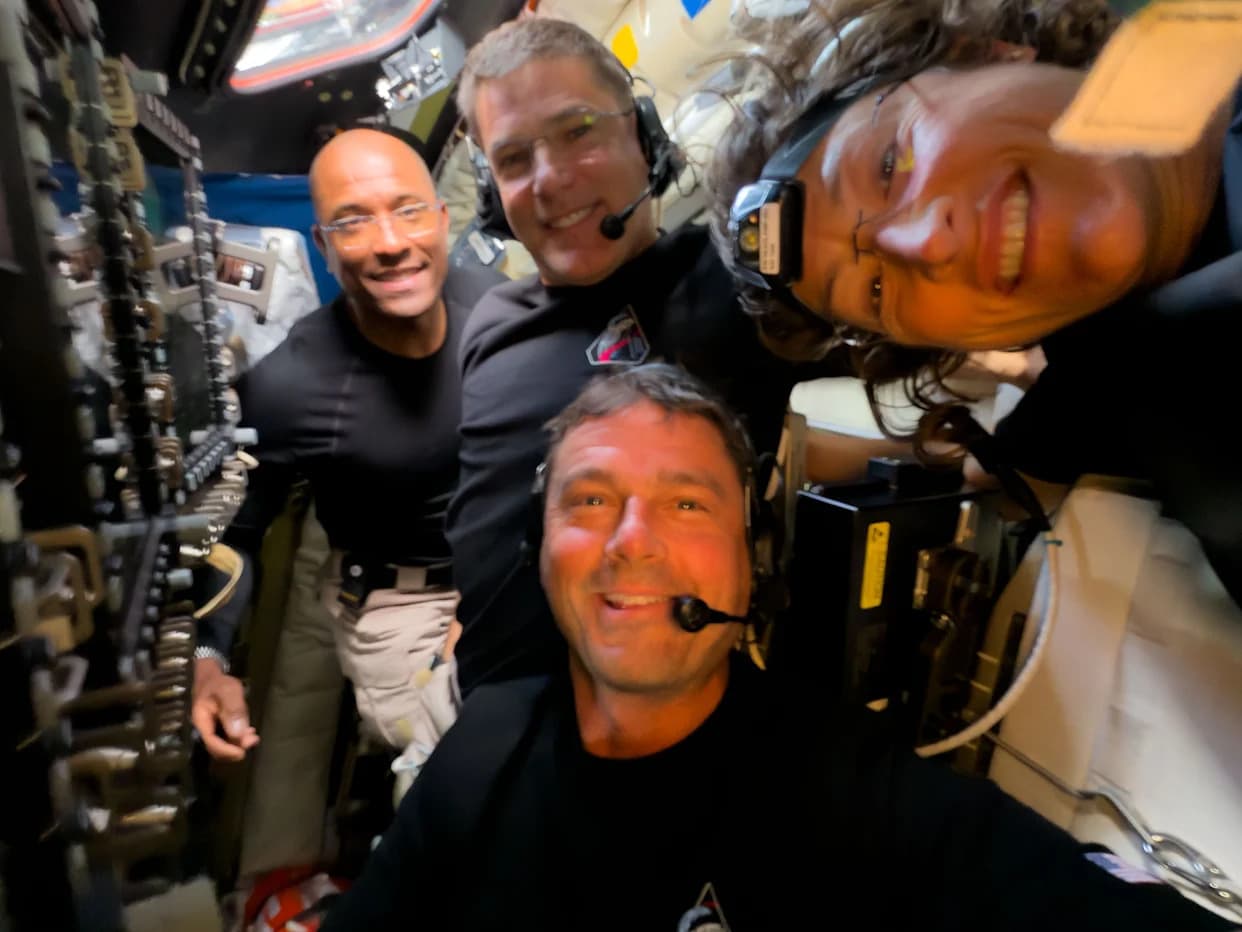
Članovi posade misije Artemis II održaće danas virtuelnu konferenciju za novinare dok se vraćaju ka Zemlji nakon istorijskog preleta Meseca 6. aprila.
Ko govori i kada
Na konferenciji će govoriti komandant Reid Wiseman, pilot Victor Glover, misijski specijalista Christina Koch (svi iz NASA) i Jeremy Hansen iz Canadian Space Agency (CSA). Događaj je zakazan za 8. april u 21:45 po istočnom vremenu (ET) — što odgovara 03:45 CEST 9. aprila za čitaoce u Srbiji. Prenos će biti dostupan uživo na NASA-inom YouTube kanalu; događaj nije naveden u rasporedu za NASA+.
Šta su postigli tokom misije
Tokom preleta 6. aprila posada je postavila novi rekord u udaljenosti od Zemlje: letelica je dostigla oko 252.756 milja (~406.830 km) i time oborila rekord iz misije Apollo 13 iz 1970. godine. Tokom najbližeg pristupa, Orion je bio na oko 4.067 milja (~6.547 km) iznad površine Meseca, što je omogućilo posmatranje celog diska i delova daleke strane koje ranije ljudi nisu videli golim okom.
Iz perspektive Orion kapsule astronauti su videli totalnu solarnu eklipsu — događaj koji sa Zemlje nije bio vidljiv — sa približno 54 minuta totaliteta. Posada je zabeležila brojne visoko kvalitetne fotografije i snimke: osvetljeni Mesec, terminator sa dramatičnim senkama, detalje kratera i obrise basena poput Orientale i Hertzsprung, kao i prizore Zemljinog "earthset" nad lunarim limbom.
Fotografije i oprema
Astronauti su koristili profesionalnu foto-opremu i lične pametne telefone za beleženje kadrova. U nekoliko snimaka jasno se vide detalji površine Meseca — tamne lave u centru basena Orientale, krater Vavilov i druge formacije — kao i prizori Zemlje i pomrčine sa jedinstvene perspektive.
Povratak na Zemlju
Orion koristi gravitacioni "slingshot" oko Zemlje kako bi se prirodno vratio u atmosferu bez velike potrošnje pogonskog goriva. Planirani reentry i splashdown su za petak, 10. april, s procenjenim dodirom o vodu oko 20:07 ET (Pacifik, blizu obale San Dijega). Pre reentrija servisni modul će se odvojiti i sagoreti, otkrivajući toplotni štit koji štiti modul sa posadom od temperature od oko 3.000 °F (~1.650 °C). Nakon sletanja, pet narandžastih airbaga pomoći će da se kapsula postavi uspravno; očekuje se evakuacija i ukrcavanje posade na američki vojni brod za spasavanje u roku od oko dva sata.
Zašto je važno
Artemis II je prvi let sa ljudskom posadom u okviru višemilijardnog Artemis programa i predstavlja presudan korak u cilju ponovnog uspostavljanja ljudske prisutnosti na Mesecu i stvaranja osnove za buduće misije ka Marsu. Konferencija će pružiti najnovije informacije iz prve ruke i odgovore posade na pitanja o naučnim posmatranjima, iskustvima i narednim koracima misije.
Autor originalnog izveštaja: Eric Lagatta, USA TODAY. Izveštaj je adaptiran i preveden za srpsku publiku.
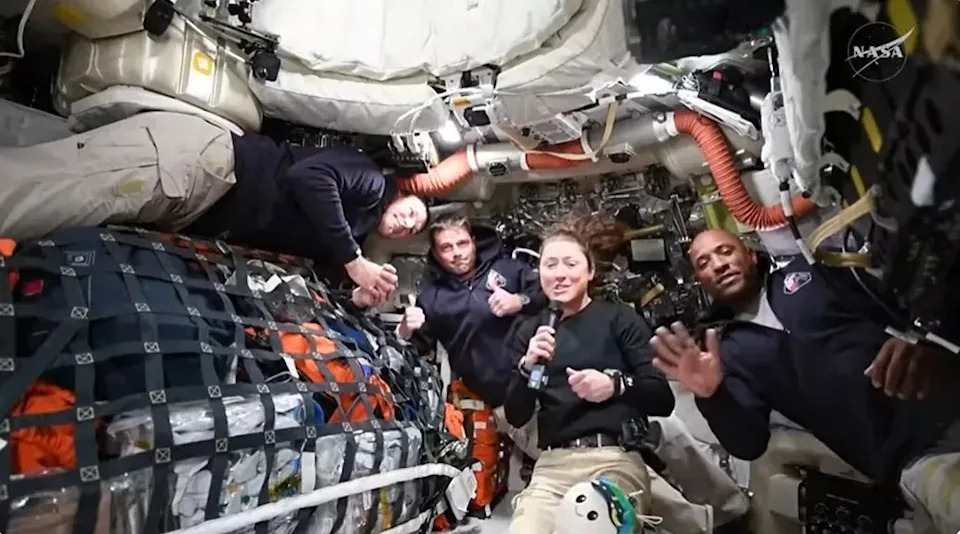
Artemis II crew members Jeremy Hansen, Reid Wiseman, Christina Koch, and Victor Glover answer questions from reporters during the first downlink event of their mission.
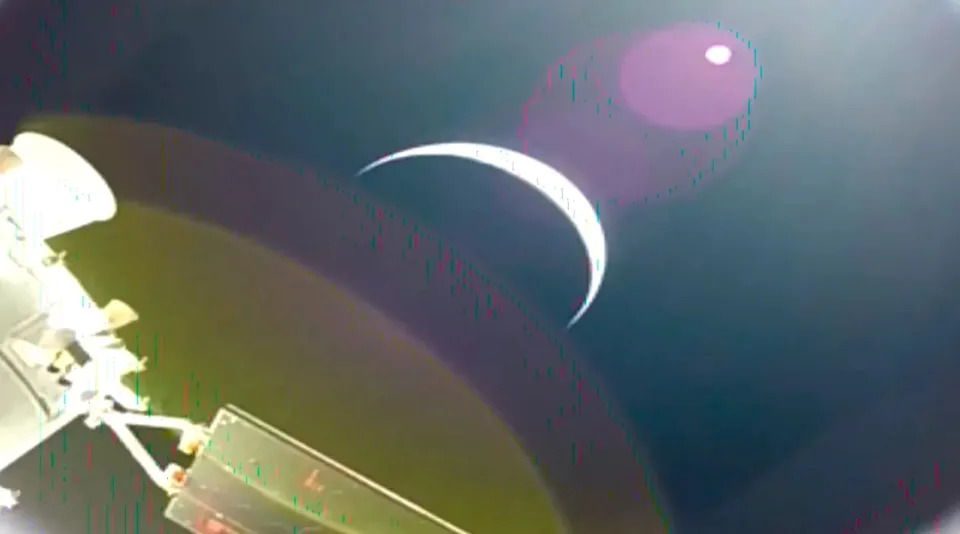
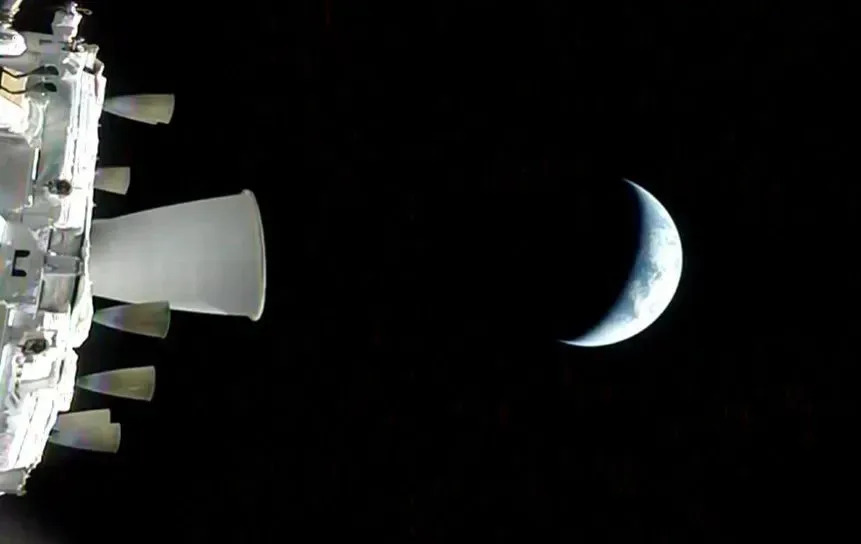
Earth’s crescent is seen from a solar array camera on the Orion spacecraft on the first flight day of the Artemis II mission.
A view of the Earth from NASA’s Orion spacecraft as it orbits above the planet during the Artemis II test flight.
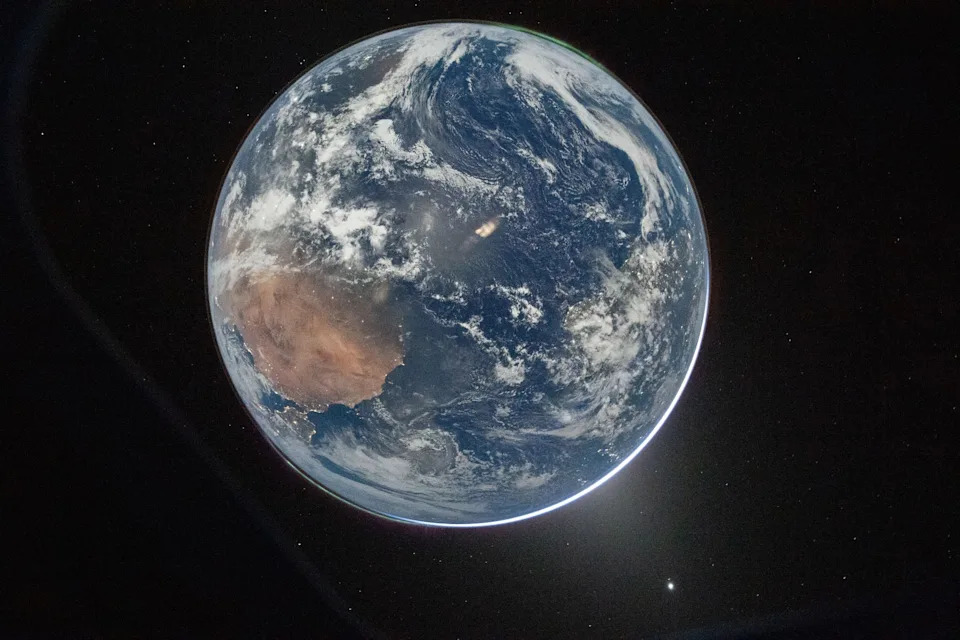
In an image posted by NASA on April 3, 2026, shows a full disk image of Earth, as seen from the Orion capsule. The planet is pale blue, swirling with white clouds and glowing slightly lighter blue in places from reflected light. From the lower left, a large brown landmass is Africa, with the Iberian peninsula twinkling with lights just where the planet curves. In the upper right, aurora glow in a thin green glow, just barely separated from the planet’s surface. Earth is set against the black of space.
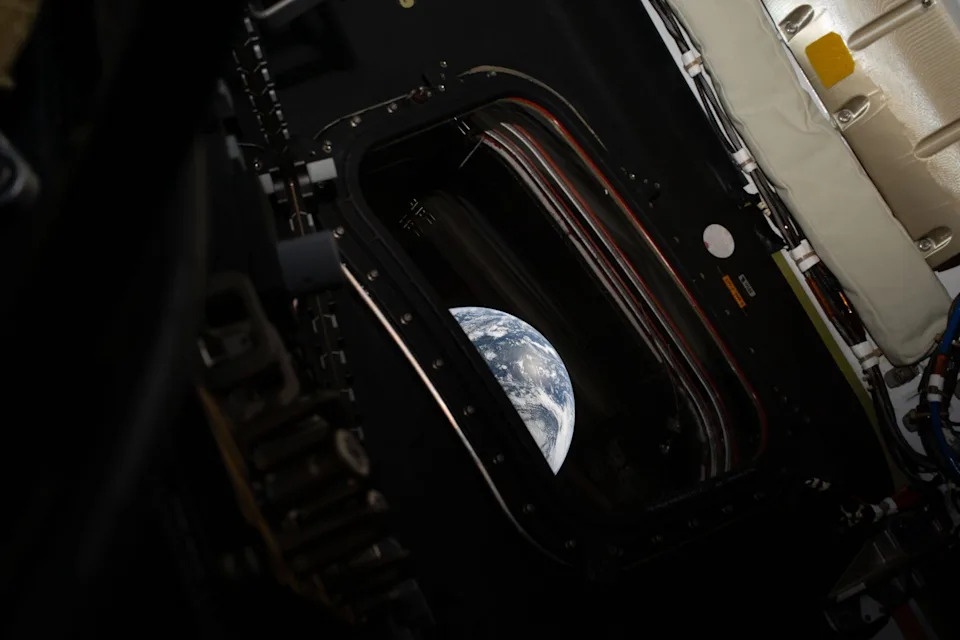
In an image posted by NASA on April 3, 2026, One-third of Earth is seen through the Orion capsule window as the NASA Artemis II mission continues towards the moon.
Although Earth only fills a fraction of the image it is the brightest object in the image. The capsule window is surrounded by a thick frame held in place with bolts. It is dark in the capsule, but the outlines of straps and various components of the capsule are visible.
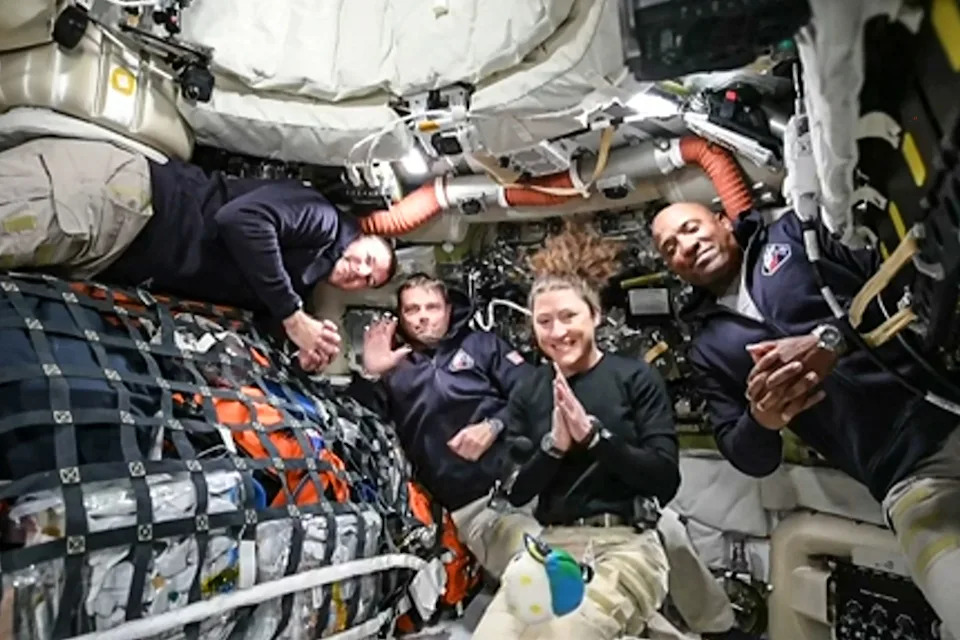
This screen grab from NASA's feed released on April 3, 2026, shows the four Artemis II crew members (L-R) Canadian Space Agency (CSA) astronaut Jeremy Hansen, Artemis II mission specialist, NASA astronauts Reid Wiseman, Artemis II commander, Christina Koch, Artemis II mission specialist and Victor Glover, Artemis II pilot as they head to orbit the Moon for the first time in more than half a century.
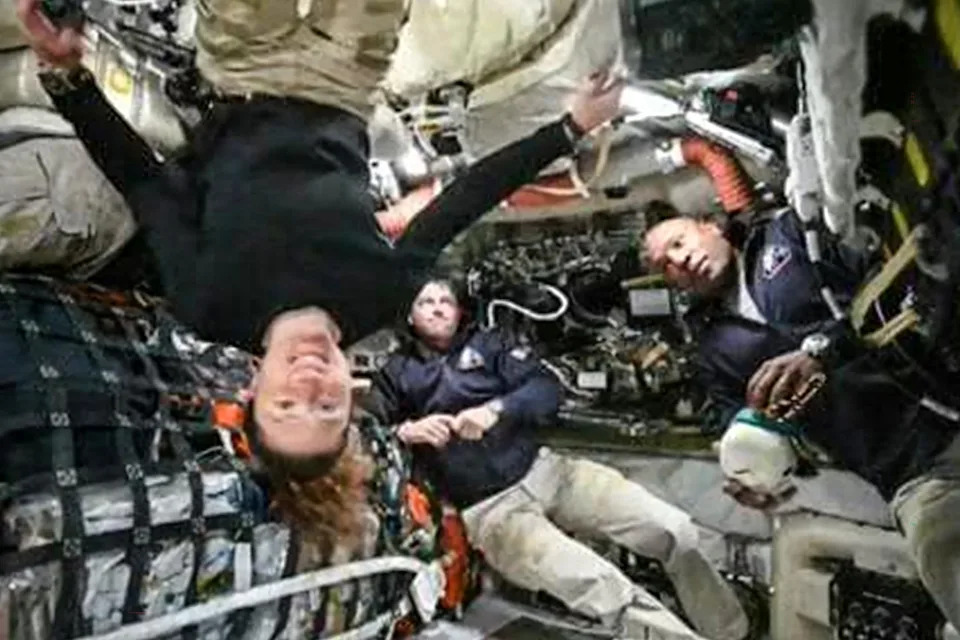
This screen grab from NASA's feed released on April 3, 2026, shows the four Artemis II crew members (L-R) Canadian Space Agency (CSA) astronaut Jeremy Hansen, Artemis II mission specialist (hidden), NASA astronauts Reid Wiseman, Artemis II commander, Christina Koch, Artemis II mission specialist and Victor Glover, Artemis II pilot as they head to orbit the Moon for the first time in more than half a century.
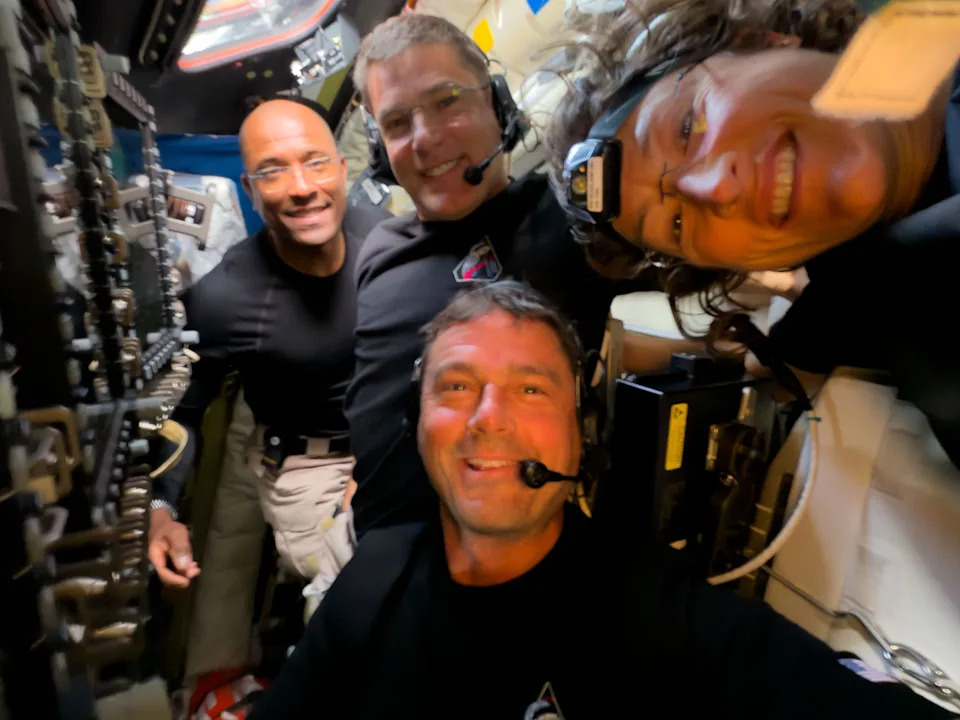
Lunar SelfieMidway through their lunar observation period, the Artemis II crew members, seen here (From left to right: Victor Glover, Jeremy Hansen, Reid Wiseman, and Christina Koch), pause to turn the camera around for a selfie inside the Orion spacecraft.NASA's Artemis II astronautsare among the first government spacefarers to bring personal smartphones to space.
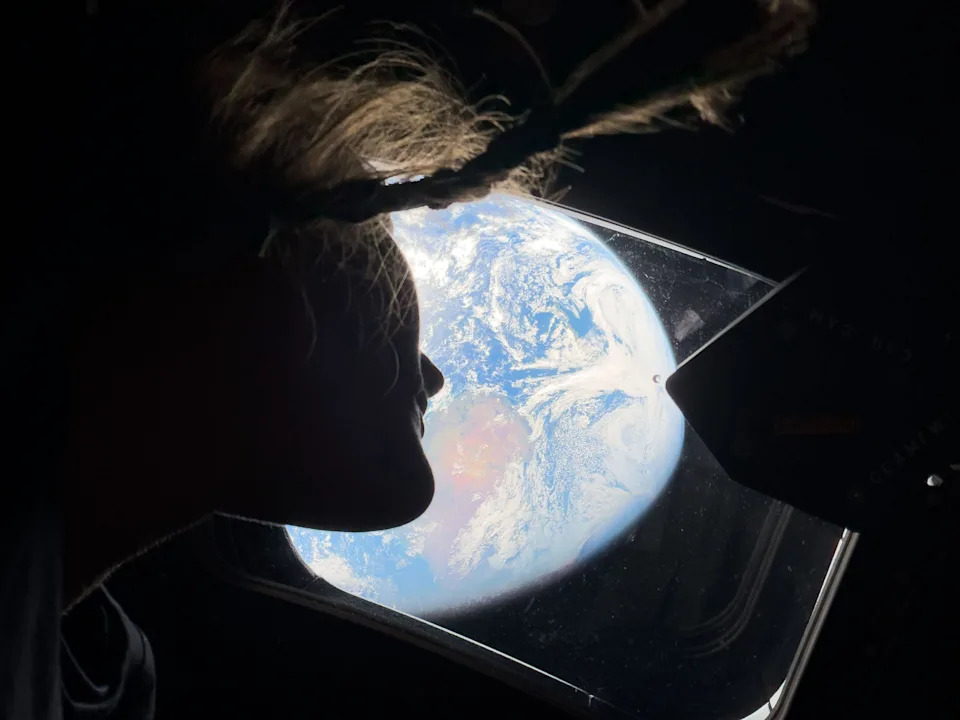
Spaceship EarthNASA astronaut and Artemis II mission specialist Christina Koch peers out of one of the Orion spacecraft's main cabin windows, looking back at Earth, as the crew travels towards the Moon.
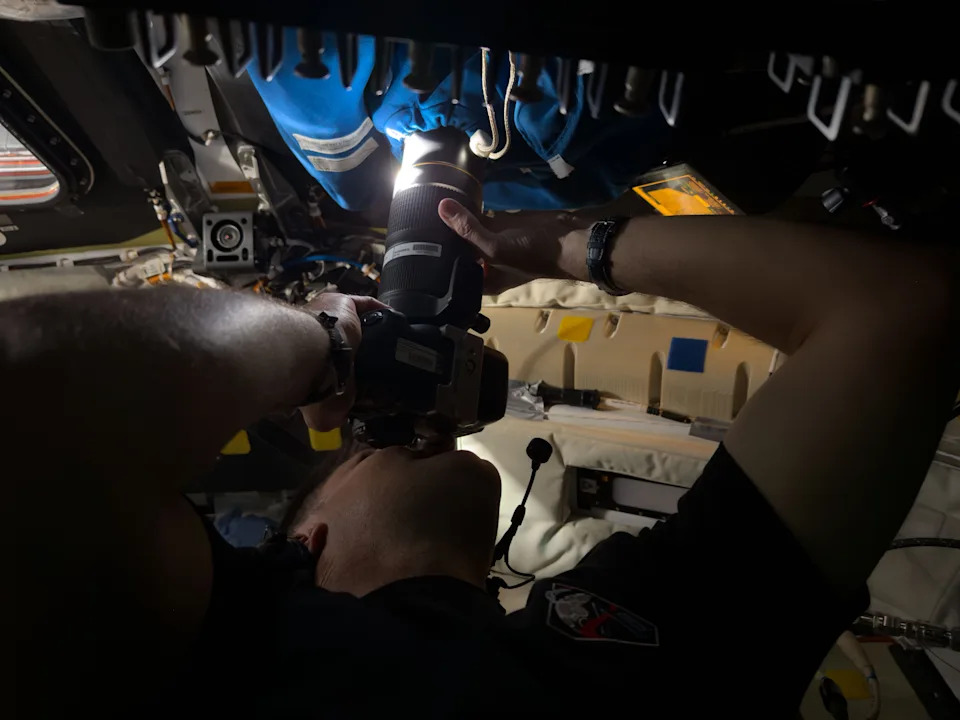
Photographer at WorkAstronaut Jeremy Hansen captures an image through the camera shroud covering window 2 of the Orion spacecraft. The camera shroud, essentially a curtain with a hole for the lens to pass through, is used to prevent light from the cabin from reflecting on the windowpanes.
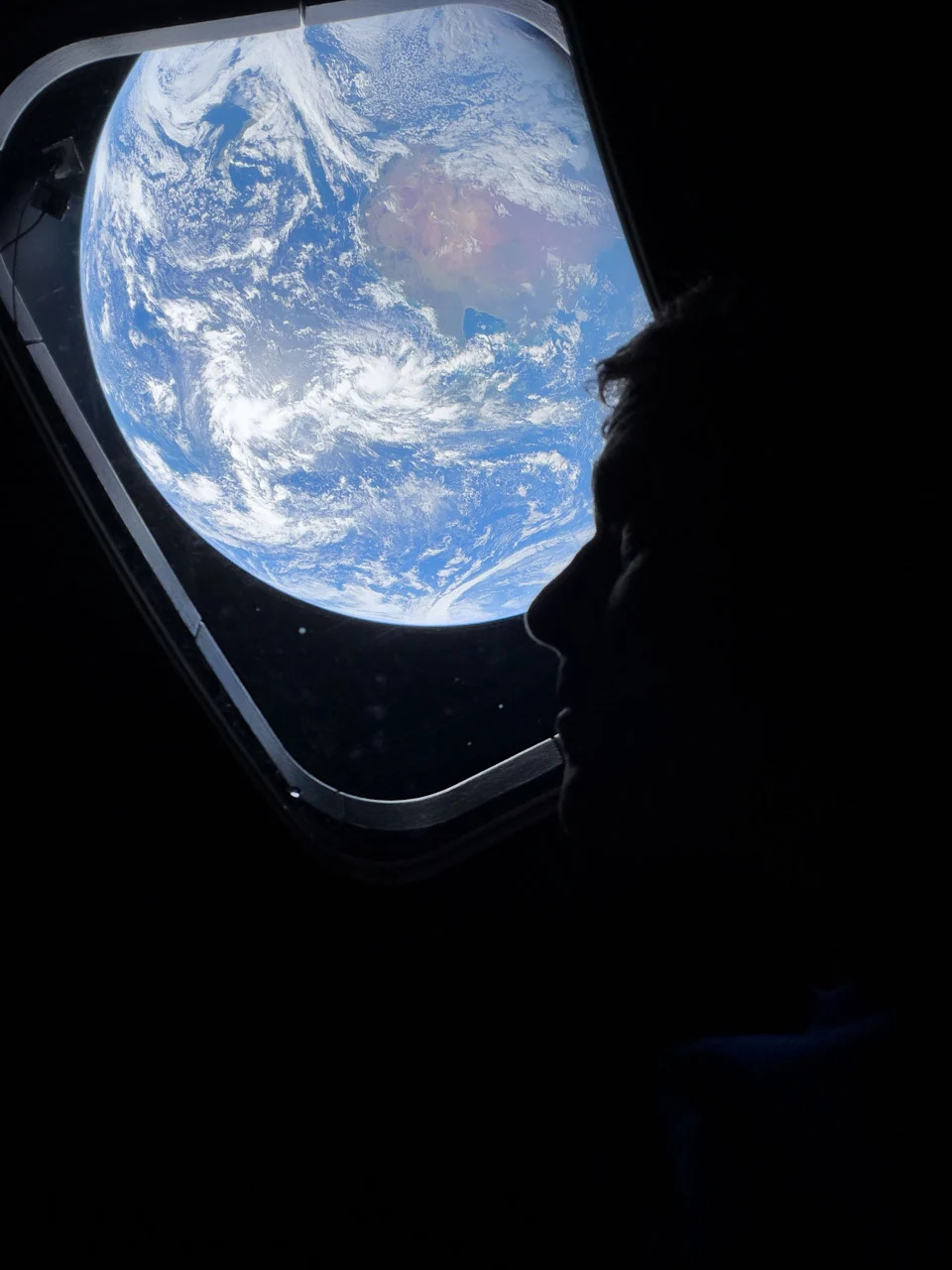
Home, Seen from OrionNASA astronaut and Artemis II Commander Reid Wiseman peers out of one of the Orion spacecraft's main cabin windows, looking back at Earth, as the crew travels towards the Moon.
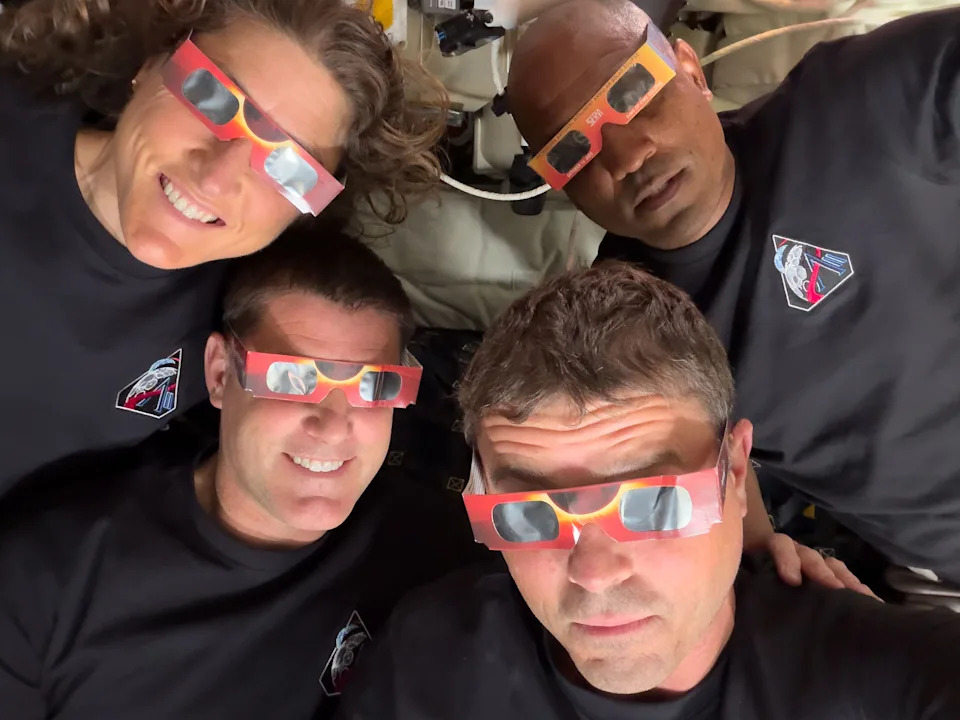
Eclipse SafetyFirst The Artemis II crew – Mission Specialist Christina Koch (top left), Mission Specialist Jeremy Hansen (bottom left), Commander Reid Wiseman (bottom right), and Pilot Victor Glover (top right) – uses eclipse viewers, identical to what NASA produced for the 2023 annular eclipse and 2024 total solar eclipse, to protect their eyes at key moments during the solar eclipse they experienced during their lunar flyby. This was the first use of eclipse glasses at the Moon to safely view a solar eclipse.
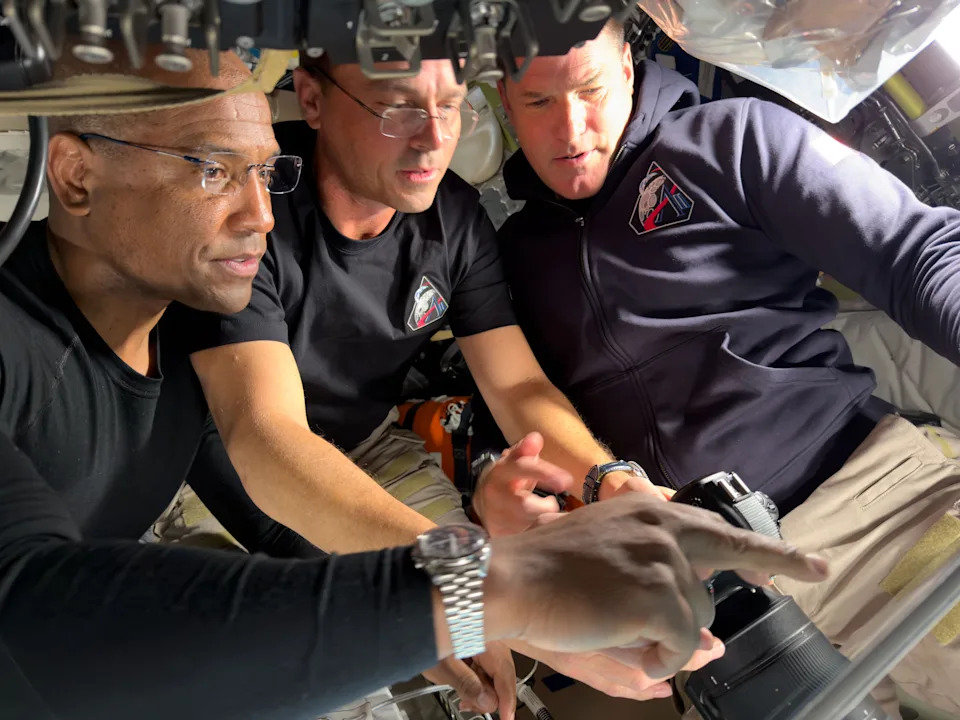
Final Flyby PreparationsArtemis II Pilot Victor Glover (Left), Commander Reid Wiseman (Center), and Mission Specialist Jeremy Hansen (Right) prepare for their journey around the far side of the Moon by configuring their camera equipment shortly before beginning their lunar flyby observations.
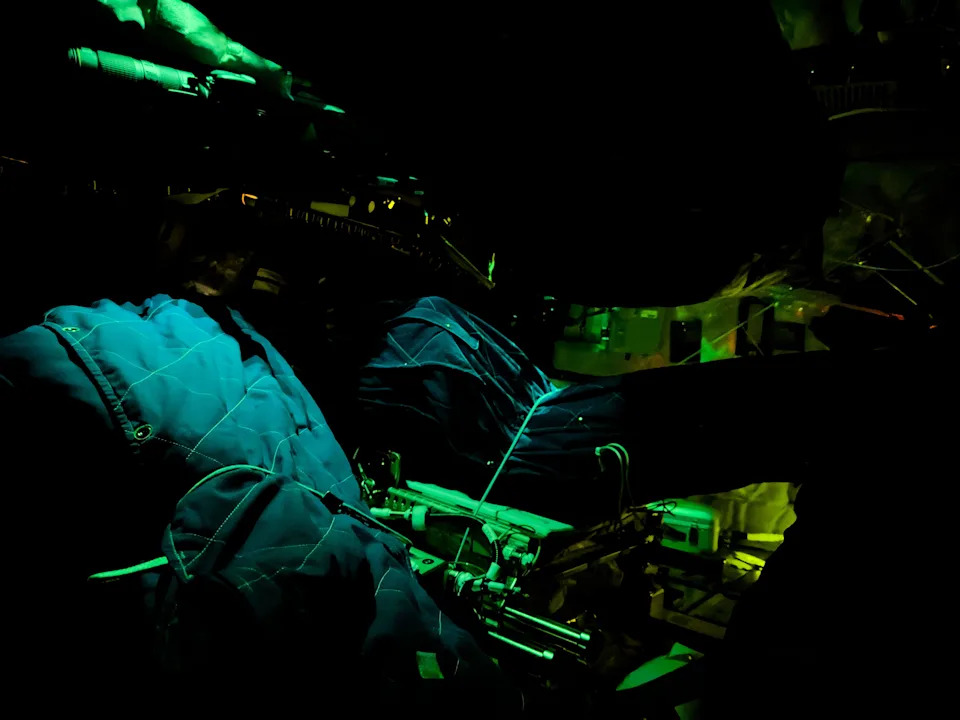
Rest Before Lunar FlybyArtemis II crewmember sleeping bags are illuminated inside the Orion spacecraft on Flight Day 5 of the mission and ahead of the crew's lunar flyby on April 6, 2026.
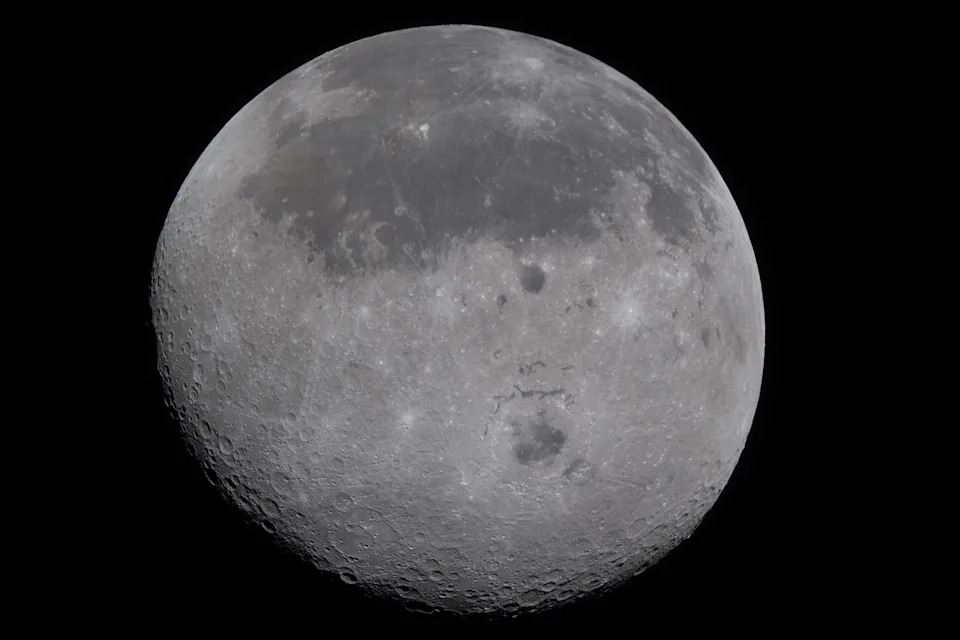
This handout image released byNASAshows a fully illuminated Moon, with the near side at top, dark lava plains, and the Orientale basin, with parts of the far side visible, on April 6, 2026. The four astronauts embarking on NASA's lunar flyby became on April 6 the humans to travel furthest from our planet, as they get set to view areas of the Moon never before seen by the naked eye. The Artemis II team broke the previous record set by 1970's Apollo 13 mission, which they are expected to surpass by approximately 4,105 miles (6,606 kilometers) when they reach this journey's anticipated furthest distance from Earth -- 252,760 miles -- later today.
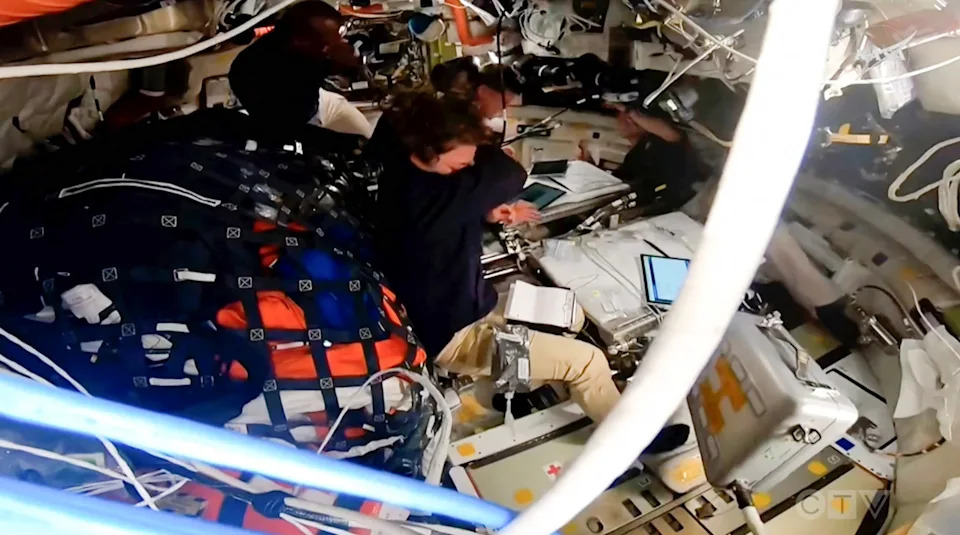
This screengrab from a NASA livestream shows Artemis II crew members Victor Glover, Reid Wiseman, Jeremy Hansen and Christina Koch wiping their tears after naming a lunar crater "Carroll" in honor of Wiseman's late wife, aboard the Orion spacecraft on April 6, 2026. Artemis astronauts at the outer edge of human space travel had an emotional moment April 6 as they named a crater in honor of the deceased wife of mission commander Reid Wiseman. "It's a bright spot on the Moon. And we would like to call it Carroll," Canadian astronaut Jeremy Hansen told a live broadcast. The crater can be seen "at certain times of the Moon's transit around Earth," he said.
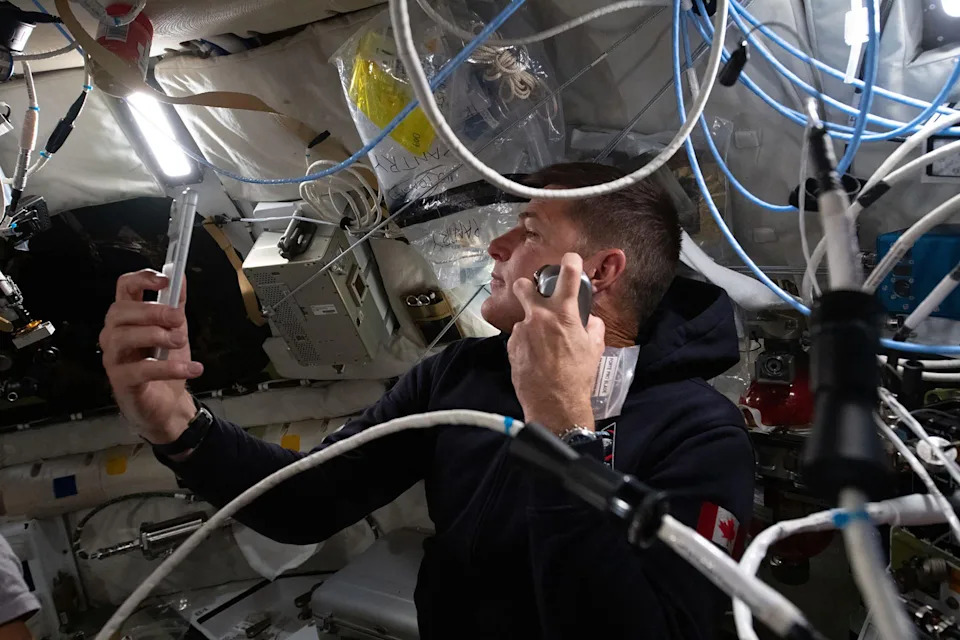
This handout image released by NASA shows Artemis II mission specialist and CSA (Canadian Space Agency) astronaut Jeremy Hansen shaving inside the Orion spacecraft during Flight Day 5 and ahead of the crew's lunar flyby on April 6, 2026. The Artemis astronauts entered the final phase of their run-up to a lunar loop on April 6, a tipping point of sorts that means the Moon's gravity is now having a stronger pull on the spacecraft than Earth's. The Orion capsule will now whip around the Moon, setting the crew up to travel farther from our home planet than any human before.
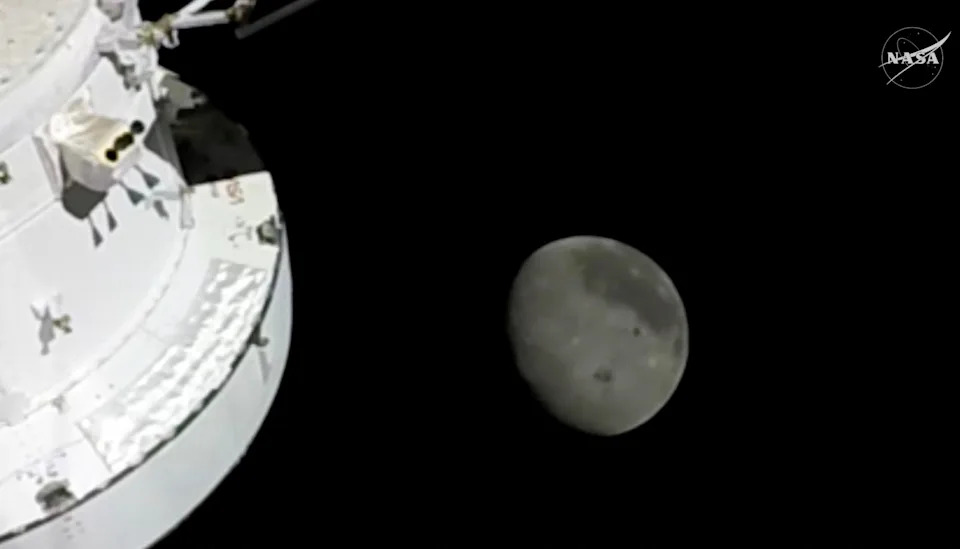
This screengrab from a NASA livestream shows the Orion spacecraft approaching the Moon on April 6, 2026. The four astronauts embarking on NASA's lunar flyby became on April 6 the humans to travel furthest from our planet, as they get set to view areas of the Moon never before seen by the naked eye. The Artemis II team broke the previous record set by 1970's Apollo 13 mission, which they are expected to surpass by approximately 4,105 miles (6,606 kilometers) when they reach this journey's anticipated furthest distance from Earth -- 252,760 miles (406,778 kilometers) -- later today.
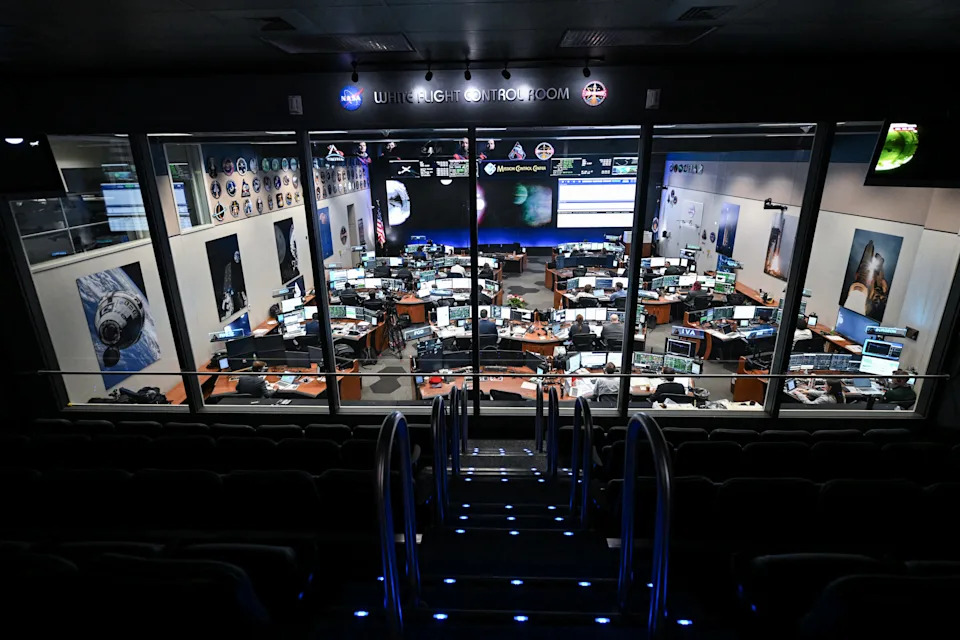
Artemis II flight controllers monitor the Orion spacecraft from the White Flight Control Room at Johnson Space Center in Houston, Texas, on April 6, 2026. The Artemis astronauts entered the final phase of their run-up to a lunar loop on Monday, a tipping point of sorts that means the Moon's gravity is now having a stronger pull on the spacecraft than Earth's. The Orion capsule will now whip around the Moon, setting the crew up to travel farther from our home planet than any human before.
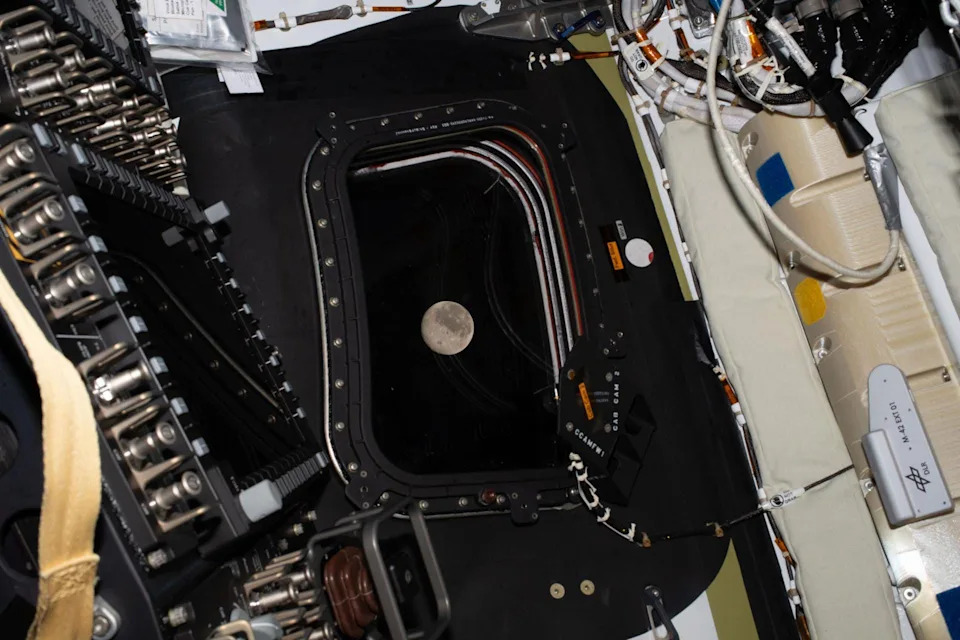
This handout picture by an Artemis II crew member provided by NASA shows the moon through a window of the Orion spacecraft on April 6, 2026. The Artemis astronauts entered the final phase of their run-up to a lunar loop on Monday, a tipping point of sorts that means the Moon's gravity is now having a stronger pull on the spacecraft than Earth's. The Orion capsule will now whip around the Moon, setting the crew up to travel farther from our home planet than any human before.
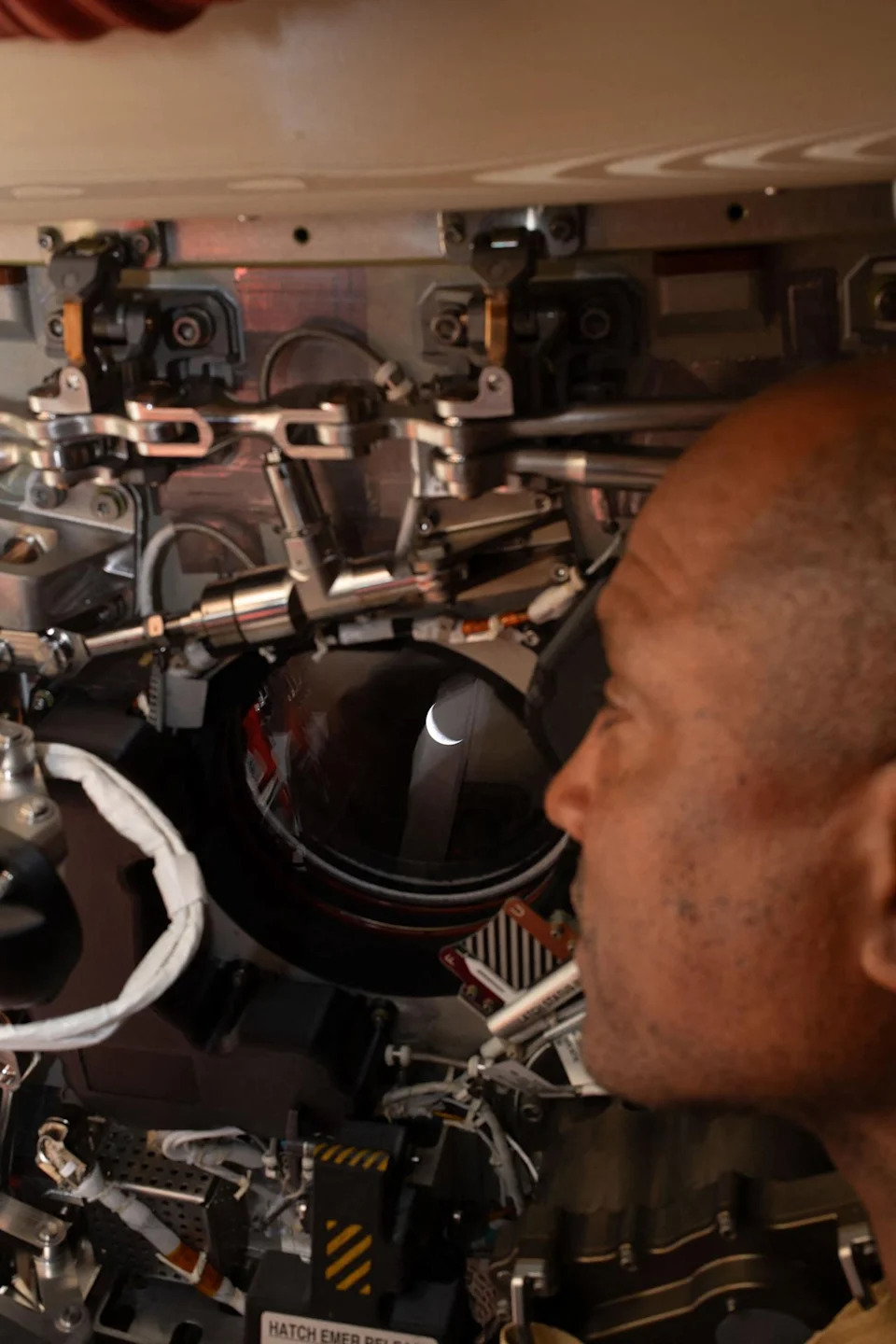
This handout image released by NASA shows Artemis II pilot and NASA astronaut Victor Glover peering out one of the Orion spacecraft's windows looking back at Earth ahead of the crew's lunar flyby on April 6, 2026. The Artemis astronauts entered the final phase of their run-up to a lunar loop on April 6, a tipping point of sorts that means the Moon's gravity is now having a stronger pull on the spacecraft than Earth's. The Orion capsule will now whip around the Moon, setting the crew up to travel farther from our home planet than any human before.
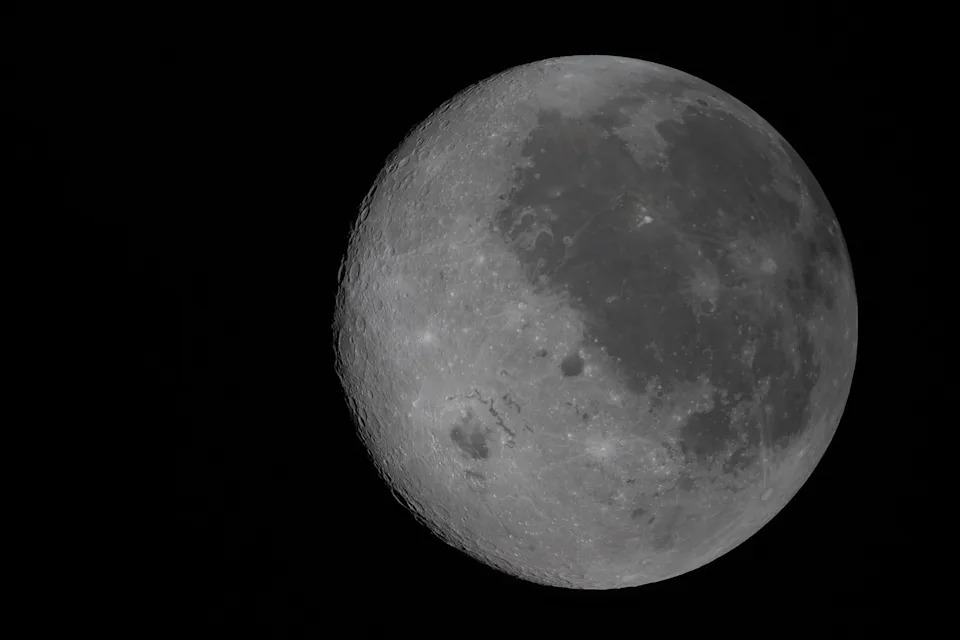
This handout image released by NASA shows a fully illuminated view of the Moon, including the Orientale basin and parts of the far side not visible from Earth, on April 6, 2026. The Artemis astronauts entered the final phase of their run-up to a lunar loop on April 6, a tipping point of sorts that means the Moon's gravity is now having a stronger pull on the spacecraft than Earth's. The Orion capsule will now whip around the Moon, setting the crew up to travel farther from our home planet than any human before.
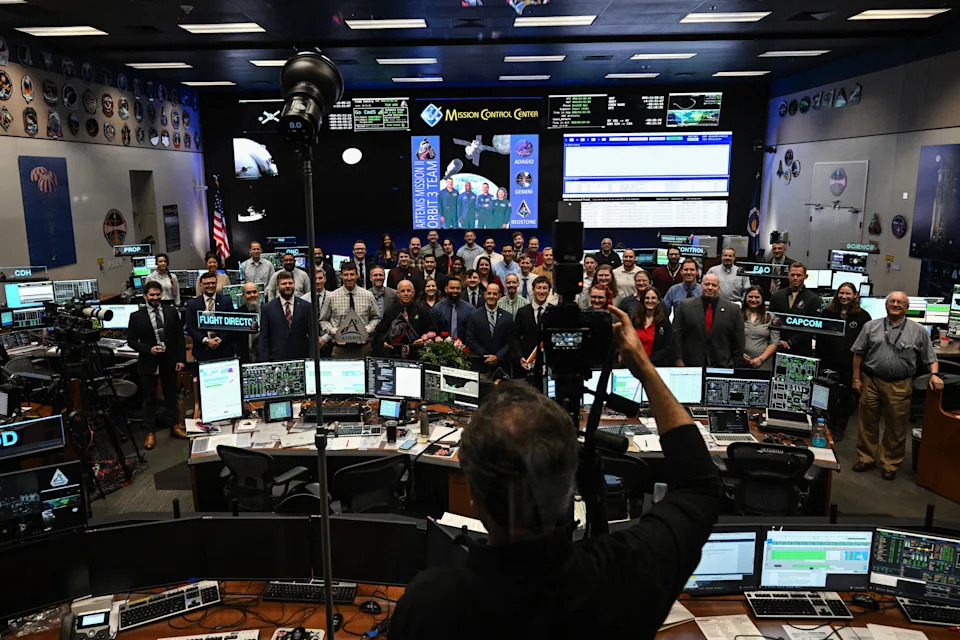
NASA staff pose for a group photo in the White Flight Control Room at Johnson Space Center in Houston, Texas, on April 6, 2026. The Artemis astronauts entered the final phase of their run-up to a lunar loop on Monday, a tipping point of sorts that means the Moon's gravity is now having a stronger pull on the spacecraft than Earth's. The Orion capsule will now whip around the Moon, setting the crew up to travel farther from our home planet than any human before.
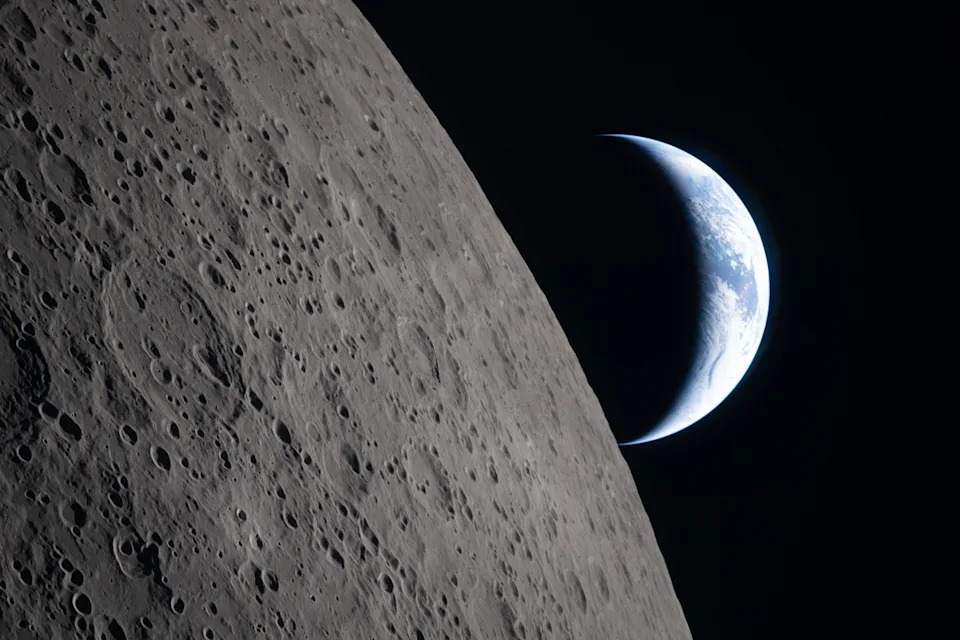
Peeking at the EarthAs the Artemis II crew came close to passing behind the Moon and experiencing a planned loss of signal on April 6, 2026, they captured this image of a crescent Earth setting on the Moon’s limb. The edge of the visible surface of the Moon is called the “lunar limb.”
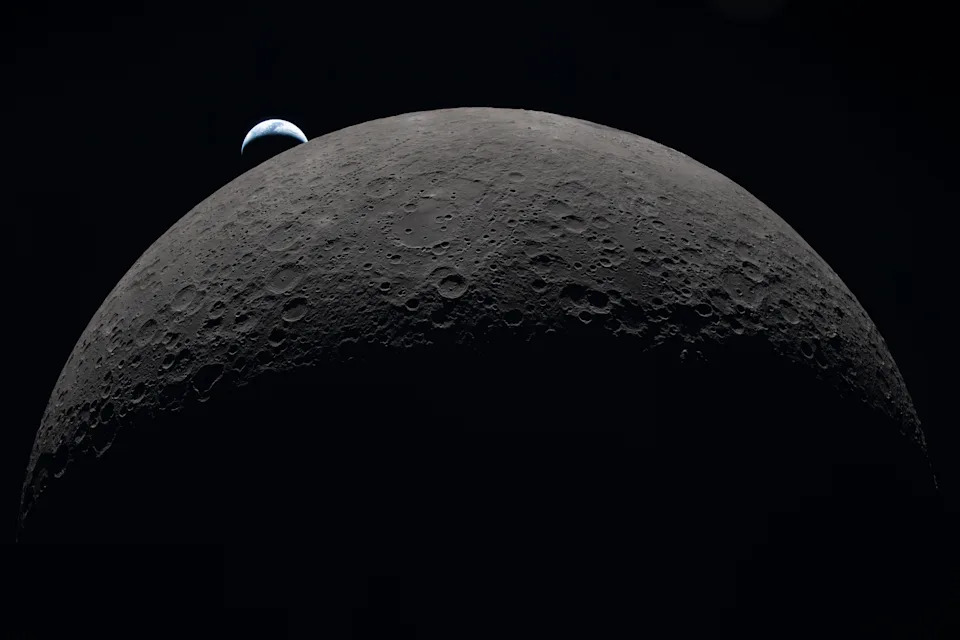
A New View of the MoonEarth sets at 6:41 p.m. EDT, April 6, 2026, over the Moon’s curved limb in this photo captured by the Artemis II crew during their journey around the far side of the Moon.
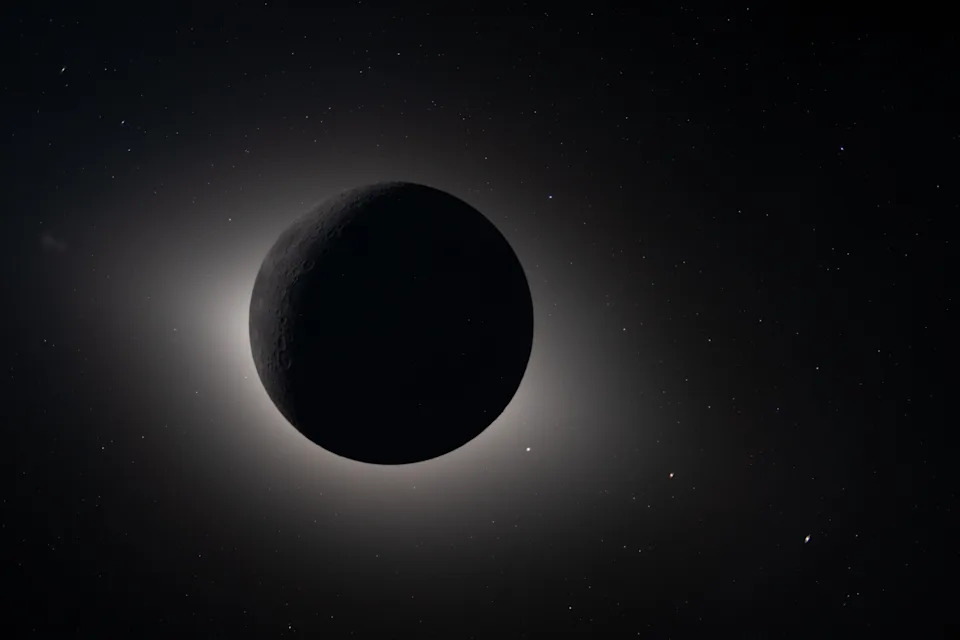
Artemis II in EclipseCaptured by the Artemis II crew during their lunar flyby on April 6, 2026, this image shows the Moon fully eclipsing the Sun. From the crew’s perspective, the Moon appears large enough to completely block the Sun, creating nearly 54 minutes of totality and extending the view far beyond what is possible from Earth. We see a glowing halo around the dark lunar disk.
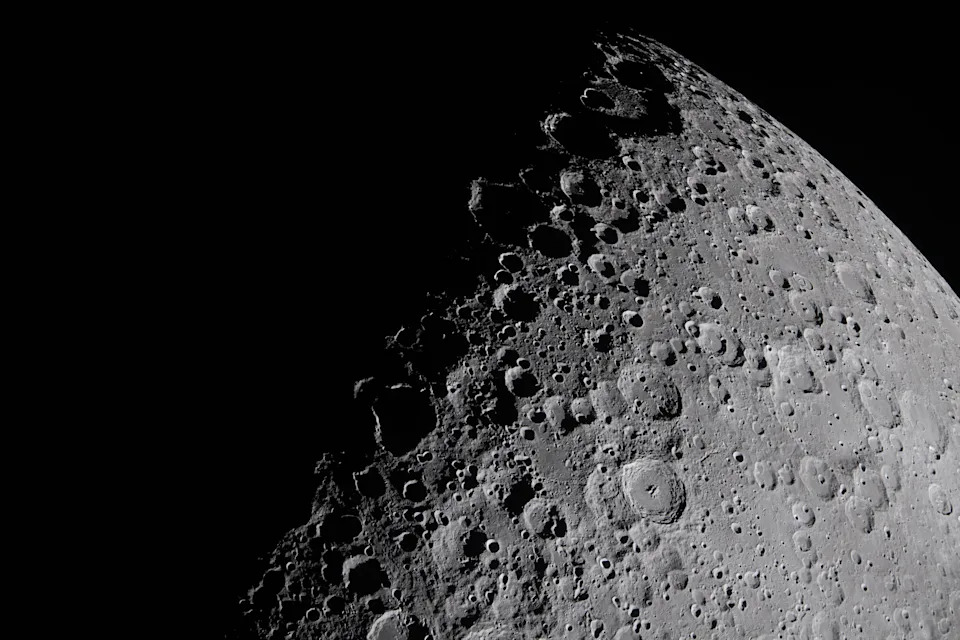
Shadows at the Edge of Lunar DayThe Artemis II crew captures a portion of the Moon coming into view along the terminator – the boundary between lunar day and night – where low-angle sunlight casts long, dramatic shadows across the surface on April 6, 2026. This grazing light accentuates the Moon’s rugged topography, revealing craters, ridges, and basin structures in striking detail. Features along the terminator such as Jule Crater, Birkhoff Crater, Stebbins Crater, and surrounding highlands stand out. From this perspective, the interplay of light and shadow highlights the complexity of the lunar surface in ways not visible under full illumination. The image was captured about three hours into the crew’s lunar observation period, as they flew around the far side of the Moon on the sixth day of the mission.
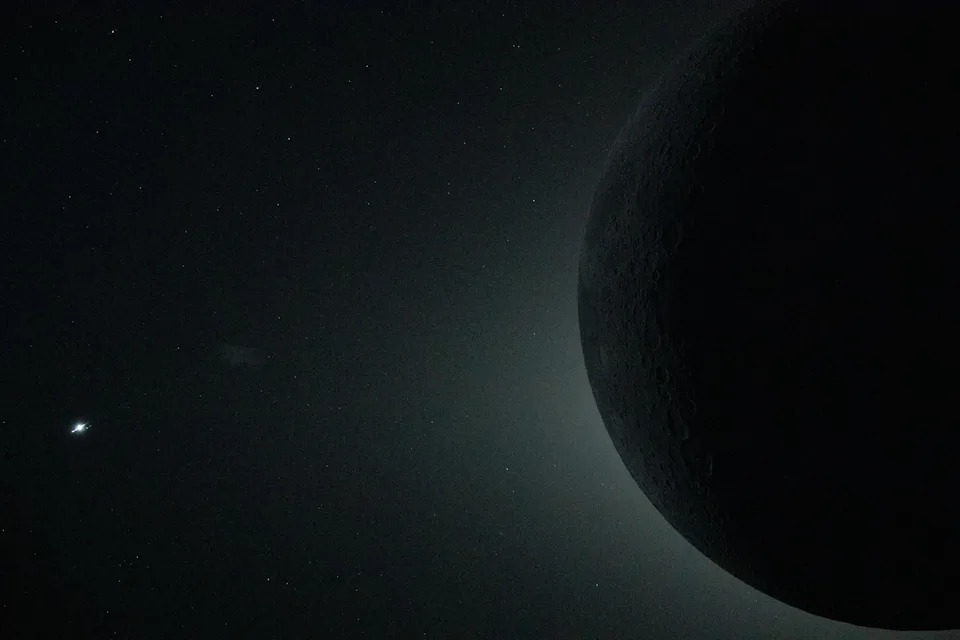
Artemis II Total Solar Eclipse, Partial FrameA close-up view from the Orion spacecraft during the Artemis II crew’s lunar flyby on April 6, 2026, captures a total solar eclipse, with only part of the Moon visible in the frame as it fully obscures the Sun.
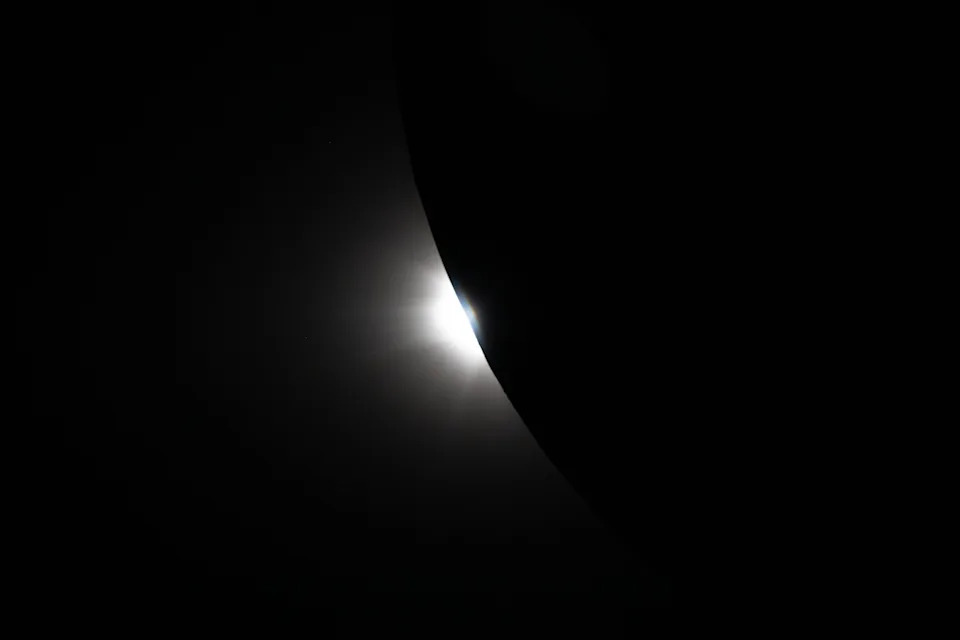
Solar Eclipse Emergence from OrionCaptured from the Orion spacecraft near the end of the Artemis II lunar flyby on April 6, this image shows the Sun beginning to peek out from behind the Moon as the eclipse transitions out of totality.
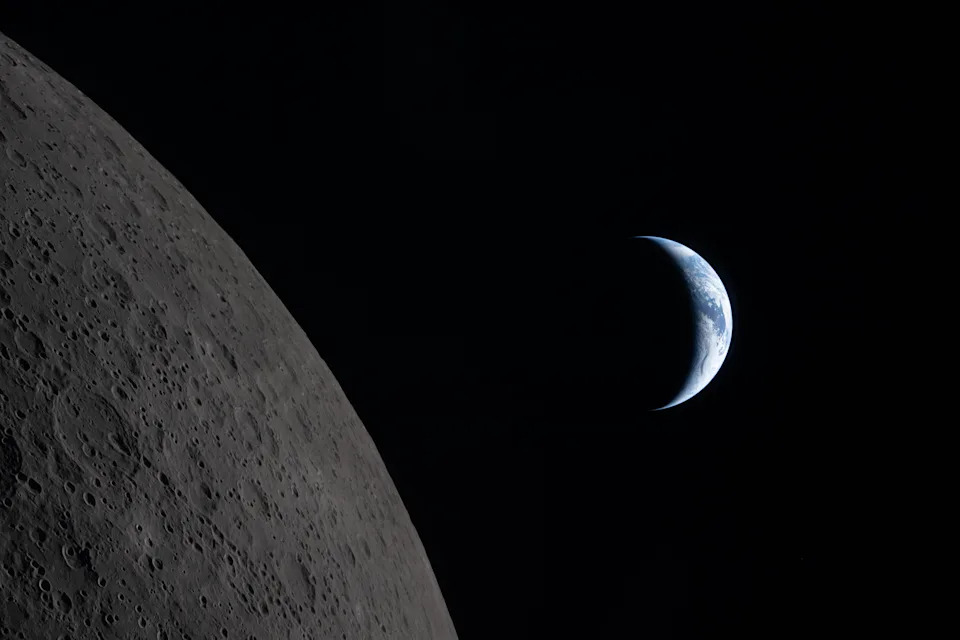
The Edge of Two WorldsEarth draws closer to passing behind the Moon in this image captured by the Artemis II crew during their lunar flyby, about six minutes before Earthset.
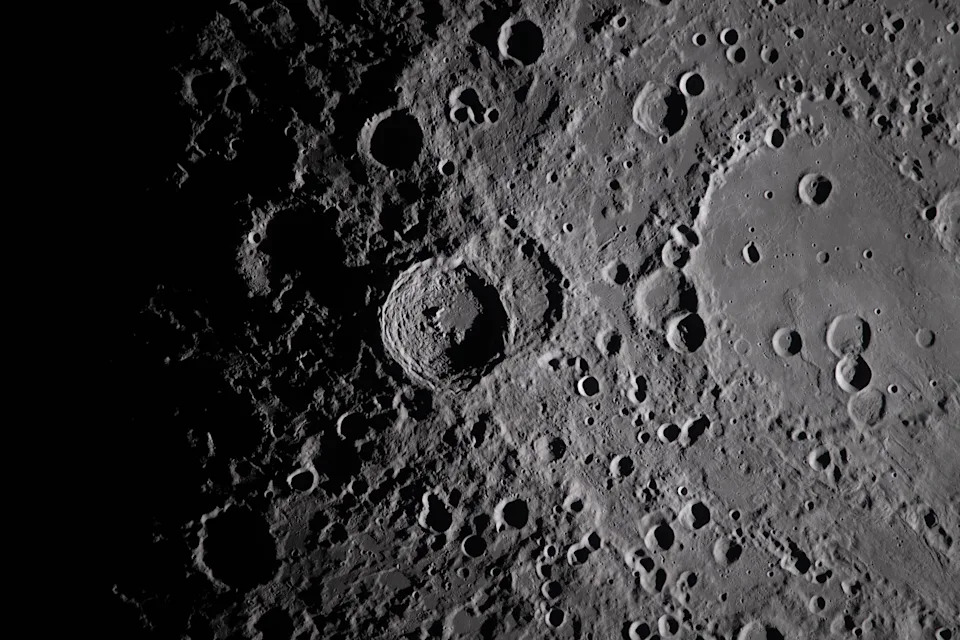
Shadows Across Vavilov CraterA close-up view taken by the Artemis II crew of Vavilov Crater on the rim of the older and larger Hertzsprung basin.
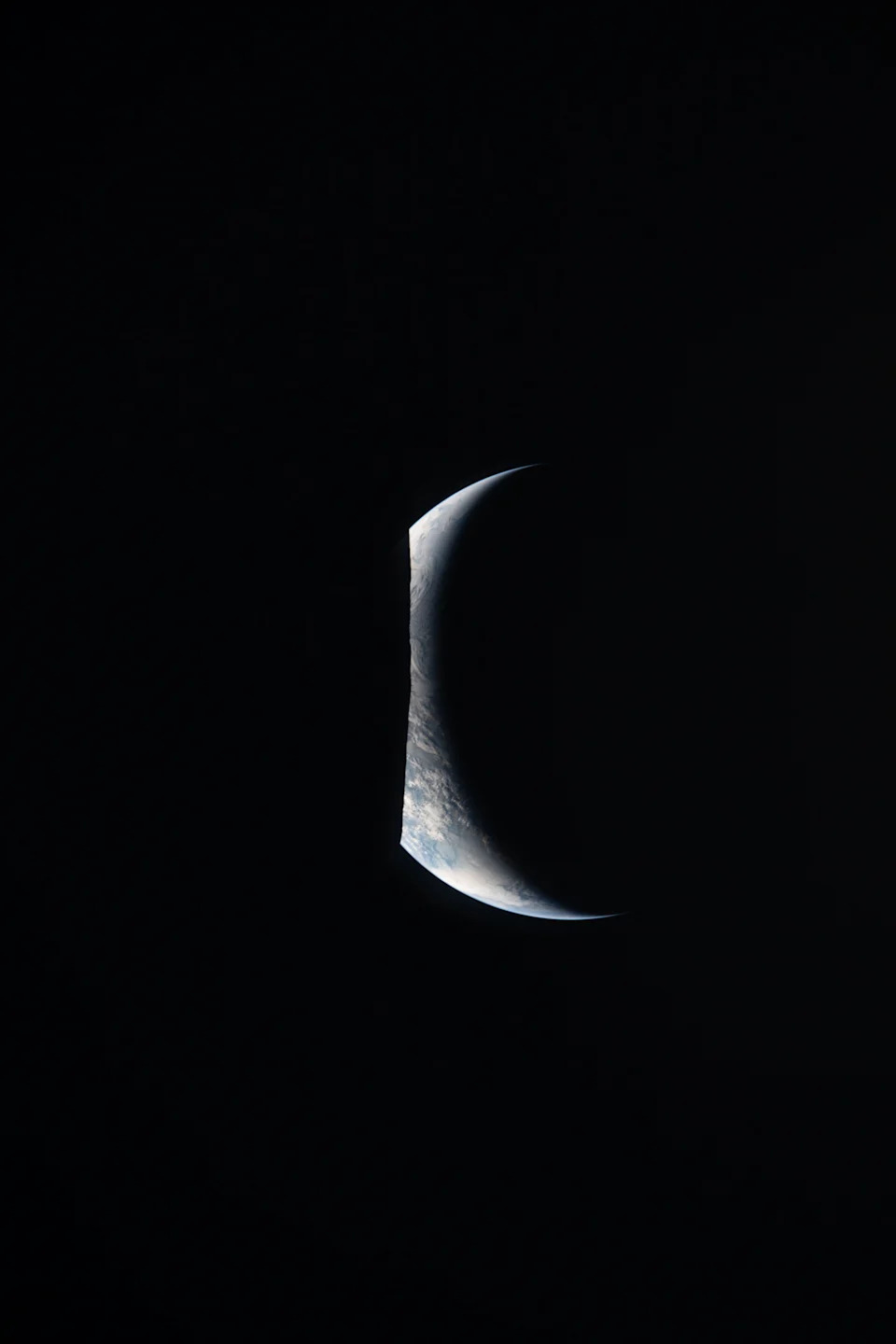
Artemis Era EarthriseEarthrise captured through the Orion spacecraft window at 7:22 p.m. ET during the Artemis II crew’s flyby of the Moon’s far side.
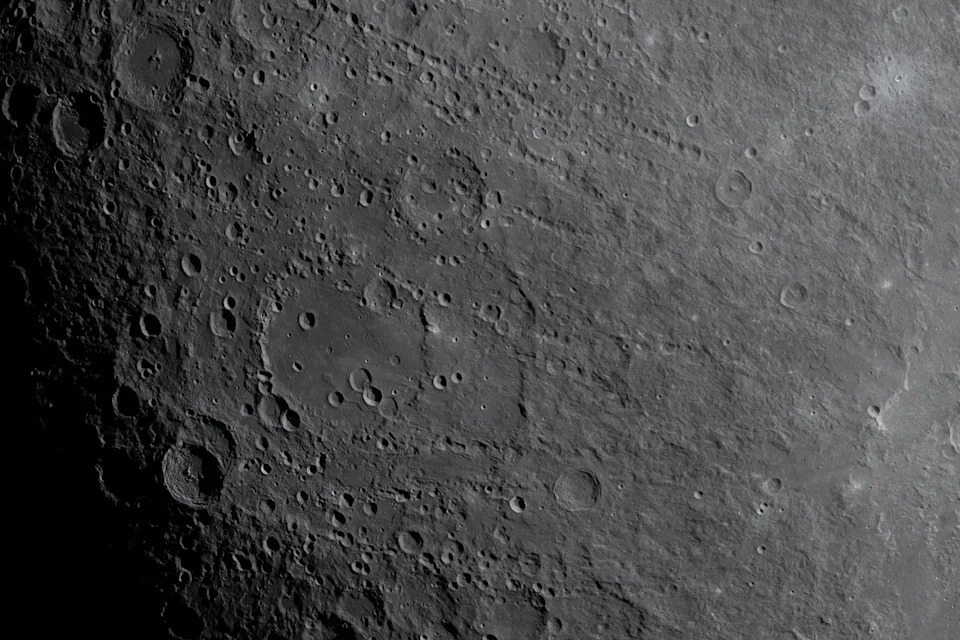
It’s all in the details. Check out these zoomed-in views ofmoon photostaken by the the Artemis II crew to see incredible lunar surface details.
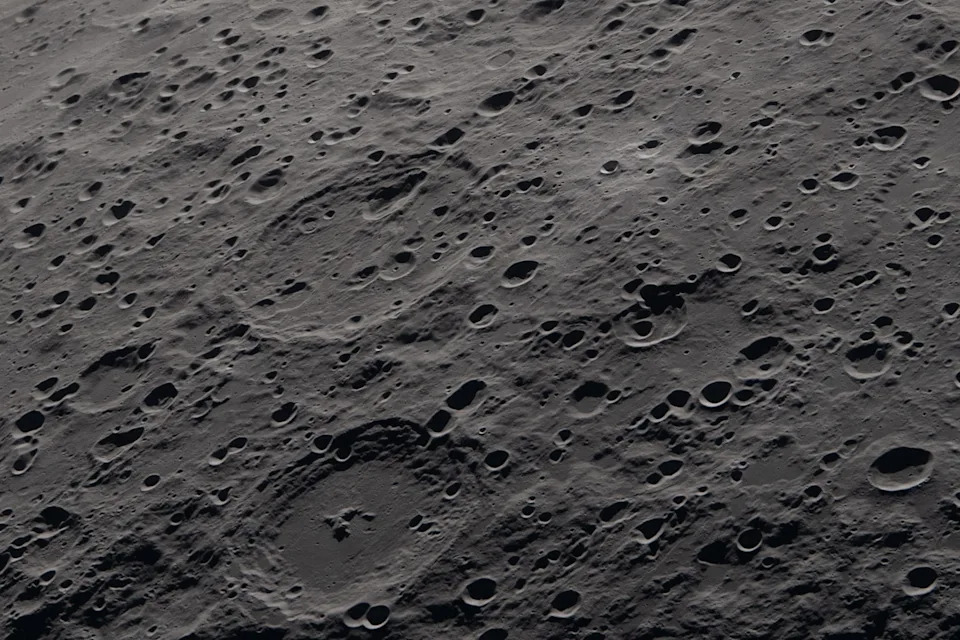
The lunar surface fills the frame in sharp detail, as seen during the Artemis II lunar flyby.
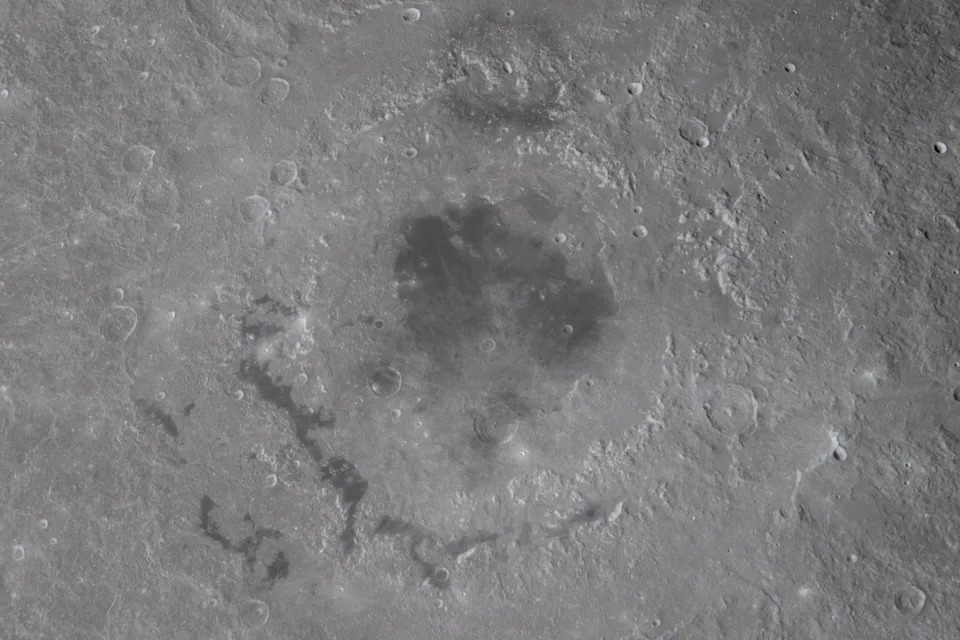
Orientale basin is visible in this close-up, with a black patch of ancient lava in the center that punched through the Moon’s crust in an eruption billions of years ago.
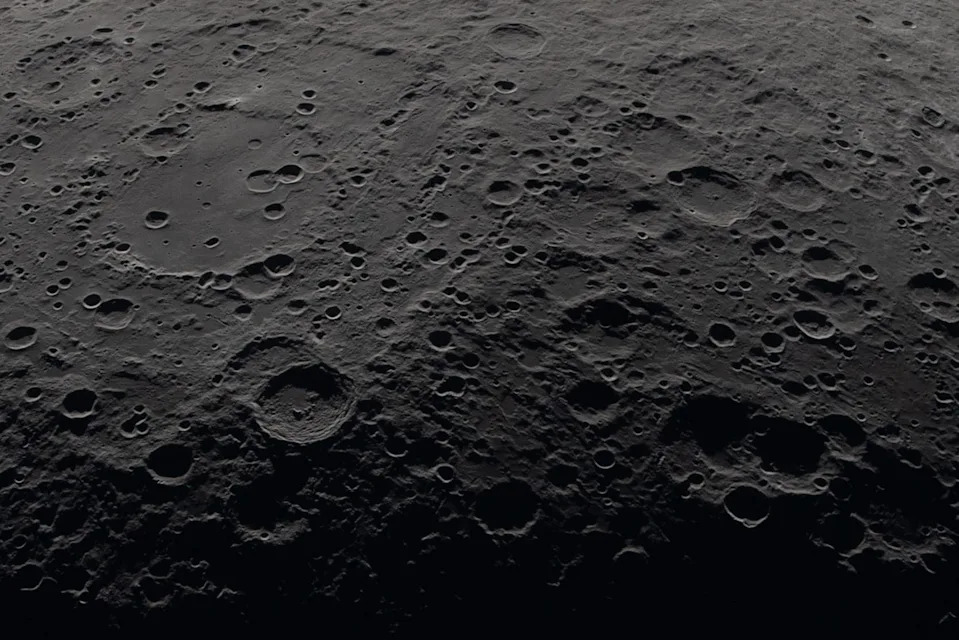
Moon crates are revealed in this detail of a photo captured by the Artemis II crew during their journey around the far side of the Moon on April 6.
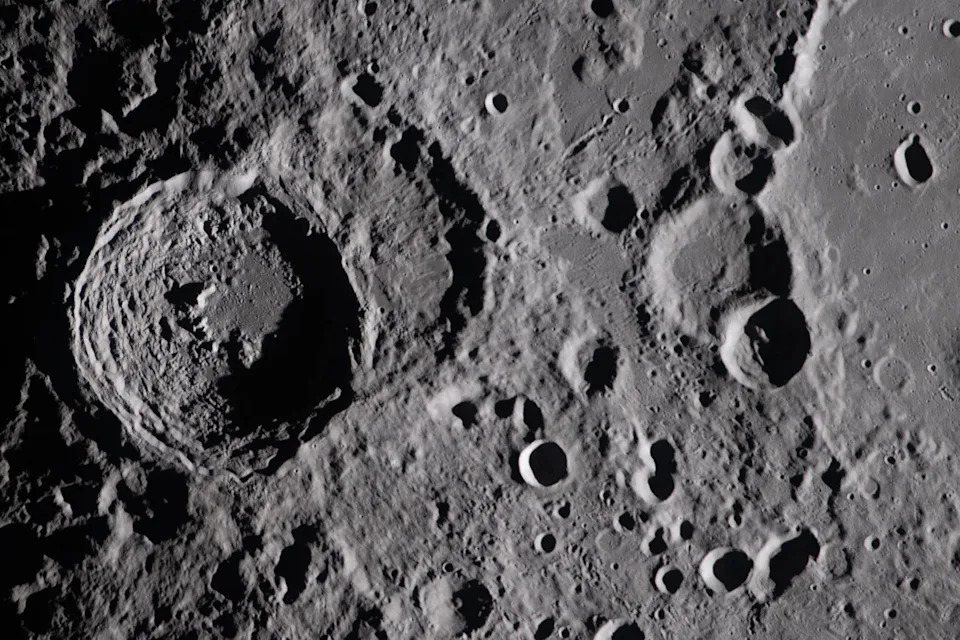
A close-up view shows the Vavilov Crater (left) an impact crater on the rim of the older and larger Hertzsprung basin.
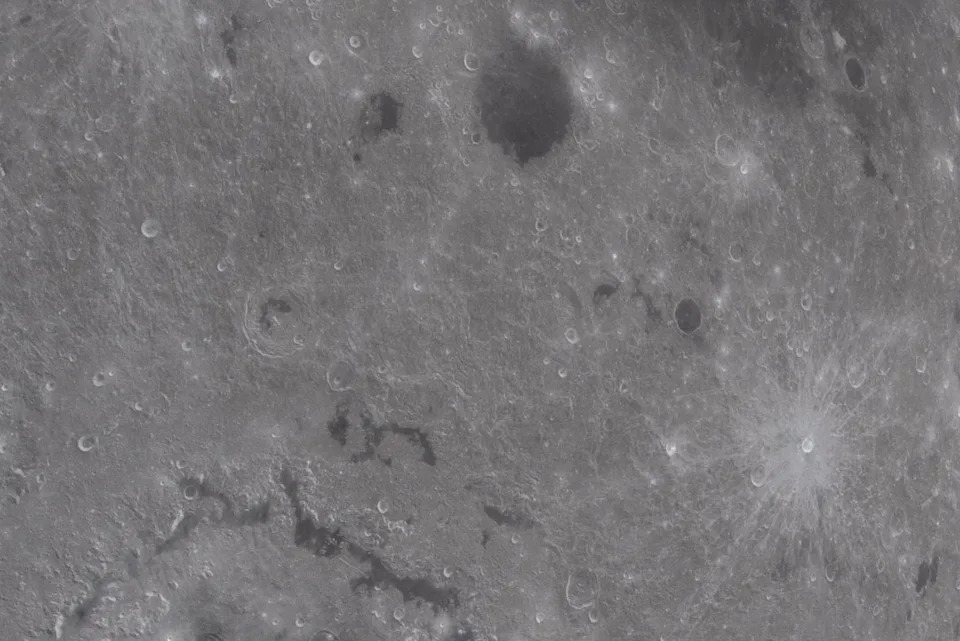
High-end digital cameras provide astronauts with powerful imaging tools that they can use to capture and share detailed views during their mission.
Pomozite nam da budemo bolji.