Artemis II je uspešno izvela desetodnevni let oko Meseca i sada su članovi posade pozvani na sastanak u Beloj kući. NASA i komercijalni partneri planiraju niz besposadnih misija 2026. i veliko povećanje landera 2027. koje treba da podrži povratak ljudi na Mesec. Artemis III je u pripremi za 2027., ciljano ljudsko sletanje se planira za 2028., a dugoročni cilj je izgradnja održive lunarne baze i priprema za misije na Mars.
Nakon Artemis II: NASA Planira Povratak Ljudi Na Mesec — Landeri, Baza I Pogled Ka Marsu
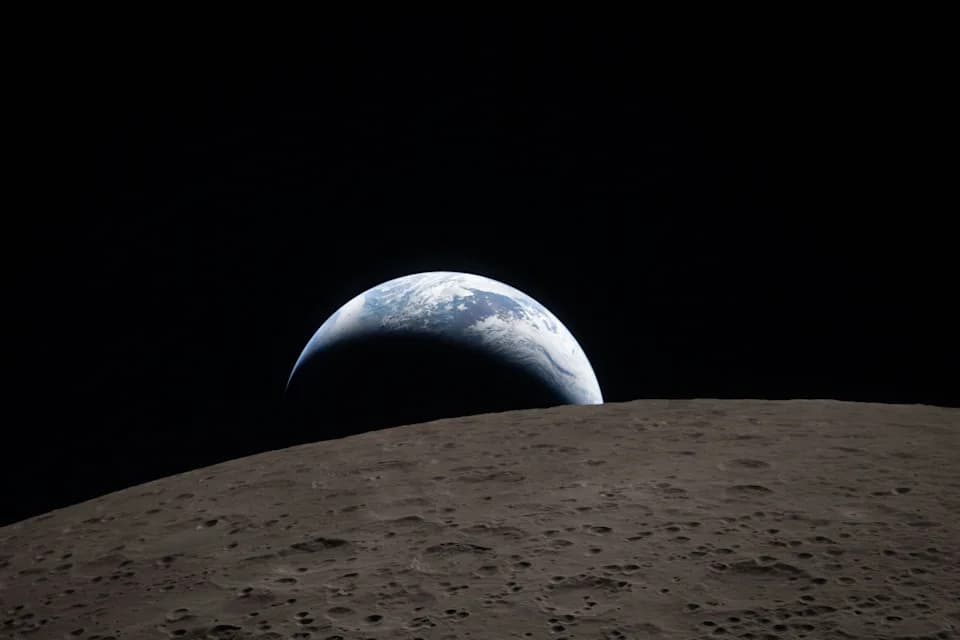
The crew of Artemis II captured a breathtaking image of a celestial event known as an "Earthset," in which the Earth dropped below the lunar horizon. The image is reminiscent of the iconic "Earthrise" photo that NASA astronaut Bill Anders captured in 1968 during the Apollo 8 mission that showed our planet rising on the lunar horizon.
Četvoro astronauta misije Artemis II, koji su 1. aprila 2026. obavili desetodnevni let oko Meseca i bezbedno se vratili, spremaju se za susret u Beloj kući sa predsednikom Donaldom Trumpom. Predsednik ih je nazvao "savremenim pionirima" — terminom koji naglašava kako njihov let otvara put za širu ljudsku prisutnost u kosmosu.
Šta znači biti „pionir“ za Artemis
Pojam pionir ukazuje na to da Artemis II postavlja tehničke i naučne temelje koje će koristiti naredne misije. Podaci i iskustva iz ove misije treba da pomognu u planiranju budućih besposadnih i posadnih sletanja, izgradnji lunarnih objekata i, dugoročno, u pripremi za ljudske misije na Mars.
Vremenski okvir narednih misija
Robotika već jeste aktivna: od 2024. NASA i komercijalni partneri su izveli tri robotska sletanja na Mesec, sa različitim rezultatima.
2026. Planirano je najmanje četiri nova besposadna lunarnih sletanja. Prva u nizu, Griffin-1 kompanije Astrobotic iz Pittsburgha, prema informacijama NASA, izgleda spremna za lansiranje tokom jula 2026. Tokom godine se kao kandidati za lansiranje pominju i Blue Originov Blue Moon Mark‑1, Firefly Aerospaceov Blue Ghost i Intuitive Machinesov Nova‑C.
2027. NASA najavljuje znatno povećanje robotskih misija — do 30 dodatnih besposadnih landera kroz program Commercial Lunar Payload Services (CLPS). Te misije treba da dopreme naučnu opremu i logistiku koja će podržati kasnija ljudska sletanja.
Artemis III (oko 2027.)
Pripreme za Artemis III su već u toku: osnovna etapa rakete Space Launch System (SLS) visine oko 98 metara pristigla je na Floridu radi finalne montaže. Misija će poslati novu posadu u svemirskom čamcu Orion, gde će se u orbiti oko Zemlje ili Meseca spojiti sa jednim od komercijalnih lunarnih landera u razvoju. Tokom Artemis III predviđeno je i testiranje novih lunarnh svemirskih odela (EVA) u saradnji sa kompanijom Axiom Space.
Artemis IV i prvo sletanje ljudi (cilj: 2028.)
Plan je da ljudi ponovo kroče na Mesec 2028. pod okriljem misije Artemis IV (ili odgovarajuće mape misija prema revidiranom planu). Izabrani lander će se spojiti sa Orion vozilom u lunarnom orbitu i prevesti astronaute na površinu, gde će obaviti šetnje i naučne eksperimente pre povratka u Orion i povratka na Zemlju.
Gde na Mesecu — fokus na južni pol
NASA je identifikovala devet potencijalnih lokacija u blizini manje istraženog južnog pola Meseca. Ta područja su južnije od bilo koje lokacije na kojoj su sleteli Apollo astronauti i mogu sadržati trajne senke sa ledom. Voda u obliku leda je ključni resurs — može se koristiti za piće, proizvodnju kiseonika i vodonika za gorivo, kao i za dugoročnu podršku ljudskim posadama.
Lunarna baza i ritam misija
Cilj NASA je da koristeći niz posadnih i bezposadnih sletanja postepeno izgrade održivu lunarnu infrastrukturu — često spominjan projekat vredan oko 20 milijardi dolara — u kojoj bi astronauti mogli da žive i rade duži period. Nakon jedne od narednih misija (Artemis V je navedena kao cilj za 2028. u izvornom planu), NASA je izrazila ambiciju da uspostavi ritam ljudskih sletanja i do dvaput godišnje, u zavisnosti od finansiranja i saradnje s komercijalnim partnerima.
Dalji pogled: Mars
Posle konsolidacije stalne prisutnosti na Mesecu i izgradnje potrebne infrastrukture, NASA planira da se okrene sledećem velikom cilju čovečanstva — ljudskim misijama na Mars, moguće tokom 2030‑ih.
Napomena o izvoru: Tekst se zasniva na izveštaju Eric Lagatta iz USA TODAY Network i saopštenjima NASA.
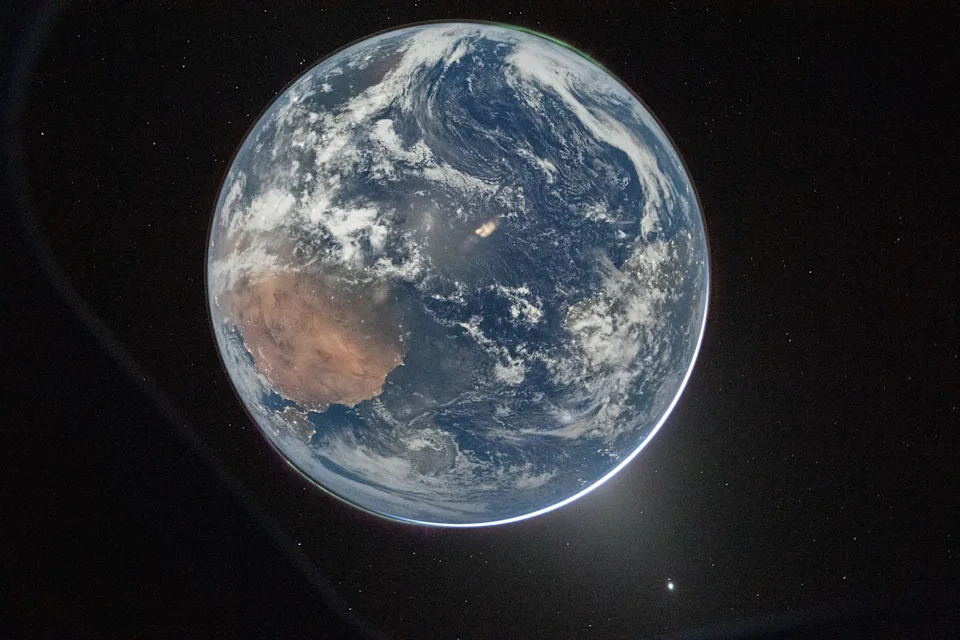
Artemis II Commander Reid Wiseman of NASA took this stunning photograph of Earth from the Orion spacecraft's window on April 2. The image is reminiscent of the iconic "blue marble" image captured during the Apollo 17 mission in 1972.
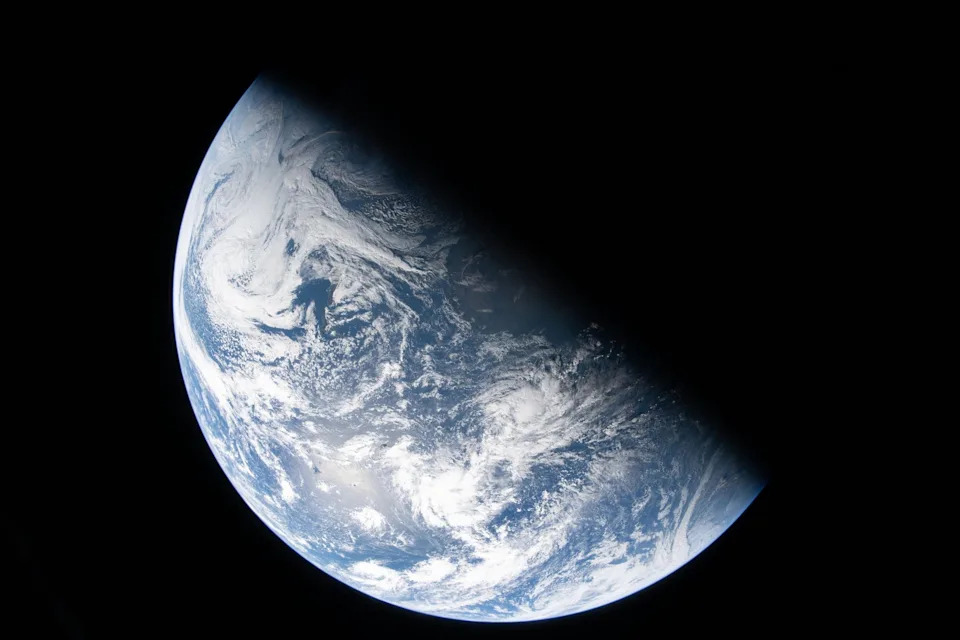
In this new image from the Artemis II crew, NASA explains that what is depicted is the "divide between night and day, known as the terminator, cutting across Earth."
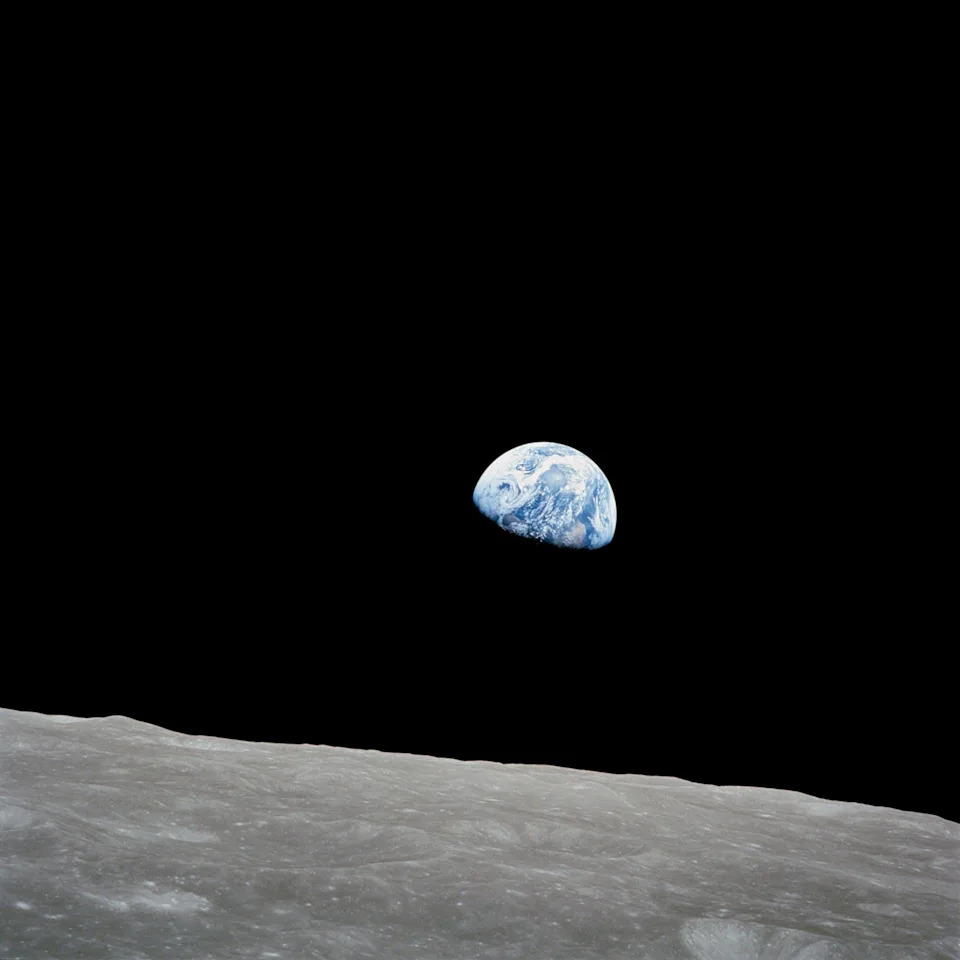
William Anders, a NASA astronaut on the historic Apollo 8 mission around the moon, took the iconic “Earthrise” photo while in lunar orbit on Dec. 24, 1968.
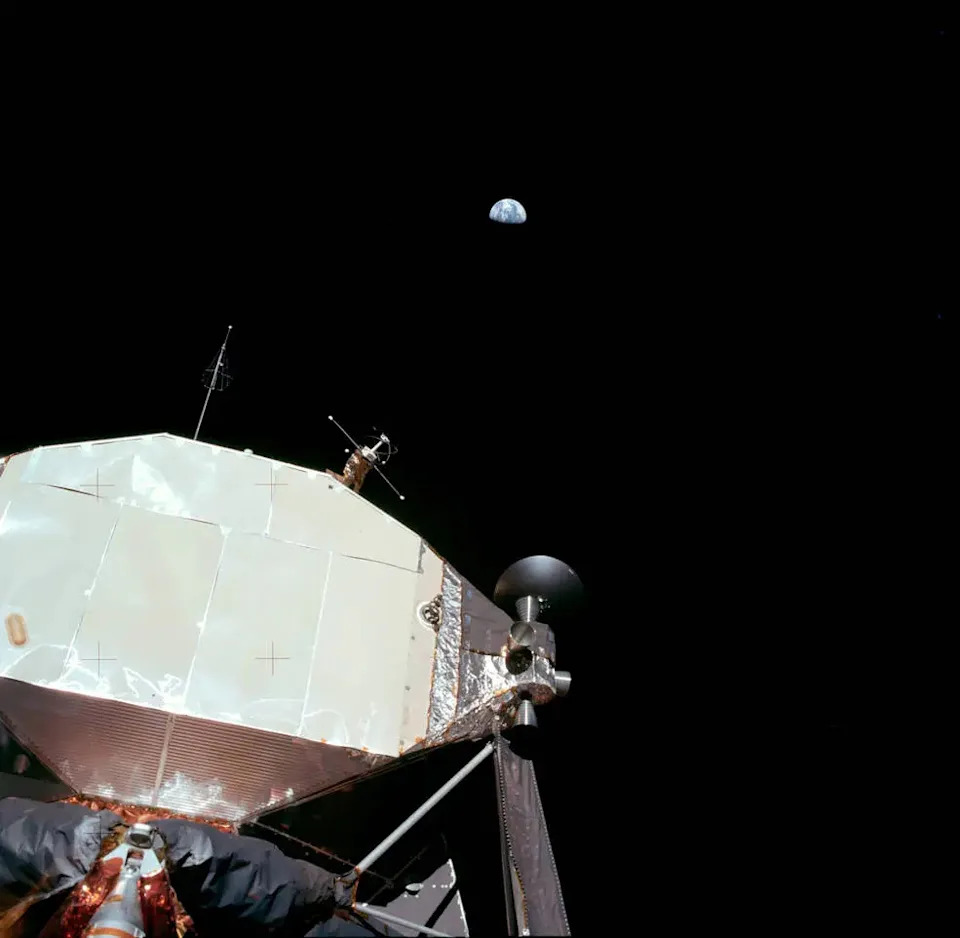
The first photograph of the Earth taken by an astronaut standing on the lunar surface, taken during the Apollo 11 Moon landing in 1969.

One of the most well-known photographs of Earth, the "blue marble" image was taken by the crew of the final Apollo mission (Apollo 17) as the crew made its way to the moon in 1972.
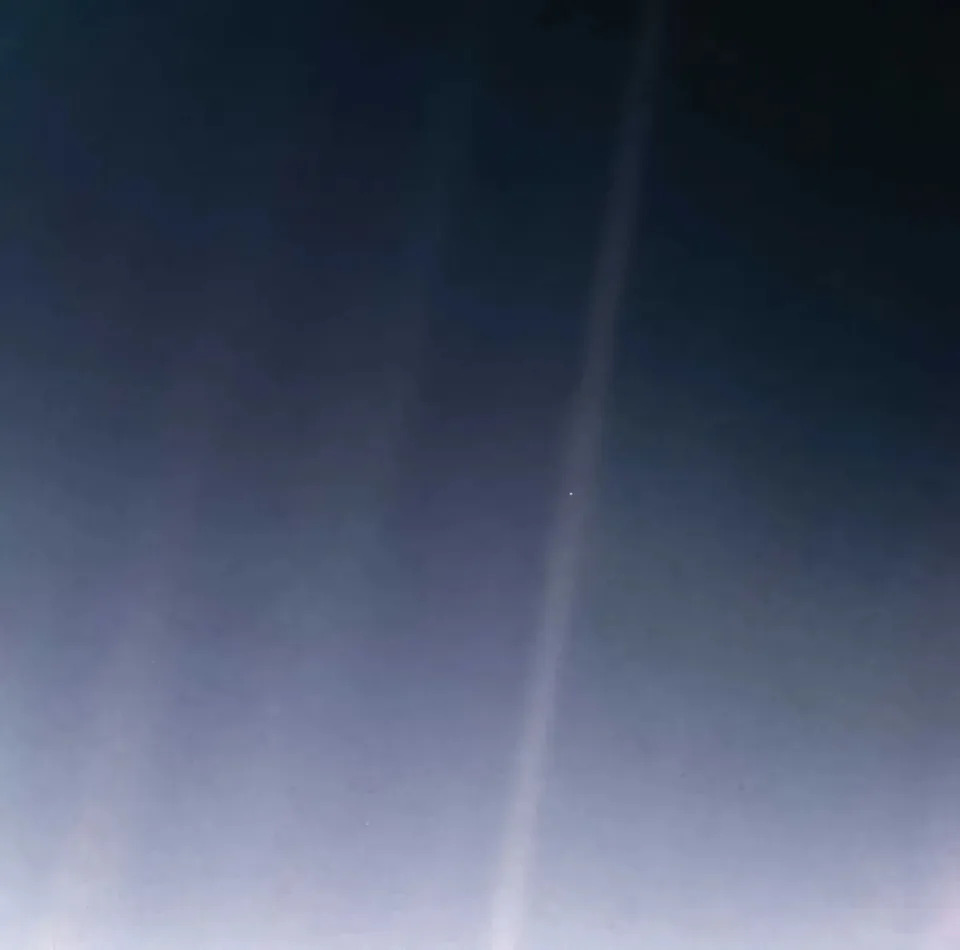
Voyager 1's 1990 photo of Earth, widely referred to as the "pale blue dot," was taken at a distance of 3.7 billion miles from the sun, making it the first photo taken beyond all the planets in our solar system. This image was created in 2020 or the 30th anniversary of the iconic picture using modern image-processing software and techniques to revisit the well-known Voyager view.
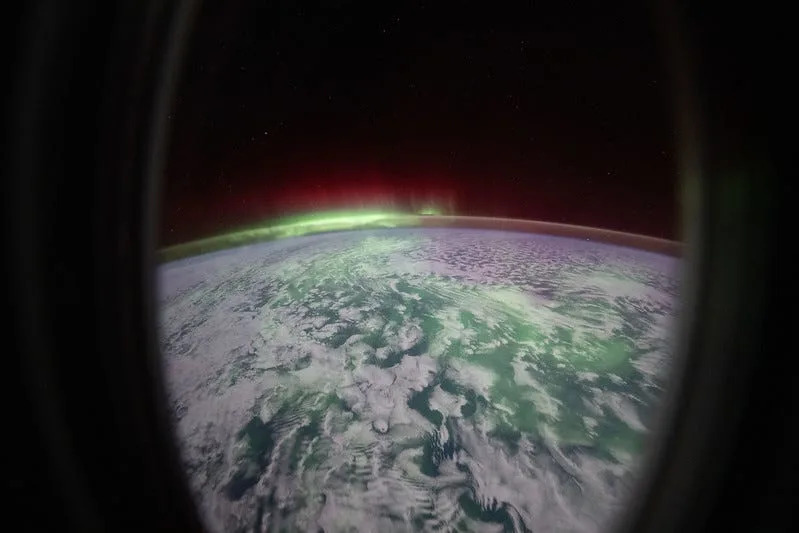
Because the International Space Station orbits so close to Earth's atmosphere (about 250 miles high,) the outpost and the astronauts who have lived aboard it have been the source of plenty of spectacular photos of our planet for 25 years. This recent photo, taken April 6, 2026, shows auroras glowing over the Indian Ocean.
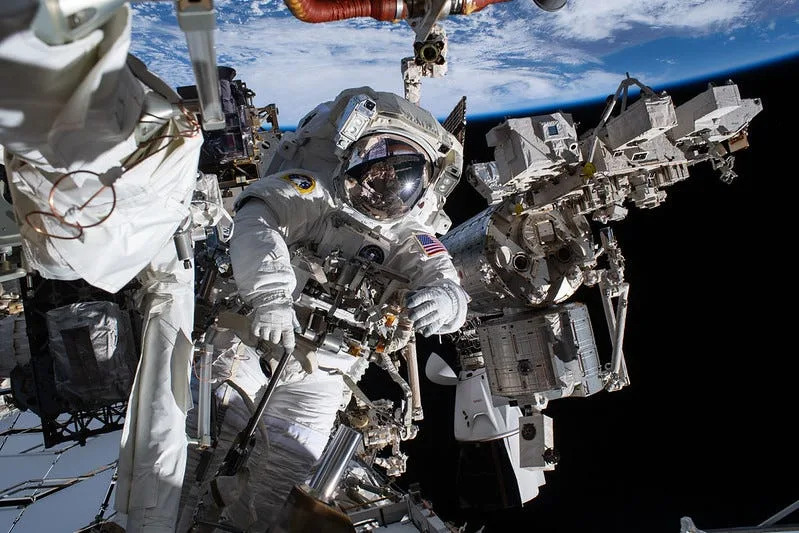
NASA astronaut Chris Williams is pictured outside the International Space Station during a March 18, 2026 spacewalk with Earth in the background.

The devastating Hurricane Milton, a Category 4 storm at the time of this photograph, is pictured Oct. 8, 2024 in the Gulf of Mexico (renamed the Gulf of America) off the coast of Yucatan Peninsula from the International Space Station as it orbited 257 miles above.
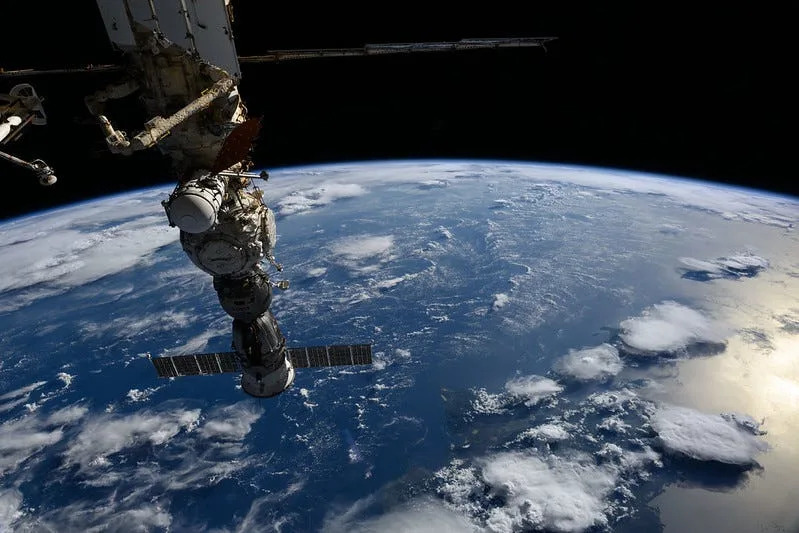
The Soyuz MS-27 crew spacecraft is pictured Sept. 14, 2025 docked to the International Space Station's Prichal module as the orbital outpost soared 257 miles above a gleaming blue Atlantic Ocean, north of the Dominican Republic.
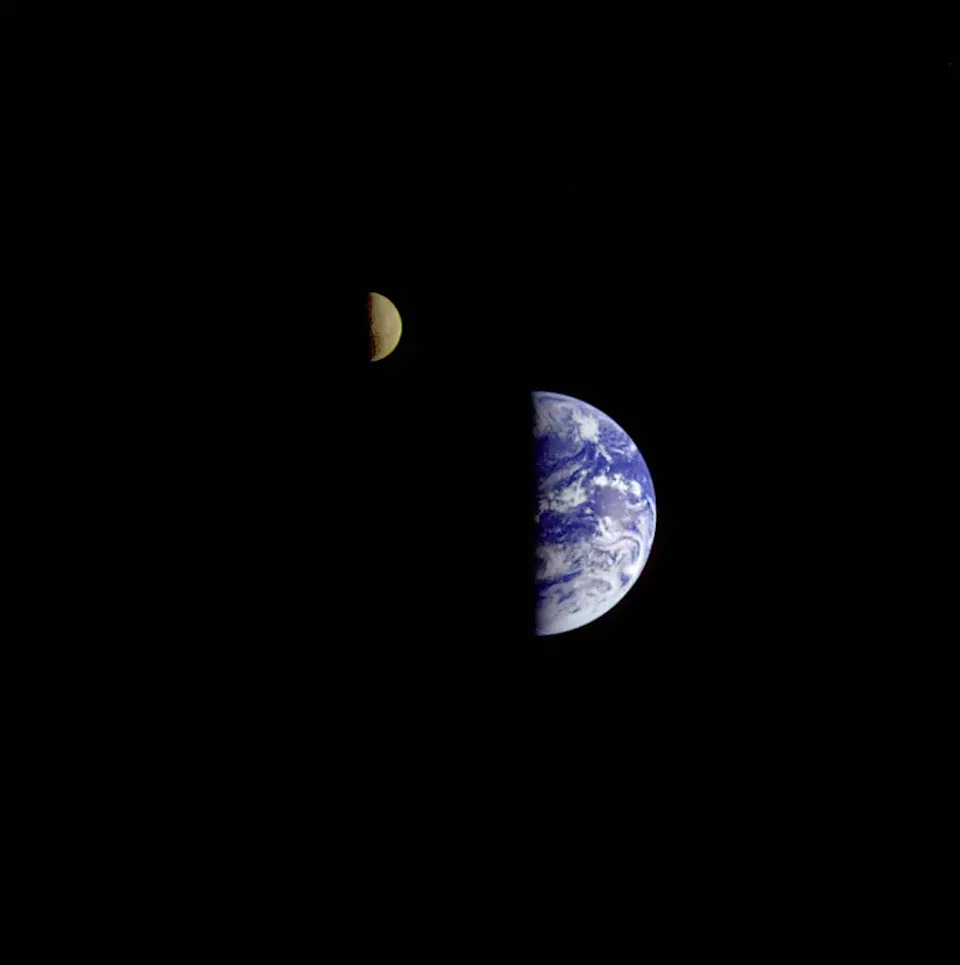
On December 16, 1992, eight days after its encounter with Earth, the Galileo spacecraft looked back from a distance of about 3.9 million miles to capture this remarkable view of the moon in orbit about Earth.
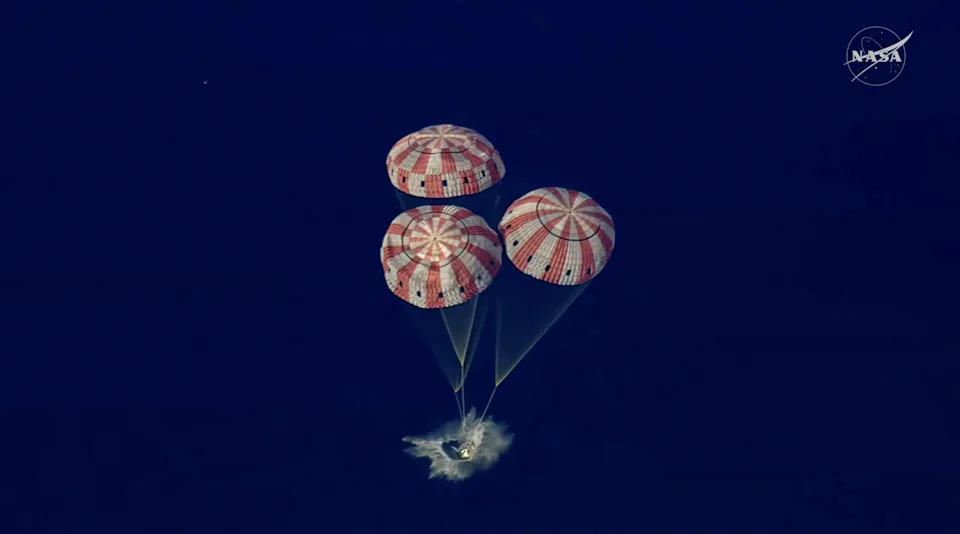
The Artemis II crew capsule splashes down in the Pacific Ocean in this screengrab from a livestream video after the Artemis II crew's flyby of the Moon, April 10, 2026.
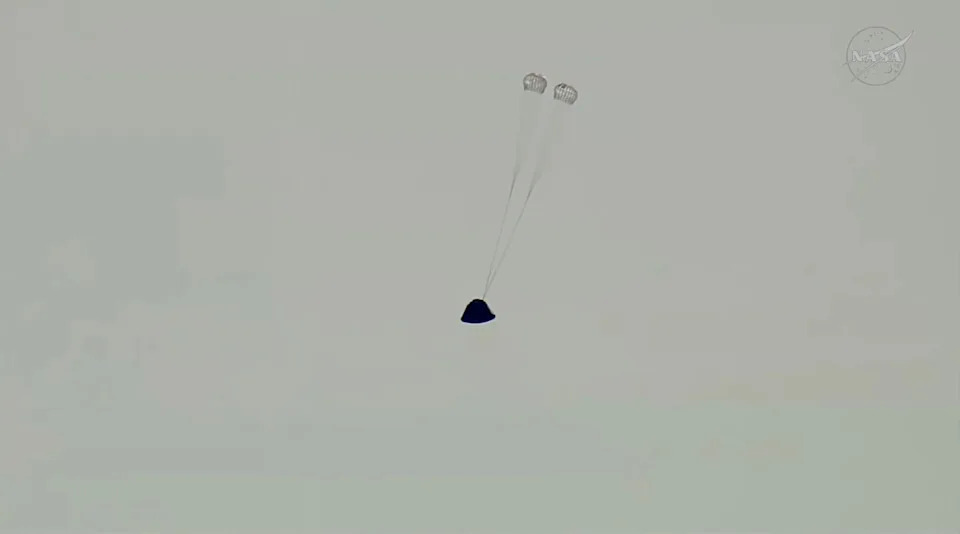
The first set of parachutes deploys on the Artemis II crew capsule in this screengrab from a livestream video as it descends toward splashdown following its re‑entry to Earth after the Artemis II crew’s flyby of the Moon, April 10, 2026.
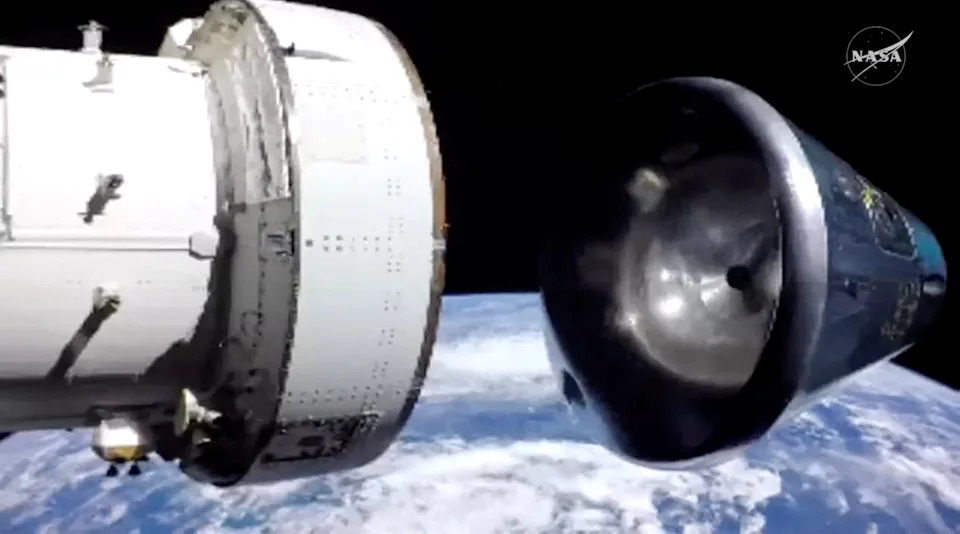
The Artemis II crew module separates from its service module in this screengrab from a livestream video as it prepares for re-entry to Earth following the Artemis II crew's flyby of the Moon, April 10, 2026.
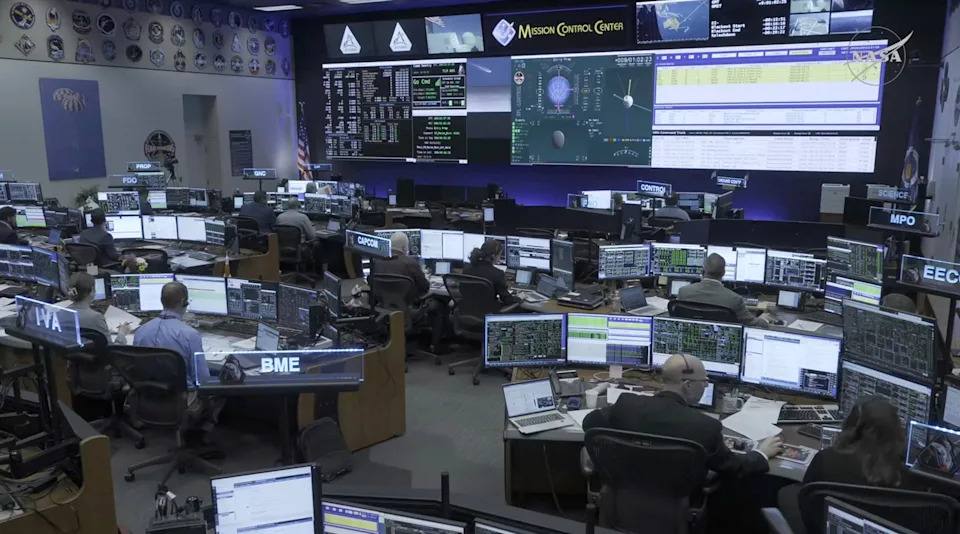
The Artemis II crew capsule is shown at NASA’s mission control center during a maneuver ahead of its re‑entry to Earth, following the Artemis II crew’s flyby of the Moon, April 10, 2026.
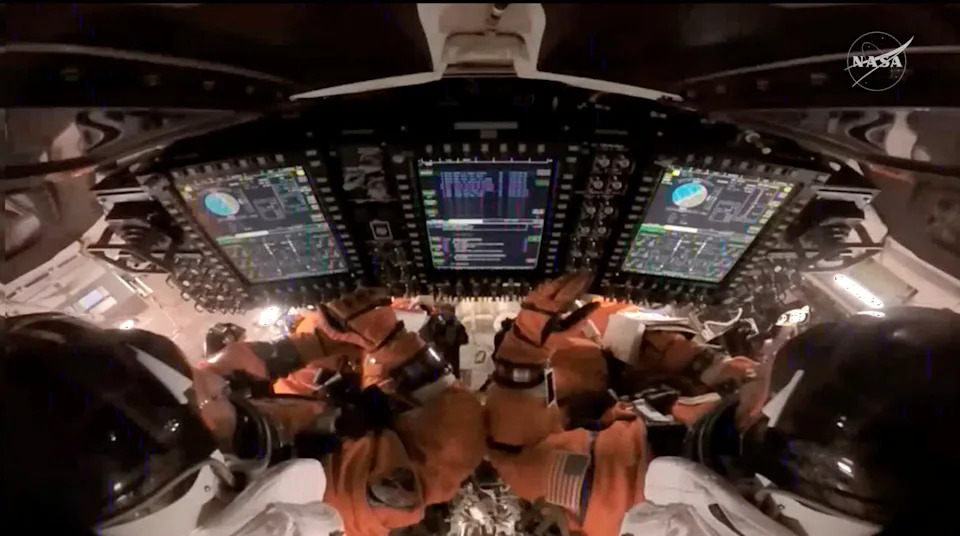
The Artemis II crew gets ready for the Orion spacecraft's Integrity module separation in this screengrab from a livestream video as it prepares for re-entry to Earth following the Artemis II crew's flyby of the Moon, April 10, 2026.
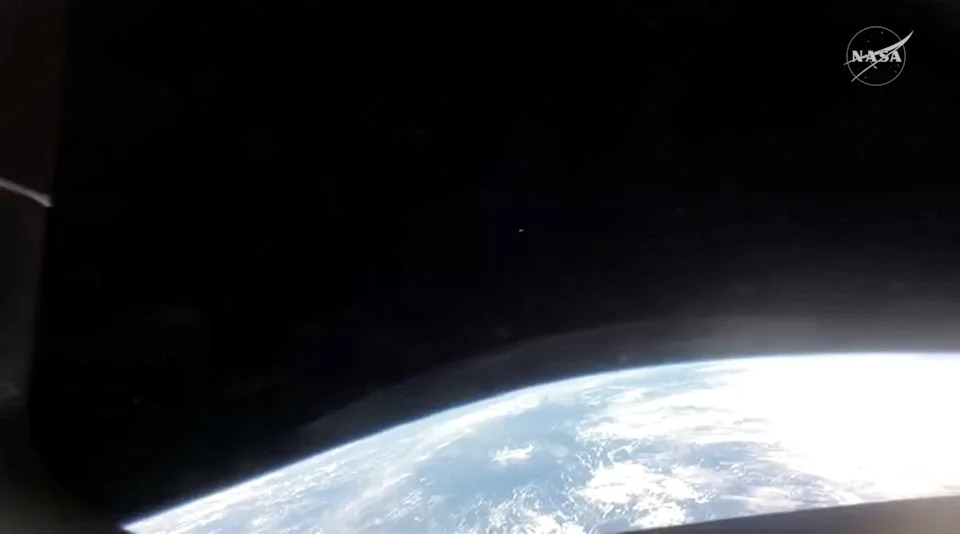
Earth is seen from a window of the Artemis II crew capsule in this screenshot from a livestream video minutes before its re-entry to Earth, following the Artemis II crew's flyby of the Moon, April 10, 2026.
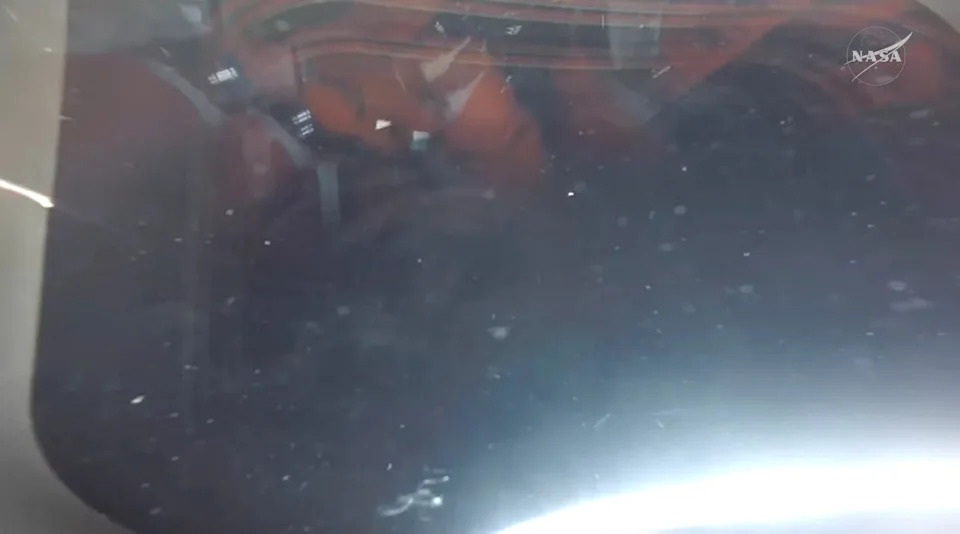
Artemis II crew members are reflected in the window of their capsule in this screenshot from a livestream video minutes before its re-entry to Earth, following the Artemis II crew's flyby of the Moon, April 10, 2026.
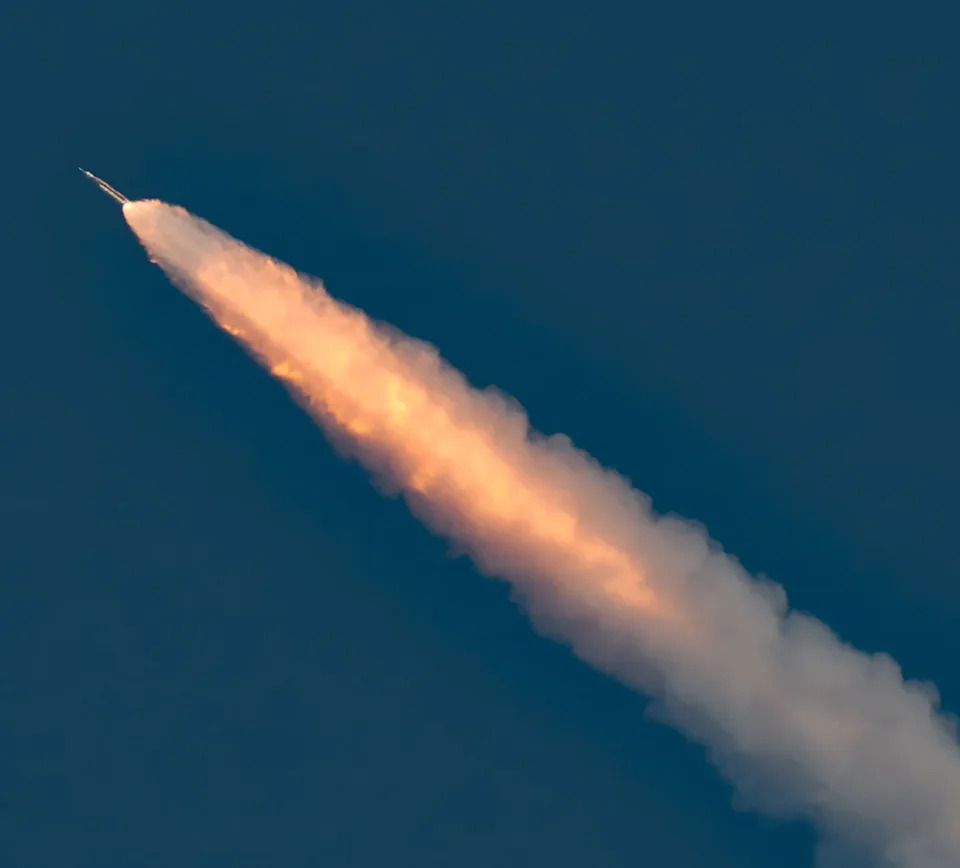
The Artemis II mission launches April 1 from the Kennedy Space Center in Cape Canaveral, Florida. The four-person crew aboard the Orion spacecraft hitched a ride to orbit atop NASA's giant 322-foot Space Launch System rocket. Launching atop 8.8 million pounds of thrust, the SLS is the most powerful rocket NASA ever launched, about 17% more powerful than the iconic Saturn V rocket used during the Apollo era.
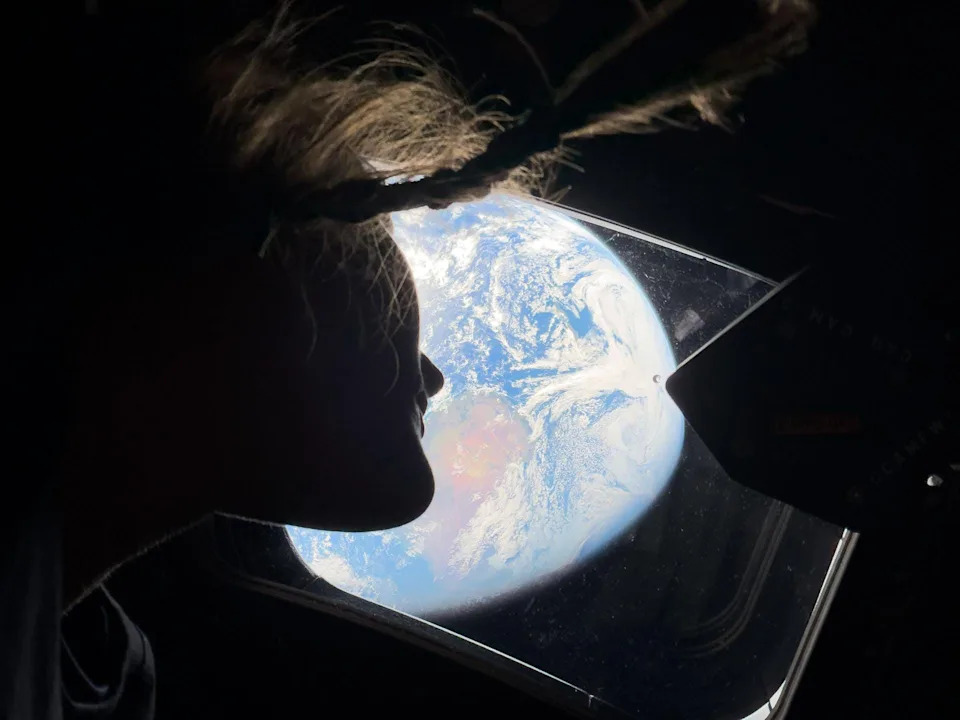
NASA astronaut Christina Koch, a mission specialist on Artemis II, gazes out the windows of the Orion vehicle back at Earth as she and the crew head toward the moon. Koch, who already holds several NASA records from her first spaceflight in 2019 to the International Space Station, became the first woman to fly on a lunar mission.
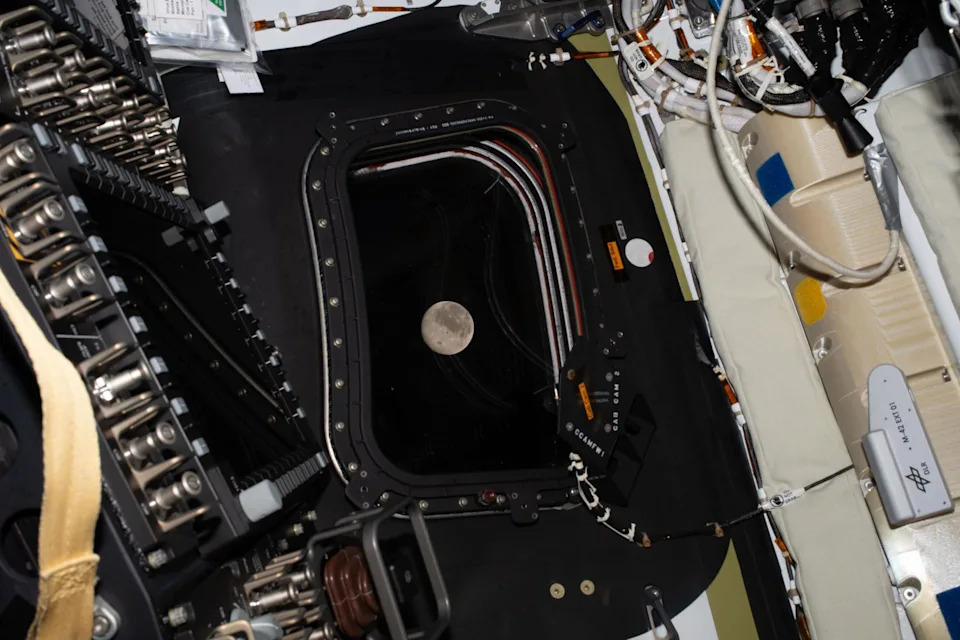
Before going to sleep April 5, the Artemis II crew snapped one more photo of the moon, as it drew close in the window of the Orion spacecraft. Shortly after, the astronauts entered the lunar sphere of influence, where the pull of the moon's gravity became stronger than Earth's.
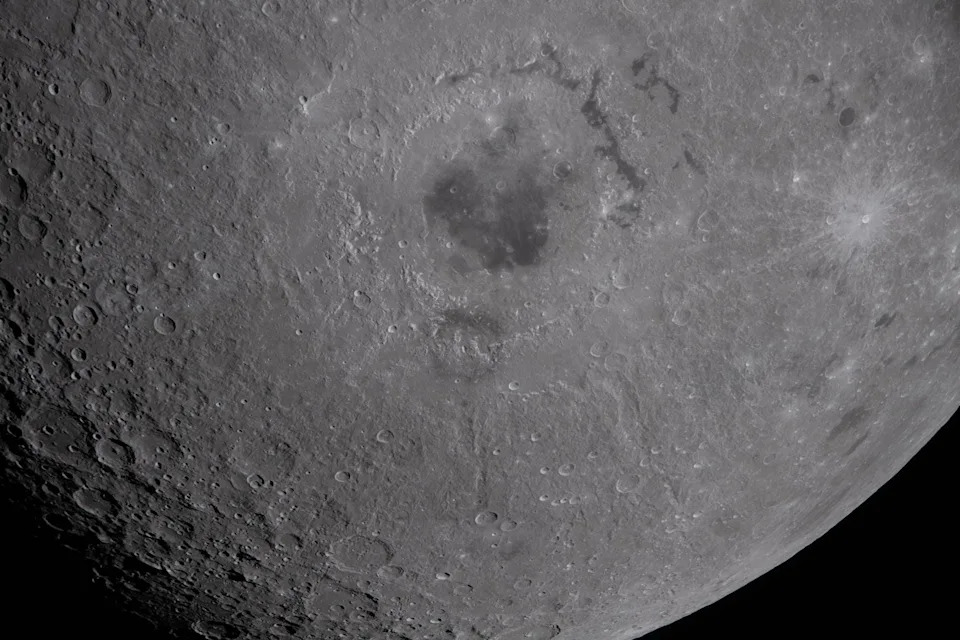
Of the impact craters, ancient lava flows and other lunar features the Artemis II astronauts observed during an April 6 flyby, a crater known as the Orientale basin was perhaps the most prominent. Spanning nearly 600 miles, the 3.8 billion year old crater (seen in the upper center of this photo) had never been seen with the naked eye prior to the mission.
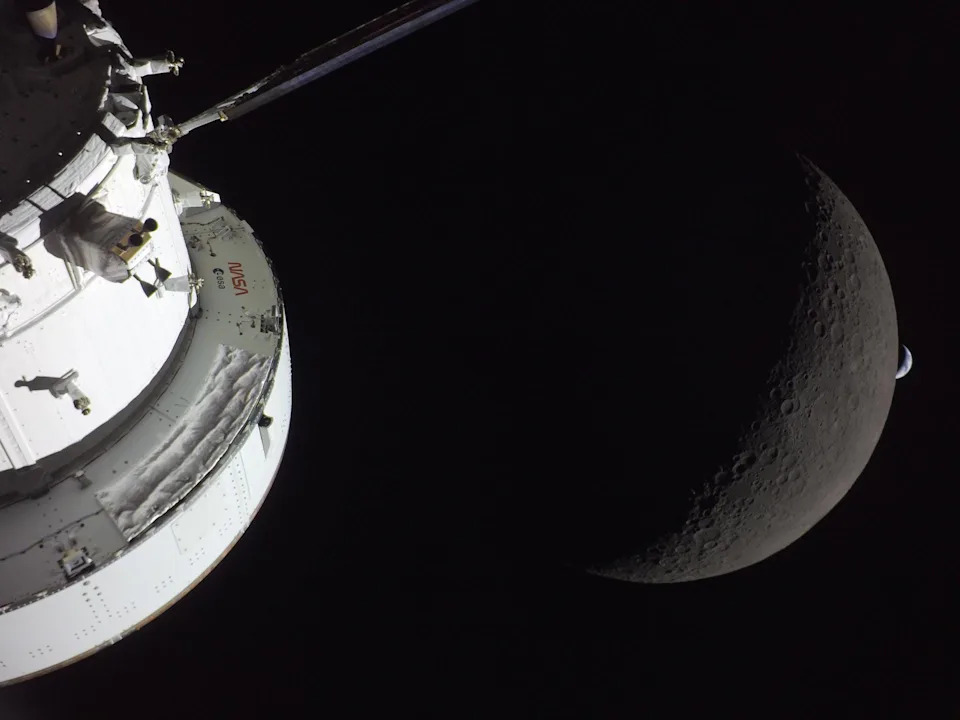
The Orion spacecraft the Artemis II astronauts were aboard is captured in the same frame as both the moon and Earth in this photo captured about four hours into the historic April 6 flyby.
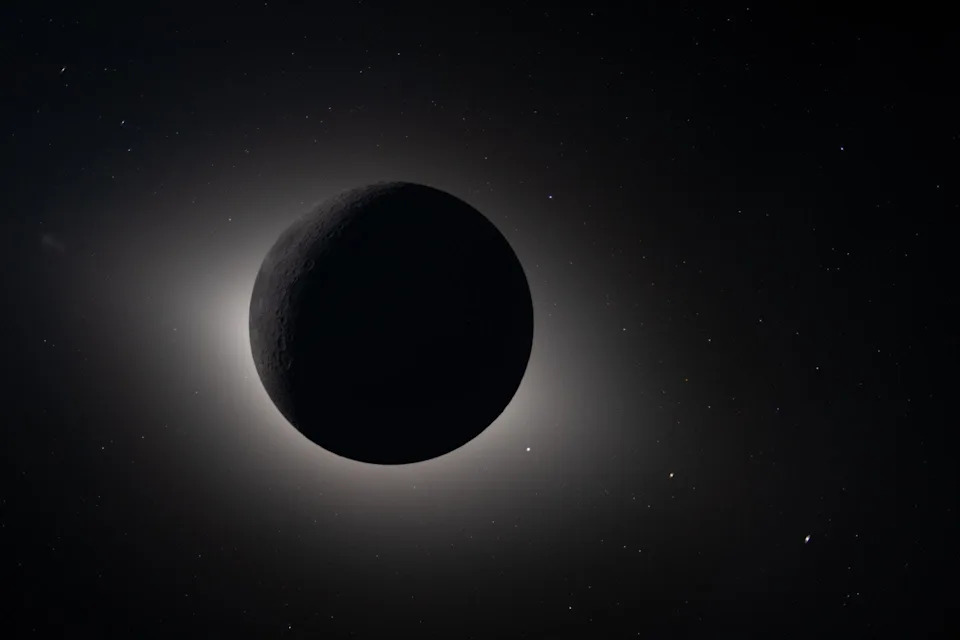
This image shows the moon fully eclipsing the sun from the vantage of the Orion spacecraft, not unlike what millions of people witnessed in April 2024 from Earth. From the crew’s perspective, the moon appeared large enough to completely block the sun, creating nearly 54 minutes of totality and revealing our star's elusive outermost layer, known as the corona.
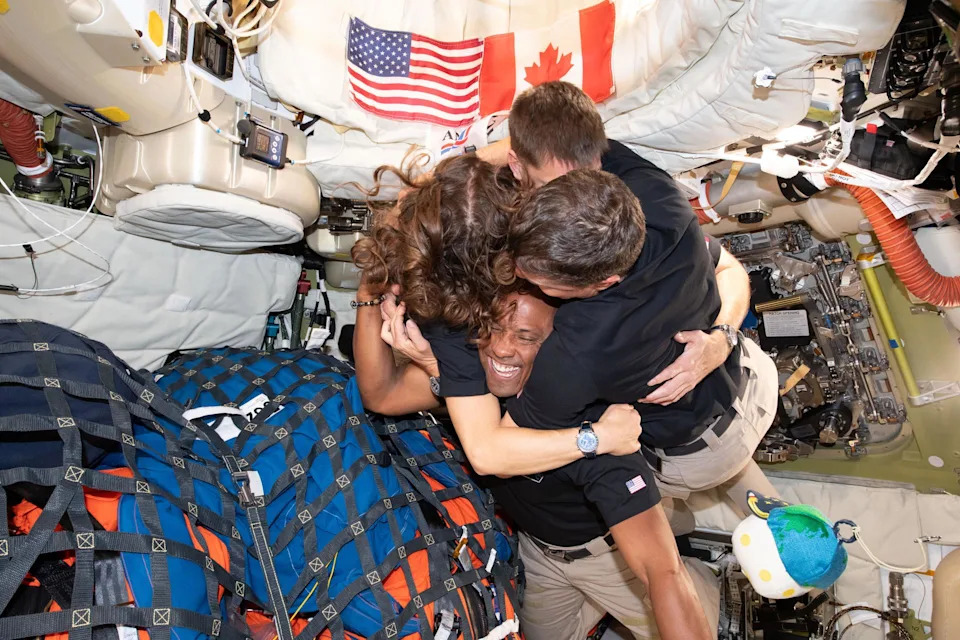
The crew members of Artemis II embrace following the historic lunar flyby April 6, during which the astronauts flew farther from Earth than anyone in human history while seeing sights of the moon's far side never seen in person.
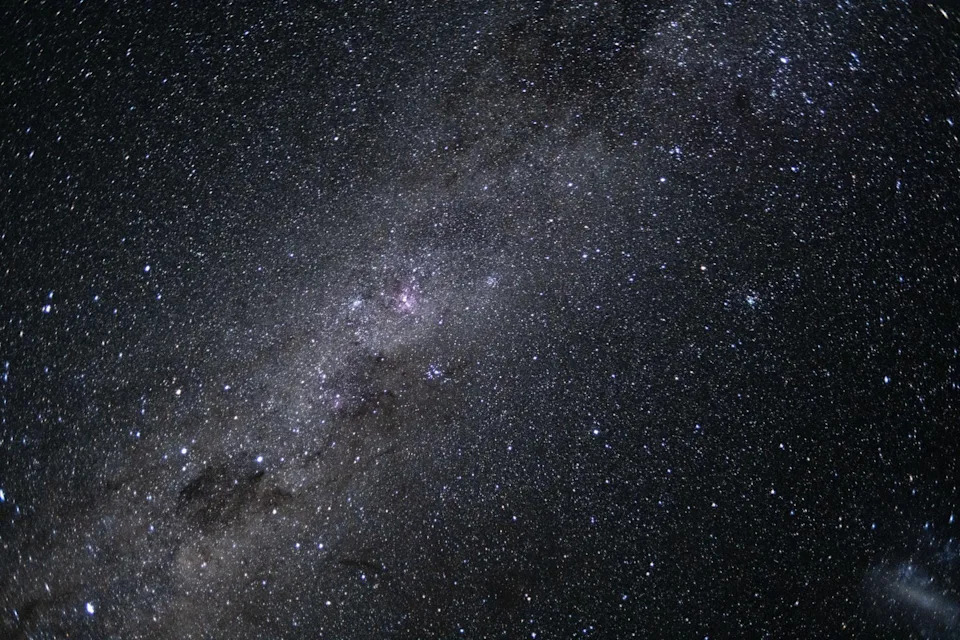
The Artemis II crew captured this breathtaking photo of our galaxy, the Milky Way. Spanning more than 100,000 light-years, Earth is located along one of the galaxy’s spiral arms, about halfway from the center.
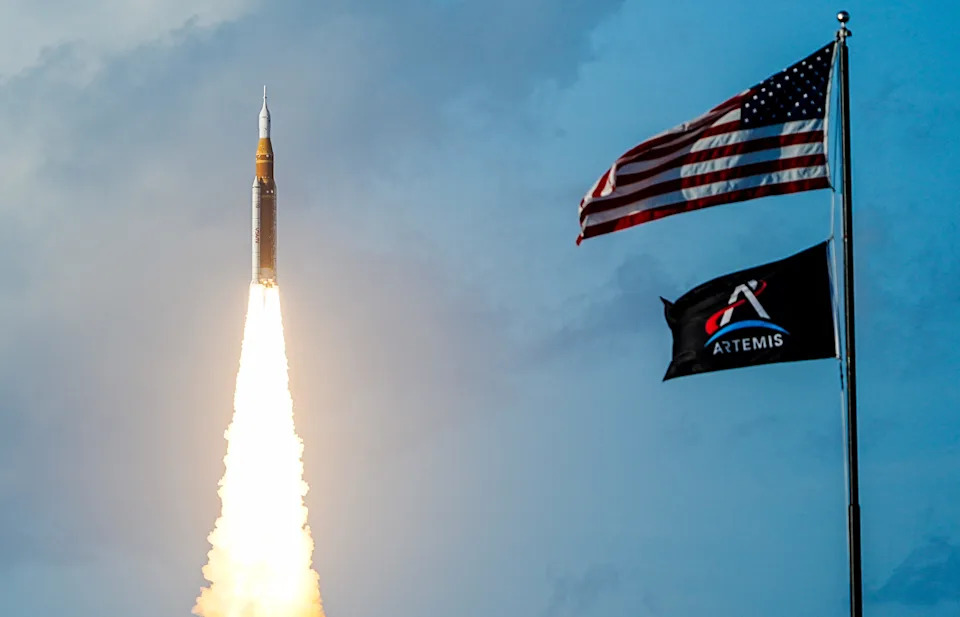
Artemis IIand it’s crew of four lift off from Kennedy Space Center April 1, 2026 on a 10-day mission around the Moon and back. Craig Bailey, FLORIDA TODAY via USA TODAY NETWORK
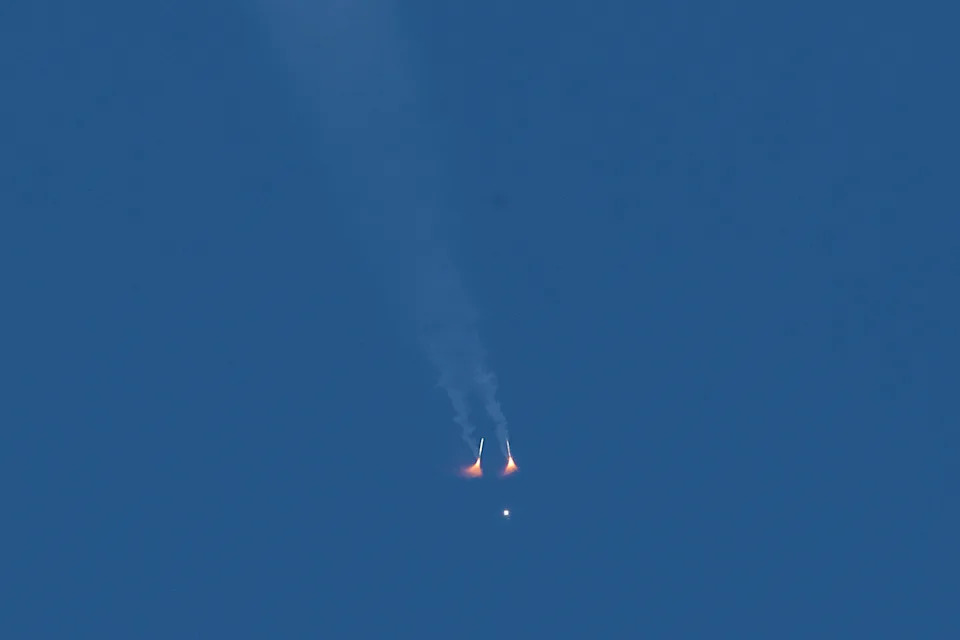
The solid rocket boosters (SRBs) detach after NASA's Artemis II Space Launch System rocket carrying the Orion spacecraft lifts off from Launch Complex 39B at Kennedy Space Center on April 1, 2026 in Cape Canaveral, Florida. The 10-day mission will take NASA astronauts Commander Reid Wiseman, Pilot Victor Glover and Mission Specialist Christina Koch and CSA (Canadian Space Agency) Mission Specialist Jeremy Hansen around the moon and back. The astronauts are supposed to fly 230,000 miles out into space, the farthest any human has ever traveled from Earth.
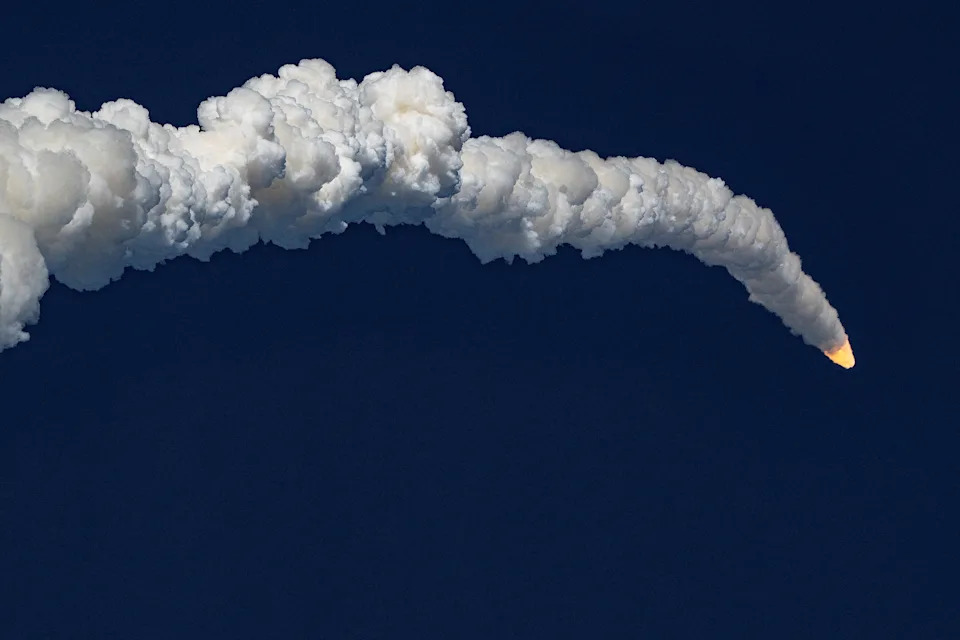
The Artemis II crewed lunar mission launches at Kennedy Space Center in Cape Canaveral, Florida, on April 1, 2026. Four astronauts blasted off aboard a massive NASA rocket April 1 on a long-anticipated journey around the Moon, the first crewed lunar flyby in more than 50 years.
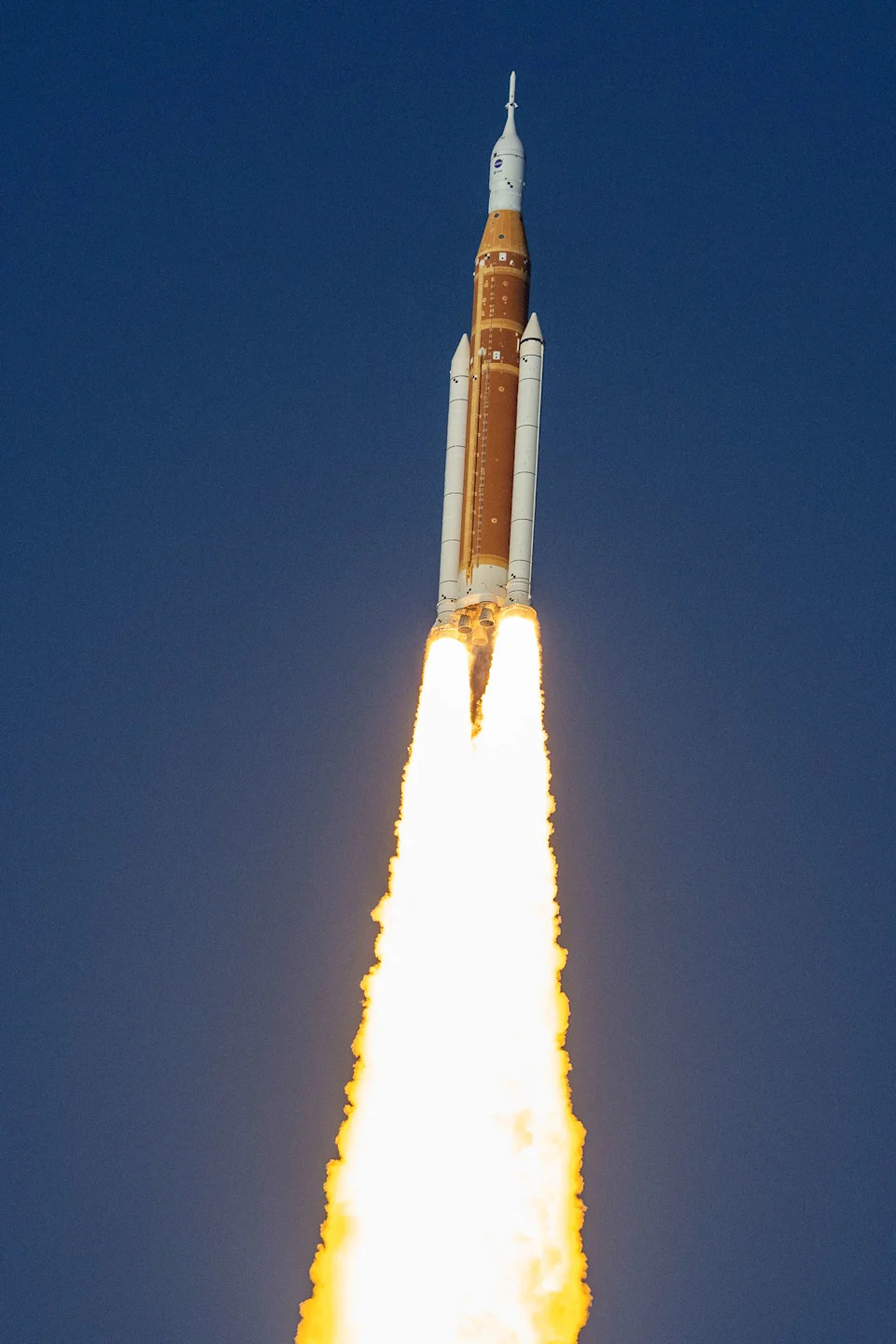
The Artemis II crewed lunar mission launches at Kennedy Space Center in Cape Canaveral, Florida, on April 1, 2026. Artemis II is a 10-day flight with four astronauts on a loop around the Moon, marking the first time humans have traveled beyond low Earth orbit since the Apollo 17 mission in 1972.
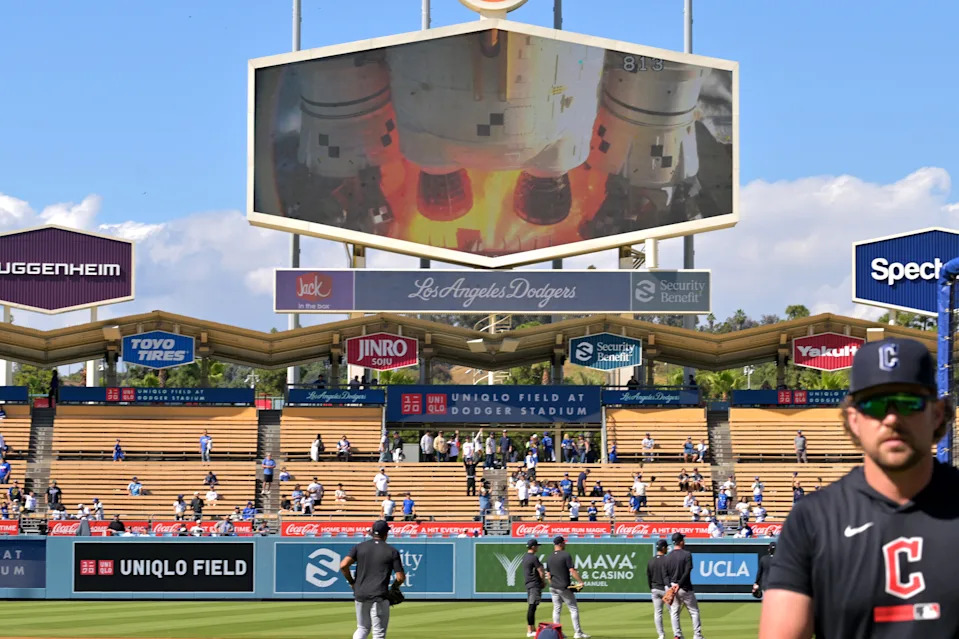
Cleveland Guardians players warm up as the NASA's Artemis II launches from Kennedy Space Center in Florida prior to the game against the Los Angeles Dodgers at Dodger Stadium.

People watch the Artemis II crewed lunar mission launch on a television outside of the News Corp building on April 1, 2026 in New York City. The 10-day mission will take NASA astronauts Commander Reid Wiseman, Pilot Victor Glover and Mission Specialist Christina Koch and CSA (Canadian Space Agency) Mission Specialist Jeremy Hansen around the moon and back. The astronauts are supposed to fly 230,000 miles out into space, the farthest any human has ever traveled from Earth.
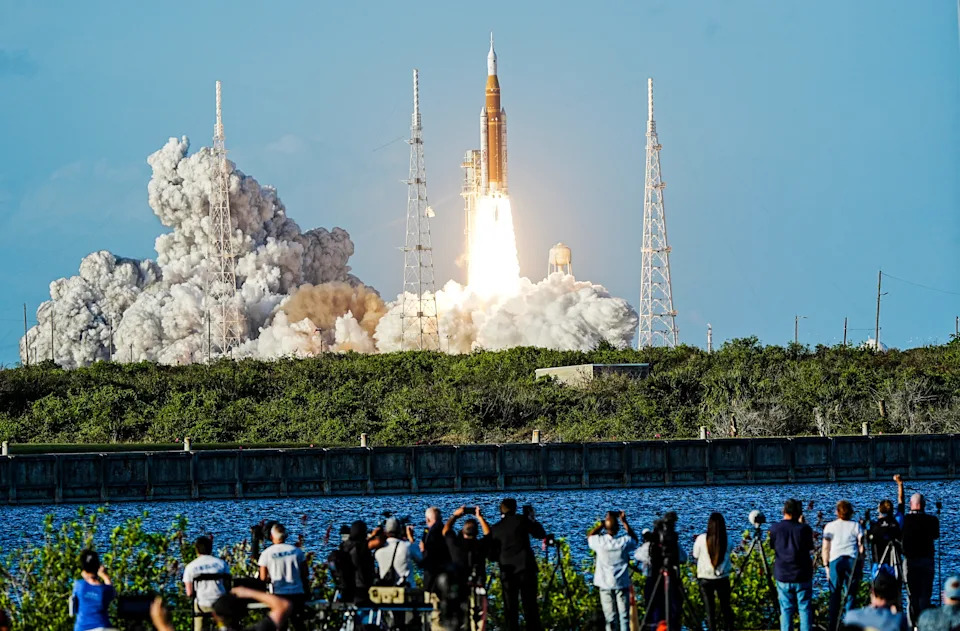
Artemis II and it’s crew of four lift off from Kennedy Space Center April 1, 2026 on a 10-day mission around the Moon and back.

People observe the launch of Artemis II from the A. Max Brewer Bridge in Titusville, Florida on April 1, 2026 in Cape Canaveral, Fla. The 322-foot-tall rocket will take astronauts around the moon and back, 230,000 miles out into space and the farthest any human has ever traveled from Earth.
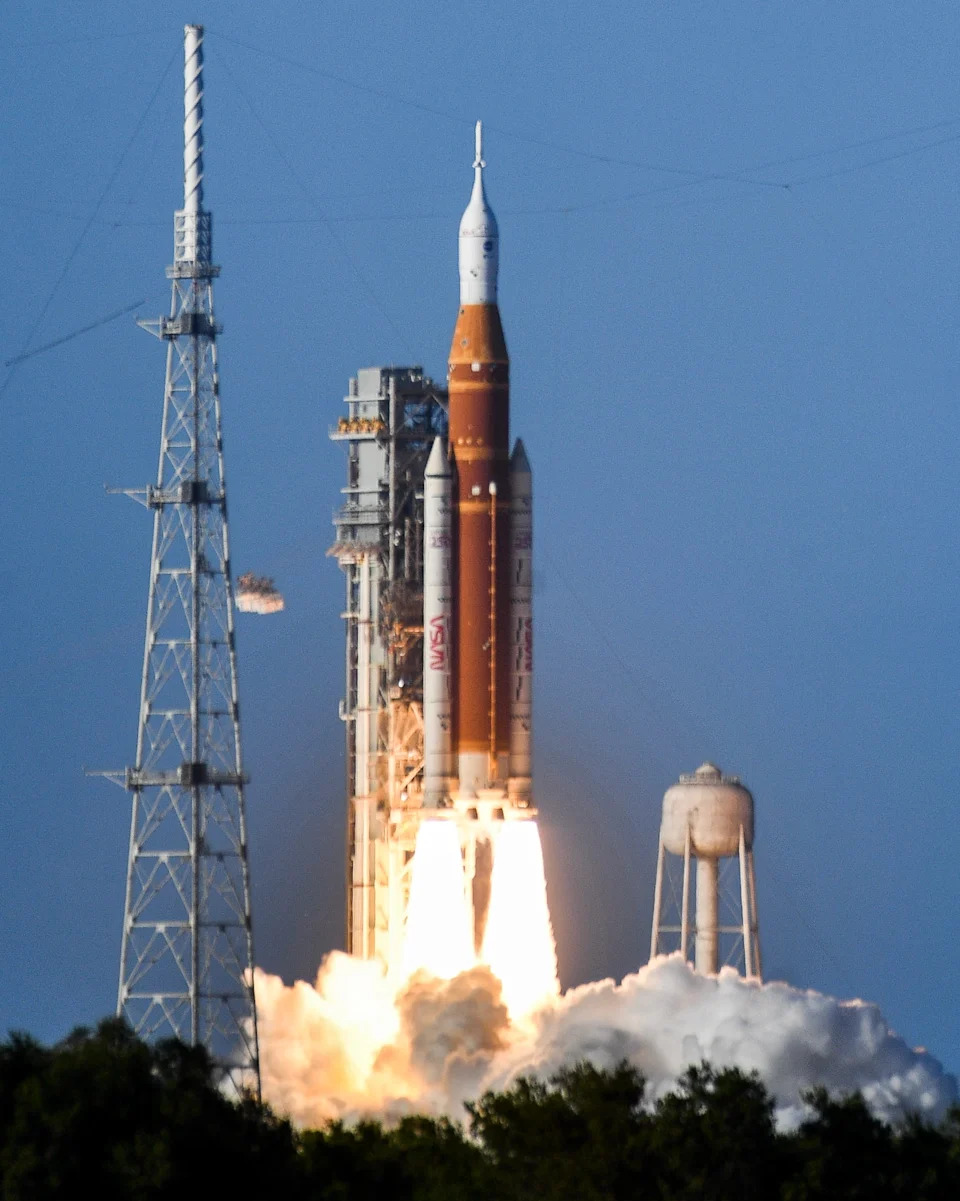
Artemis II and it’s crew of four lift off from Kennedy Space Center April 1, 2026 on a 10-day mission around the Moon and back. Craig Bailey, FLORIDA TODAY via USA TODAY NETWORK
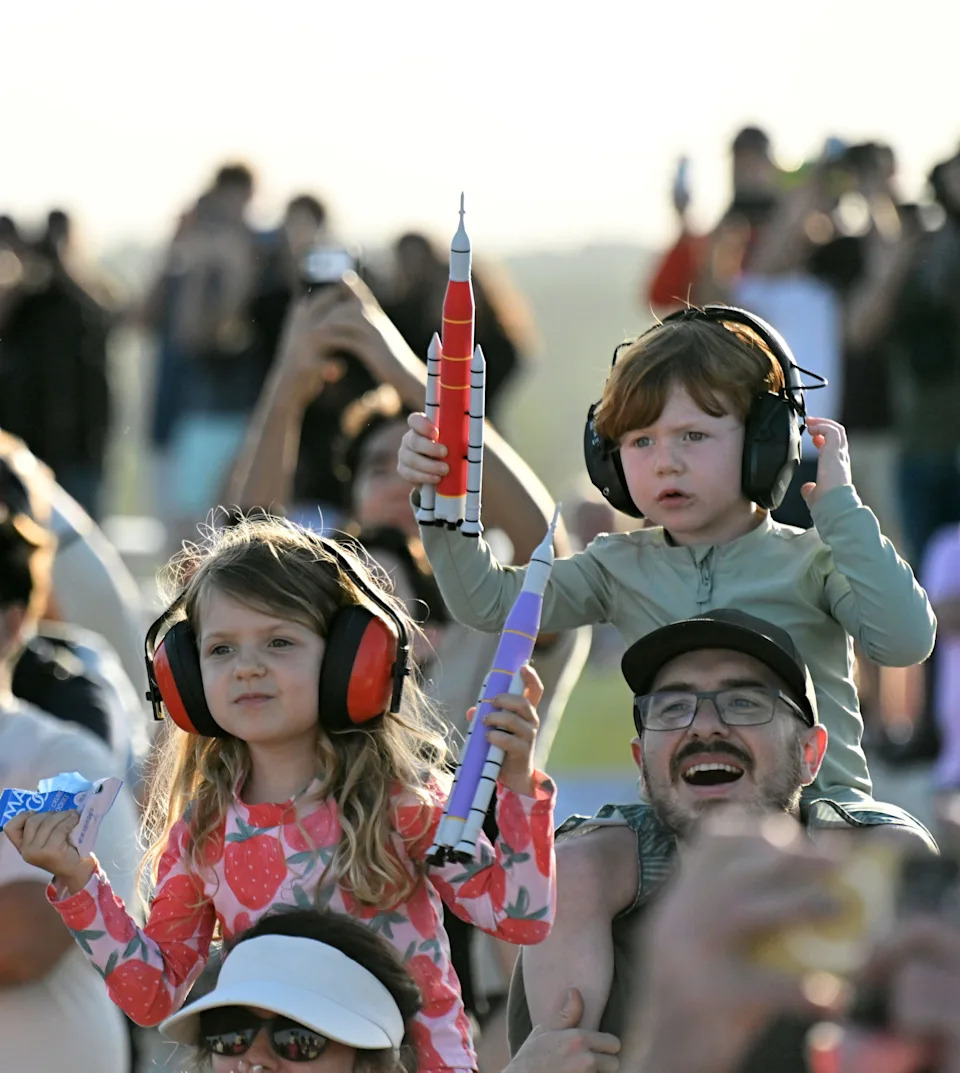
People observe and celebrate the launch of the Artemis II from the A. Max Brewer Bridge in Titusville, Florida on April 01, 2026 in Cape Canaveral, Florida. The 322-foot-tall rocket will take astronauts around the moon and back, 230,000 miles out into space and the farthest any human has ever traveled from Earth.

The Artemis II astronauts leave crew quarters at Kennedy Space Center, FL April 1, 2026 headed to Pad 39B for launch on an 10-day rendezvous with the Moon. Craig Bailey, FLORIDA TODAY via USA TODAY NETWORK

Artemis II Mission Specialist Jeremy Hansen talks with family as the crew leaves crew quarters at Kennedy Space Center, FL April 1, 2026. They’re headed to Pad 39B for launch on an 10-day rendezvous with the Moon. Craig Bailey, FLORIDA TODAY via USA TODAY NETWORK
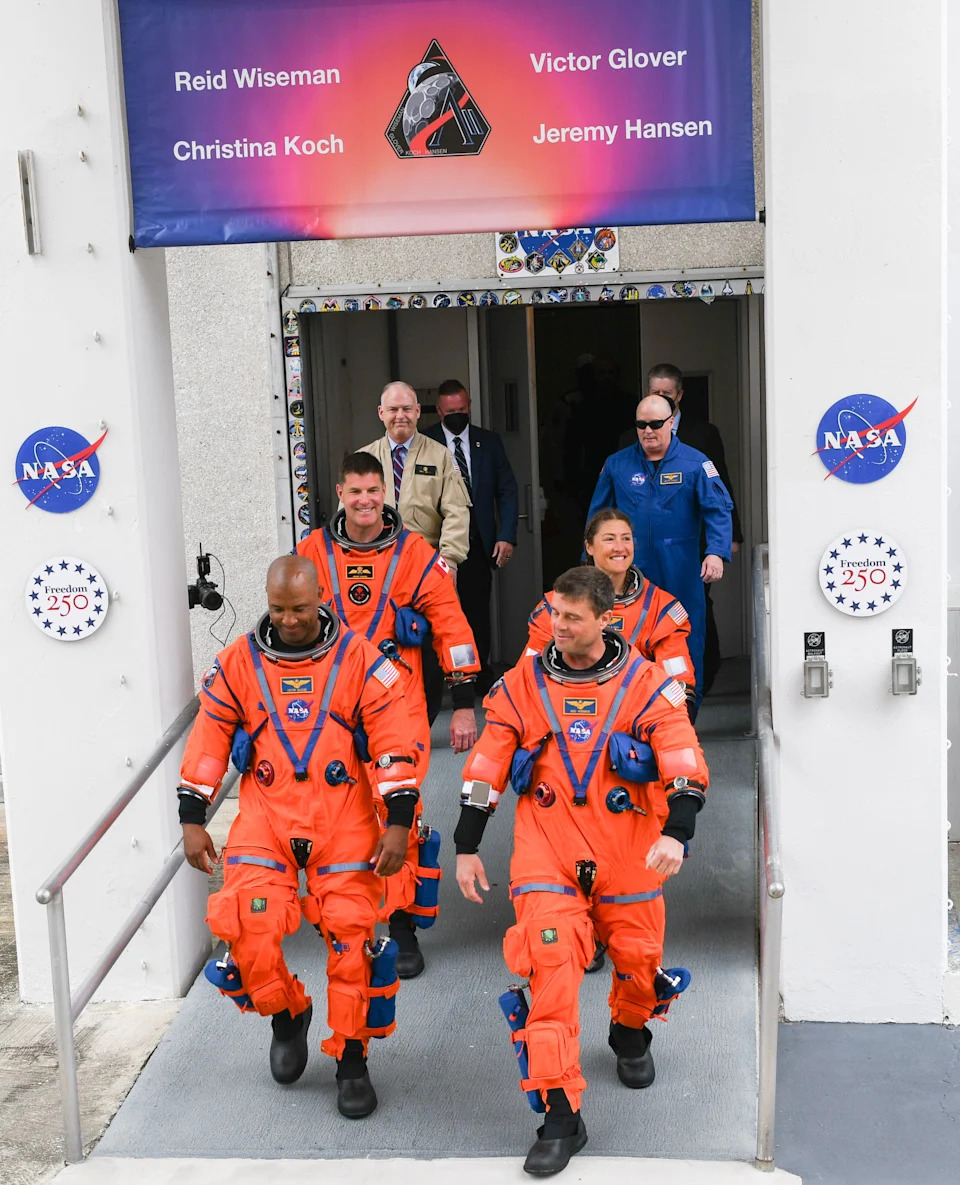
The Artemis II astronauts leave crew quarters at Kennedy Space Center, FL April 1, 2026 headed to Pad 39B for launch on an 10-day rendezvous with the Moon. Craig Bailey, FLORIDA TODAY via USA TODAY NETWORK
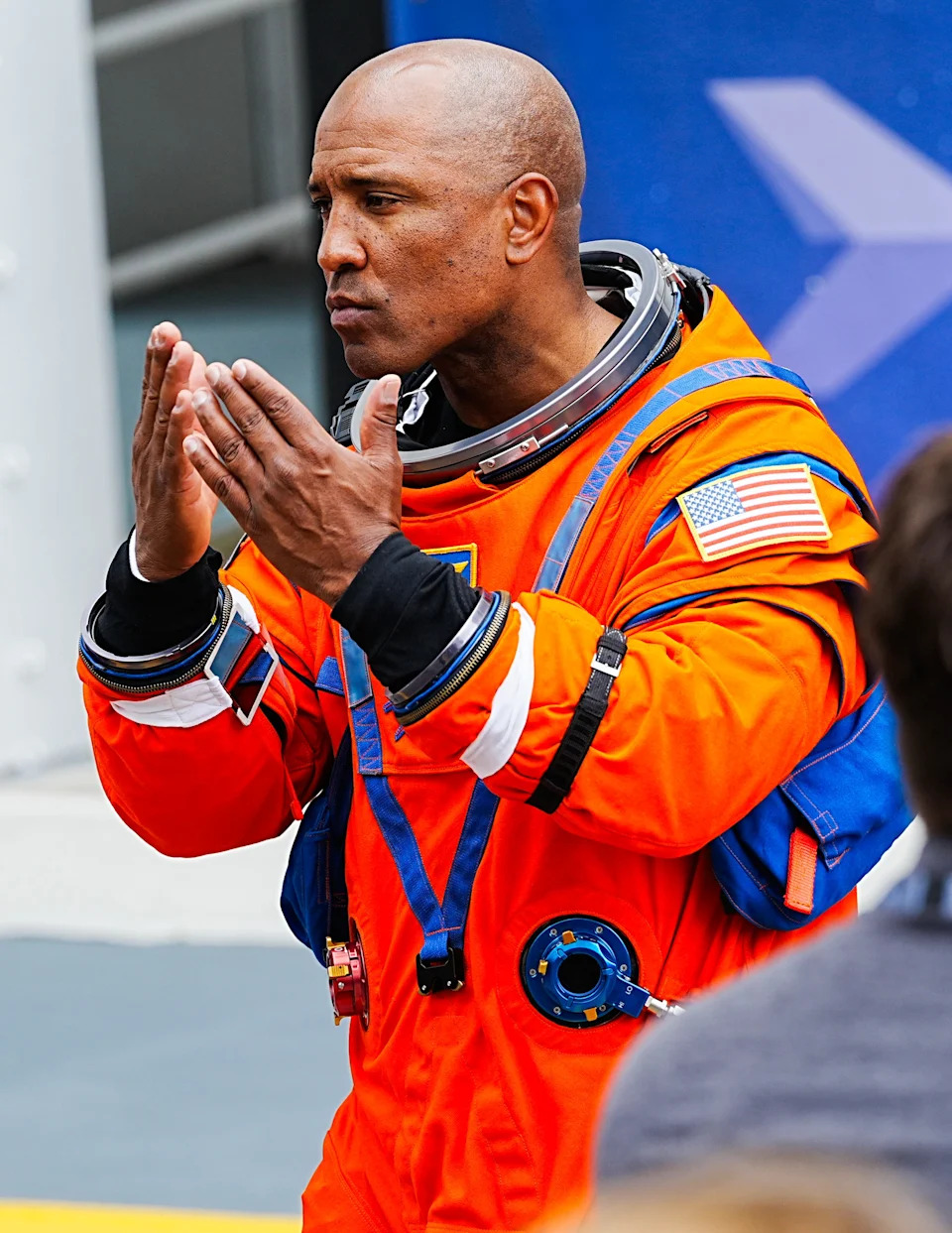
Artemis II Pilot Victor Glover blows kisses to his family as the crew leaves crew quarters at Kennedy Space Center, FL April 1, 2026. They’re headed to Pad 39B for launch on an 10-day rendezvous with the Moon.

The Artemis II astronauts (from left) Mission Specialist Jeremy Hansen, Pilot Victor Glover, Commander Reid Wiseman and Mission Specialist Christina Koch leave crew quarters at Kennedy Space Center, FL April 1, 2026 headed to Pad 39B for launch on an 10-day rendezvous with the Moon. Craig Bailey, FLORIDA TODAY via USA TODAY NETWORK
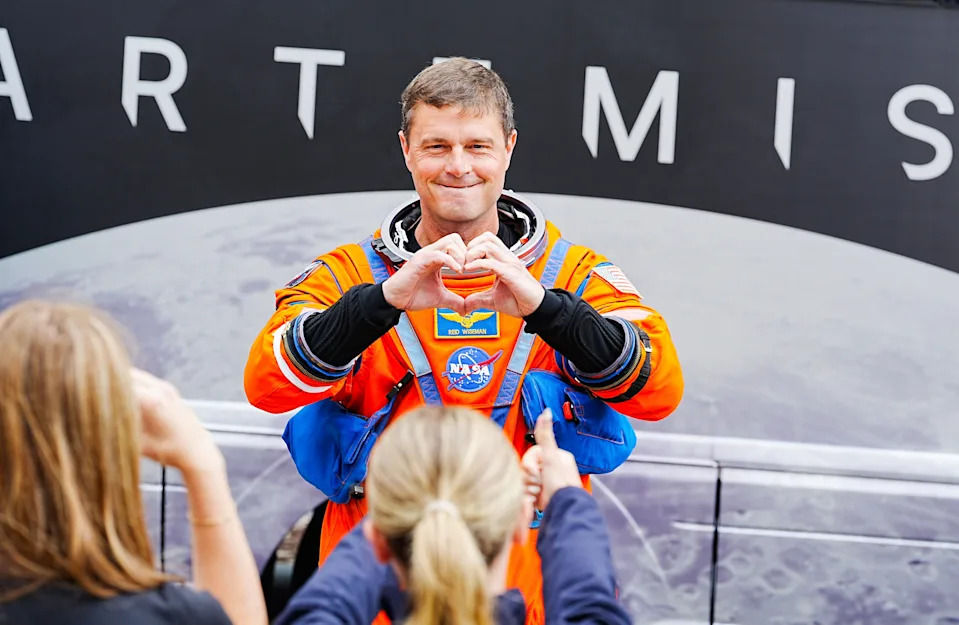
Artemis II Commander Reid Wiseman sends a heart of loved ones as the crew leaves crew quarters at Kennedy Space Center, FL April 1, 2026. They’re headed to Pad 39B for launch on an 10-day rendezvous with the Moon. Craig Bailey, FLORIDA TODAY via USA TODAY NETWORK

Artemis II Mission Specialist Christina Koch laughs as the crew leaves crew quarters at Kennedy Space Center, FL April 1, 2026. They’re headed to Pad 39B for launch on an 10-day rendezvous with the Moon. Craig Bailey, FLORIDA TODAY via USA TODAY NETWORK
Photographers set up remote cameras inside Pad 39B March 31, 2026 in advance of the launch of Artemis II. Craig Bailey, FLORIDA TODAY via USA TODAY NETWORK
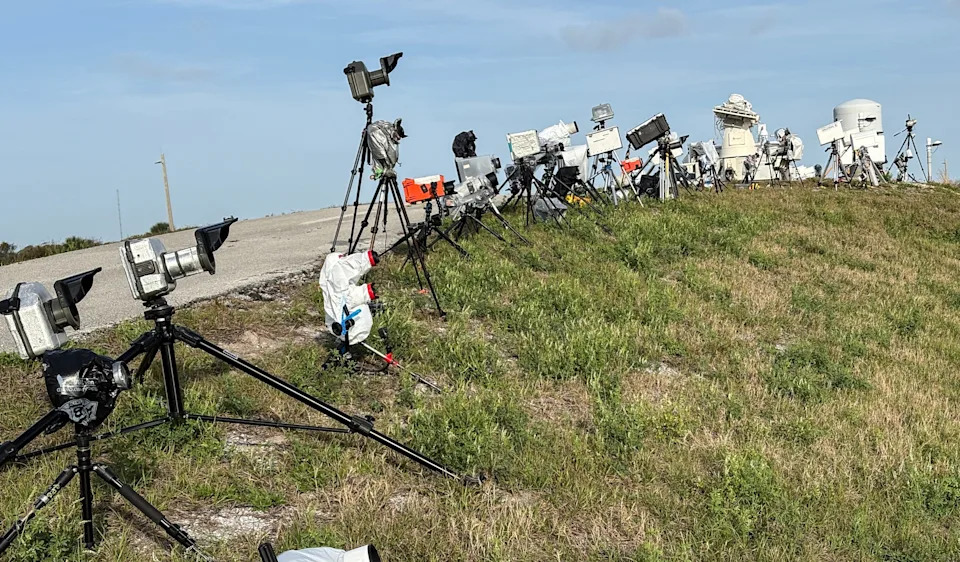
Remote camerasa are set up inside Pad 39B March 31, 2026 in advance of the launch of Artemis II. Craig Bailey, FLORIDA TODAY via USA TODAY NETWORK
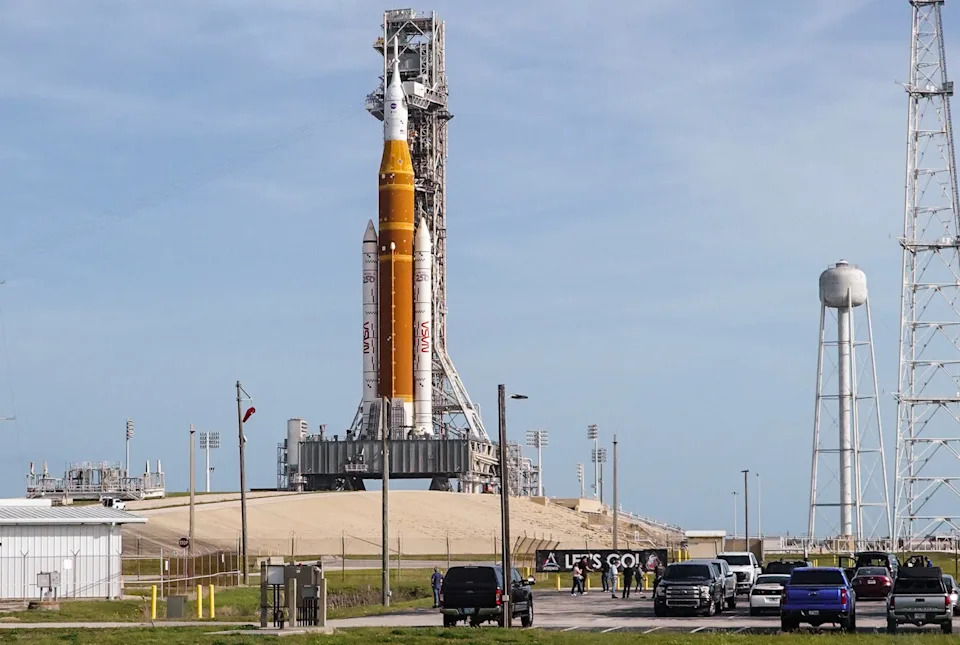
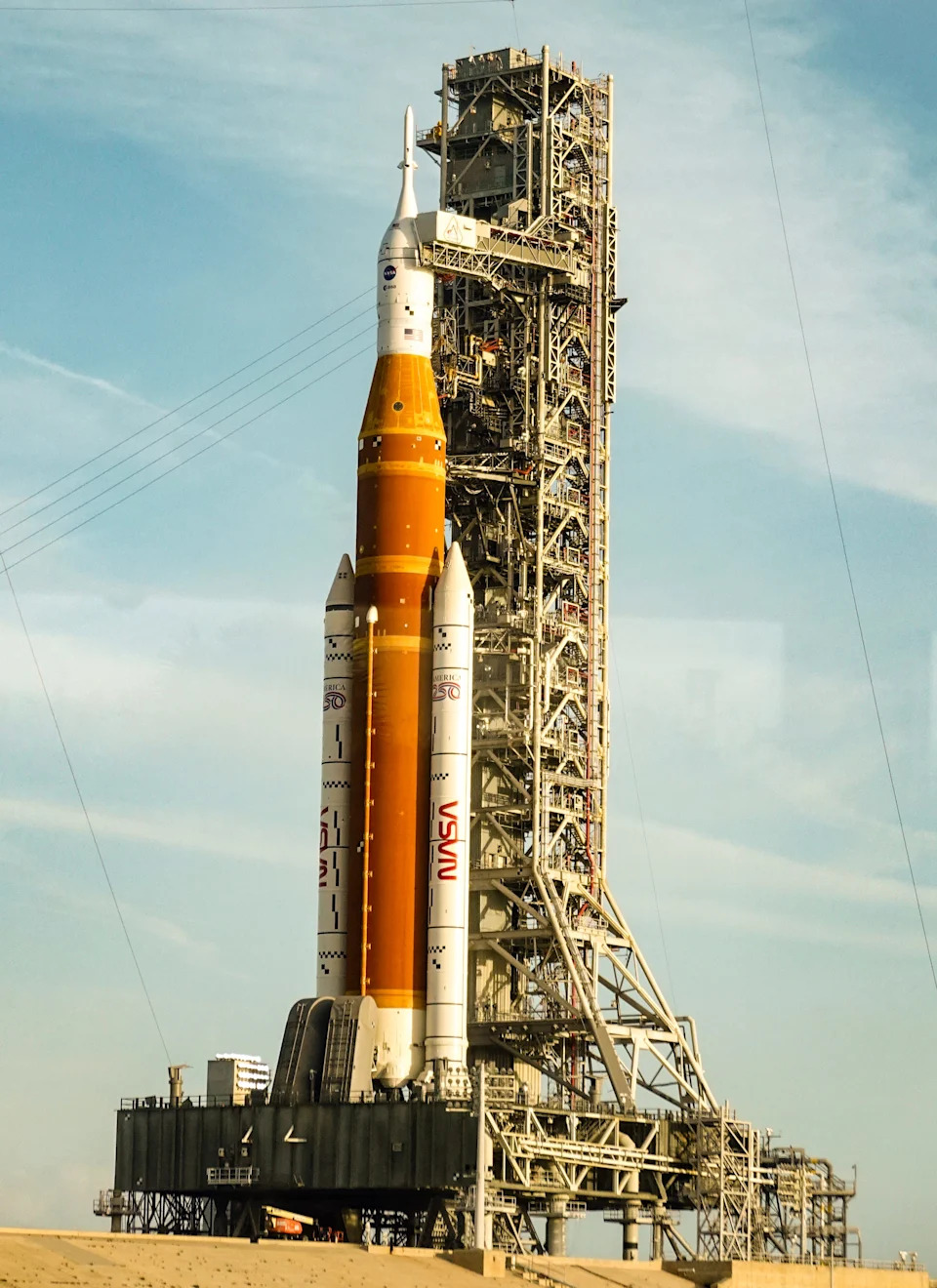
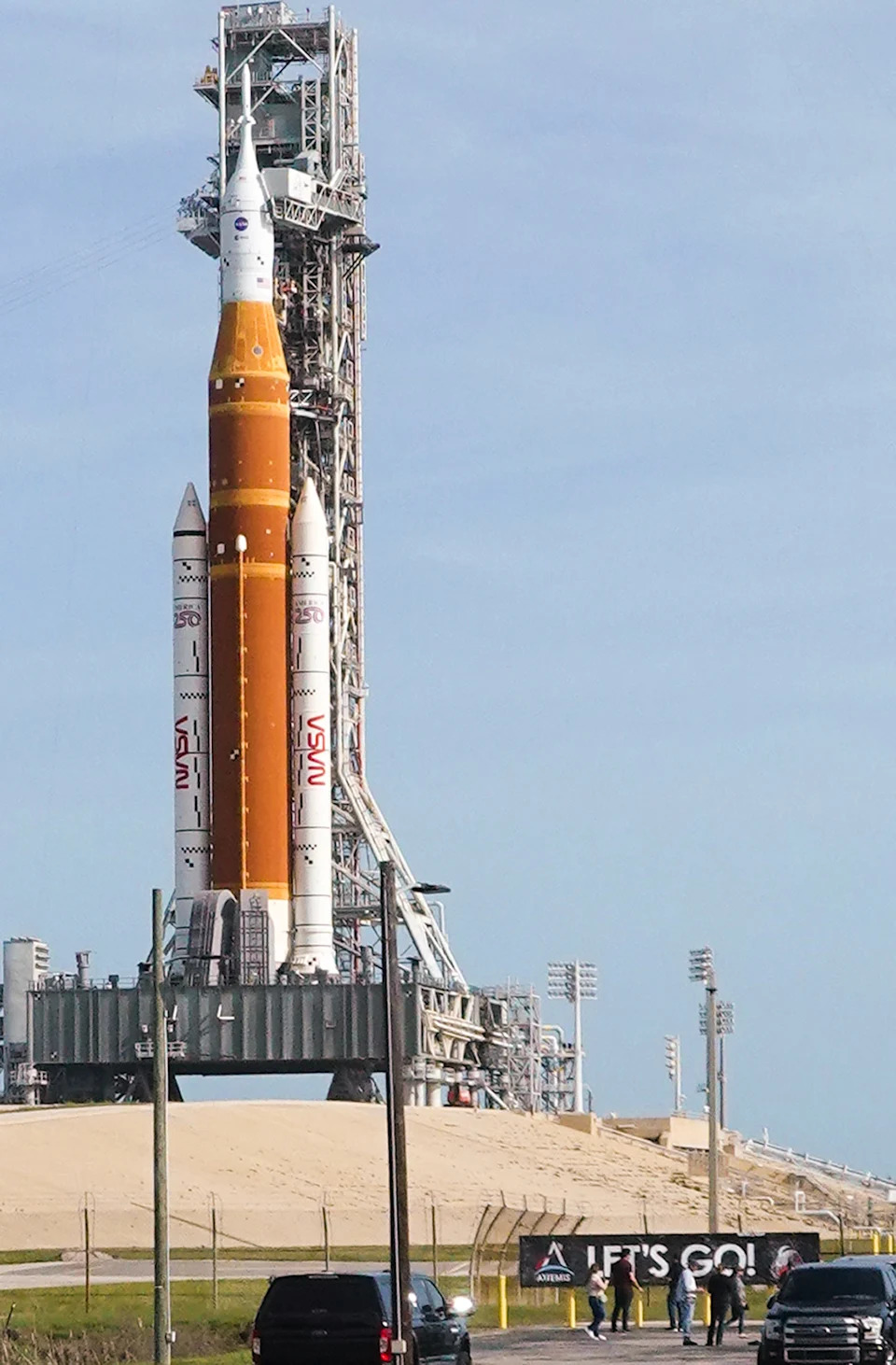
NASAÕs Space Launch System rocket Artemis II is readied for launch on Pad 39B at Kennedy Space Center, FL, March 31, 2026. Artemis II is scheduled to launch April 4, taking 4 astronauts around the Moon and back. Craig Bailey, FLORIDA TODAY via USA TODAY NETWORK
Photographers set up remote cameras inside Pad 39B March 31, 2026 in advance of the launch of Artemis II. Craig Bailey, FLORIDA TODAY via USA TODAY NETWORK
Photographers set up remote cameras inside Pad 39B March 31, 2026 in advance of the launch of Artemis II. Craig Bailey, FLORIDA TODAY via USA TODAY NETWORK
Photographers set up remote cameras inside Pad 39B March 31, 2026 in advance of the launch of Artemis II. Craig Bailey, FLORIDA TODAY via USA TODAY NETWORK
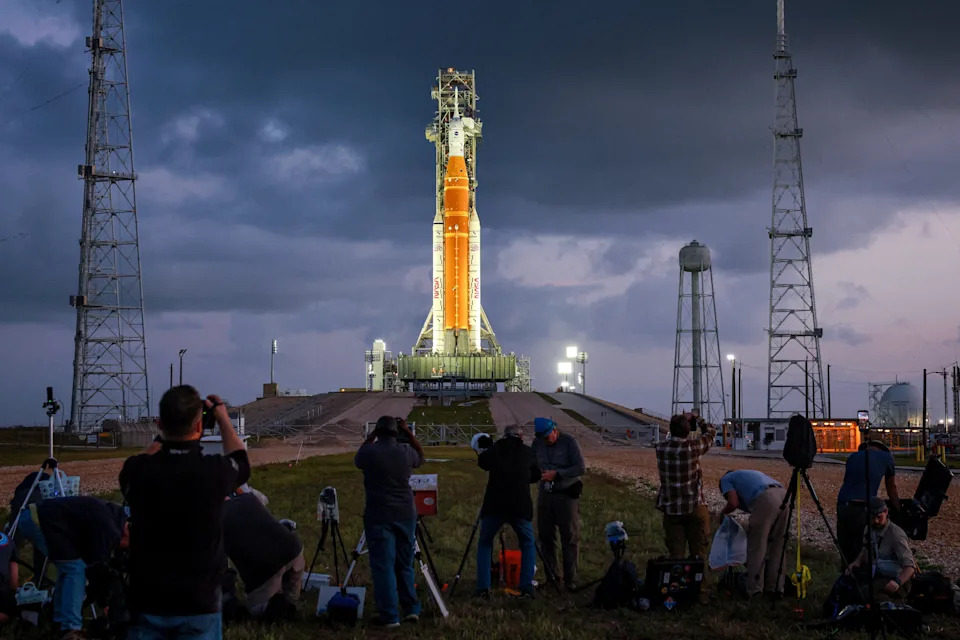
People set cameras to photograph NASA's Artemis II lunar flyby mission, with the next-generation moon rocket, the Space Launch System (SLS) rocket and the Orion crew capsule, on Pad 39B ahead of the launch of theArtemis II missionat the Kennedy Space Center in Cape Canaveral, Fla., March 31, 2026. The rocket is scheduled for an April 1, 2026, 6:24 p.m. launch of the 10-day mission.
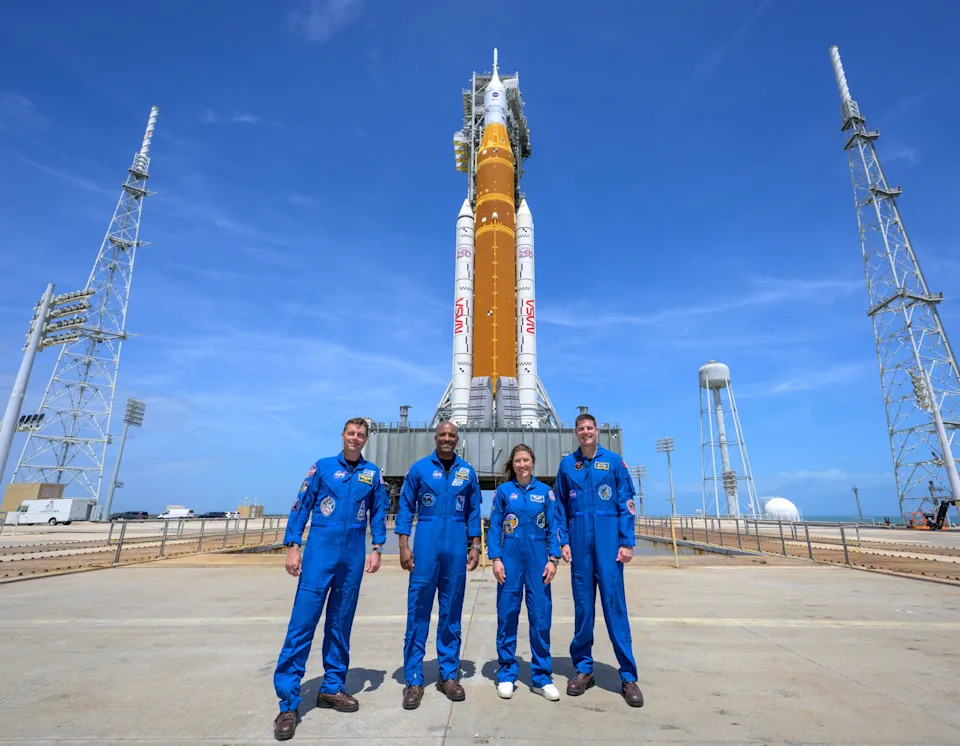
This NASA handout image shows NASA astronauts Reid Wiseman, Artemis II commander (L), Victor Glover, Artemis II pilot (2L), Christina Koch, Artemis II mission specialist (2R), and CSA (Canadian Space Agency) astronaut Jeremy Hansen, Artemis II mission specialist (R), as they pose for a group photo during a visit to NASA's Artemis II SLS (Space Launch System) rocket and Orion spacecraft, on March 30, 2026, at Launch Complex 39B of NASA's Kennedy Space Center in Florida.
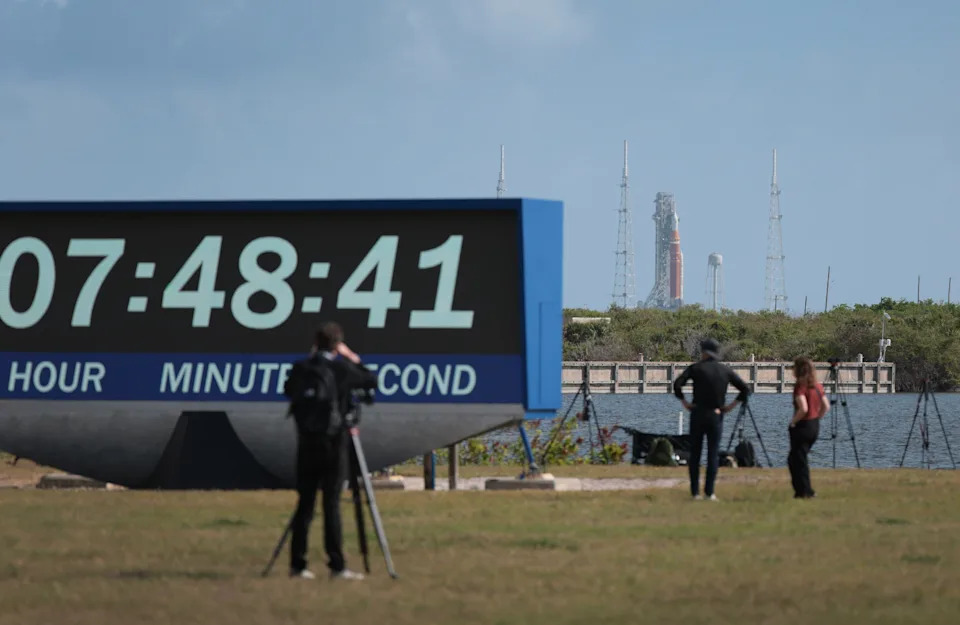
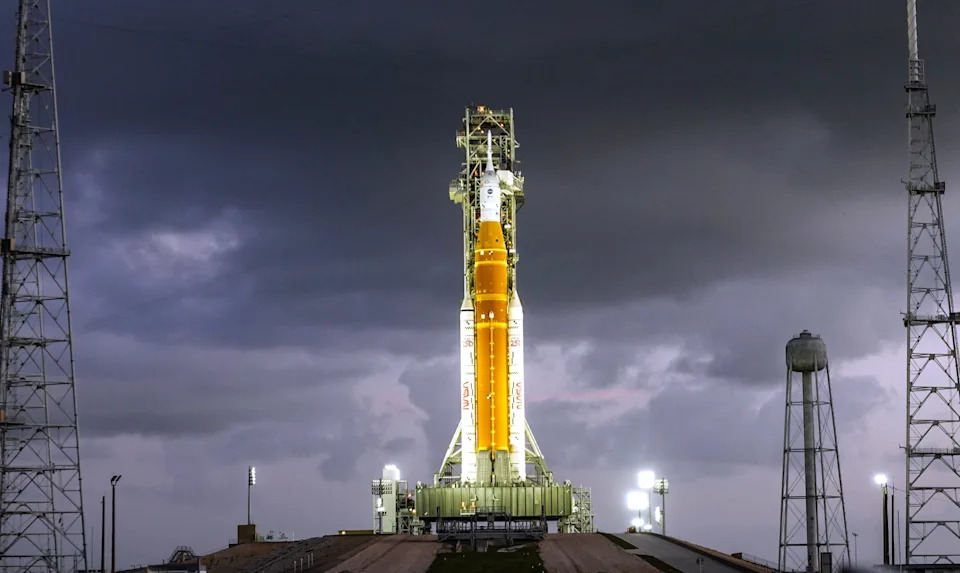
The countdown clock runs as NASA's Artemis II Space Launch System rocket and Orion spacecraft sit on Launch Pad 39B at the Kennedy Space Center on April 1, 2026 in Cape Canaveral, Fla.
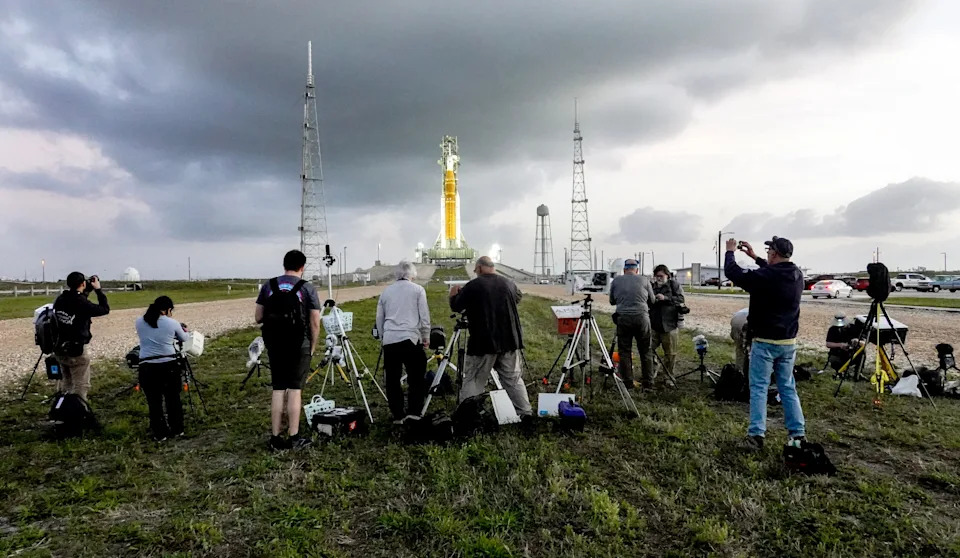
Photographers set up remote cameras inside Pad 39B March 31, 2026 in advance of the launch of Artemis II.

People gather ahead of the launch of the next-generation moon rocket, the Space Launch System (SLS) rocket and the Orion crew capsule, part of NASA's Artemis II lunar flyby mission, from NASA's Kennedy Space Center, in Titusville, Fla., April 1, 2026.
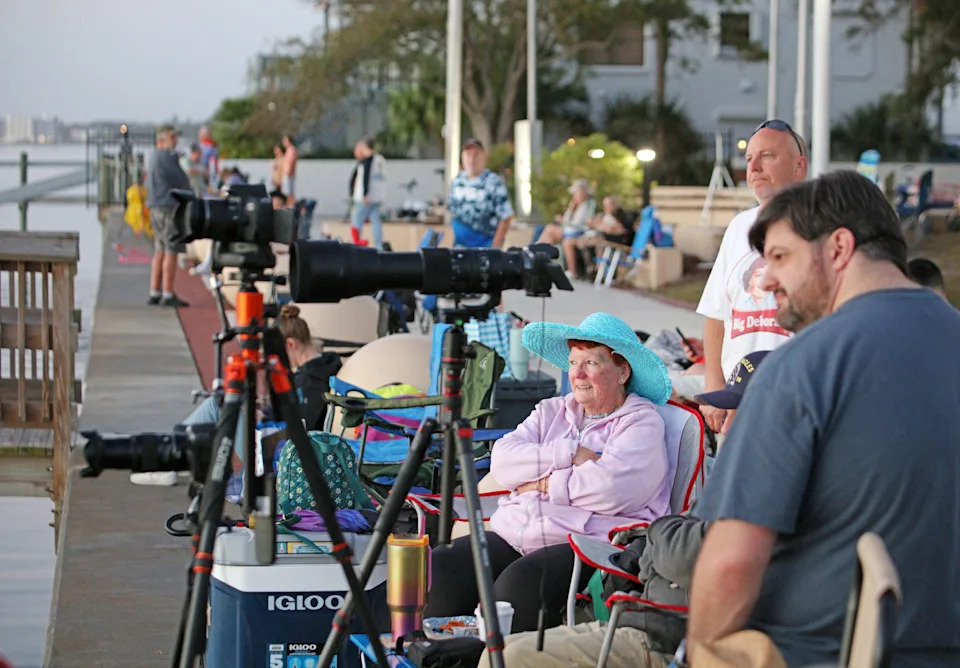
Space enthusiasts watch the sunrise from a park in Titusville, Fla. several hours before NASA's Artemis II Space Launch System (SLS) rocket is scheduled to launch from the Kennedy Space Center on April 1, 2026.
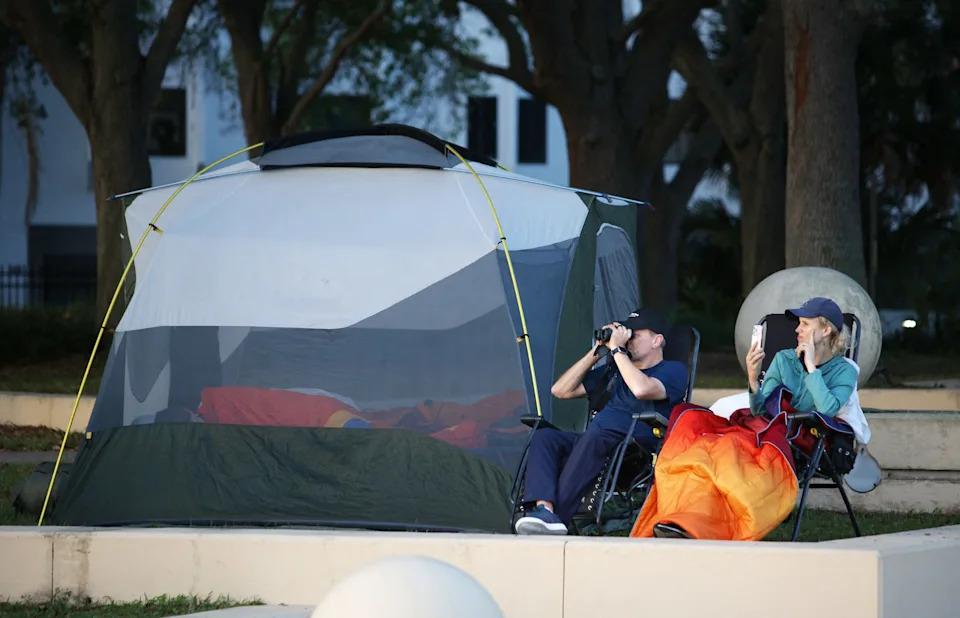
Space enthusiasts watch the sunrise from a park in Titusville, Florida several hours before NASA's Artemis II Space Launch System (SLS) rocket is scheduled to launch from the Kennedy Space Center on April 1, 2026.
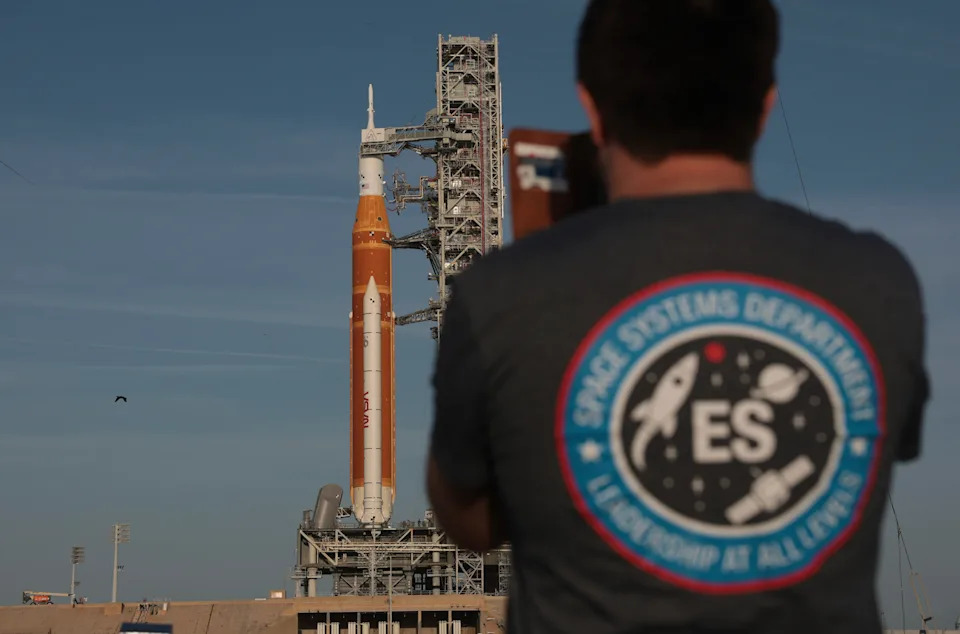
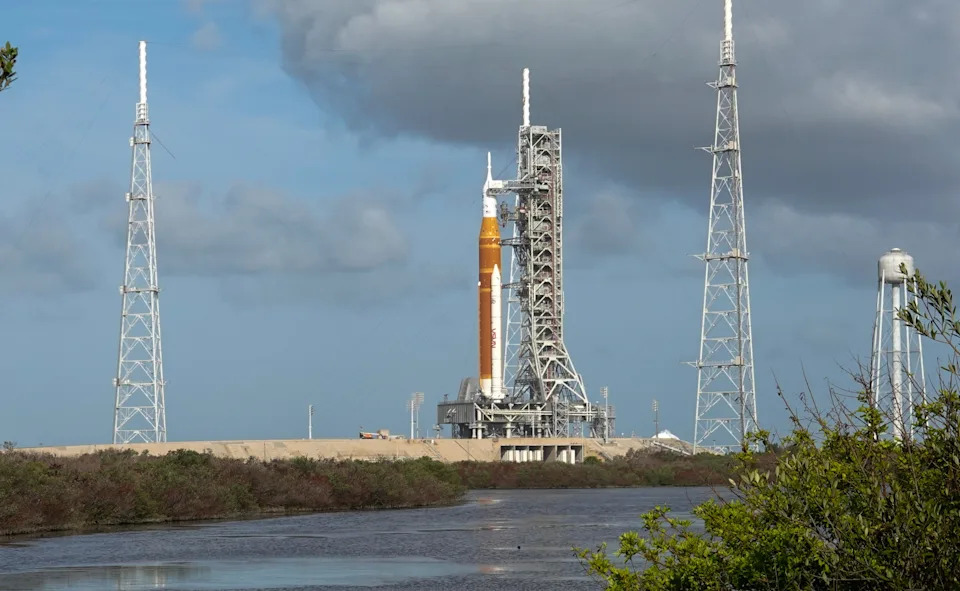
NASA's Artemis II Space Launch System rocket and Orion spacecraft sit on Launch Pad 39B at the Kennedy Space Center on March 31, 2026 in Cape Canaveral, Fla.

Brenda Mulberry, president of Pike Products and Space Shirts, holds up one of the thousands of Artemis II t-shirts she has printed in their north Merritt Island shop.
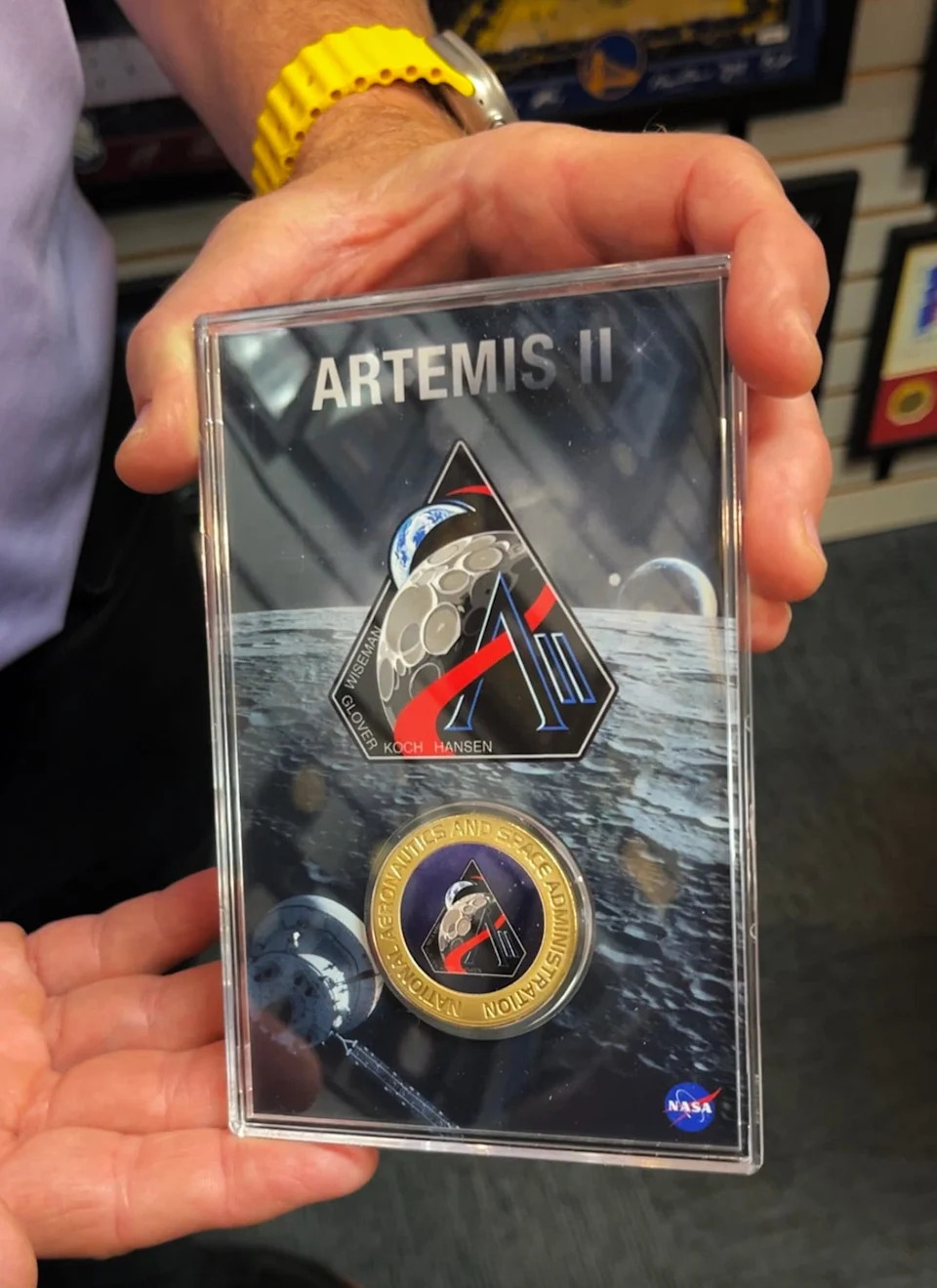
The Highland Mint in Melbourne, Fla. has minted an Artemis II collector coin.
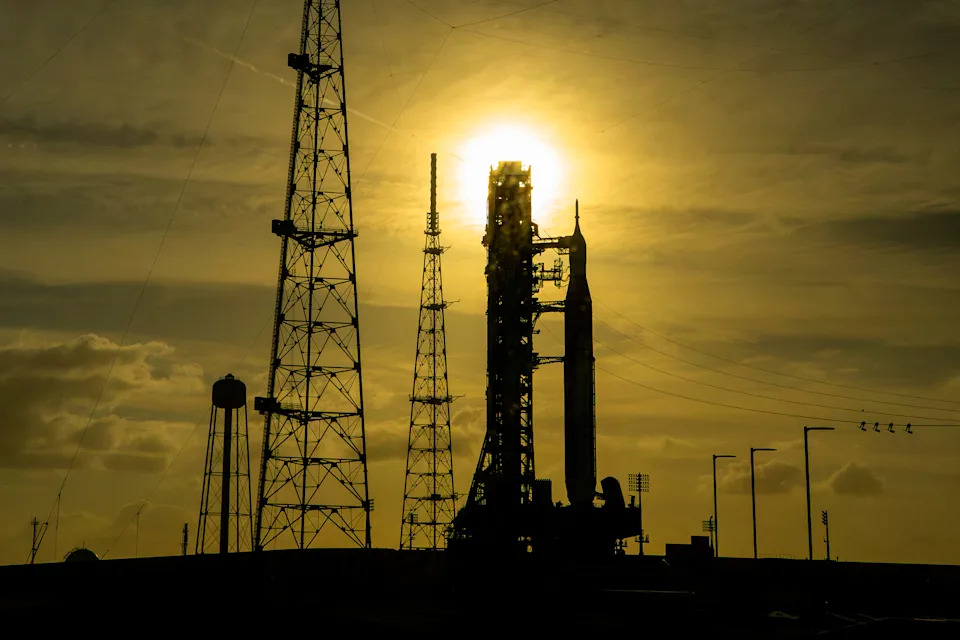
NASA's Artemis II Space Launch System rocket and Orion spacecraft rest on Launch Pad 39B at Kennedy Space Center in Cape Canaveral, Fla., on March 31, 2026, ahead of the crewed lunar mission.
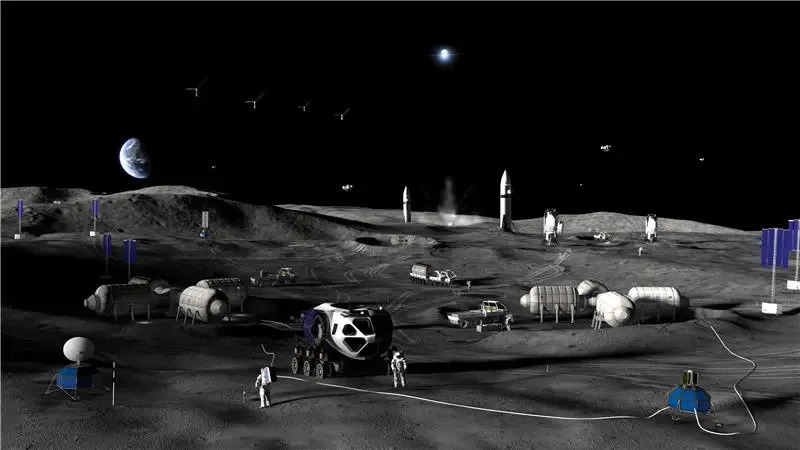
This artistic rendering shows what NASA's moon base may look like near the lunar south pole.
Pomozite nam da budemo bolji.